Revolutionary Lives

The American Revolution raised profound questions about liberty, equality, and constitutional rights—debates that continue to this day over what these concepts mean and to whom they apply. But on the ground in communities like Princeton, the war itself—the heat of battle, a winter of scarcity—proved just as transformative as revolutionary ideals.
A destructive tragedy for some, a noble sacrifice or pragmatic opportunity for others, the War for Independence affected people in different ways. It shattered families, wrought heartbreak and hunger, and opened paths to freedom and fortune. It displaced tens of thousands and inflicted tremendous violence and devastation. Amid cries for liberty and equality, the war shook centuries-old institutions of patriarchy and slavery.
The artifacts here invite you to step into the world of revolutionary Princeton and to witness the experiences of those who passed through it. They capture fleeting glimpses of the uncertainty, exhilaration, and loss felt by the town’s diverse community—moments that together made the American Revolution truly revolutionary for those who lived it.

Journal, 1775–1776
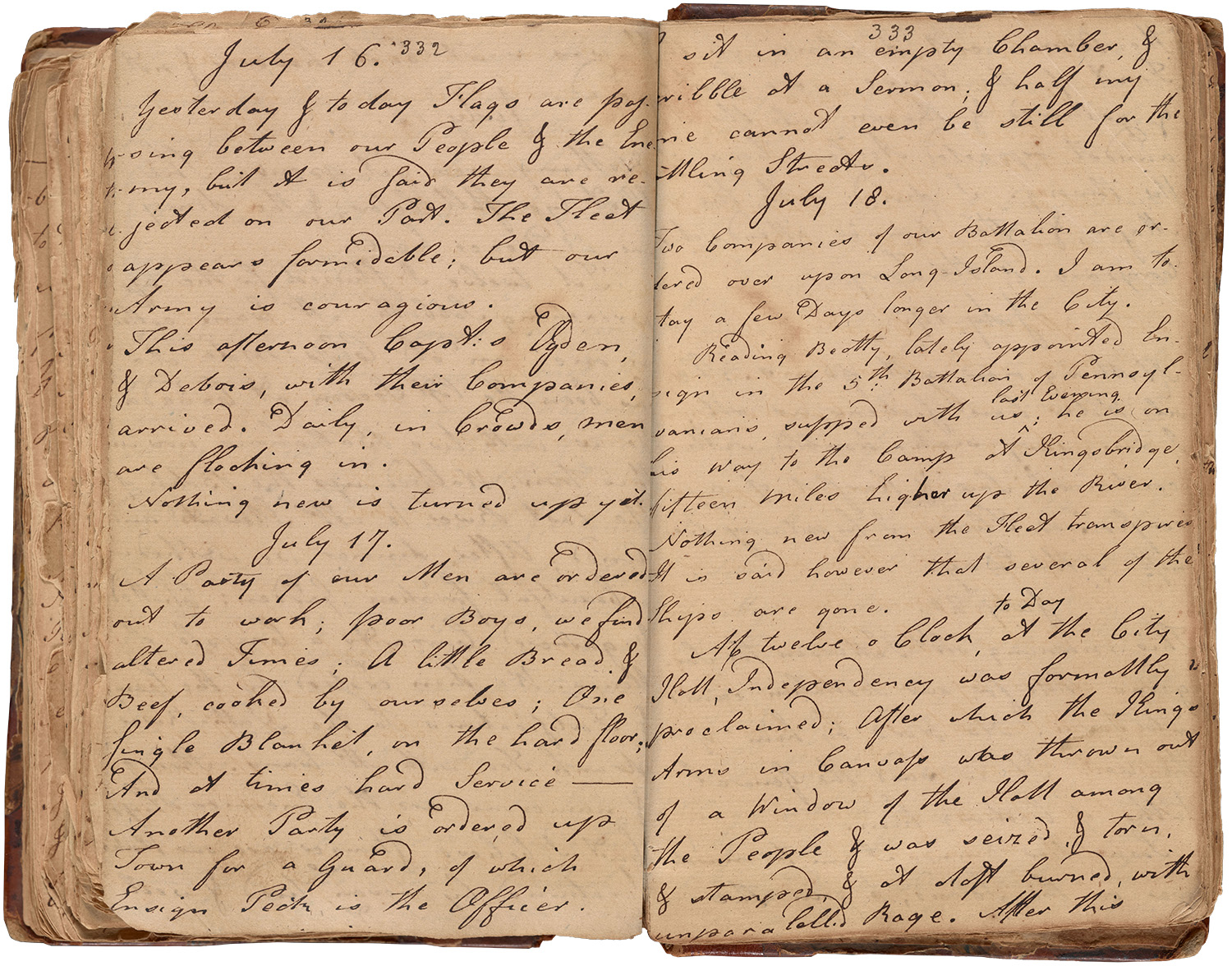
Philip Vickers Fithian (1747–1776), Class of 1772
Gift of Mr. and Mrs. E. W. Hitchcock
Formidable warships loomed in New York Harbor. Exhausted soldiers slept on hard floors with only a blanket and some bread. Princeton education hadn’t prepared 29-year-old Phillip Vickers Fithian for war. But as a militia chaplain, Fithian wrote in his diary, he needed to instill faith in the “poor Boys.” Wartime drudgery broke when independence was announced, sparking “unparallel’d Rage” to shatter symbols of monarchy. However, the hardships endured: camp fever claimed Fithian’s life just months later.

Revolutionary War diary, 1776-1779
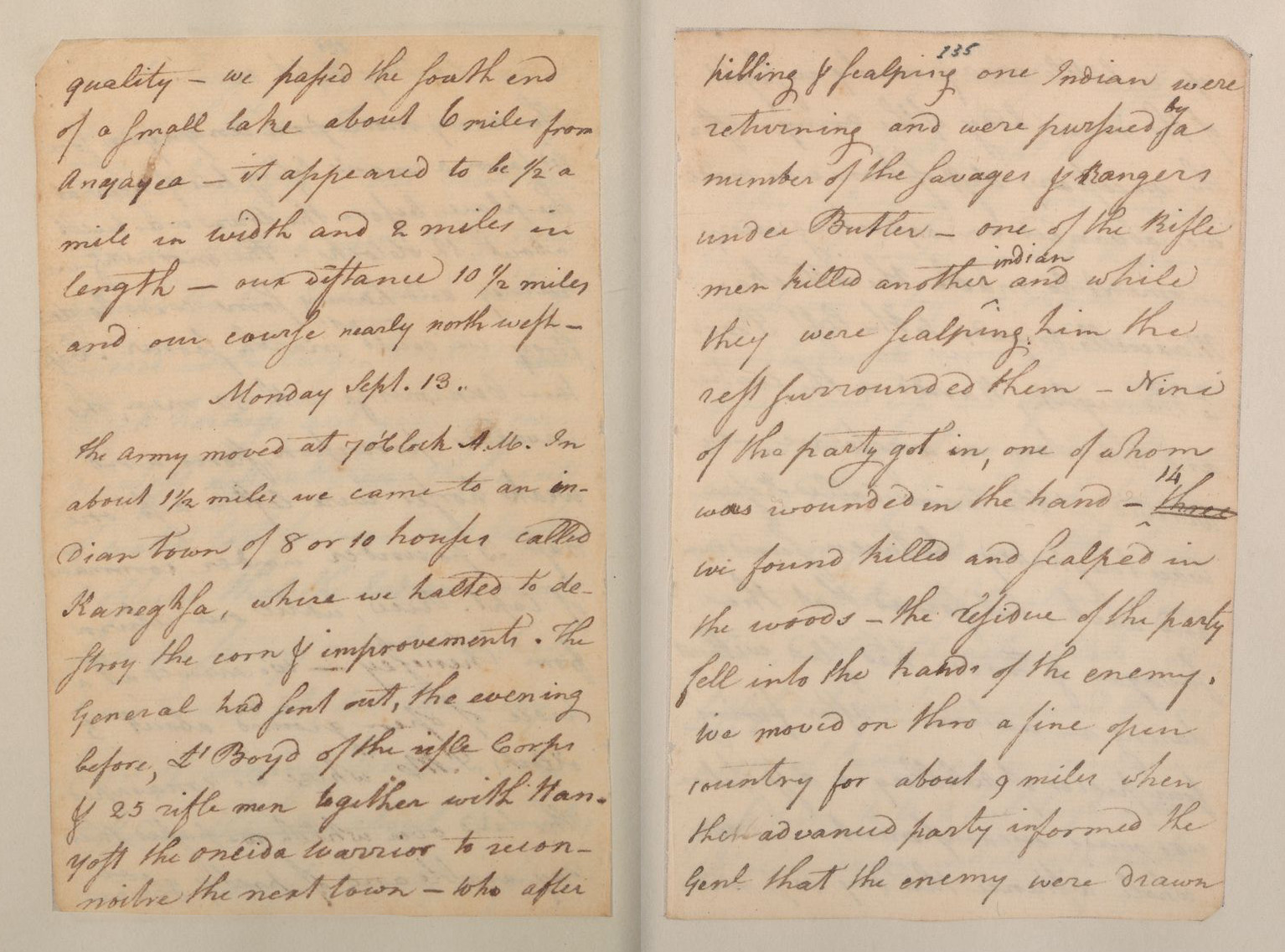
Andrew Hunter (1751-1823), Class of 1772
Princeton graduate Andrew Hunter kept a diary during much of his time as a Continental chaplain—including his participation in General John Sullivan’s 1779 scorched-earth campaign against the Haudenosaunee (Six Nations). Rampaging through present-day western New York, Sullivan’s army targeted Haudenosaunee homes, families, and crops in an attempt to break their alliances with the British. Here, Hunter described a typical day on campaign: Continentals rendezvoused with Oneida allies, skirmished with enemy Mohawks and loyalists, and burned Seneca cornfields and villages.

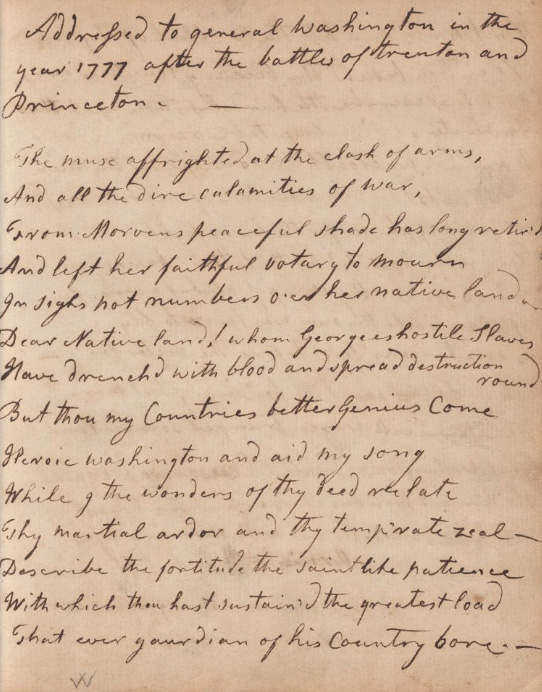
“Addressed to general Washington in the year 1777 after the battles of Trenton and Princeton.” Commonplace book titled Colonial and Revolutionary Poems, 1759-1777
Annis Boudinot Stockton (1736-1801)
On deposit, courtesy of the Stockton family
1777 began poorly for Annis Boudinot Stockton. Her husband, Richard Stockton, had been captured four months after signing the Declaration, and their Princeton home, Morven, was occupied by British troops. Following Washington’s victories at Trenton and Princeton, Annis, a celebrated poet, returned to a plundered estate. This volume contains the few poems that could be “saved out of the wrecks of the office papers” and “culled from among soldiers straw,” the British having made off with most of her books and journals.



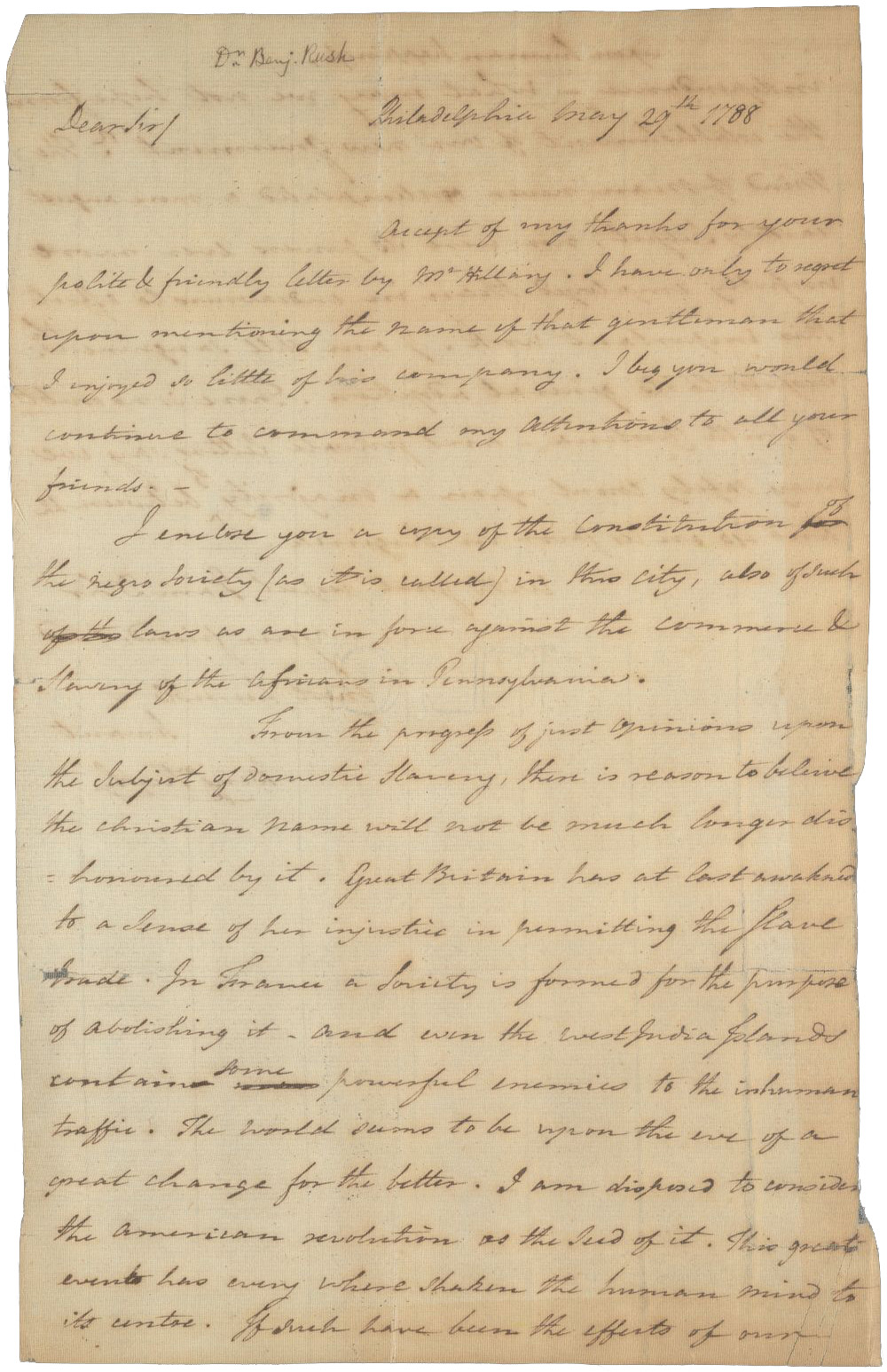
Letter from Benjamin Rush (1746–1813), Class of 1760, to unknown recipient, May 29, 1788
Bequest of Andre De Coppet, Class of 1915
For Benjamin Rush—a physician, signer of the Declaration, and Nassau Hall graduate—the Revolution’s significance lay in part in its ideological challenge to slavery. “The world seems to be upon the eve of a great change for the better,” observed Rush, a member of the Pennsylvania Abolition Society. Antislavery sentiments were growing in America, Britain, and France. “I am disposed to consider the American revolution as the seed of it… If such have been the effects of our independence upon human happiness, what may we not hope from the establishment of our new government?”
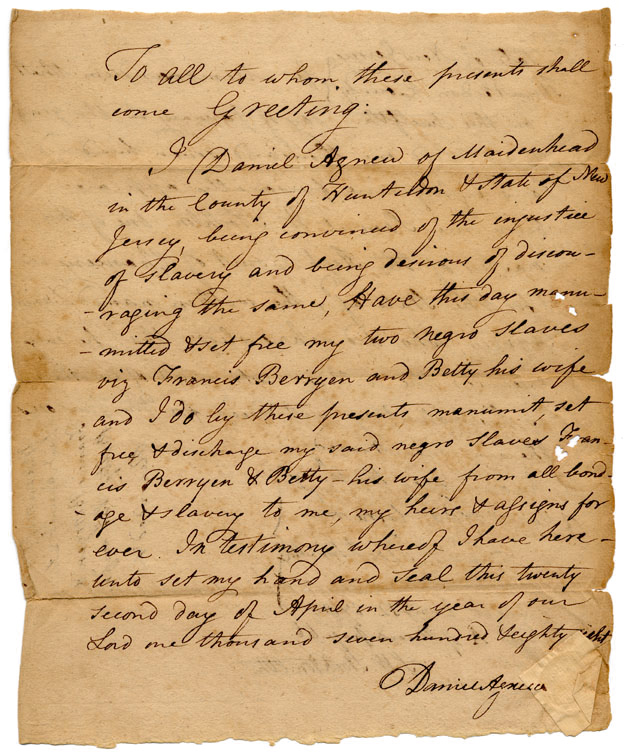
Manumission papers for Francis and Betty Berryen, April 22, 1788
Daniel Agnew
Loan courtesy of the New Jersey State Archives, Department of State
Although slavery continued in New Jersey through the Revolution, Quakers and free and enslaved African Americans agitated for change. Pointing to the profound contradiction of slavery’s persistence in a land proclaiming radical new ideas about liberty and equality, they drove some slaveowners to act. Daniel Agnew was a Lawrenceville farmer and merchant who provisioned students and faculty as the college steward. In this 1788 document, Agnew, “convinced of the injustice of slavery,” freed Francis and Betty Berryen, a married couple he had previously held as slaves.



Poems on Various Subjects, Religious and Moral. By Phillis Wheatley, Negro Servant to Mr. John Wheatley, of Boston, In New England
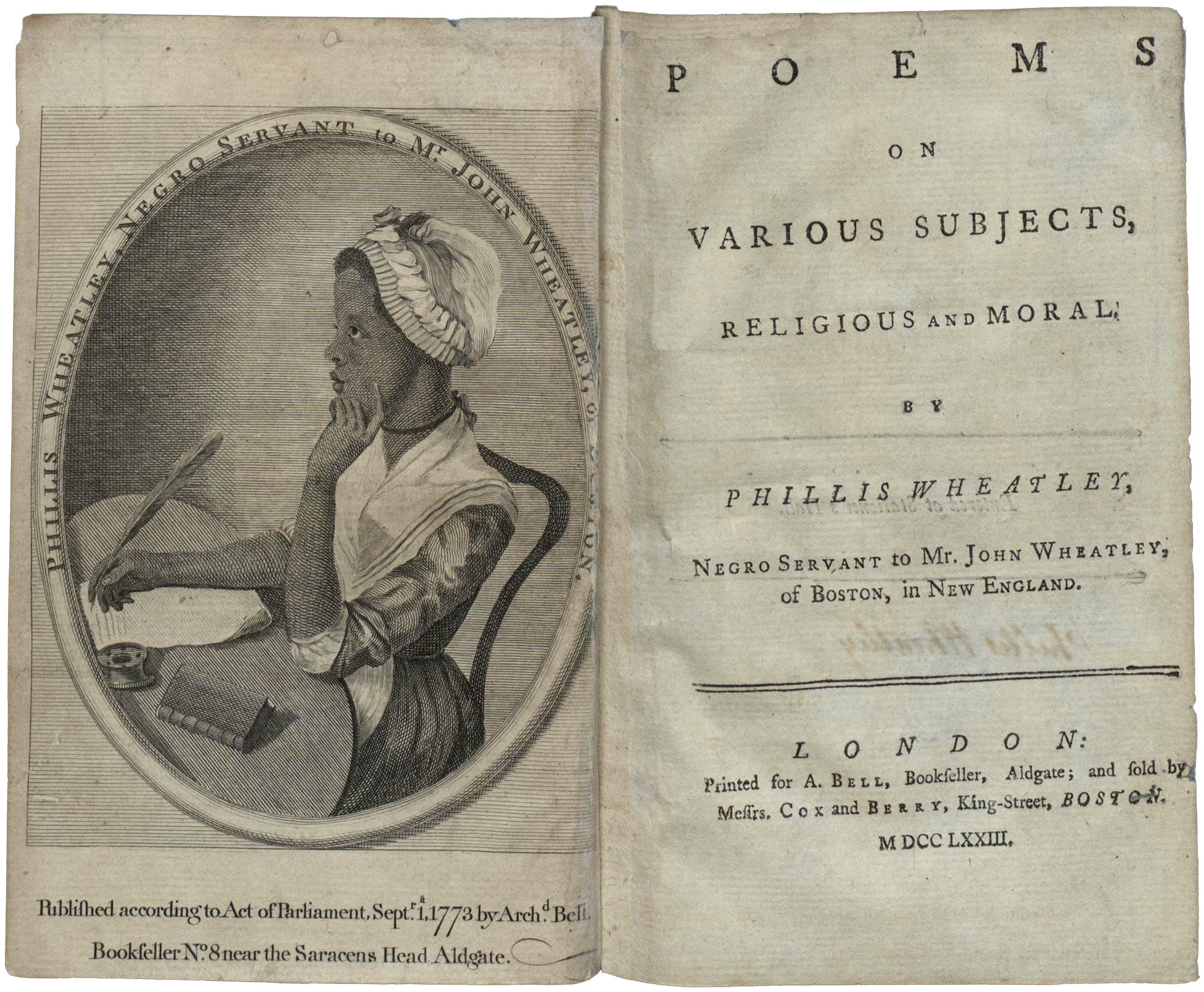
Phillis Wheatley (circa 1753–1784)
London: Printed for A. Bell and Sold by Messrs. Cox and Berry, King-Street, Boston, 1773
Gift of Sid Lapidus, Class of 1959
The enslaved poet Phillis Wheatley was just 19 when she published this collection, the first book by an African American. Wheatley pushed readers to see parallels between the rhetoric of colonial resistance and the injustice of slavery: “Can I then but pray / Others may never feel tyrannic sway?” Her poems challenged racist sentiments and contributed to a transatlantic debate about the meaning of liberty under British rule. Freed shortly after the book’s publication, Wheatley appears on the frontispiece hard at work on a poem. In this copy, her faded signature seeps through the verso of the title page.

Journal, 1773-1774
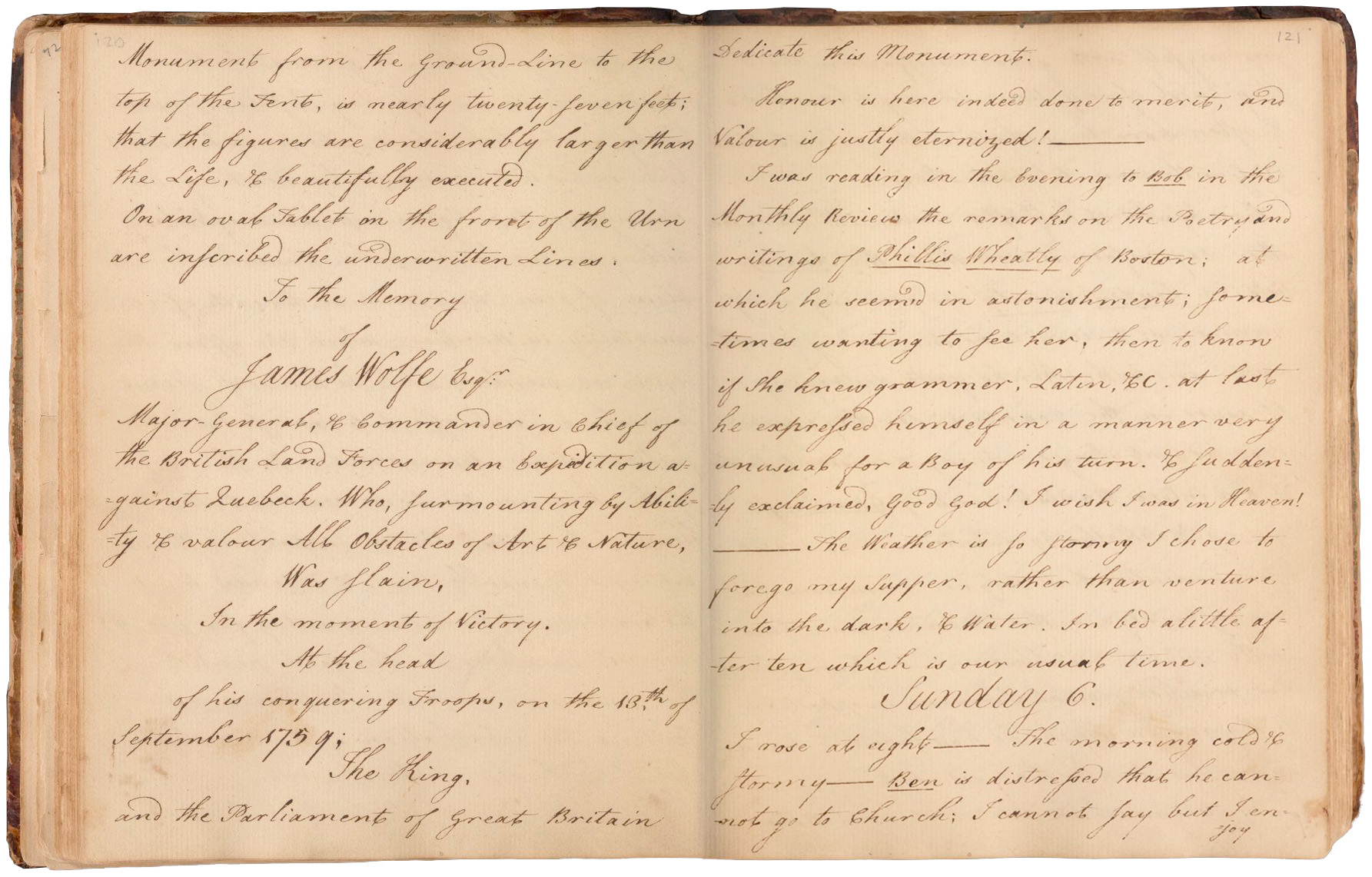
Philip Vickers Fithian (1747–1776), Class of 1772
Gift of Mr. and Mrs. E. W. Hitchcock
After graduating from the college at Princeton, Philip Fithian took a position at Nomini Hall, one of the largest plantations in Virginia, tutoring the children of the wealthy Carter family. When he encountered a review of Wheatley’s book in a London magazine, Fithian shared it with his young charges. Fifteen-year-old Bob Carter, who stood to inherit the family’s nearly 500 slaves, was astonished to learn of Wheatley’s literary achievements, “sometimes wanting to see her, then to know if She knew grammer, Latin, &c.,” and finally exclaiming in disbelief “Good God! I wish I was in Heaven!” The next day, Fithian searched the Carter library for more on Wheatley. Finding one of her poems (“On Being Brought from Africa to America”) in another magazine, he transcribed its eight lines onto a subsequent page of his journal.