“Princetown”

“Princetown” was a tiny place in the 18th century, home to fewer than 300 people, free and enslaved. At its center stood the College of New Jersey, now Princeton University and then known simply as “Nassau Hall.” Drawing students from New England, the South, and the Caribbean, the college made Princeton relatively cosmopolitan for a crossroads hamlet.
Founded initially to train Protestant clergy, the college truly began to thrive after president John Witherspoon arrived in 1768. He expanded the curriculum to include natural science, modern literature, and history, along with a greater emphasis on reason and empiricism influenced by the Scottish Enlightenment. Witherspoon inspired fierce loyalty from his students, who on the eve of revolution were debating big philosophical questions about society, human nature, and how nations should be governed.

“A Map of the Road from Trenton to Amboy Copied (from a Survey Made by John Dalley for James Alexander Esquire) by G: Bancker,” March 8, 1762
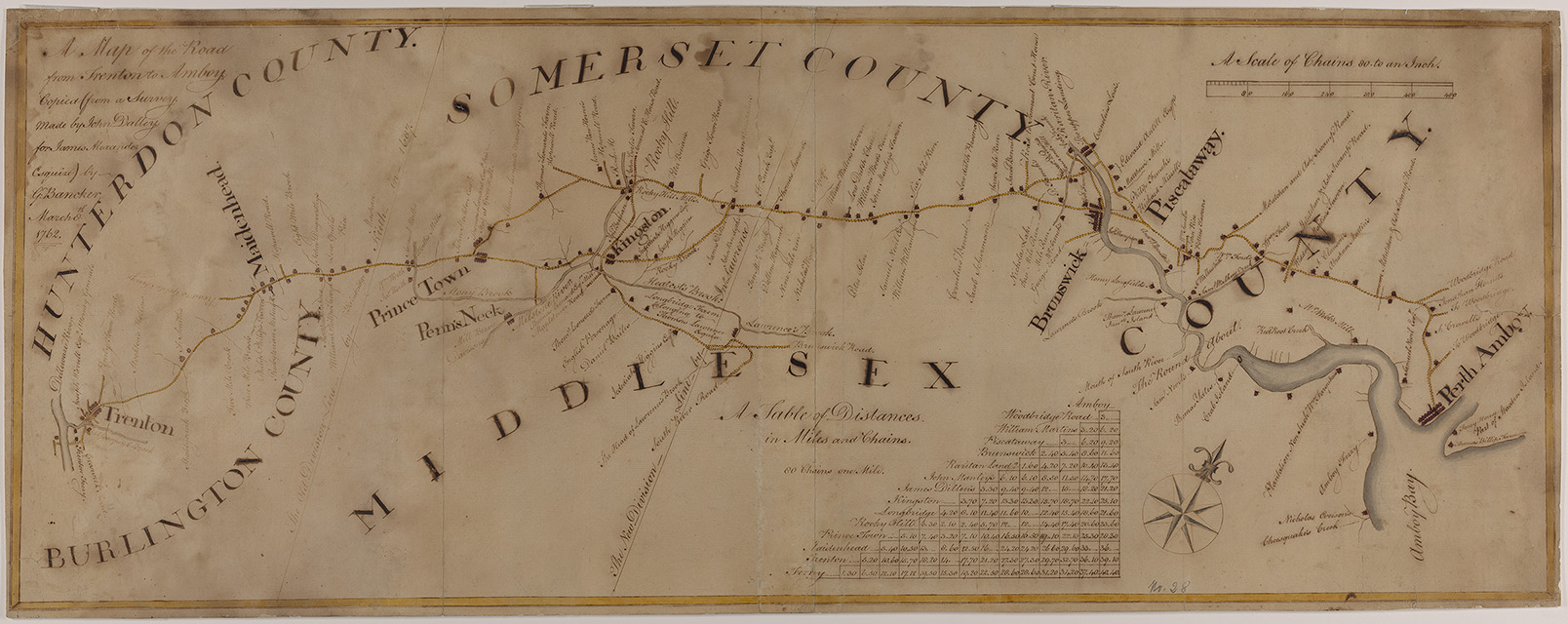
John Dalley
Manuscript map, pen and ink on paper, with some wash
Nestled along a major route between Philadelphia and New York, Princeton was originally a small cluster of farms, taverns, and churches catering to the people and horses shuttling between cities. This map, based on a 1745 survey, shows what travelers might expect as they passed through the area before the college moved in. Though the King’s Highway depicted here is no longer New Jersey’s primary thoroughfare, one can still follow this map today through roads like Princeton’s Nassau Street.

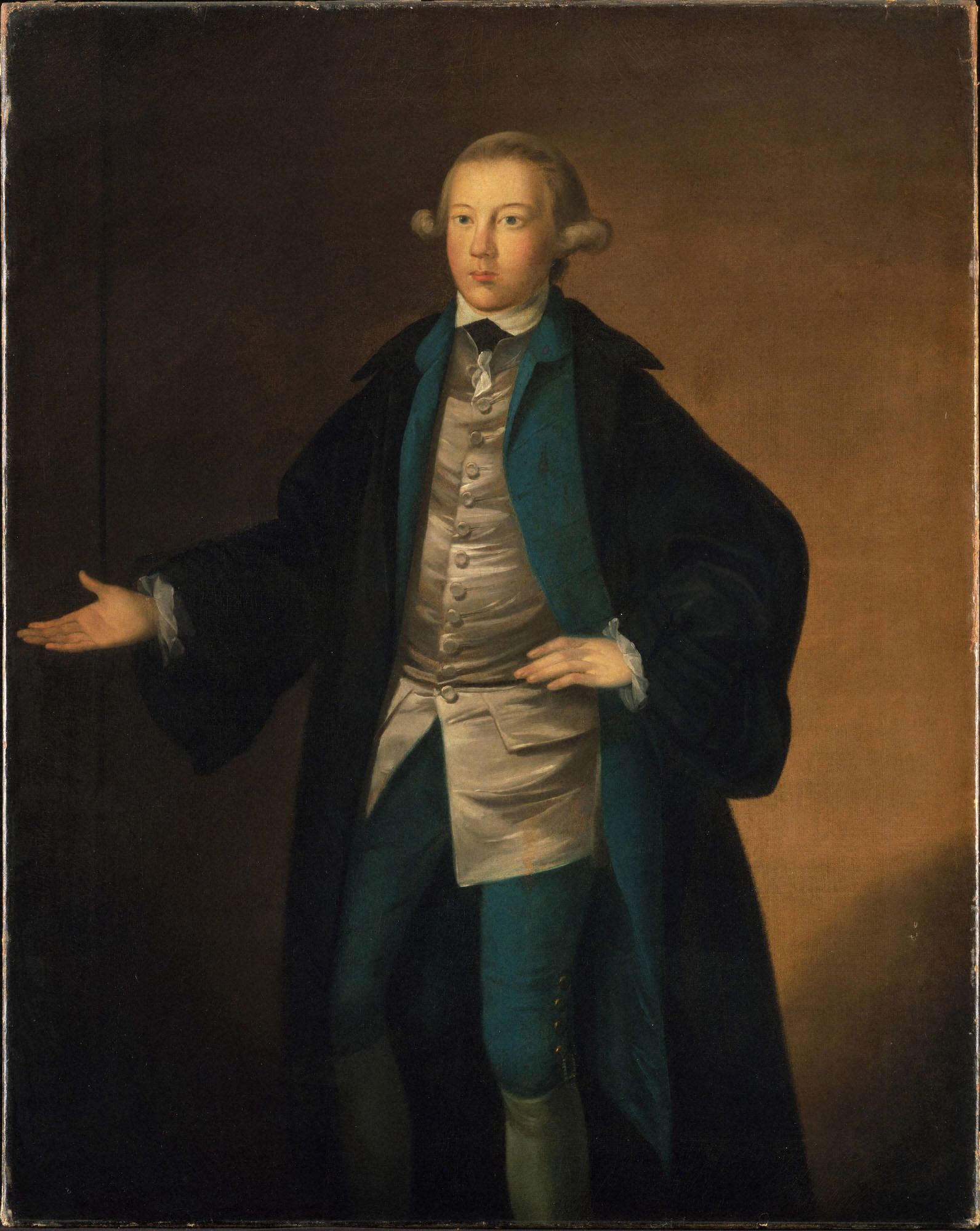
James McCulloch (1756-1836), Class of 1773
Oil on canvas
Princeton University Art Museum. Carl Otto von Kienbusch, Jr. Memorial Collection.
Eighteenth-century college students were evaluated on their ability to compose and deliver lengthy, persuasive speeches. This painting—the only known portrait of an 18th-century North American undergraduate in academic robes—depicts 16-year-old James McCulloch delivering one such oration at the College of New Jersey. Although many of his classmates served in the Revolutionary War, McCulloch instead spent the war years establishing himself as a successful merchant in Baltimore and speculating in the Revolutionary War debt.
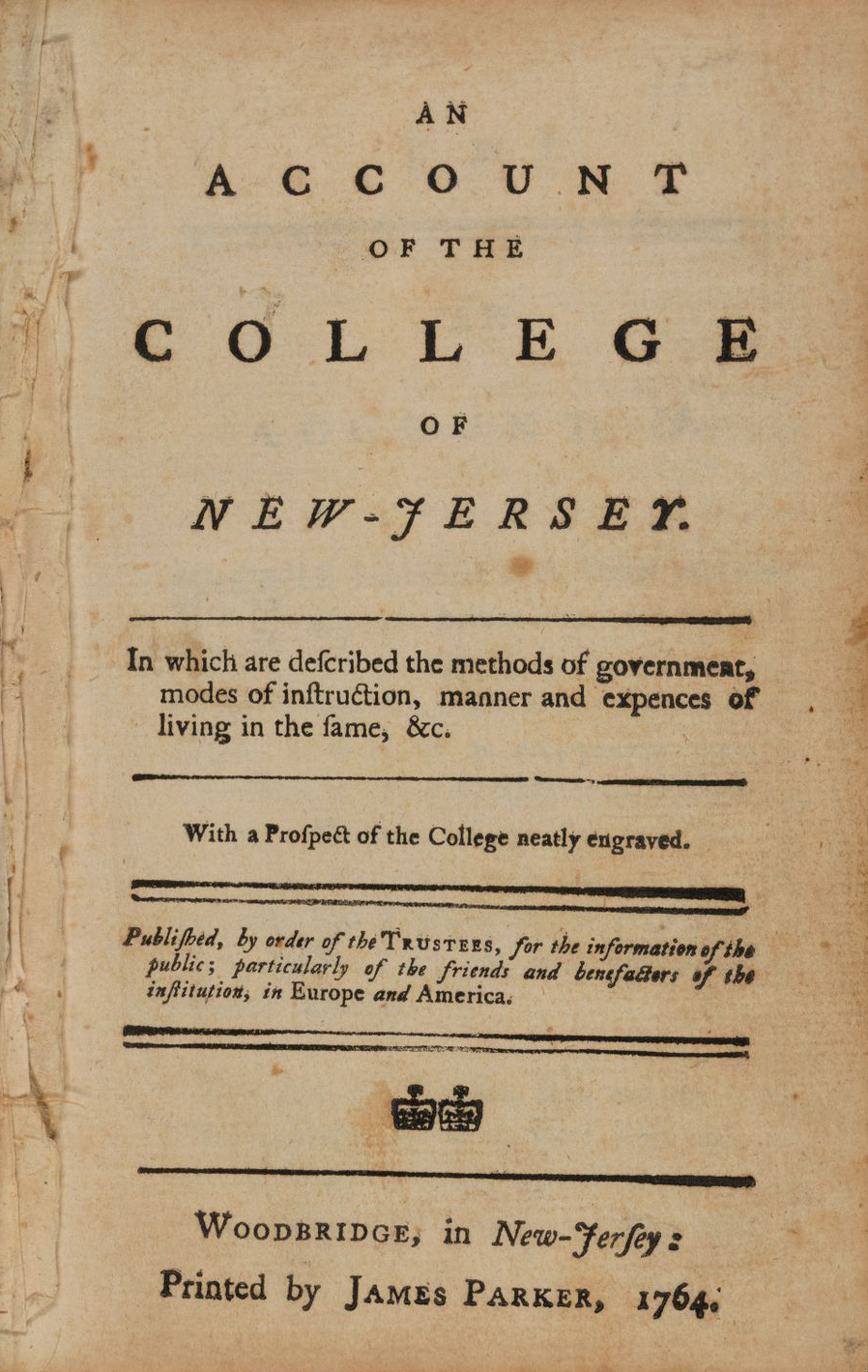
An Account of the College of New-Jersey. In Which are Described the Methods of Government, Modes of Instruction, Manner and Expences of Living in the Same, &c. With a Prospect of the College Neatly Engraved
Samuel Blair (1741-1818), Class of 1760
Woodbridge, N.J.: Printed by James Parker, 1764
The distance and cost of British universities were “insuperable obstacles” for colonists seeking higher education. Thus nine colleges were founded in British America before 1776. Yet as Samuel Blair reminds us in this pamphlet—part fundraising brochure, part history of the college where he had both studied and worked as a tutor—some obstacles remained: “To teach a classic author, or system of philosophy is a much easier task, than to govern a society of youth.”

A North-West Prospect of Nassau-Hall with a Front View of the Presidents House, in New-Jersey, 1764
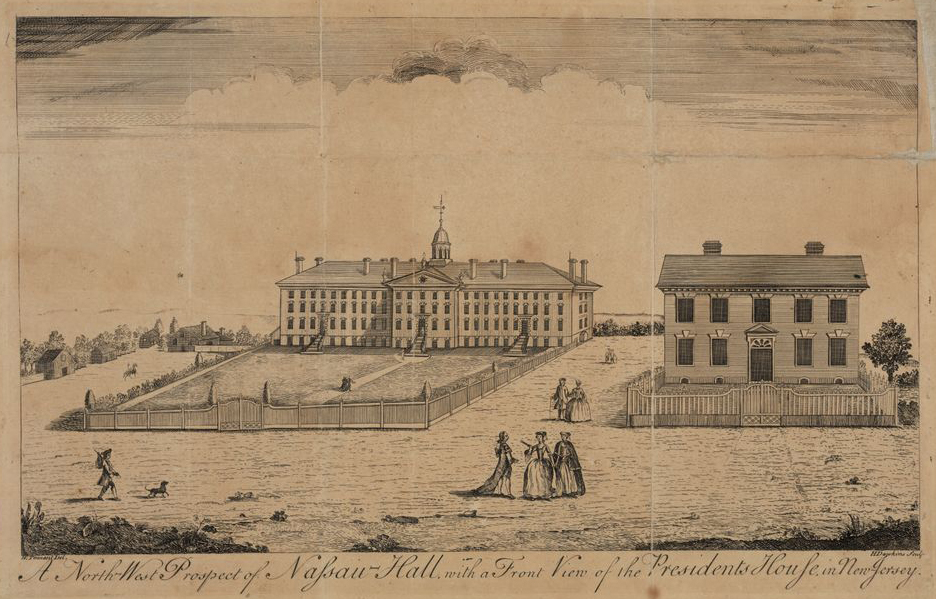
Henry Dawkins, after a drawing by William Tennent
Engraved frontispiece for Samuel Blair’s An Account of the College of New Jersey
At its completion in 1756, Nassau Hall was the largest stone building in British North America. Its massive walls housed almost every function of college life: the library, classrooms, kitchen, dining hall, dormitories, and a grammar school for younger boys. Twice daily the cupola bell summoned students—half of them future clergy—to worship in the prayer hall, and in the college’s early years students devoted most of their studies to theology and Greek and Latin classics.

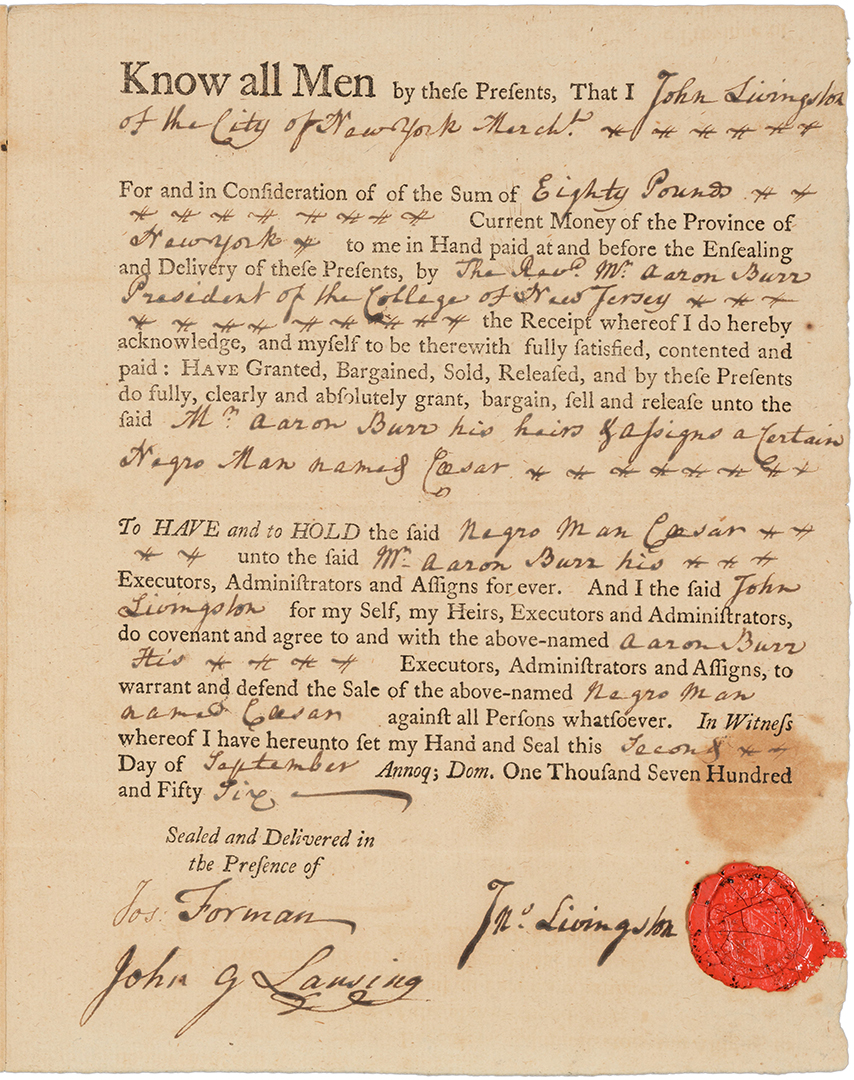
Bill of sale for Caesar from John Livingston (1709-1791) to Aaron Burr Sr., 1756
Gift of J. Dennis Delafield, Class of 1957, and Penelope D. Johnston
About seven percent of New Jersey’s colonial population was enslaved. At the College of New Jersey, slavery persisted even as the campus became a seedbed of revolutionary liberty. All of the college’s first nine presidents owned slaves. In 1756, college president Aaron Burr Sr. purchased Caesar for £80. Caesar lived in a kitchen building behind the president’s house on Nassau Street. Records show that his work included cooking for the president and his guests, likely among other household tasks.
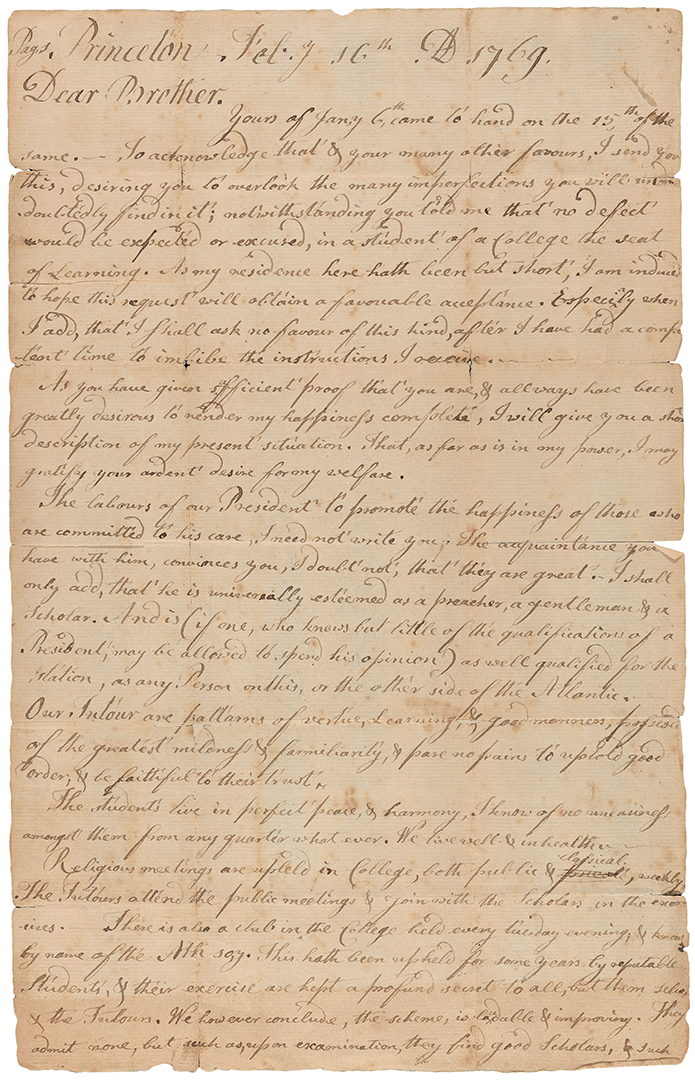
Letter from Moses Allen (1748-1779), class of 1772, to Thomas Allen, February 16, 1769
“I would not be persuaded to leave the college for the wealth of both the Indies,” wrote Moses Allen in this letter home to Massachusetts. Classmate of Aaron Burr Jr. and James Madison, Allen enjoyed the routines of college life and admired John Witherspoon, the “universally esteemed” college president. He went on to become a minister in Georgia. A vocal patriot, Allen was captured when the British took Savannah in 1778 and drowned while trying to escape a prison ship.