Allies

As the war dragged on, both sides sought to gain the upper hand through strategic alliances, prompting European and Native American powers alike to consider what American independence might mean for them. Most Native Americans sought to remain neutral or sided with the British. The Lenapes (Delawares)—who had been driven by colonial settlement from their homelands in present-day New Jersey and Pennsylvania to the Ohio country—were one of the few Native nations to broker an alliance with the patriots. Meanwhile, when the United States secured the aid of France, Britain’s old rival, the alliance transformed a colonial rebellion into a vast imperial conflict with theaters around the globe.

L’Amérique indépendente. Paris, 1778
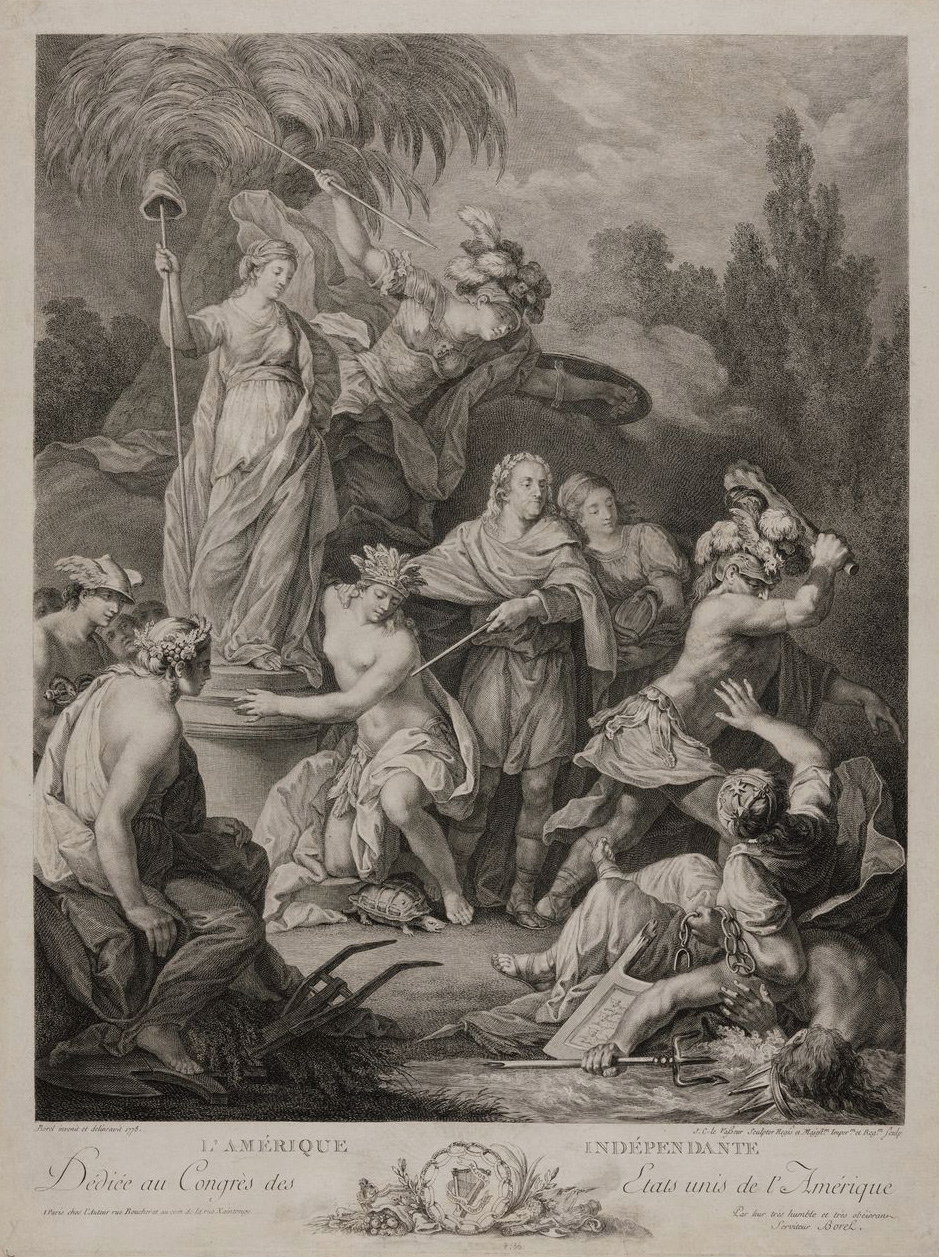
Jean Charles Le Vasseur (1734-1816)
Engraving
This Parisian engraving celebrated the momentous alliance between France and Britain’s rebellious colonies. Benjamin Franklin, the alliance’s main broker and a celebrity in France, stands in Roman costume, freeing America, represented as a Native American woman kneeling at the foot of Liberty. An allegorical cast surrounds them, including Courage (at right), who attacks a crowned figure (holding the chains of slavery) that represents Britain. Franklin declined the artist’s request to dedicate the print to him, as he thought it overemphasized his role in giving freedom to America.

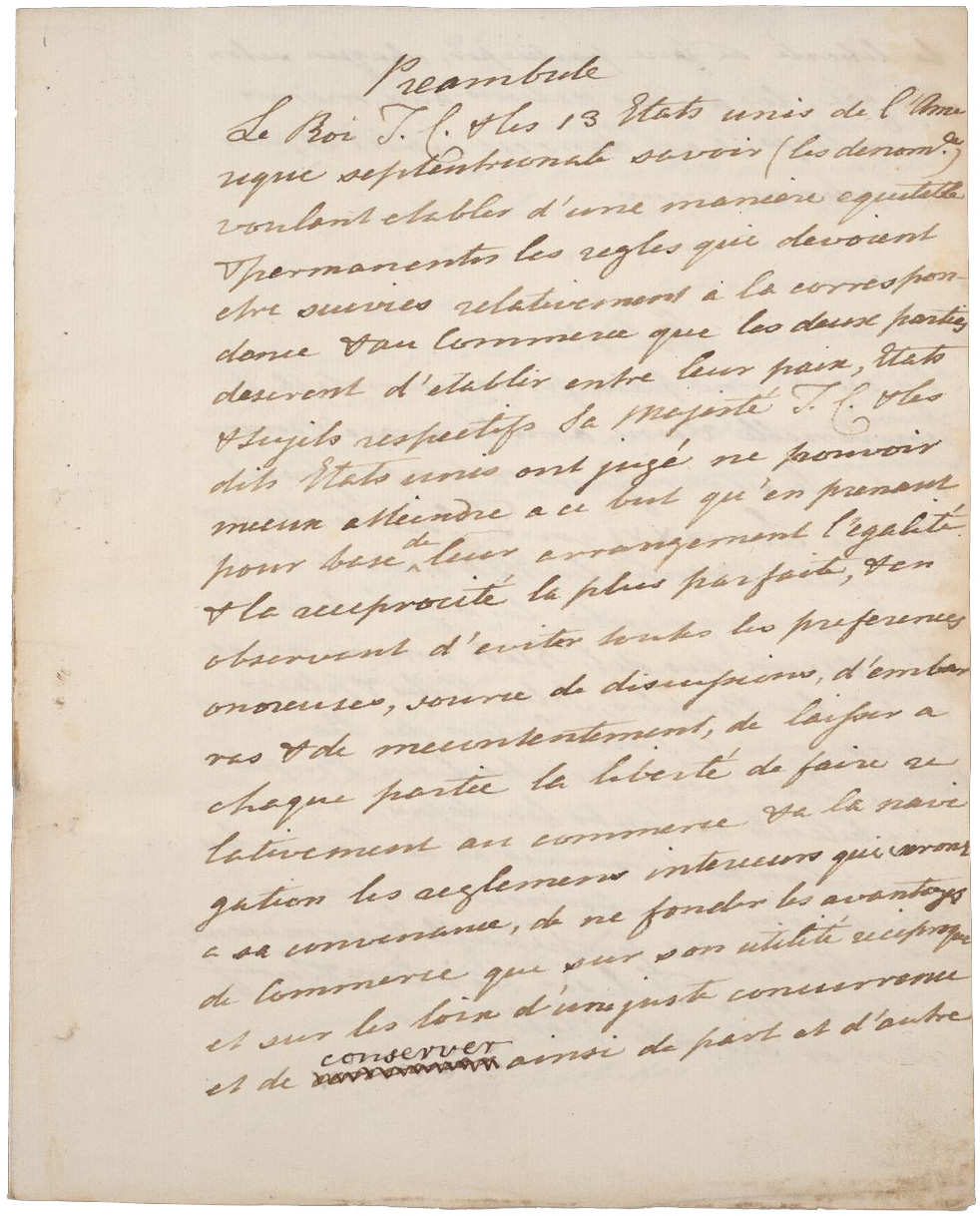
Manuscript draft of the Franco-American Treaty of Amity and Commerce, 1778
Bequest of Andre De Coppet, Class of 1915
France formally recognized U.S. independence through the Treaty of Amity and Commerce. A sister agreement to the military alliance, the treaty assured that the United States, like any nation, would enjoy certain commercial and navigation rights within the treacherous world of maritime trade. This draft, peppered with revisions, captures the complex deliberations between the treaty’s negotiators. Contention over words like “sovereignty” reveals the fragile diplomatic dance behind this bold assertion of independence.
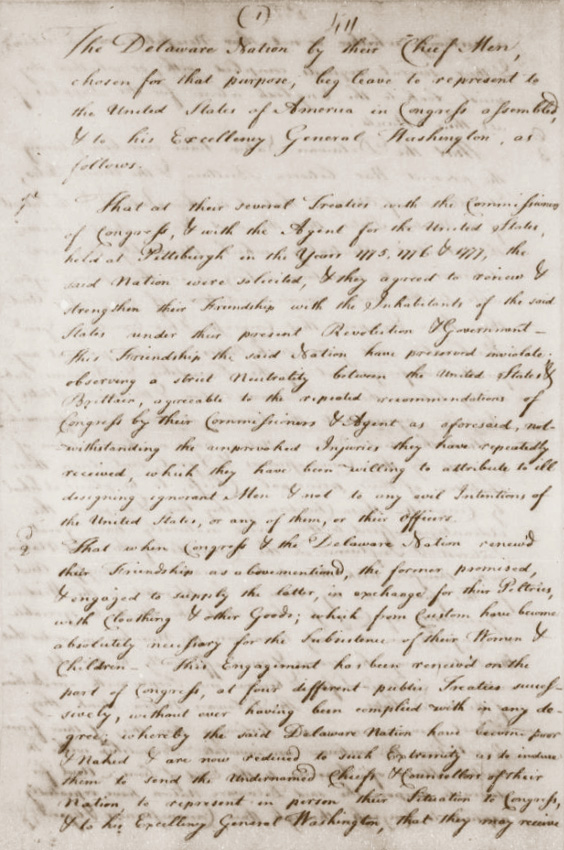
Letter from the Delaware Nation to George Washington and the Continental Congress, May 10, 1779
Courtesy, National Archives & Records Administration, Washington, D.C.
The 1778 Fort Pitt Treaty, the first between the United States and a Native nation, created a military alliance with the Lenapes. Guaranteeing them the lands they occupied in the Ohio country, it also proposed that the Lenapes might join the union as the 14th state. But the Americans failed to uphold their end of the agreement, and patriot militiamen murdered White Eyes, a prominent chief. In 1779, a delegation visited Congress to renegotiate. In this address, written at the Princeton home of former frontier diplomat George Morgan, the Lenapes renounced the treaty. They reaffirmed their friendship for the United States but insisted on military neutrality and their sovereignty as a “free & independant People.”
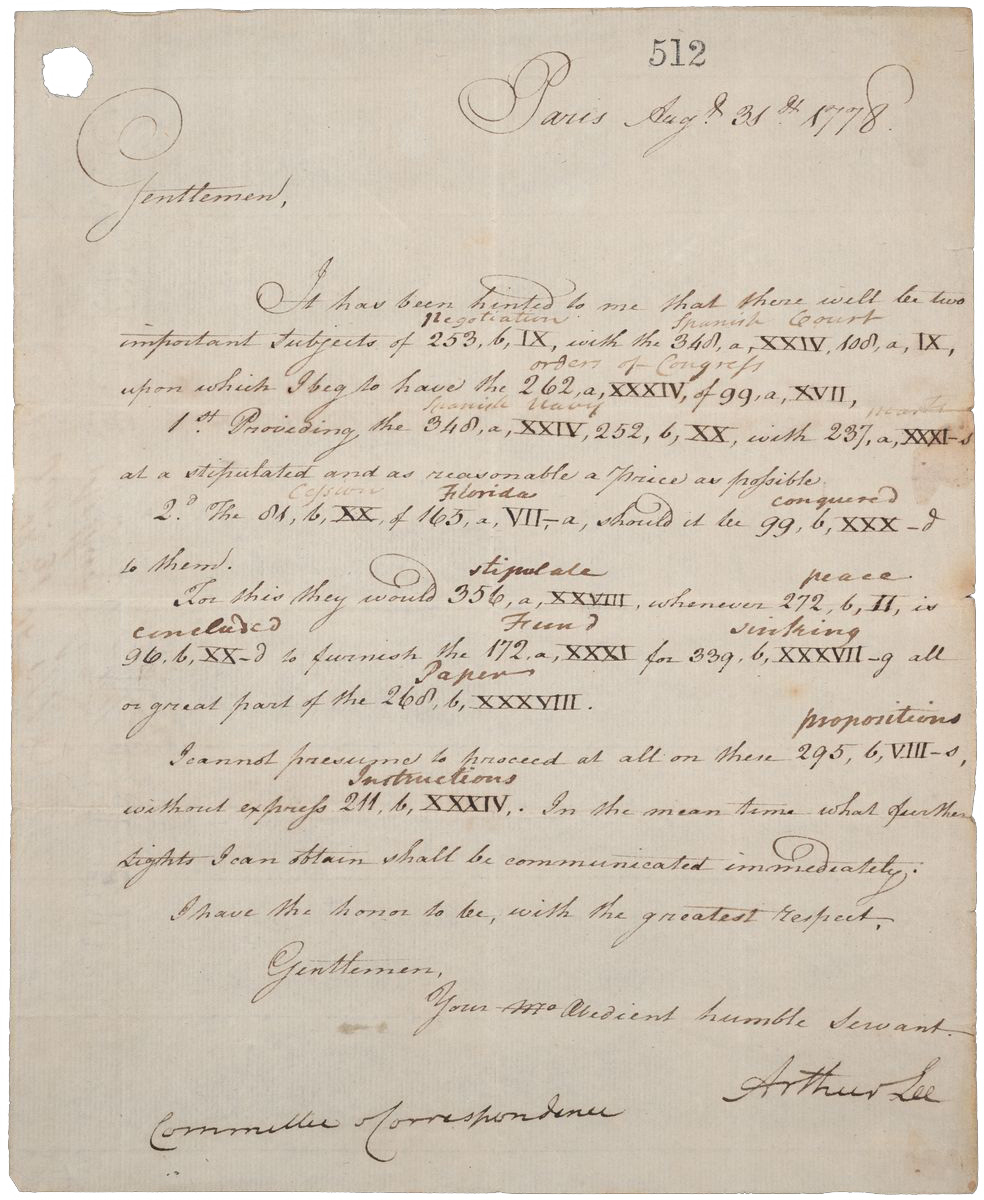
 Letter from Arthur Lee (1740-1792) to the Continental Congress’s Committee of Correspondence, August 31, 1778
Bequest of Andre De Coppet, Class of 1915
After France formalized its support for the patriots, Arthur Lee, an envoy for the Continental Congress, pursued a Spanish alliance as well. In exchange for financial support, Spain demanded affordable ship masts and the colony of Florida. To shield his mission from prying eyes, Lee encoded his letter using a sophisticated cipher. Numbers, letters, and Roman numerals directed readers to words in Entick’s Dictionary, which this letter’s recipient subsequently interlined. Although Lee’s direct negotiations fell short, Spain declared war on Britain the following year