Loyalists

Despite its reputation as a “nursery of rebellion,” Princeton also produced its fair share of loyalists. Comprising perhaps one-quarter of the colonial population, loyalists opposed the Revolution for a variety of reasons: principled and self-interested, religious and economic and political. Many had supported the colonial resistance movement but considered armed rebellion a step too far. All suffered intimidation, property confiscation, and persecution for their views, and at war’s end at least 60,000 fled the new nation as refugees—several Princeton loyalists among them. For the loyalists, American rebels, not George III or Parliament, were the true threat to liberty.

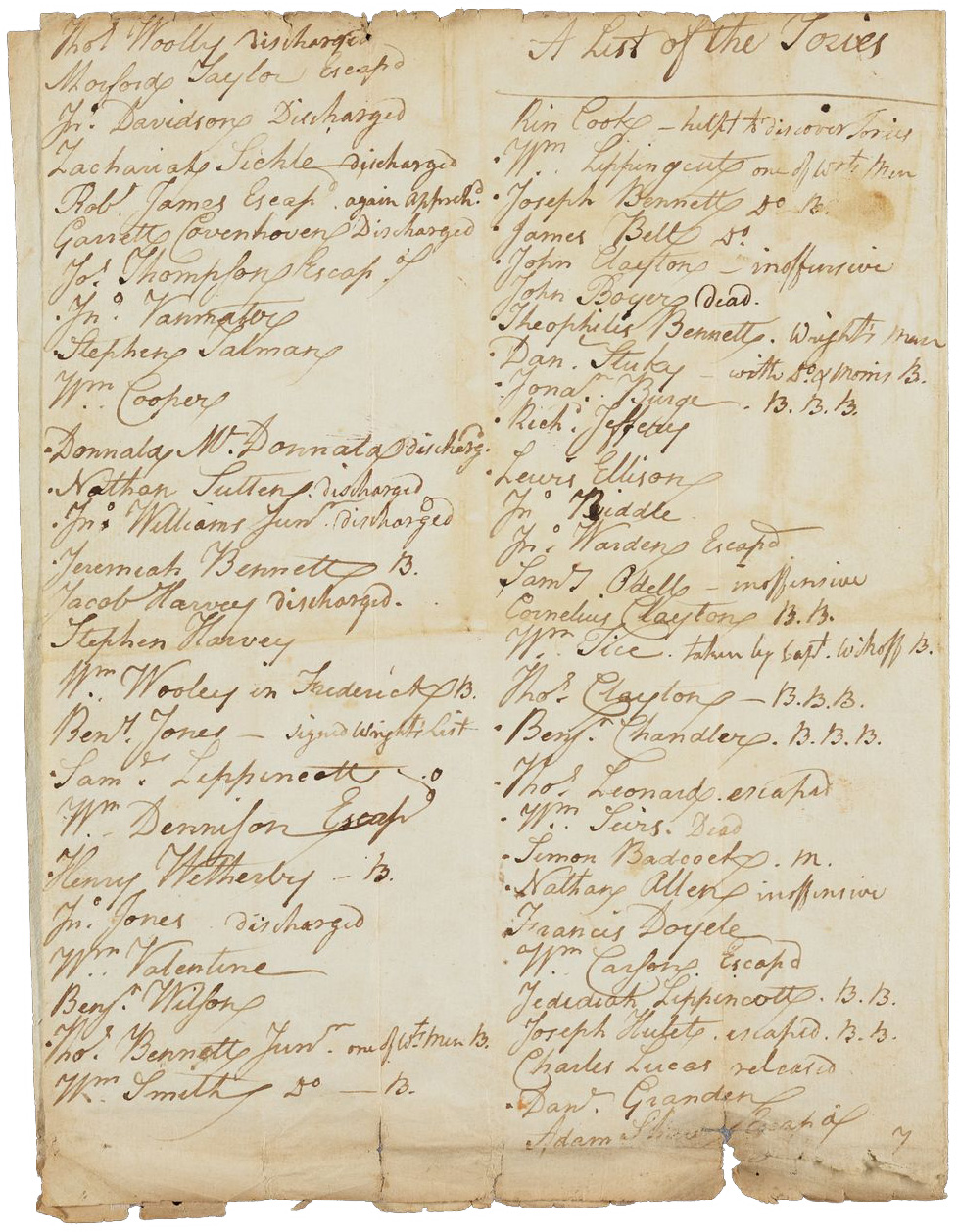
 “A List of the Tories,” circa 1776
Gift of Julia Barricklo Fouche
This list of suspected loyalists in Monmouth County, home to some of New Jersey’s most vicious partisan fighting, is an artifact of political vengeance and retribution amid the chaos of war. Local revolutionary committees compiled such records through interrogations, informant testimony, and direct observation. Singling out “Tories” for persecution, property confiscation, and banishment, surveillance documents such as these aimed to snuff out political dissent that patriots considered dangerous to the cause
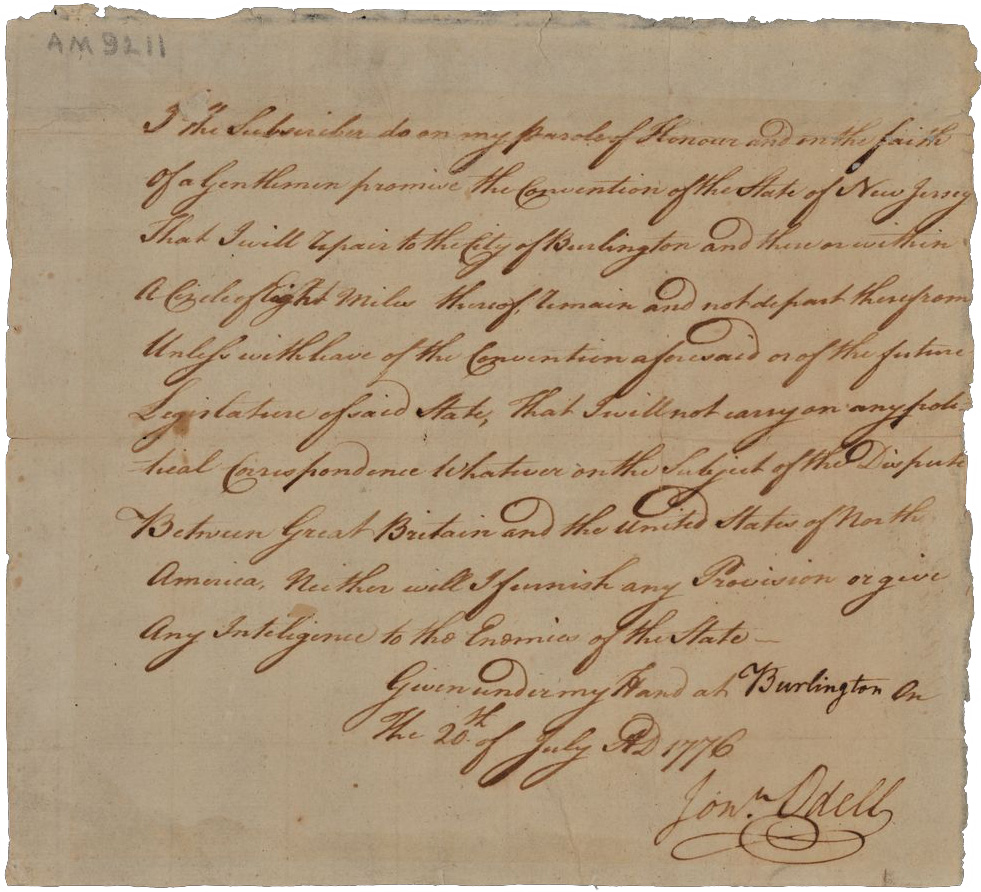
Parole oath, July 1776
Jonathan Odell (1737–1818), Class of 1754
Gift of Charles A. Cass
Jonathan Odell thought some rebellions were justifiable but that the colonists’ fight wasn’t one of them. A College of New Jersey graduate, Odell kept his loyalist sentiments quiet until June 1776, when British prisoners at Burlington, New Jersey, where he was an Anglican priest, were overheard singing an ode he had written for George III’s birthday. Hauled before the rebel legislature, he was named an enemy to American liberty and signed this oath that he would not aid the British or travel beyond town limits. In December, he fled to British lines.

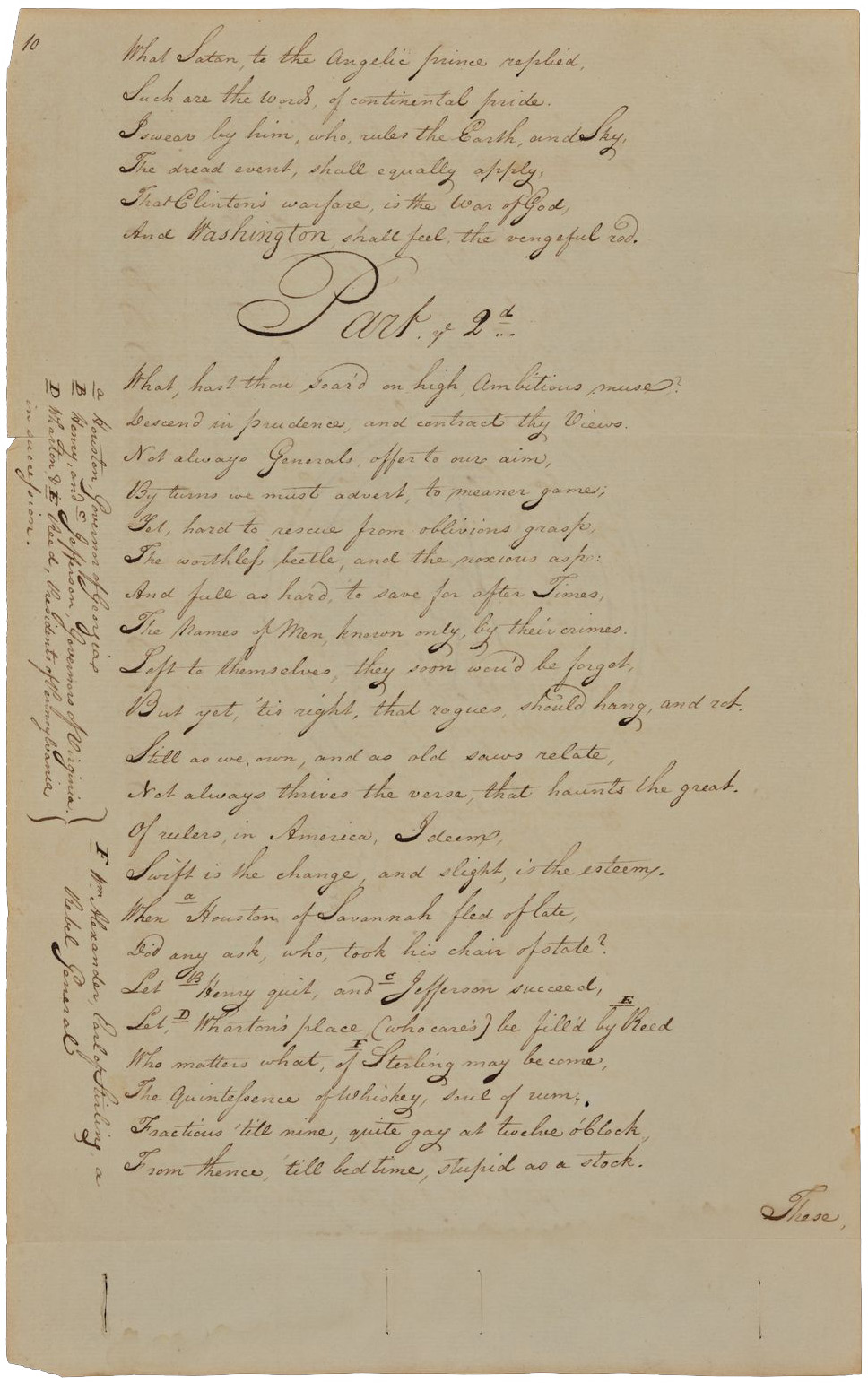
“The American Times: A Satire,” circa 1779
Jonathan Odell (1737–1818), Class of 1754
From the safety of British-occupied New York City, Odell channeled his anger into satirical poetry for the loyalist propaganda machine. In “The American Times,” an 81-stanza screed, he leveled withering mockery against patriot ringleaders. On this page alone, he prayed that Washington would be beaten like a disobedient child, belittled Jefferson and Patrick Henry as nobodies, and ridiculed one Continental general as a drunkard. At war’s end, Odell joined the refugee exodus to the new loyalist colony of New Brunswick (today a province of Canada).
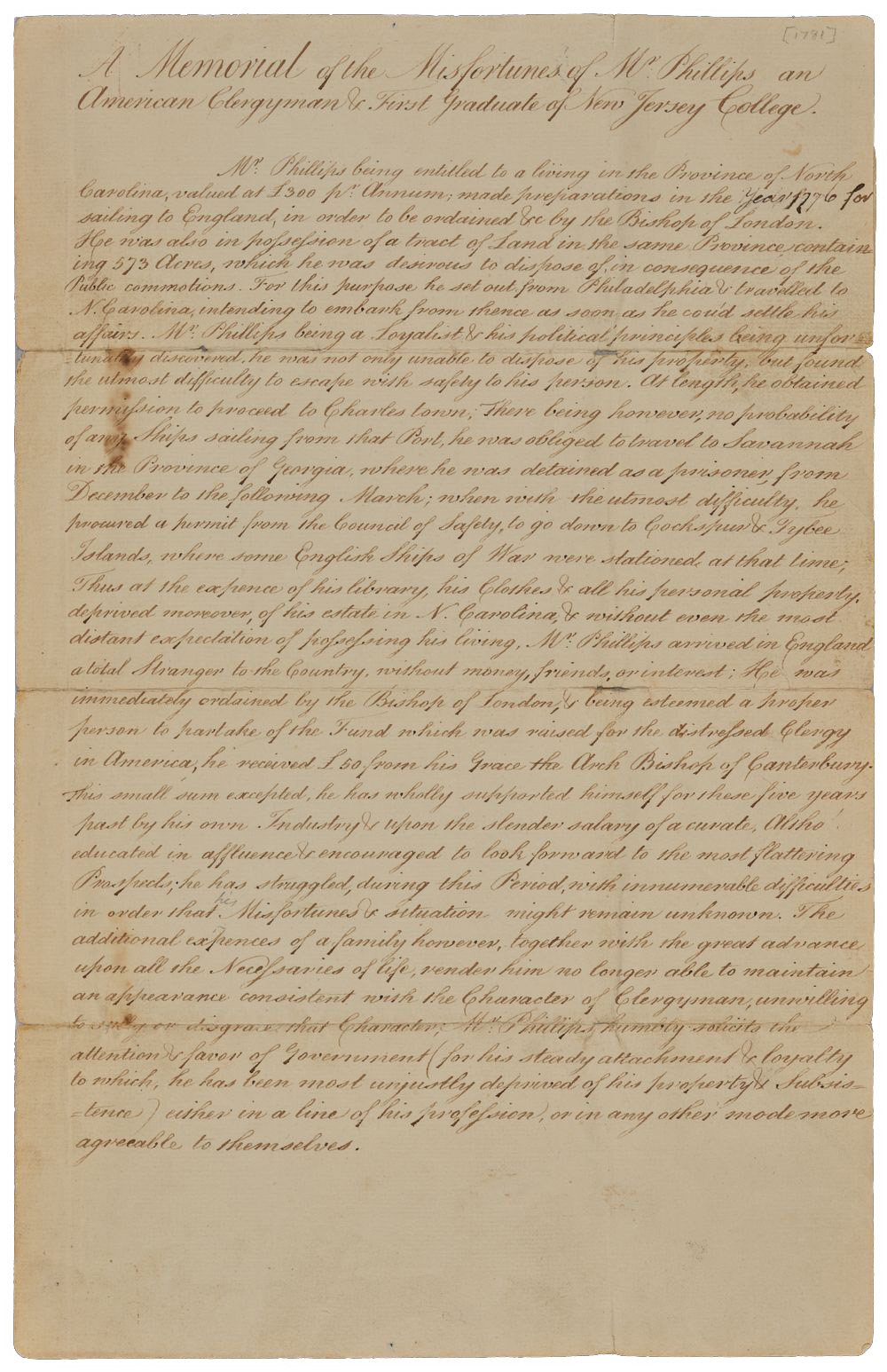
“A Memorial of the Misfortunes of Mr. Phillips an American Clergyman & First Graduate of New Jersey College,” circa 1781
John Lott Phillips (1744–1802), Class of 1774
Gift of Rev. John Meakins Harte
After graduating from the college at Princeton, John Lott Phillips looked forward to a promising ecclesiastical career. War shattered those aspirations. Escalating “public commotions” convinced Phillips to leave America, but before he could escape, his loyalist sympathies were “unfortunately discovered,” resulting in the confiscation of his property and four months spent in prison. Eventually reaching England penniless and alone, he relied on government relief through petitions such as this.

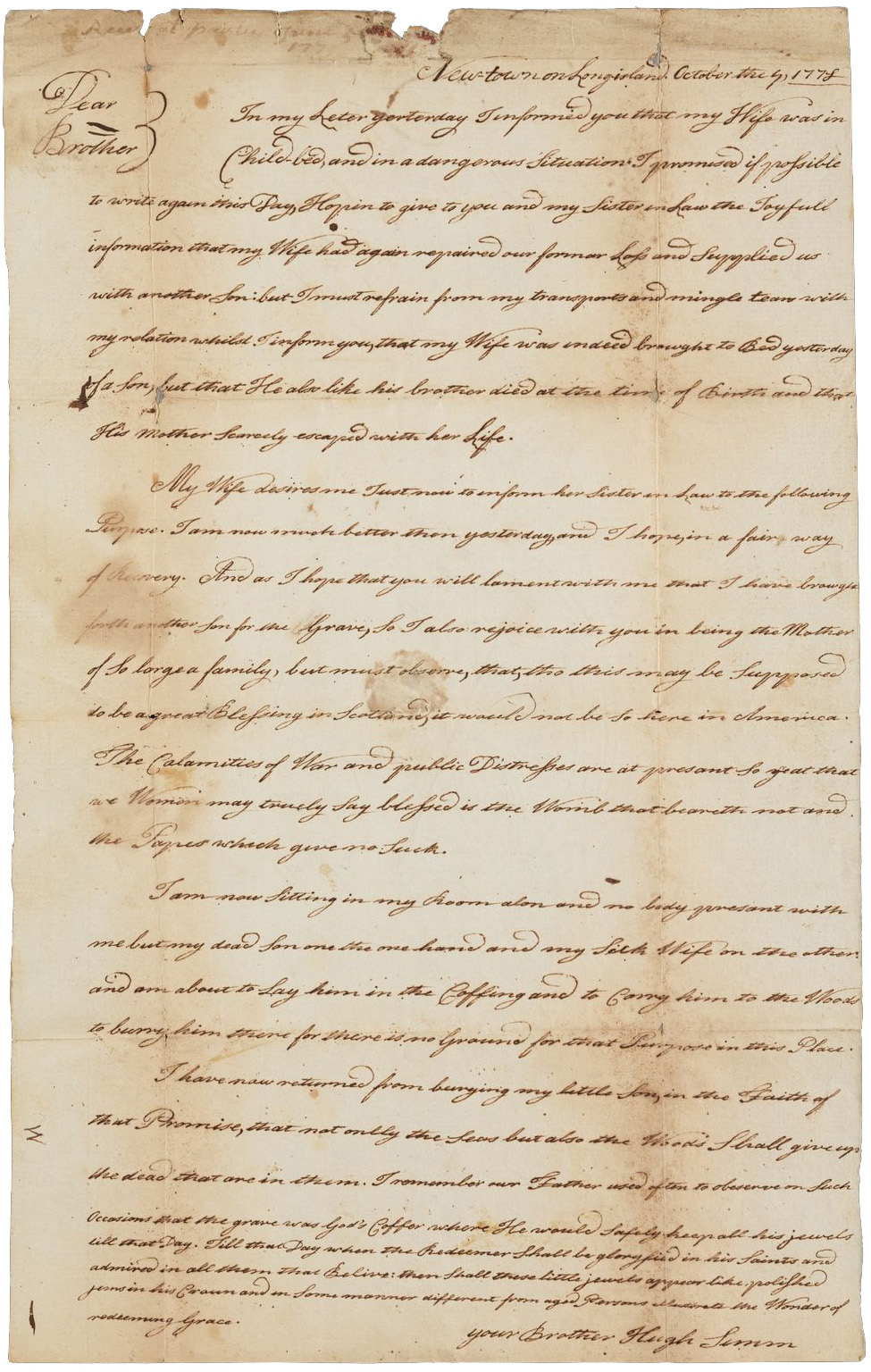
Letter from Hugh Simm to Andrew Simm, October 9, 1778
Gift of John M. Brodie
Hugh Simm, Princeton’s first librarian, adhered to the Crown even as his patron, John Witherspoon, became a leading patriot. Simm and his wife Mary endured harassment, poverty, and hunger, fleeing to British-occupied Long Island and suffering two stillbirths amid the tumult of war. This letter conveys Mary’s sense of the Revolution as an experience of profound grief: “The Calamities of War and public Distresses are at presant So great that we Women may truly Say: blessed is the Womb that beareth not.”

Letter from George Washington (1732–1799) to Henry Lee, October 20, 1780
Bequest of Andre De Coppet, Class of 1915
Revolution forced people to choose sides, but survival often necessitated shifting allegiances. Amid spies and defectors, loyalty was uncertain—and, sometimes, for sale. For once-celebrated Continental hero Benedict Arnold, the price was £20,000. In exchange, he secretly agreed to surrender West Point. Upon discovering the betrayal, George Washington dispatched this haunting instruction that Arnold be “brought to me alive” to make a “public example” of the notorious traitor.