The Costs of War

The protracted struggle for American independence was hugely expensive for both sides. Its massive costs were especially troublesome for the patriots, whose Continental Congress lacked the authority to tax. Congress and the states racked up huge debts, which, combined with rampant inflation and wartime destruction, plunged the new republic into economic crisis. The war’s staggering costs required all segments of society to mobilize and contribute. On account of such personal and financial sacrifices, broad swaths of American society, including women and African Americans, claimed a stake in revolutionary ideals of liberty and equality.

Pennsylvania currency, 1777
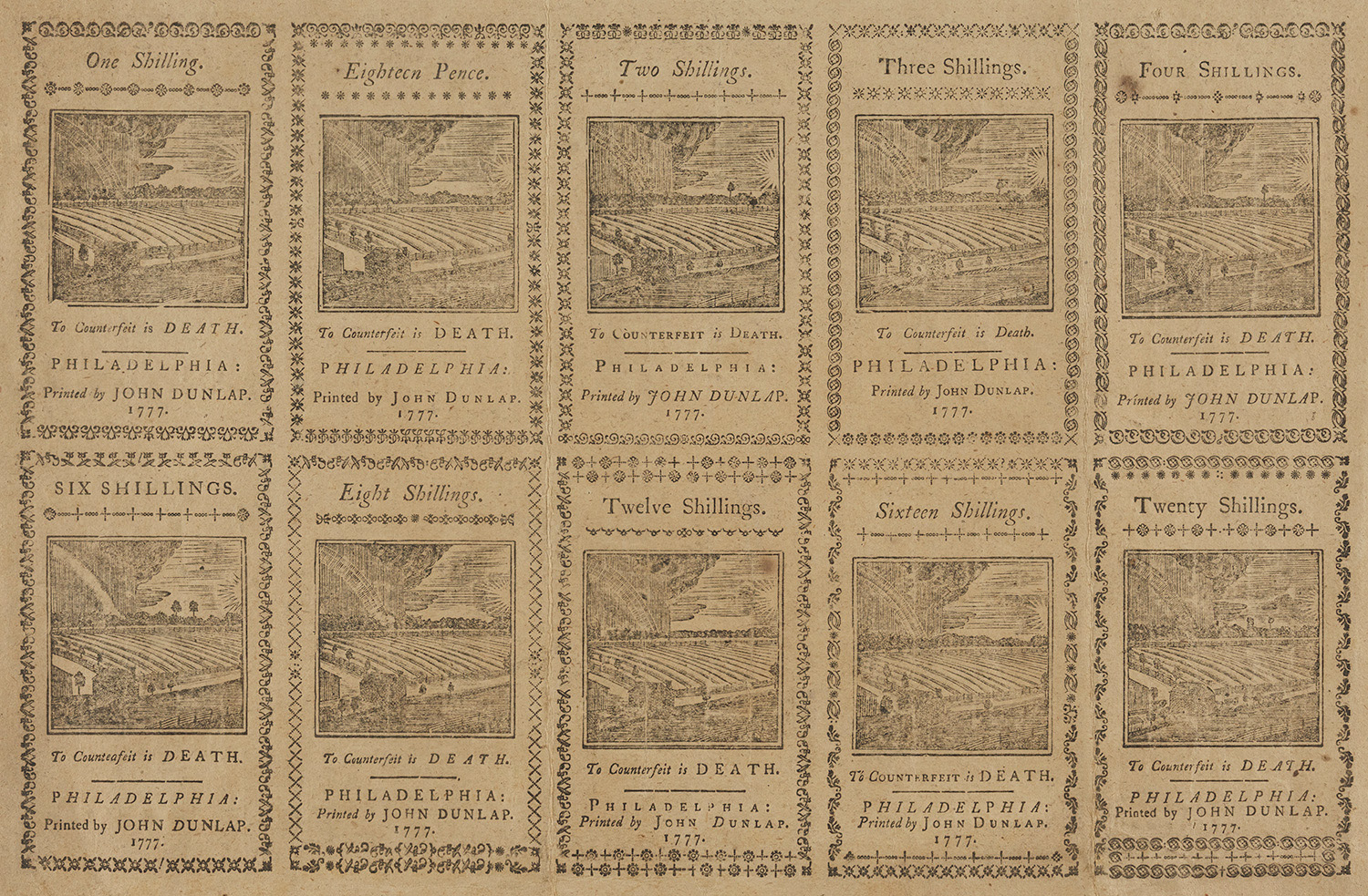
Philadelphia: Printed by John Dunlap
Gift of Edna French Reed
To finance the Revolution, Congress and the states turned to the printing press, issuing reams of paper money such as this uncut sheet of Pennsylvania shillings. Printed in 1777 by John Dunlap, printer to the Continental Congress, the bills featured an elaborate pastoral design to discourage counterfeits. Doled out for soldiers’ salaries and supplies, paper money paid for two-thirds of the patriots’ war effort—but also led to runaway inflation. By 1781, Continental dollars were circulating at 1/150th of their initial value.

“In the Roll of Foreign Accounts of the XXXIIIIth year of King George the Third . . . [for] Daniel Chamier . . . Between the 25th of May 1774 and the 24th of May 1777,” circa 1794
![Image of top segment of “In the Roll of Foreign Accounts of the XXXIIIIth year of King George the Third . . . [for] Daniel Chamier . . . Between the 25th of May 1774 and the 24th of May 1777,” circa 1794](/uploads/spotlight/attachment/file/7146/Item_73.jpg)
Parchment roll
This 43-foot parchment roll details expenditures made by Daniel Chamier, a wealthy loyalist who served as Commissary General of the British Army in North America. Chamier’s expenses included provisions such as beef, flour, potatoes, and rum, as well as payments to loyalist printers. Compiled by Chamier’s heirs, the roll was an attempt to recoup some of the £300,000 he paid personally during the course of his duties. As a sign of their enduring loyalty, British tax stamps are attached to each of the 14 conjoined parchment sheets.
 Revolutionary War weapons receipts, Natick (Mass.), May 15, 1775
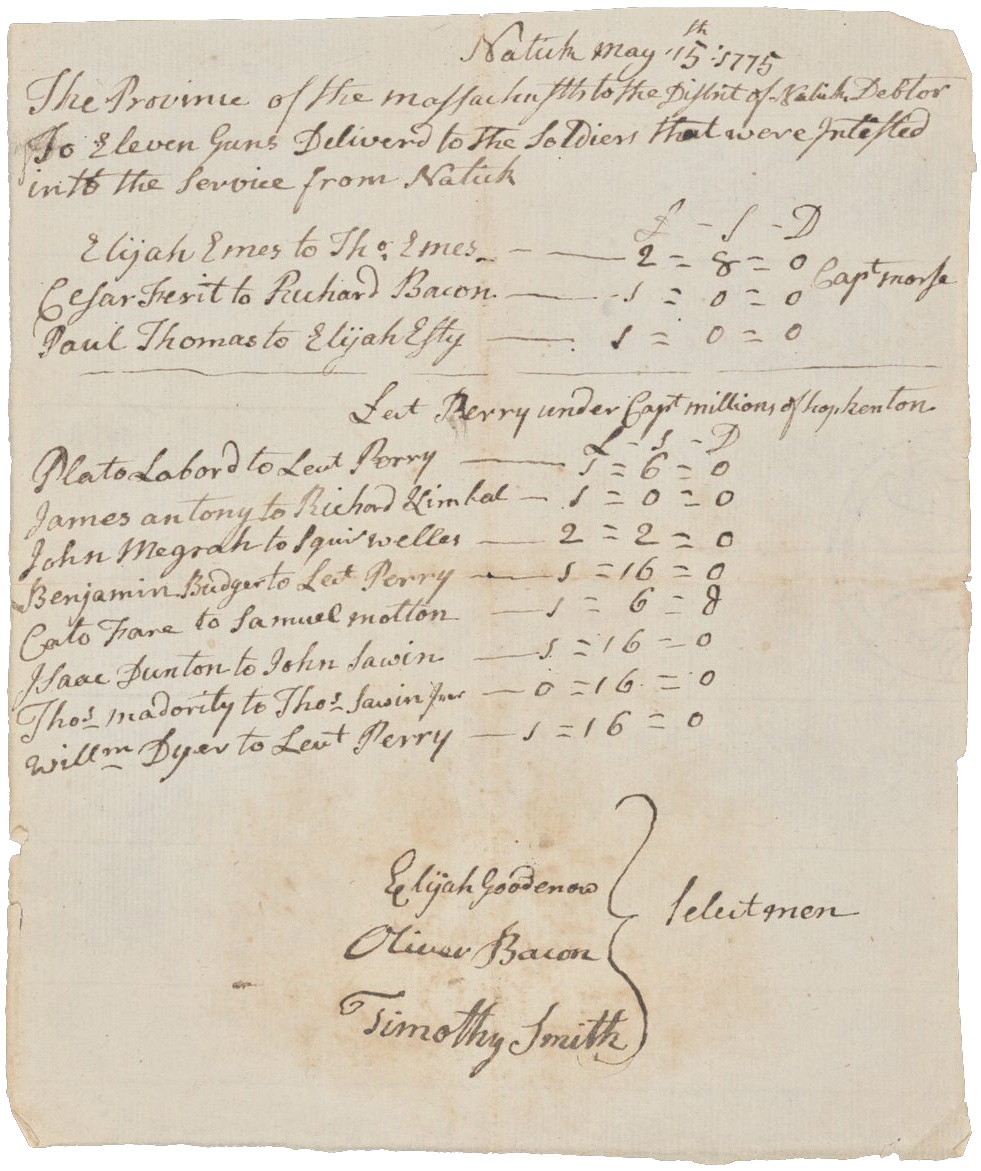
While tens of thousands of African Americans sided with the British under the promise of freedom from slavery, an estimated 5,000 soldiers of color served with the patriots—contesting racial divisions and laying claim to the revolutionary cause. Dated less than a month after Lexington and Concord, these scrappy receipts record guns received by 11 militiamen from Natick, Massachusetts. At least five had African American or Native American ancestry: James Antony, Cato Fare, Cesar Ferit, Plato Labord, and Thomas Madority
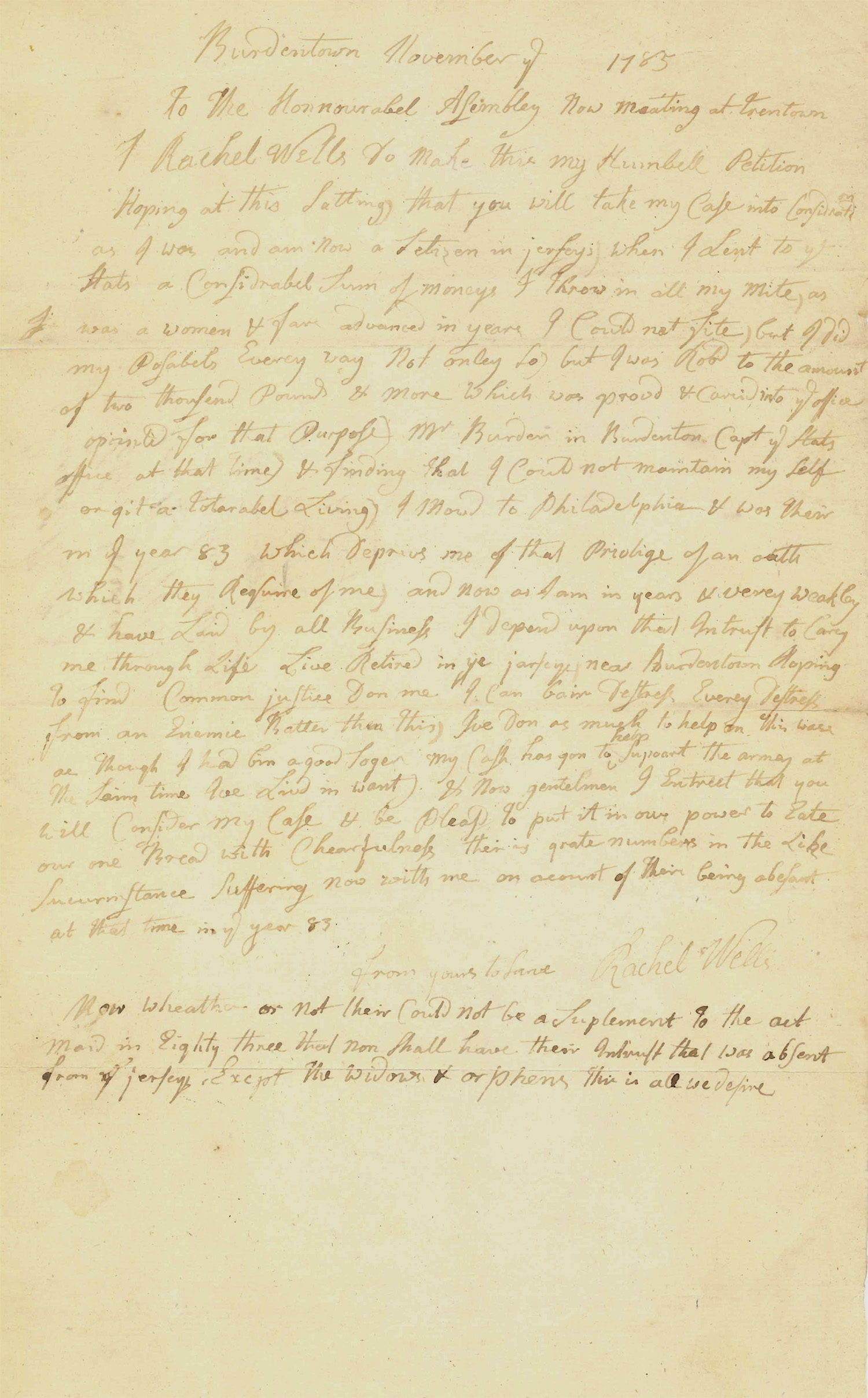
Petition from Rachel Wells (1735-1796) to the New Jersey General Assembly, November 15, 1785
Loan courtesy of the New Jersey State Archives, Department of State
Like many supporters of the cause, Rachel Wells, a widowed wax sculptor from Bordentown, loaned money to the patriot war effort. In this petition to the state legislature, asking to be paid interest, Wells confidently claimed the status of “setizen” and noted that she had sacrificed “as much to help on this warr as though I had bin a good [soldier].” In part because of such contributions, propertied women could vote under New Jersey’s 1776 constitution.