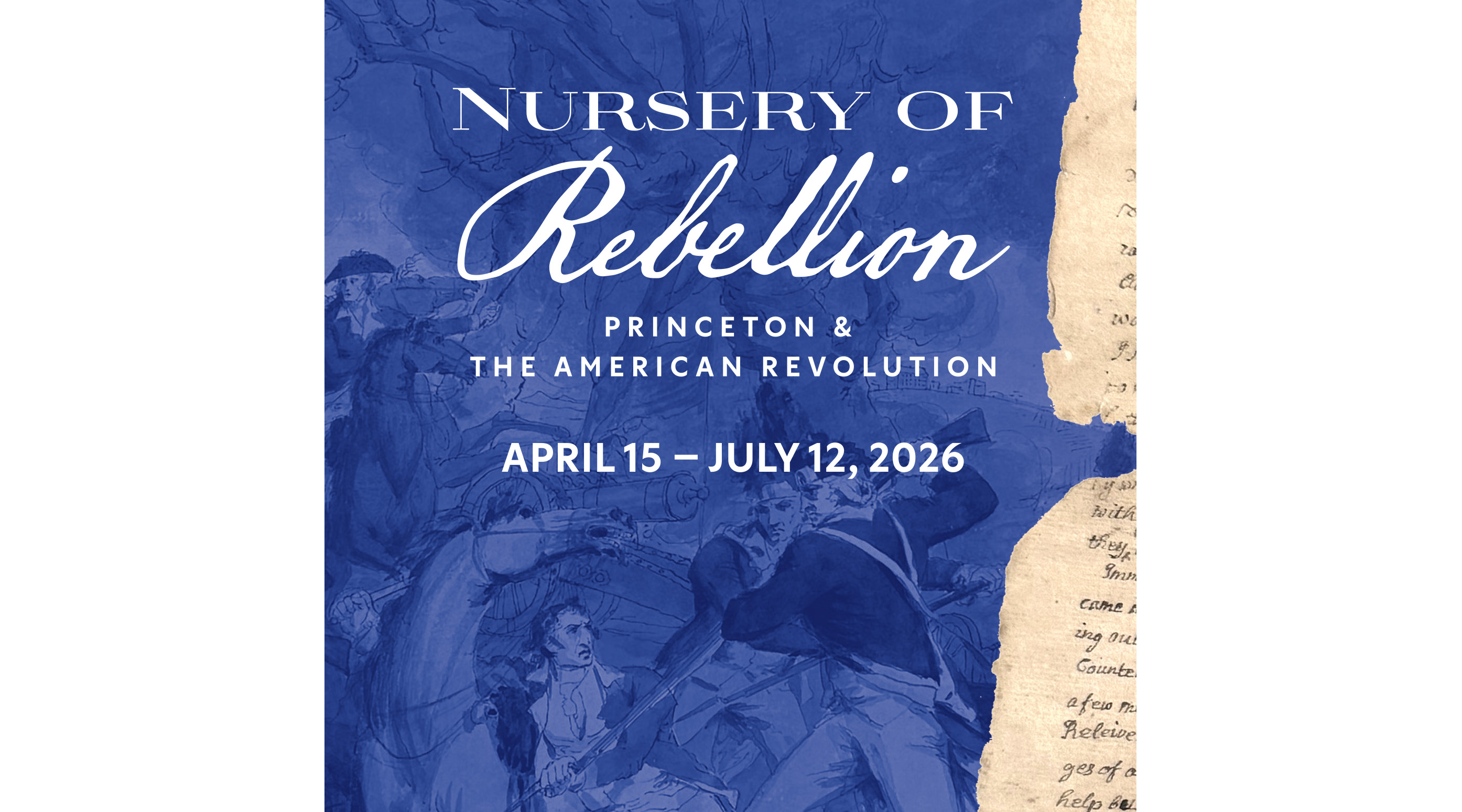

In 1783, looking back after eight years of war, professors at the college realized that their once-sleepy town had earned a new reputation: Princeton had been, as they put it, “a nursery of rebellion.” Swept up in colonial resistance, seized by revolutionary fervor, occupied by the British, ravaged by battle, overrun by competing armies, and turned briefly into a new nation’s makeshift capital, Princeton was upended by the American Revolution. Its inhabitants saw their world transformed. Many seized the Revolution as an opportunity to improve their lives—some out of conviction, others out of desperation. Others sought simply to survive the violence, privation, and loss. All, in some way, confronted the profound choice to support or oppose independence.
Seeing the Revolution through a local lens, Nursery of Rebellion explores the diversity of revolutionary experiences. Not only on the battlefield and at the statehouse but also in ordinary people’s homes, shops, and classrooms, this exhibition showcases the University’s archival treasures and lesser-known sources to investigate the Revolution across differences of background, status, and allegiance. The perimeter of the gallery traces the Revolution chronologically, following how national events and local responses unfolded side-by-side. The center of the room, meanwhile, captures the stories of individual men and women: patriot and loyalist, free and enslaved, Black and White and Native.
Their experiences reveal that amid the idealistic quest for liberty and republican government, the Revolution reached most people in communities like Princeton as, first and foremost, a war. The letters, diaries, and other documents they left behind enable us, 250 years later, to feel the tragic weight of war, to sense the jubilation of independence, and to glimpse the Revolution up close.

In Congress, July 4, 1776. A Declaration by the Representatives of the United States of America, In General Congress Assembled
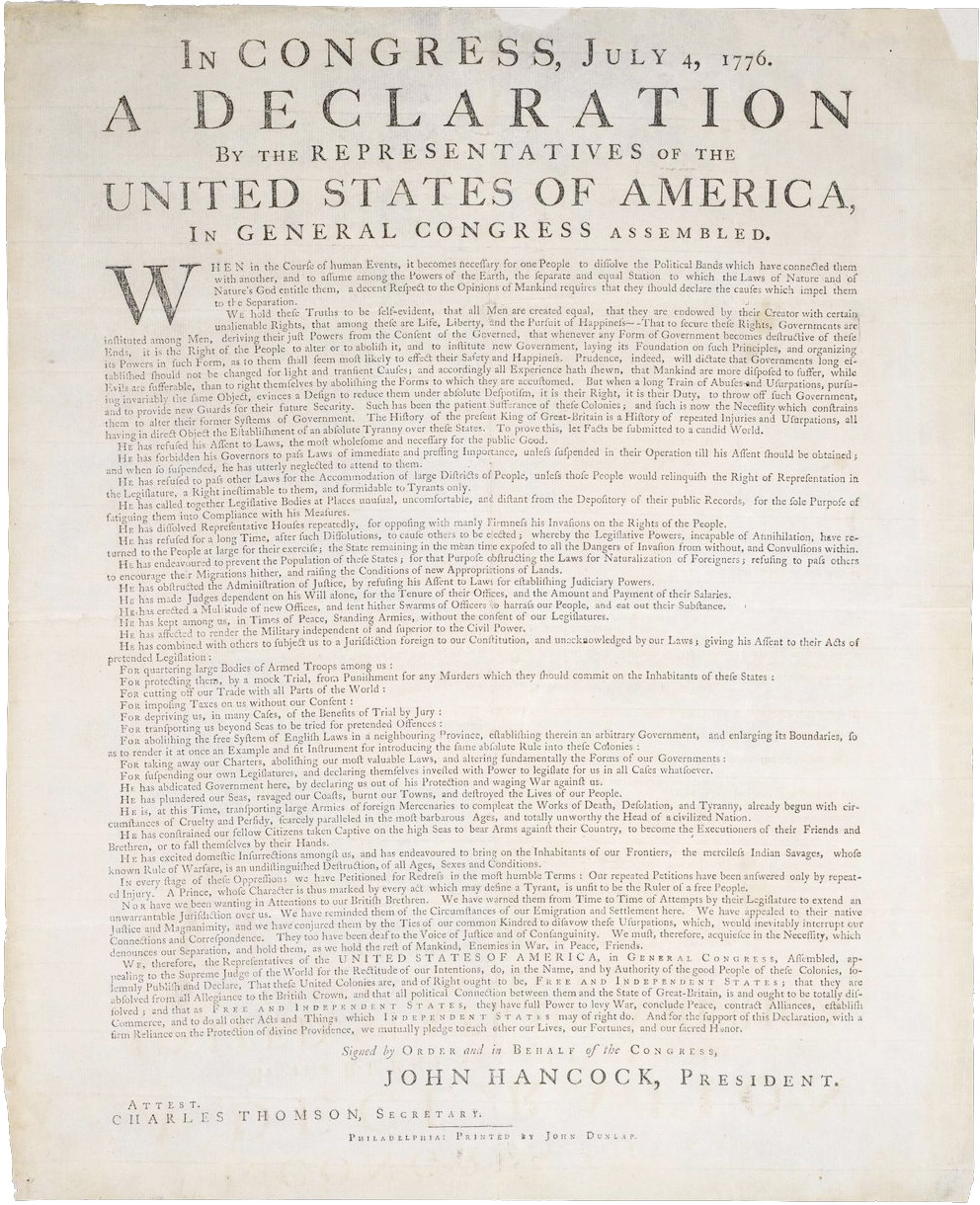
Philadelphia: Printed by John Dunlap, 1776
Gift of John H. Scheide, Class of 1896
Deep into the night of July 4, 1776, a Philadelphia printer was hard at work. While the city slept, 29-year-old Irish immigrant John Dunlap meticulously arranged the type for a momentous document the Continental Congress had approved just hours earlier. By morning, Dunlap produced perhaps 200 copies; only 26 are known to survive today.
More than the handwritten parchment at the National Archives, signed gradually over the ensuing months, these “Dunlap Broadsides” are the true originals of the Declaration of Independence. Copies rushed out from Philadelphia—some sent abroad, some posted in taverns and courthouse squares. Crowds and troops rallied for public readings as independence from the British empire was, literally, declared.
The Declaration announced the patriots’ radical choice for self-determination. Thomas Jefferson’s justification began with a stirring appeal to a truth he called self-evident: all men are created equal. It went on to enumerate every way King George III and Parliament had not treated the colonists as equals: unconstitutional taxes, constraints on immigration and trade, military occupation, and attempts to subordinate unruly colonists through slave rebellion, Hessian mercenaries, and Native American proxies.
Visually, Dunlap placed this long list of grievances at center stage. A bullet-point history of the crisis over Britain’s empire, it pointed the patriots toward republican government and a society without kings. As the artifacts in this gallery demonstrate, the war waged in pursuit of these principles would rattle every corner of American life.

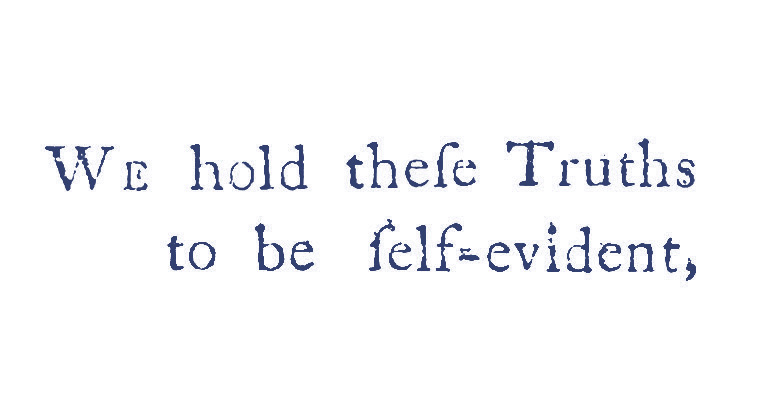
Long “s” in these; round “s” in Truths
Long “s” and “f” in self-evident.
To modern readers, words in many of these texts appear to be misspelled—with an “f” where “s” should be. In the 18th century, handwriting and printing conventions used two versions of the letter “s.” A “round s,” used for capitals and at the end of words, resembles our modern letter. But a “long s” that resembles the letter “f” was used in the middle of words and at the start of lower-case words. In print, the crossbar of a “long s” extends only to the left side of the letter. In handwriting, the descending loop of the “long s” goes to the left side.
 What is this Symbol?
The scroll indicates that a label is based on research and writing by students in “Revolution in the Archives,” an undergraduate seminar offered by the History Department in spring 2025.

The exhibition will be open and free to the public during Milberg Gallery hours of operation, April 15 through July 12, 2026.
Information about visiting Princeton University.