From Resistance To Rebellion
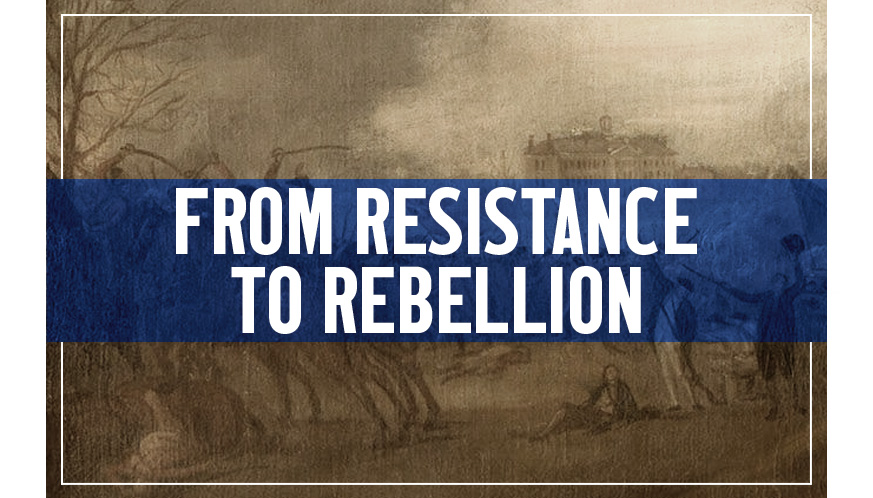

After the Seven Years War, Parliament and George III’s ministers passed a series of reforms to help defray the runaway costs of empire. But policies that seemed sensible in London sparked a backlash in North America. To colonists, new taxes and regulations passed without their consent smacked of tyranny. They denounced measures like the Stamp Act and Townshend Acts as violations of the liberties they cherished under Britain’s unwritten constitution—affronts that marked them as unequal subjects of the Crown.
In many colonies, protests against these reforms were centered in cities like Boston and Philadelphia. But in New Jersey, tiny Princeton was a hotbed of political radicalism. With students from across the colonies, as well as a stalwart for colonial liberty and vigilance against royal encroachment in President John Witherspoon (a Scottish émigré), Princeton assumed an outsized role. As this debate over British imperial governance grew increasingly heated, much of New Jersey’s revolutionary leadership would be drawn from the Princeton area.