Lenape Students in Revolutionary Princeton

In 1779, three young Lenapes, the descendants of principal chiefs, arrived to study at the College of New Jersey. As revolutionary violence divided Native communities and wrought havoc on the frontier, a Lenape delegation brought Thomas Killbuck, John Killbuck, and George Morgan White Eyes (ages 18, 16, and 8) from the Ohio country to Princeton, located in their ancestral homelands—leaving them in the Americans’ custody to prove the Lenapes’ continued friendship for the United States.
The Continental Congress paid the young men’s tuition and board, hoping they would maintain the Lenapes’ allegiance and facilitate land cessions as future leaders. Their Princeton education was thus an experiment in both cultural assimilation and forced removal. Lenape people continue to live in and return to this region, and the young men’s descendants and kin are citizens of the thriving Lenape (Delaware) tribal nations, which are located in today’s Oklahoma, Wisconsin, and Ontario, Canada.

House at Prospect, no date
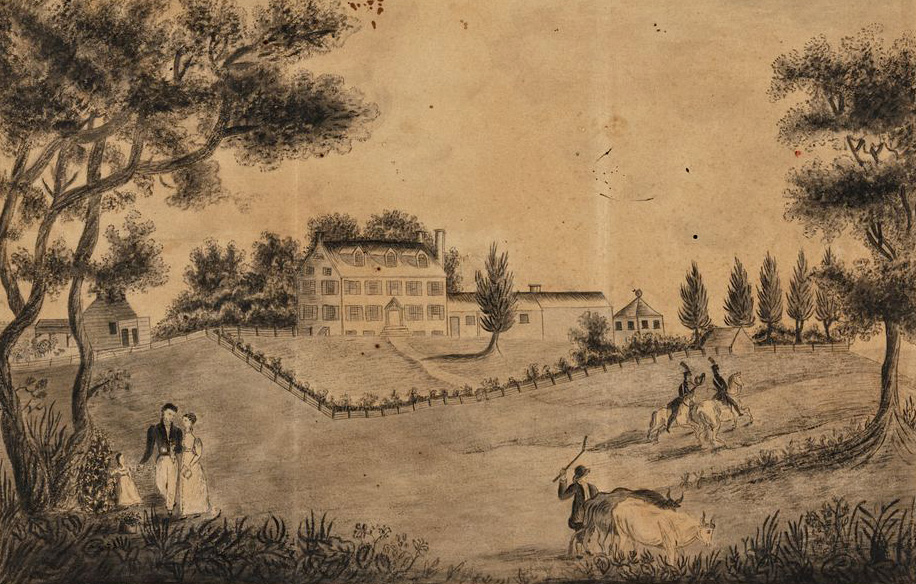
Pen and ink wash
Gift of Miss Julia Morgan Harding
As Congress’s frontier diplomat, Colonel George Morgan brokered relations with the Lenapes. He grew especially close to Chief White Eyes—who named his son after George Morgan, signed the 1778 Treaty of Fort Pitt, was commissioned a captain in the Continental Army, and soon thereafter was slain by an American soldier. When Colonel Morgan learned of the murder, he resigned in protest and moved to a Princeton farm called “Prospect,” depicted here and now part of campus. The three young Lenapes who arrived in 1779 were placed under his care.

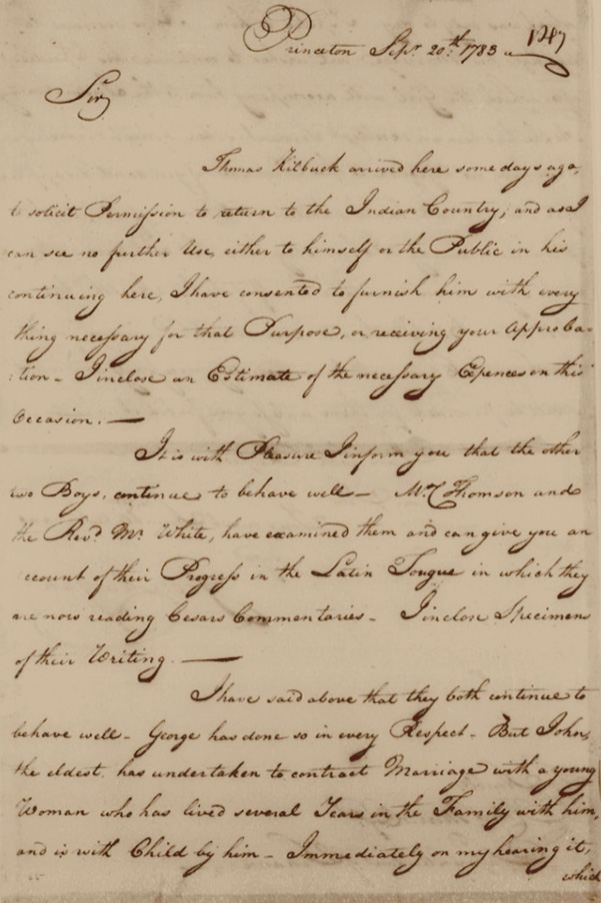
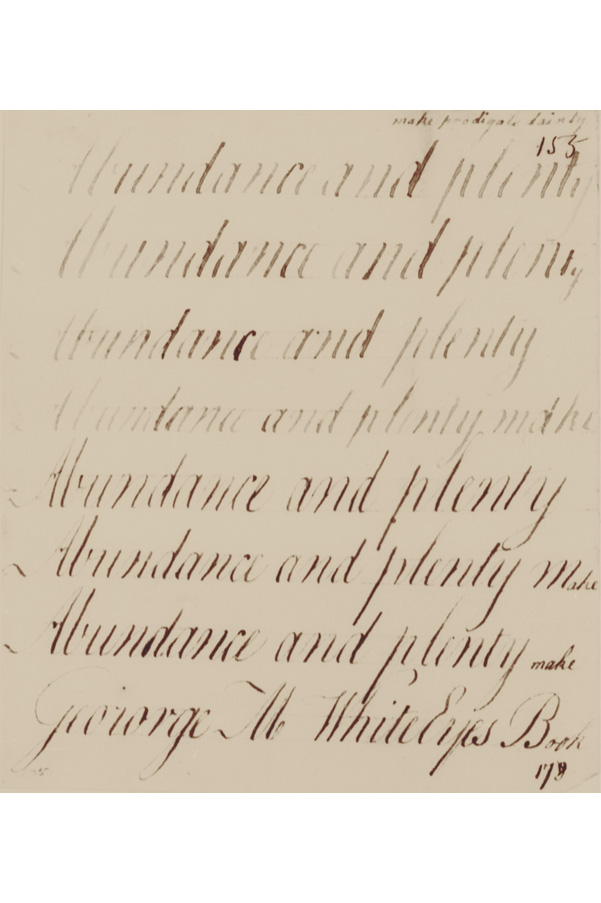
Letter from George Morgan (1743–1810) to Robert Morris, September 20, 1783, with specimen of writing by George Morgan White Eyes
Courtesy, National Archives & Records Administration, Washington, D.C.
U.S. relations with the Lenapes deteriorated across the Revolutionary War. Many ultimately sided with the British, and in 1782 Pennsylvania militiamen massacred 92 Lenape Christians at an Ohio settlement called Gnadenhutten. Meanwhile, the three young Lenapes remained at Princeton, “in some Measure [as] Hostages,” as George Morgan wrote. In 1783, he reported, John Killbuck and George M. White Eyes were reading Latin, mastering written English (evinced here in George’s penmanship exercise, where he copied a maxim from a textbook: “Abundance and Plenty make Prodigals Dainty”), and crossing paths with the new republic’s leading statesmen during Congress’s residence in Princeton. John, age 20, planned to marry a servant (likely enslaved) in Morgan’s household, who was pregnant with his child. George, age 12, was at the top of his grammar school class.

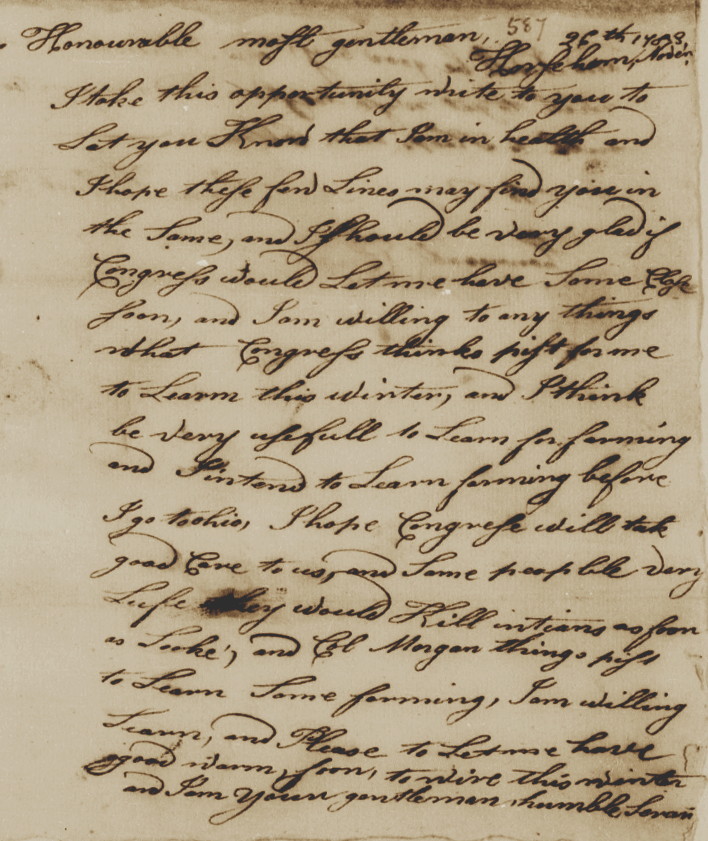
Letter from Thomas Killbuck (circa 1760-?) to Congress, November 26, 1783
Courtesy, National Archives & Records Administration, Washington, D.C.
At age 18 in 1779, Thomas Killbuck was far older than his White grammar school classmates. Little wonder that he lost interest in his studies. In 1783, struggling, he pleaded with the “Honourable Congress at Princeton College” for winter clothes and permission to return to his people in Ohio. Thomas lamented the racism he faced in the eastern states but proudly clung to his status within Lenape society, signing his name “Thomas Killbuck Chife.”
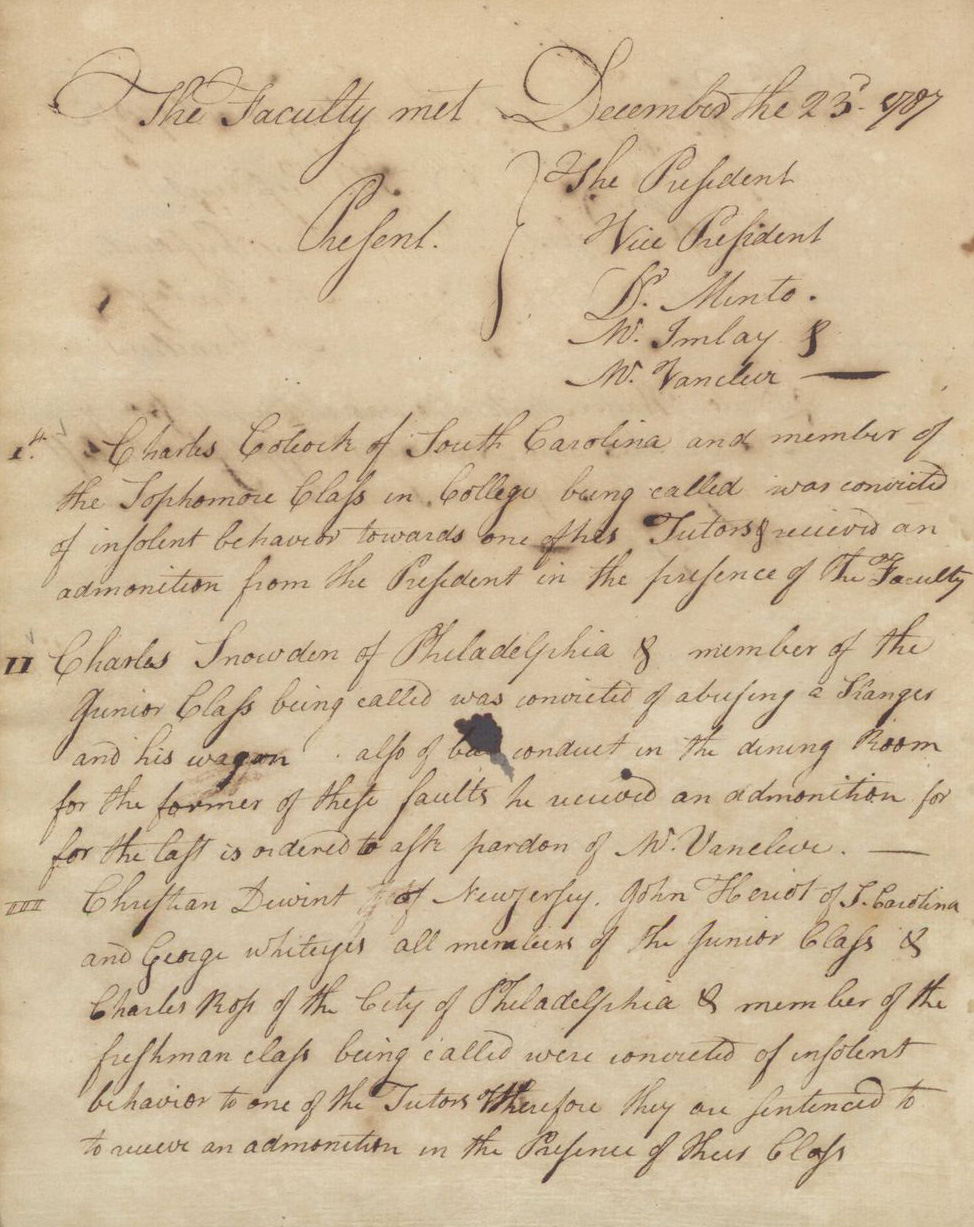
Resolves and Minutes of the Faculty, December 23, 1787
While the Killbucks returned to the Ohio country in 1785, George M. White Eyes entered the college as a freshman and moved from Prospect Farm to a room in Nassau Hall. He studied under Witherspoon, read Virgil, learned Greek, led chapel prayers, and rebelled against authority—as in 1787, when the faculty minutes directed that he and three others be admonished before their classmates for insolence toward one of the tutors.

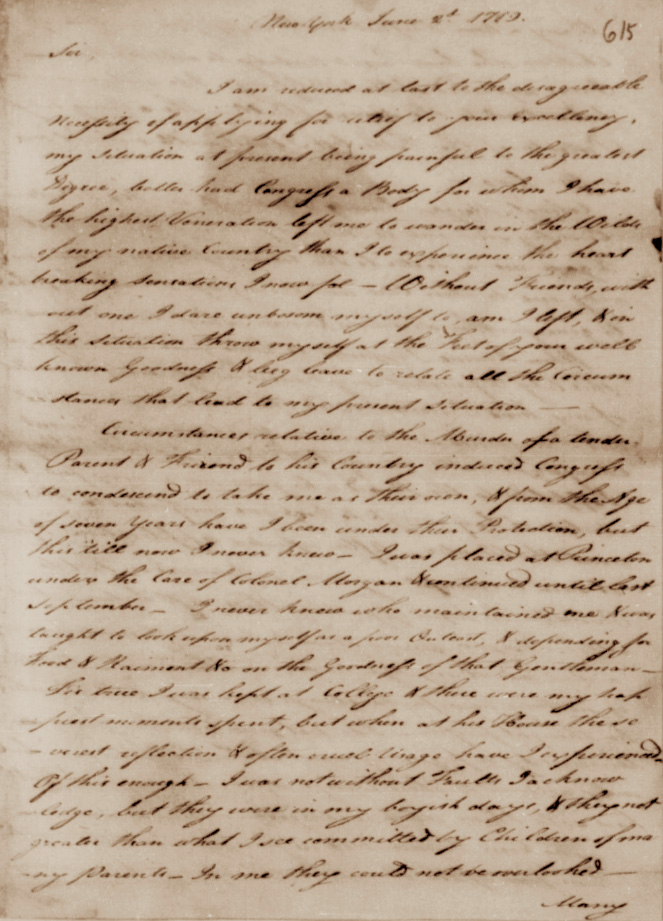
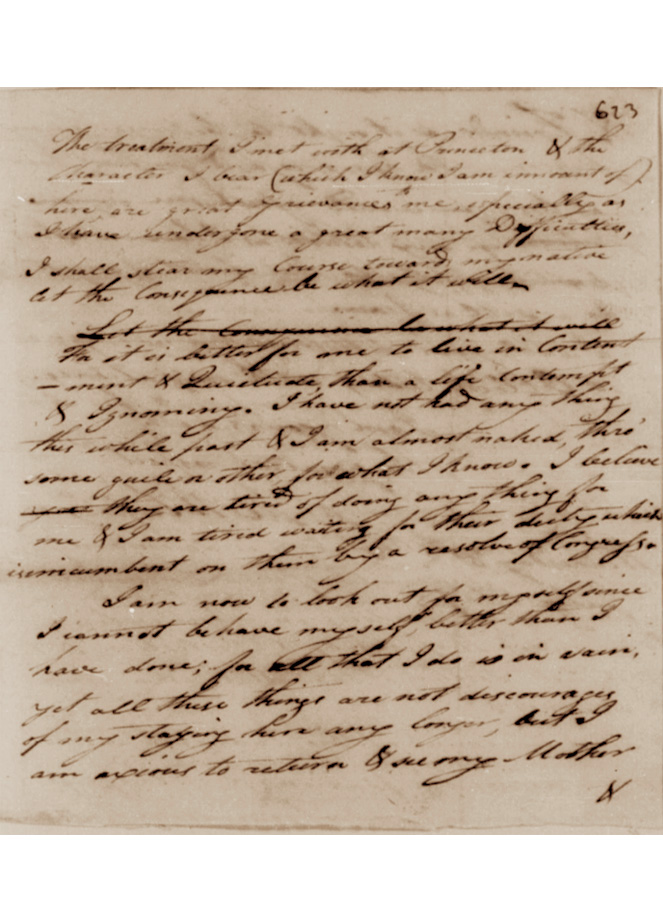
Letters from George Morgan White Eyes (circa 1770-?), Class of 1789, to George Washington, June 2 and July 8, 1789
Courtesy, National Archives & Records Administration, Washington, D.C.
In fall 1788, as George M. White Eyes was about to begin his senior year, he learned that both his parents had been murdered by American citizens. He fell in with a bad crowd at Princeton, his studies ground to a halt, and he was sent to stay in New York. Penniless and aimless, he wrote to George Washington, newly inaugurated as president, to ask for a government job. Although his letters noted that his “happiest moments [were] spent” at the college, he also recounted moments of discrimination and scorn. By July 1789, he resolved to return to the Ohio country, concluding that a life of “Contentment & Quietude” was better than one of “Contempt & Ignominy.”