The Battles of Trenton & Princeton

War came to Princeton in December 1776, at one of the lowest ebbs for the American cause. British forces occupied the town amid a stretch of patriot defeats and retreats that left even some revolutionary leaders doubting the future of independence.
But with bold victories at the battles of Trenton and Princeton, Washington’s army turned things around in the space of just 10 days. Patriot forces retook most of New Jersey, and revolutionaries sought retribution against loyalist collaborators in the wake of British retreat. This turn of events breathed new life into the patriot cause—but at great cost to local communities and the college. Princeton had been reduced to “heaps of ruin,” one observer wrote, and all its inhabitants plundered. “You would think it had been desolated with the plague and an earthquake as well as with the calamities of war.”

The Battle of Princeton, 1782
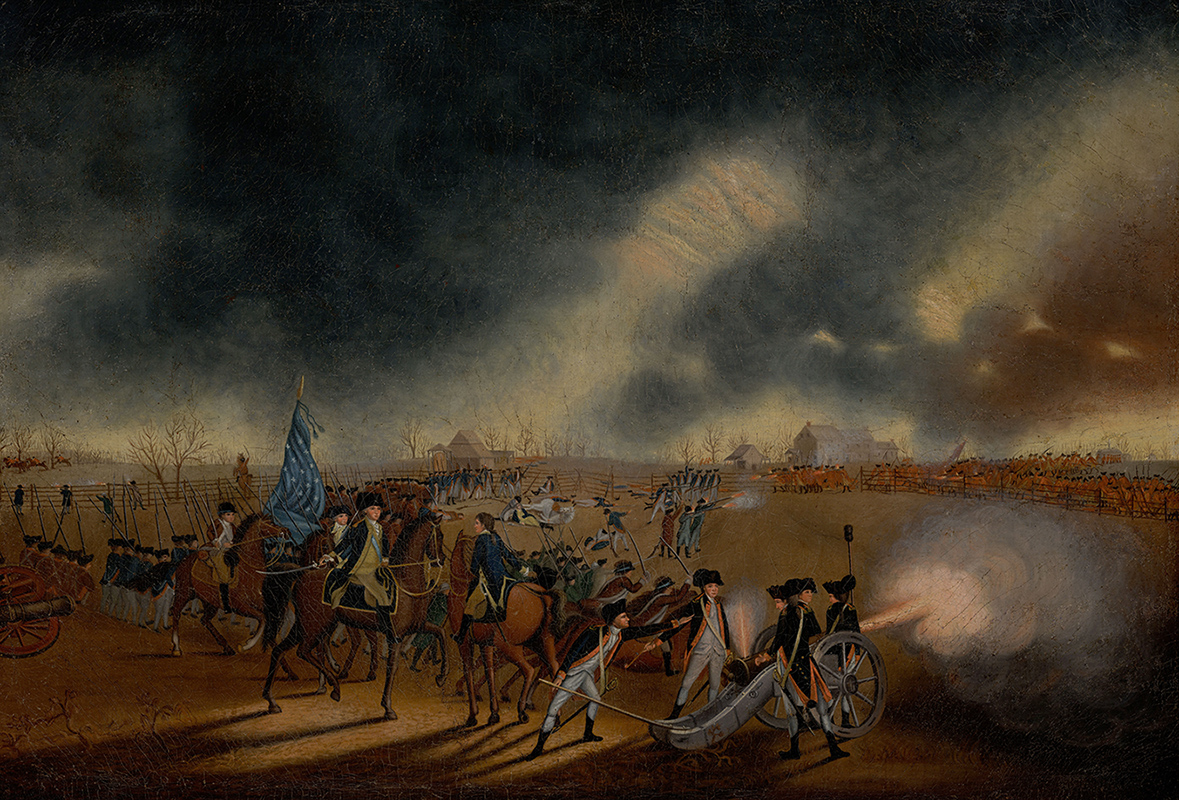
James Peale (1749–1831)
Oil on canvas
Gift of Dean Mathey, Class of 1912
One of the very few depictions of a Revolutionary War battle made by a participant, James Peale’s The Battle of Princeton captures the key moment when Washington suddenly arrived on the battlefield. General Hugh Mercer, mortally wounded during an earlier phase of the engagement, lies in the middle distance. Continental artillery holds off a British advance as Washington, accompanied by his blue headquarters flag, rallies the Americans for the charge that won the battle. Peale, who as an officer in the 1st Maryland Regiment had fought (and retreated) under Washington for five exasperating months, understood as well as anyone the significance of this turning point.

Seven Sketches for The Death of General Mercer at the Battle of Princeton, 1786


John Trumbull (1756–1843)
Ink on paper
Purchased through the generosity of Edward Duff Balken, Class of 1897.
Gift of Junius Spencer Morgan, Class of 1888.
John Trumbull, known for his iconic American Revolution paintings, spent decades perfecting his depiction of the Battle of Princeton. He condensed multiple battlefield scenes into a single composition: General Hugh Mercer awaits a fatal bayonet; George Washington rallies the troops; Captain Daniel Neil defends cannons with his life; Nassau Hall looms in the distance. In these sketches, Trumbull tinkered with the arrangement before turning to oil and canvas. He worked on versions of the painting for nearly a half century.
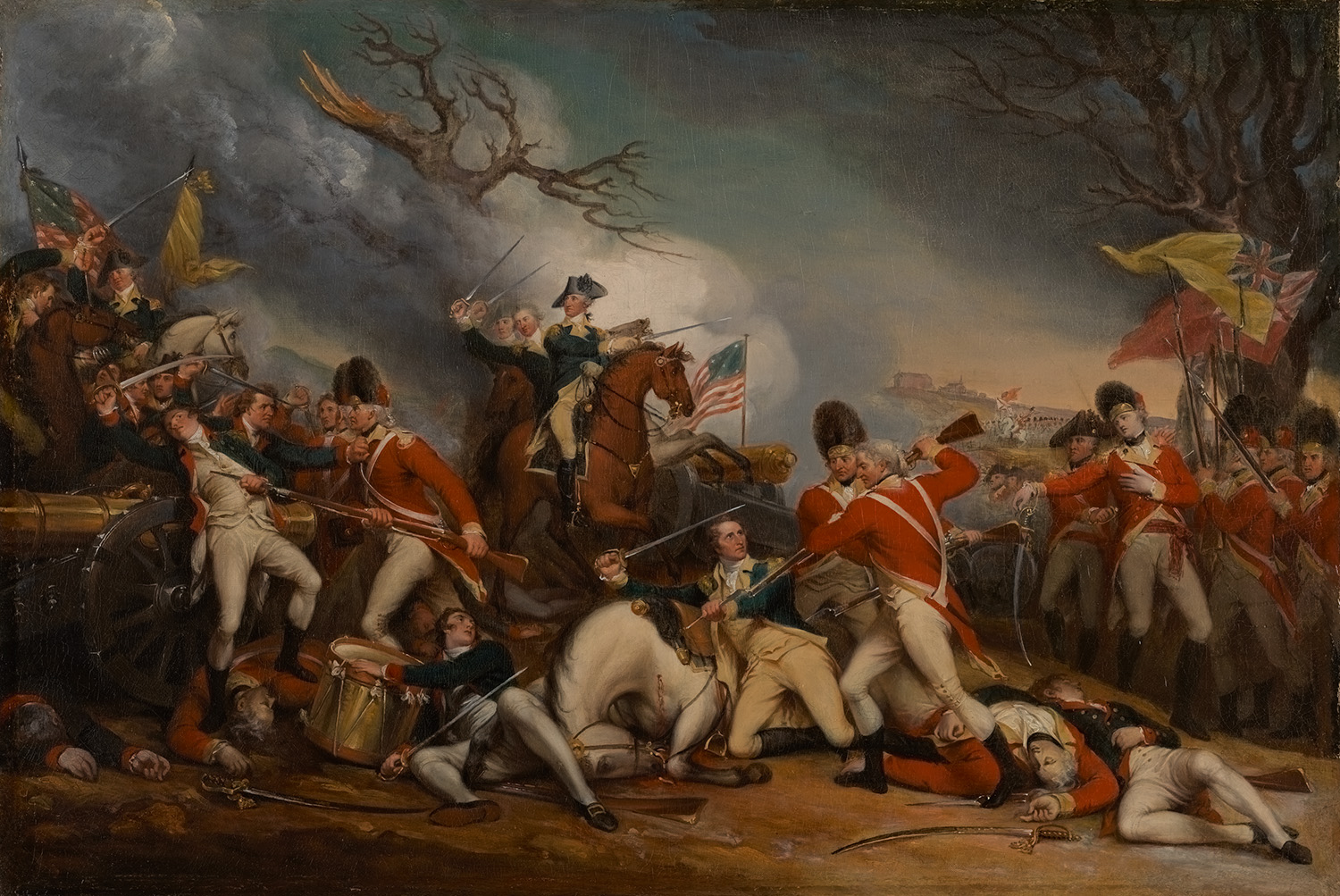
The Death of General Mercer at the Battle of Princeton, January 3, 1777
Date: circa 1789–circa 1831
Material: Oil on canvas
Credit: Yale University Art Gallery, Trumbull Collection

The American Crisis [Numbers I-V]. By the Author of Common Sense.
Philadelphia: Styner and Cist, 1776-1778
The Crisis Extraordinary.
Philadelphia: Sold by William Harris, 1780
![Rotating .gif images of the front pages of "The American Crisis [Numbers I-V]. By the Author of Common Sense" and first page of "The Crisis Extraordinary"](/uploads/spotlight/attachment/file/7158/1.gif)
Thomas Paine (1737-1809)
Bequest of William H. Scheide, Class of 1936
“These are the times that try men’s souls” reads Thomas Paine’s American Crisis. Such words rang true for the beleaguered Continental Army. With the British advancing quickly and winter not far behind, weary soldiers were ready to leave once their contracts expired. But Paine—briefly a soldier himself—urged “perseverance and fortitude.” Legend holds that his words, read aloud to Washington’s troops, revitalized the forces just days before crossing the Delaware.

 Letter from Mary Peale Field (1743-1816) to Grace Peale Parr, January 12, 1777
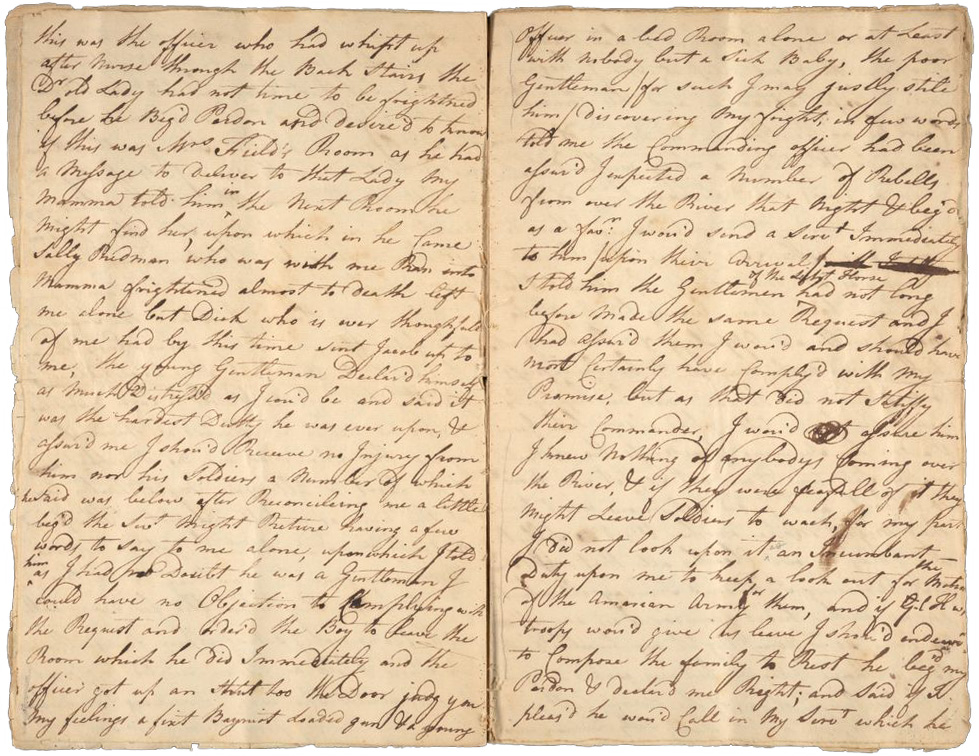
For Mary Field, war literally knocked at her door. A constant influx of British cavalry, Hessian officers, and Continental troops passed through the young widow’s house near Bordentown, New Jersey, seeking food and supplies before the battles to come. Amidst the chaos, Field remained neutral: even when British officers pressed her for information, she boldly declared that it had never been her “Incumbent Duty” to “keep a look out” for army movements.
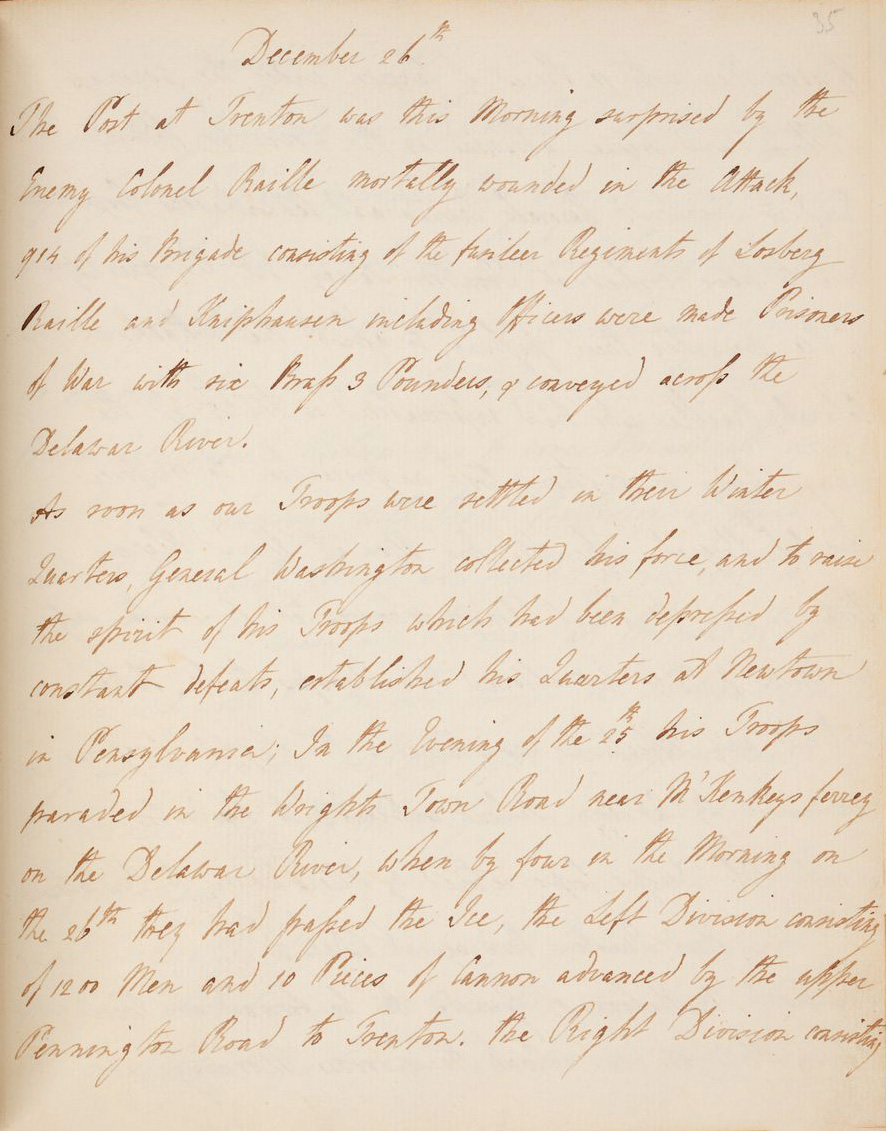
Journal of an American Campaign, 1776-1777
Thomas Glyn (1756-1813)
In December 1776, after months chasing the Continental Army from Long Island, New York into Pennsylvania, Thomas Glyn, a British officer in the elite Brigade of Guards, was settling into winter quarters near New Brunswick, New Jersey. In this journal, he recorded the astonishing news that arrived on December 26: “The Post at Trenton was this morning surprised by the Enemy.” Washington’s force had “passed the Ice” on the Delaware River the previous night, taking 914 Hessian prisoners in a shocking victory.
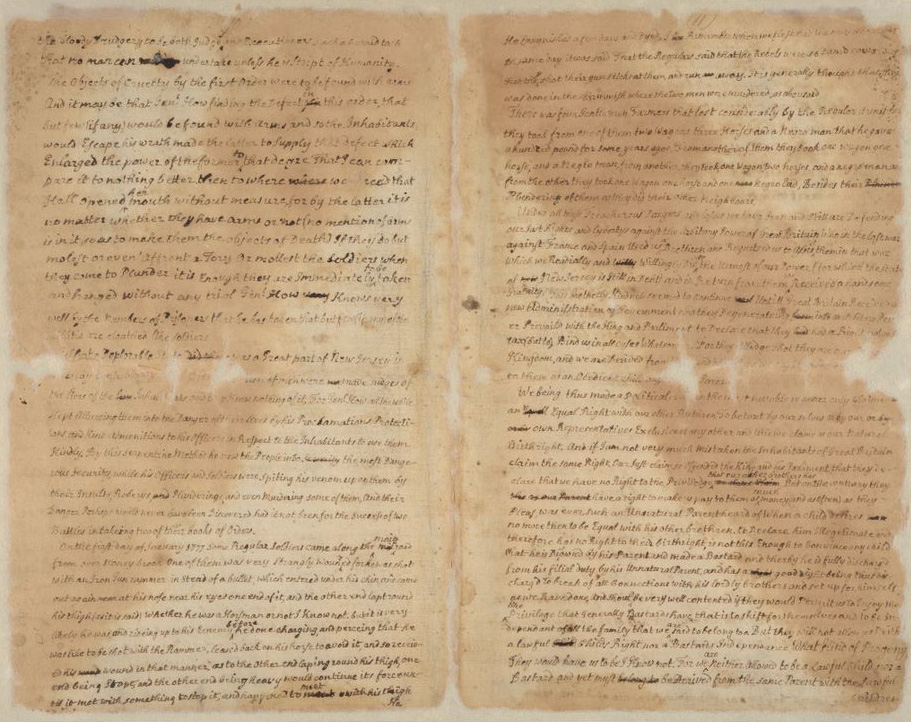
A Brief Narrative of the Ravages of the British and Hessians at Princeton, 1777
Robert Lawrence (1692-1781)
For Robert Lawrence, an 84-year-old lawyer, the British occupation of Princeton was “twenty six days [of] tyranny” by “a pack of Insolent Poltroons.” He vividly chronicled acts of violence, terror, and plunder against civilians—including, here, British soldiers making off with local enslaved men who may have been offered freedom if they fought for the Crown. Lawrence understood the Revolution as a struggle by 13 disowned “Bastard” colonies to defend their “Just Rights and lybertys against the Arbit[r]ary Power” of the “Parent Kingdom.”
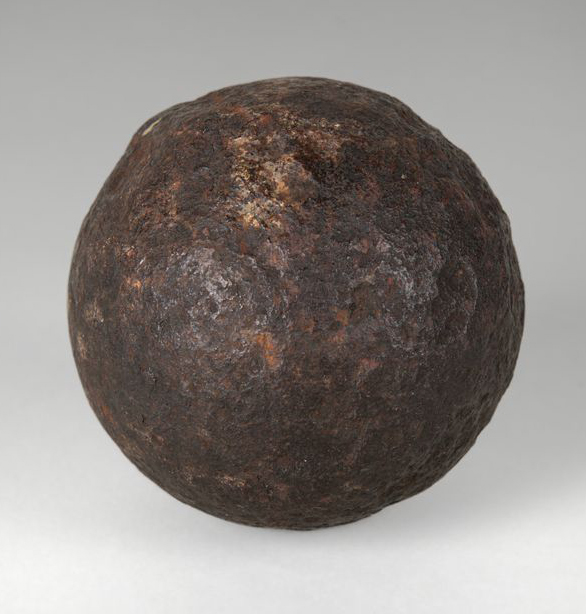
Cannonball found in April 1896 near the Princeton battlefield, circa 1777
Gift of Cora A. Margenem
Blasting across a battlefield at thousands of feet per second, this nine-pound mass of cast iron could inflict tremendous damage from a thousand yards away. Likely fired during the Battle of Princeton, it eventually tumbled to where the Princeton Stadium now stands, lying buried there for over a century. Uncovered by a farmhand in 1896, it exchanged hands several times before ultimately returning to Princeton—this time as a library donation, rather than a deadly attack.

Letter from James Read (1743-1822) to Susanna Read, January 6, 1777
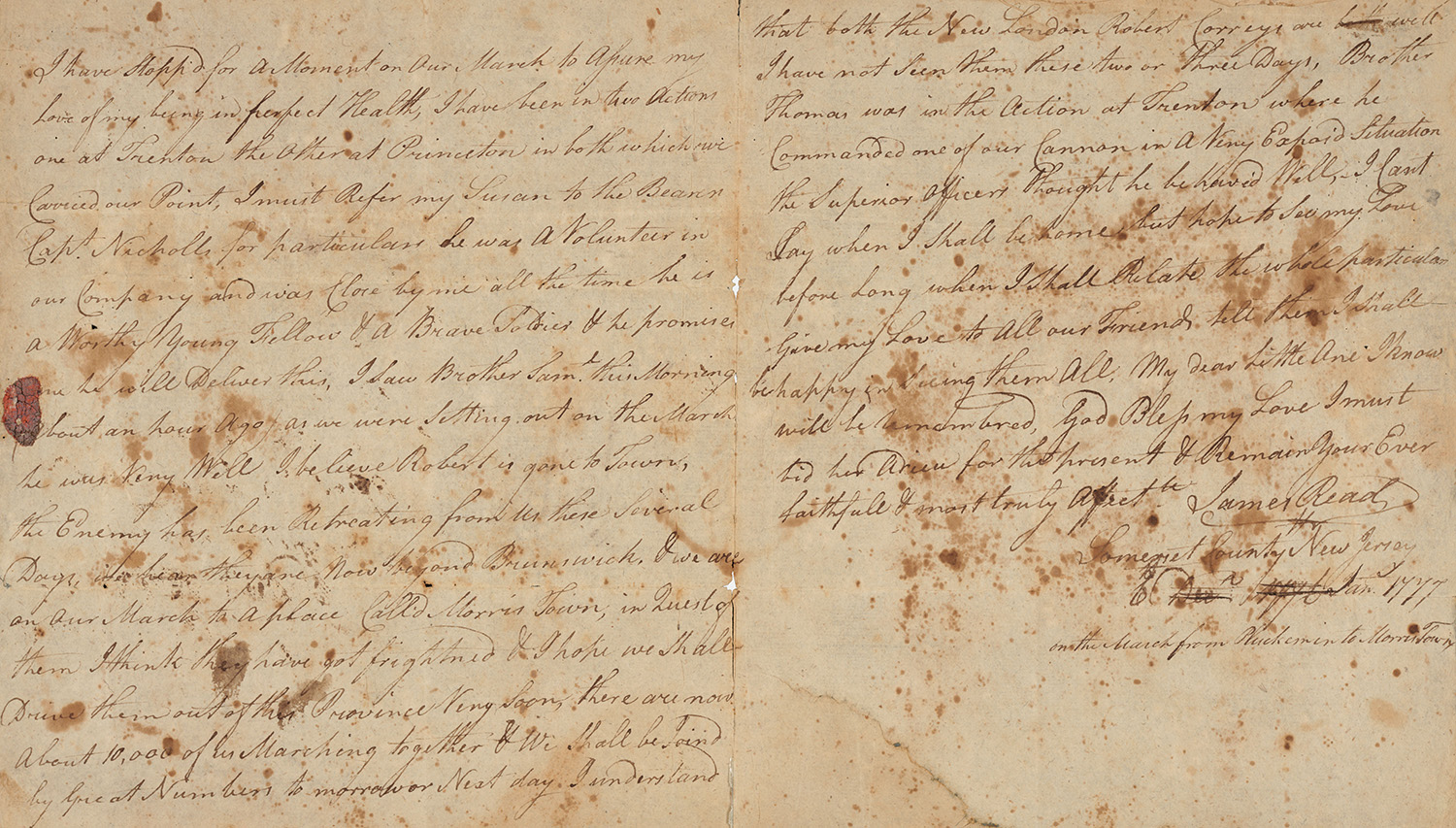
Bequest of Andre De Coppet, Class of 1915
During a brief pause along the march to Morristown, Pennsylvania militiaman James Read dashed off this letter to his wife Susanna, informing her that in the previous 12 days he had participated in two audacious victories at Trenton and Princeton. Read shared news of family members also marching with Washington’s army, and he reveled in the patriots’ turn of fate: “I think [the British] have got frightned & I hope we shall Drive them out of this Province very soon.”

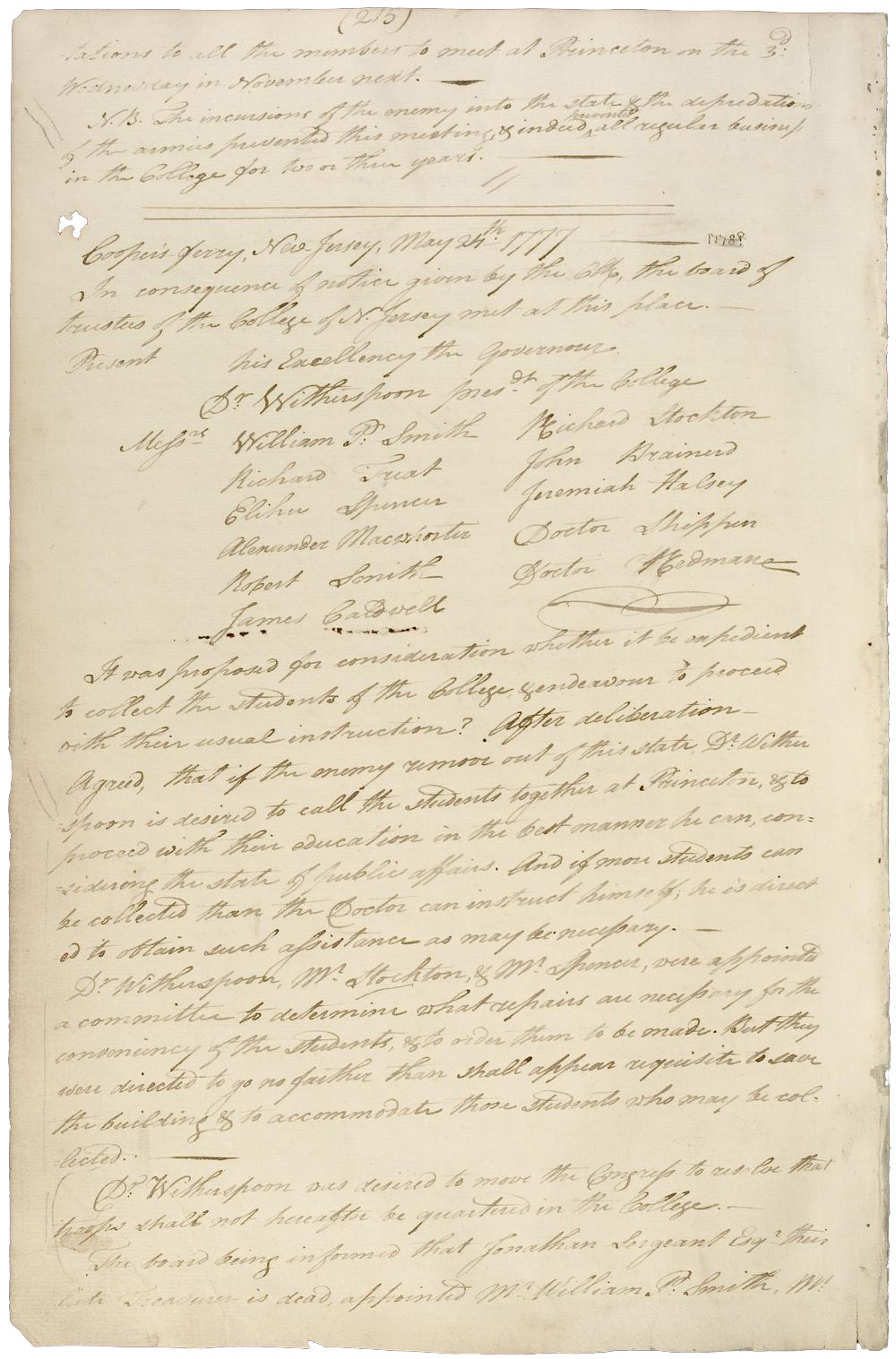
Board of Trustees’ Minutes, May 24, 1777
Five months after the battle, the college Trustees met near Philadelphia, where several were then serving in the Continental Congress. They resolved to reopen the war-torn college when British forces left New Jersey, to make necessary repairs “to save the building & to accommodate those students” who might return, and to invest college funds in Continental war bonds. Given the damage visited upon campus by both American and British soldiers over the preceding months, the college president, John Witherspoon, was asked to secure Congress’s promise “that troops shall not hereafter be quartered in the College.”
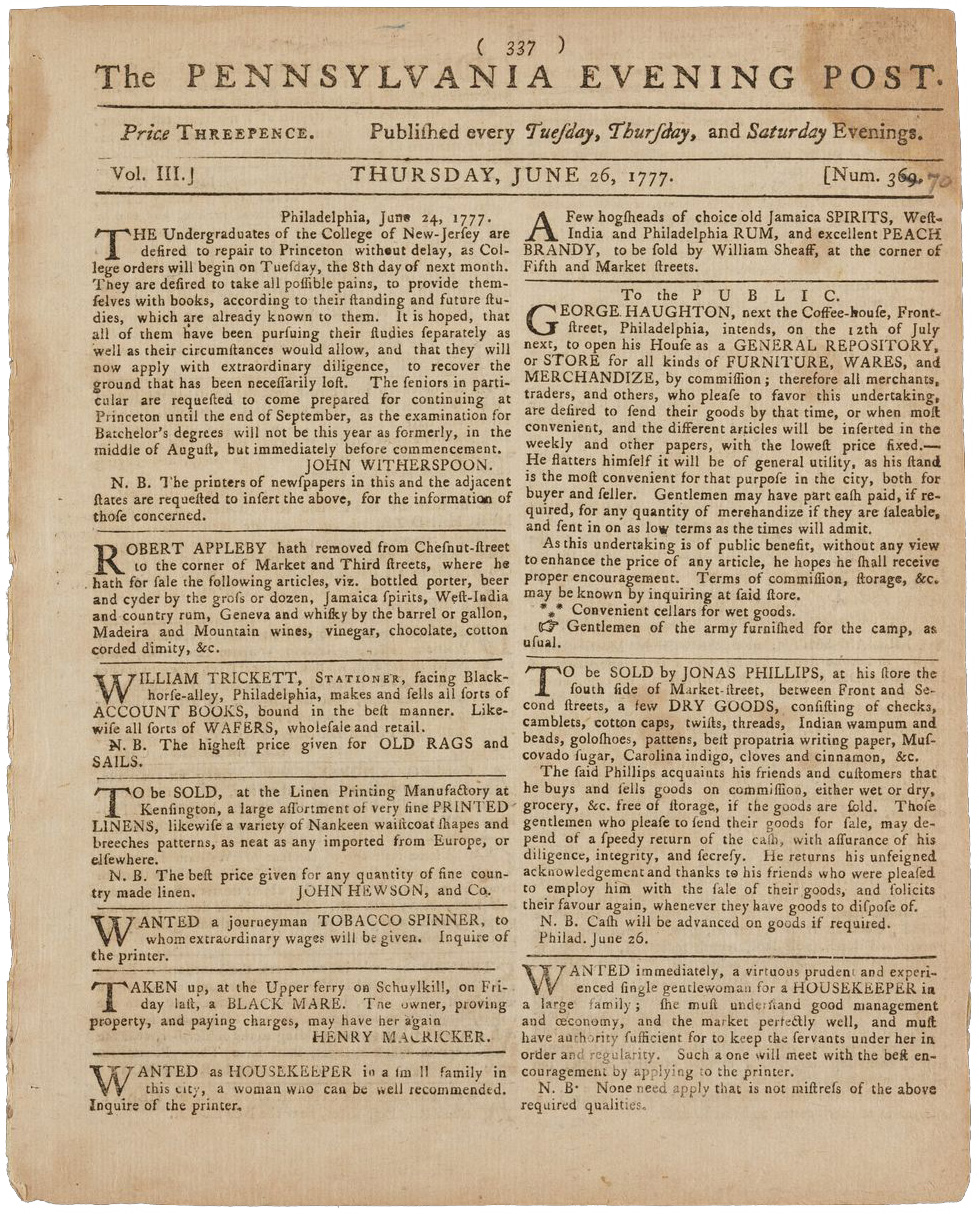
Pennsylvania Evening Post, and Daily Advertiser, June 26, 1777
In November 1776, as British forces under General Charles Cornwallis pursued the Continental Army south through New Jersey, Witherspoon dismissed the students at Princeton and told them to seek safety. Seven months later, he placed ads in the newspapers announcing the college’s plans to reopen—and, perhaps too optimistically, expressing hope that students had been continuing their studies independently during the hiatus.