Resistance

Britain’s North American colonies were home to wildly different cultures and economies. For most of the 18th century, places as disparate as Massachusetts, New Jersey, and South Carolina had little in common except a shared British heritage.
But during the escalating crisis of the 1760s and early 1770s—from the Stamp Act riots through the military occupation of Boston to boycotts of British goods and protests over tea—a sense of colonial unity haltingly emerged. Through the power of print, ordinary people in small communities like Princeton grew to fear that rulers back in Britain were plotting to subjugate the colonies. Spurring protests and calls for solidarity, these fears slowly forged a sense of shared American cause. At the College of New Jersey, students brewed a spirit of resistance to British imperial overreach that many of them would carry forward into political and military roles in their home colonies.

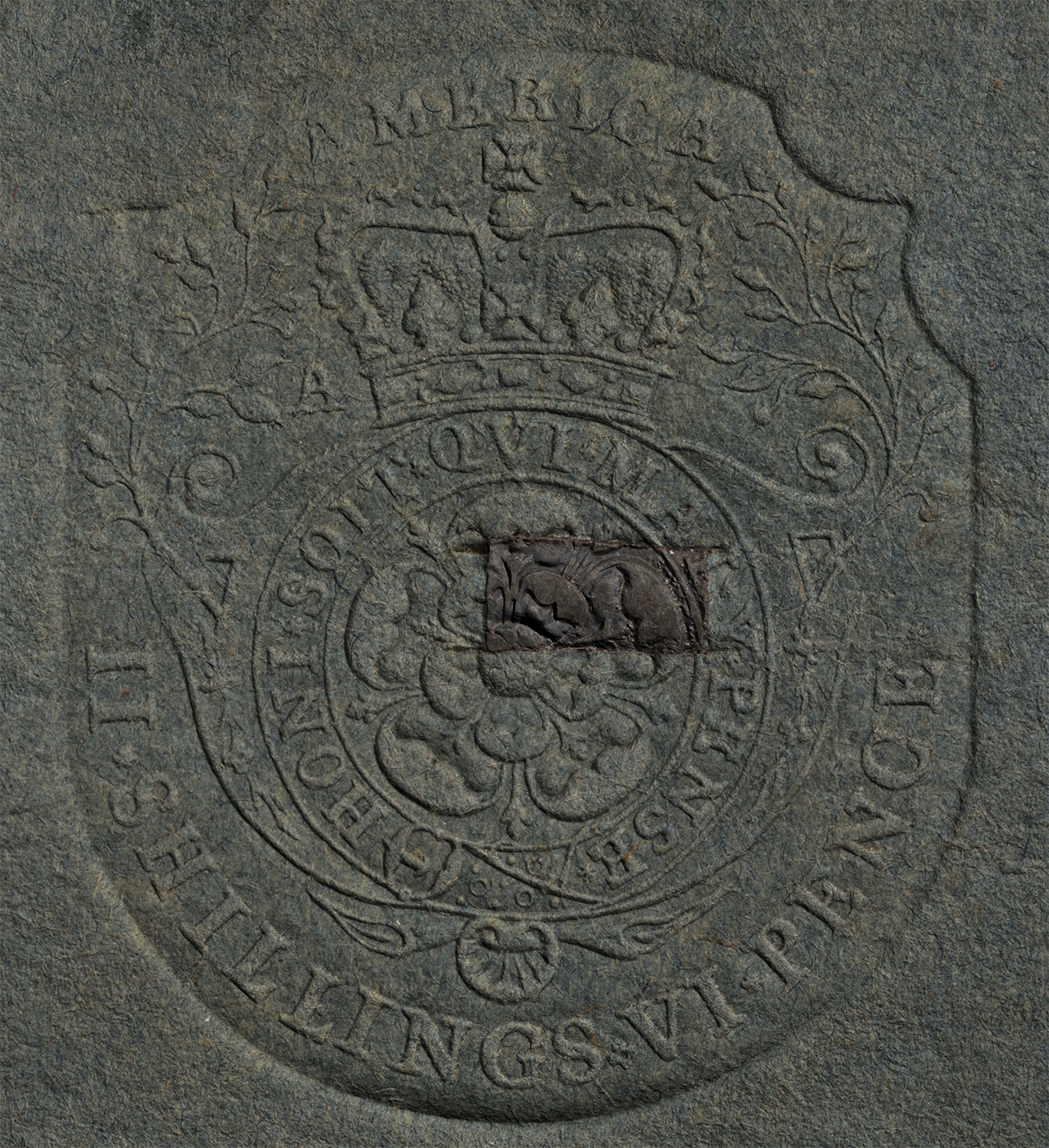
Revenue Stamp, circa 1765
Gift of Herbert H. Kimball, Class of 1924
The 1765 Stamp Act ignited a political firestorm. Levying a tax on nearly every form of paper used in the colonies—from newspapers and pamphlets to deeds and playing cards—the Act impinged upon daily life. A stamp affixed to any such document was to indicate that the tax had been paid. But colonial crowds intimidated stamp distributors into resigning and destroyed their stockpiled stamps, making surviving examples like this one extremely rare.
Use the 3D viewer to explore the object. Click and drag to rotate, and scroll or pinch to zoom in for a closer look.

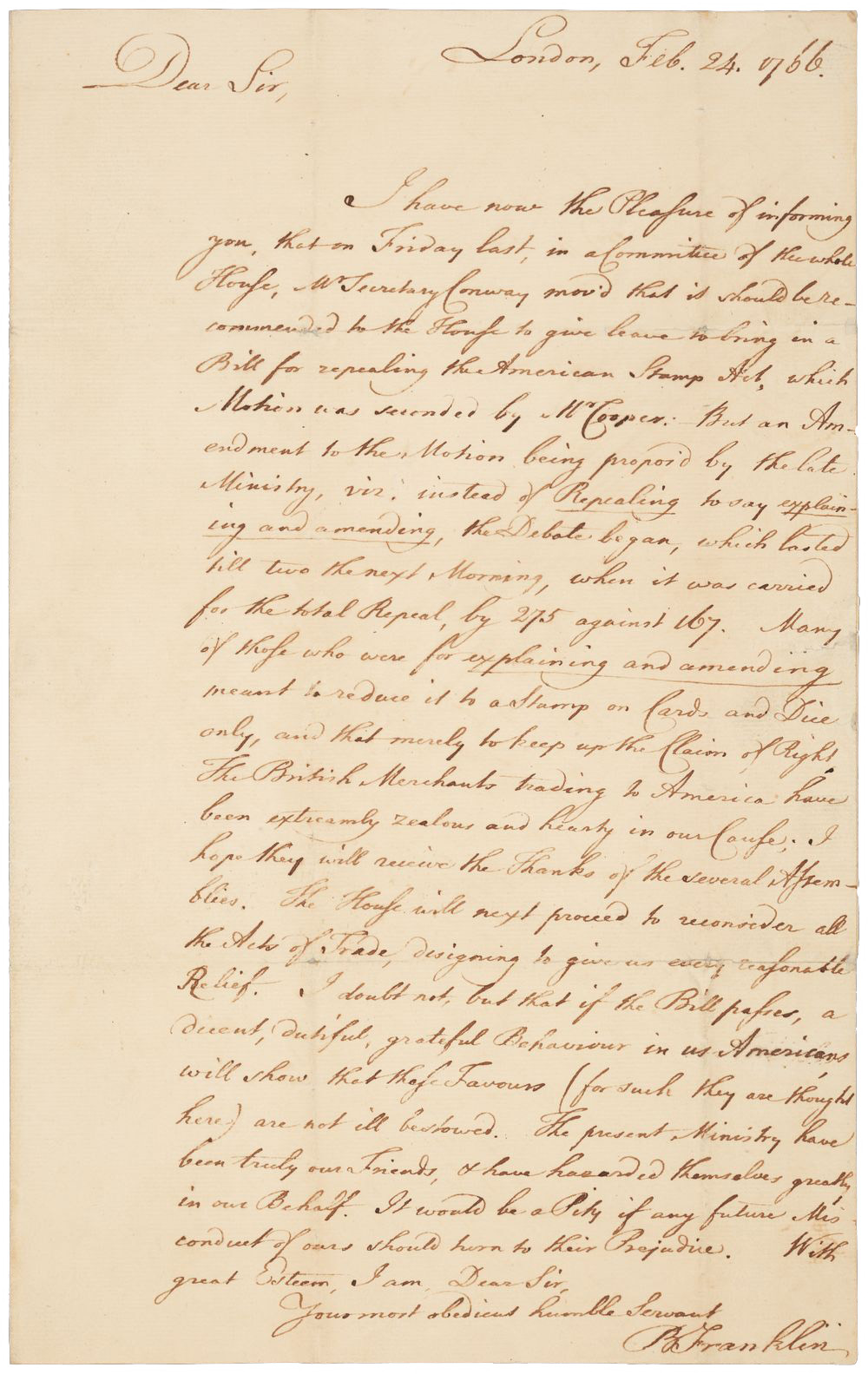
 Letter from Benjamin Franklin (1706-1790) to Joseph Fox, February 24, 1766
Bequest of Andre De Coppet, Class of 1915
As Pennsylvania’s agent in London, Benjamin Franklin tried but failed to prevent the Stamp Act’s passage. He initially underestimated the depths of colonial outrage—even nominating a friend to become a stamp distributor. But after hearing reports of the uproar, he advocated strenuously for repeal. In this letter to the speaker of the Pennsylvania Assembly, he shared news of Parliament’s ongoing debate and cautioned against further unrest.

Dispatch Box, inscribed “GR | Stamp Act Rep’d | March 18, 1766”
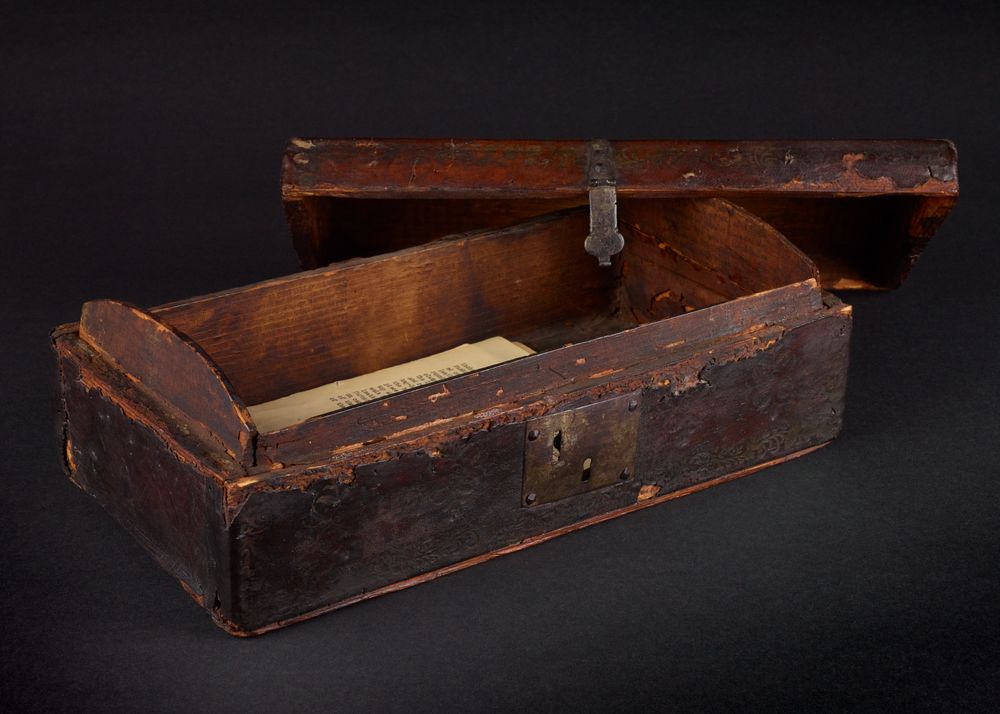
James Season, artisan
Gift of William Patton Woods, Class of 1884
At Nassau Hall, where diplomas were to be taxed under the Stamp Act, the class of 1765 protested by graduating in homespun clothes and giving orations on liberty and patriotism. By the time the Act was to take effect, resistance had grown so widespread that the law would have been impossible to enforce. This dispatch box, crafted in London, reportedly carried news of the Act’s repeal to America. Embossed with the king’s initials and inscribed “Stamp Act Rep[eale]d,” it was later owned by John Witherspoon.

The Repeal. Or the Funeral Procession of Miss Americ-Stamp, 1766
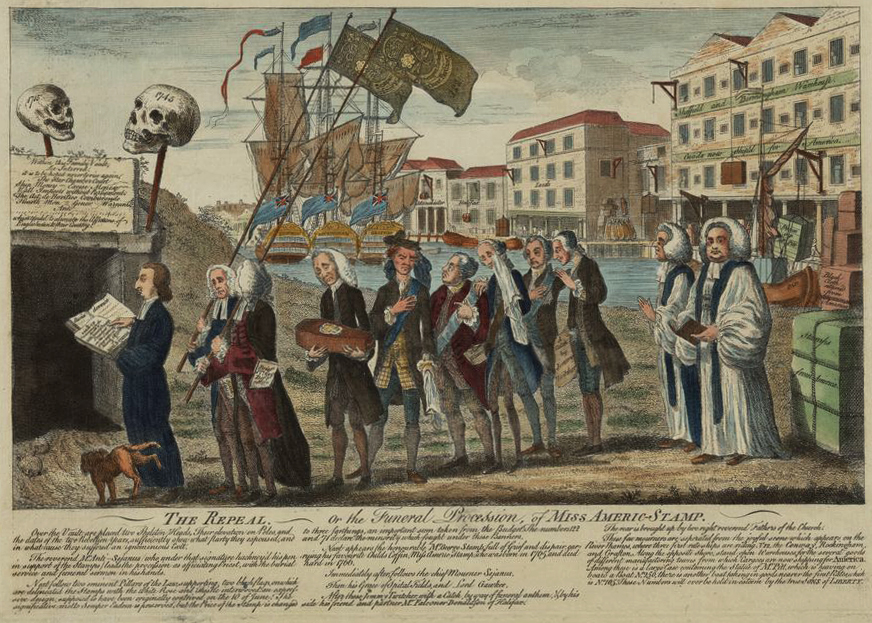
Hand-colored engraving
Purchased with the assistance of the Barksdale-Dabney-Henry Fund
This political cartoon, a bestseller, celebrated the repeal of the Stamp Act. The measure’s proponents lead a funeral procession for “Miss Americ-Stamp,” carrying black flags that feature the stamp and interring a small coffin in a tomb reserved for similar threats to liberty. In the background, trade lately threatened by colonial boycotts of British manufactures begins to revive, and three ships named for pro-repeal politicians prepare to sail.

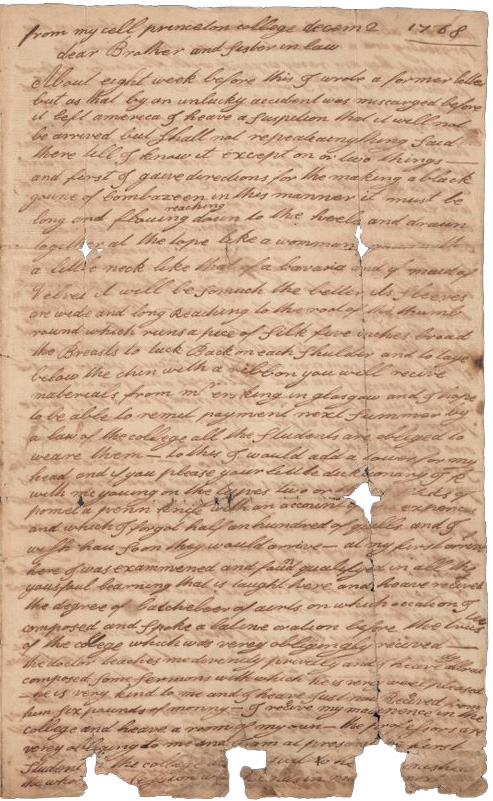
Letter from Hugh Simm to Andrew Simm, December 2, 1768
Gift of John M. Brodie
Hugh Simm, a young Scottish weaver evidently unhappy in his trade, became Princeton’s first librarian after John Witherspoon recognized his passion for literature and invited him along to America in 1768. Writing from his “cell [at] princeton college,” Simm reported that the Townshend Acts and the British occupation of Boston had renewed the sense of crisis in the colonies: “we are all here in the greatest confusion and uncertainty.”

The Boston-Gazette, and Country Journal, March 12, 1770
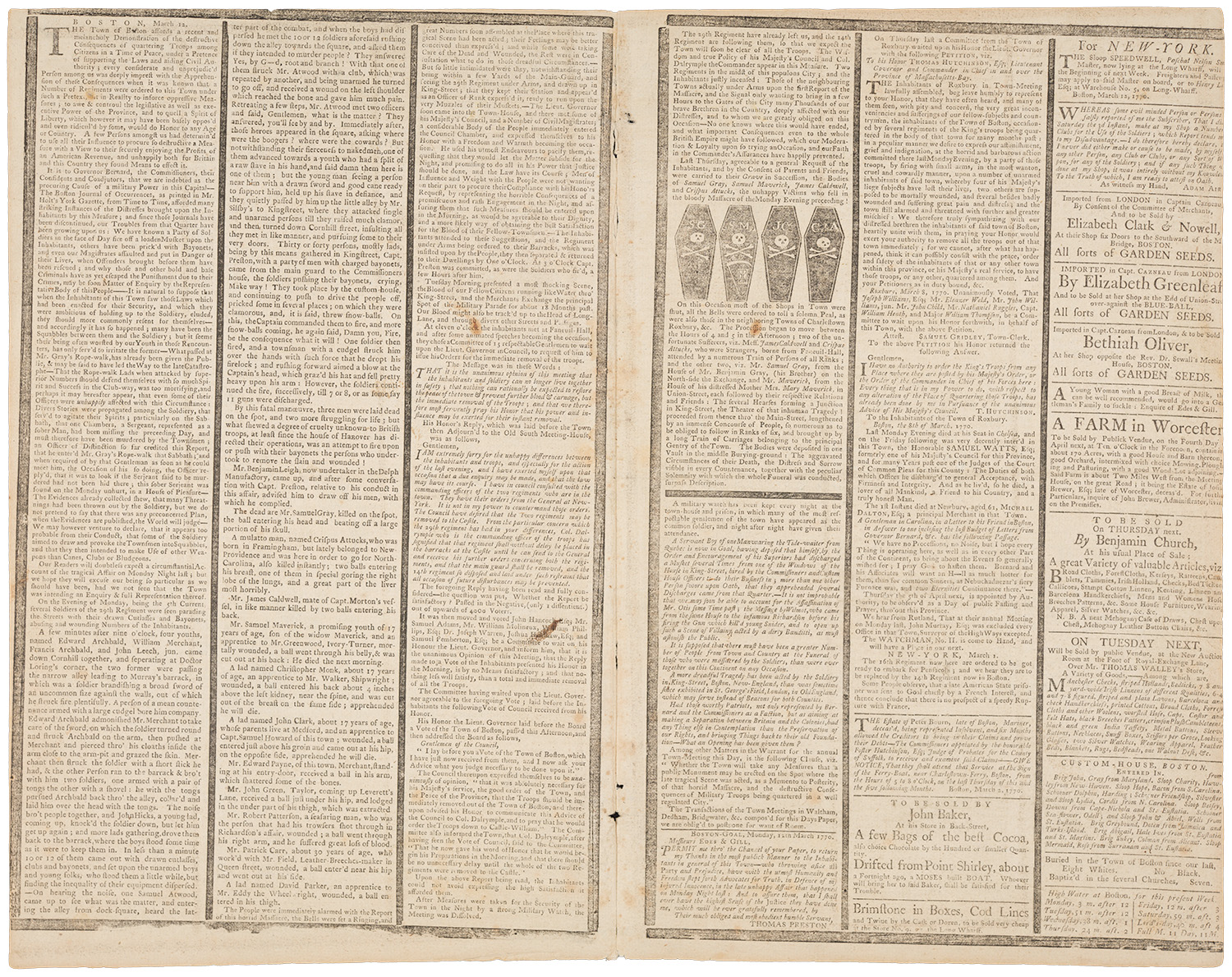
Boston: Edes & Gill
Bequest of William H. Scheide, Class of 1936
On the chilly evening of March 5, 1770, a boisterous crowd began taunting the British soldiers who stood guard outside the Boston Customs House—part of a regiment sent to enforce the unpopular taxes on British imports known as the Townshend Acts. As chaos swelled, the frightened soldiers fired into the crowd, killing five. This issue of the Boston-Gazette,the first comprehensive account of the incident, dubbed it a “horrid Massacre.” The issue featured a black border to signify mourning and four coffins to represent the victims. The fifth had not yet succumbed to his wounds.

The Bloody Massacre Perpetrated in King Street Boston on March 5th, 1770 by a Party of the 29th Regt.
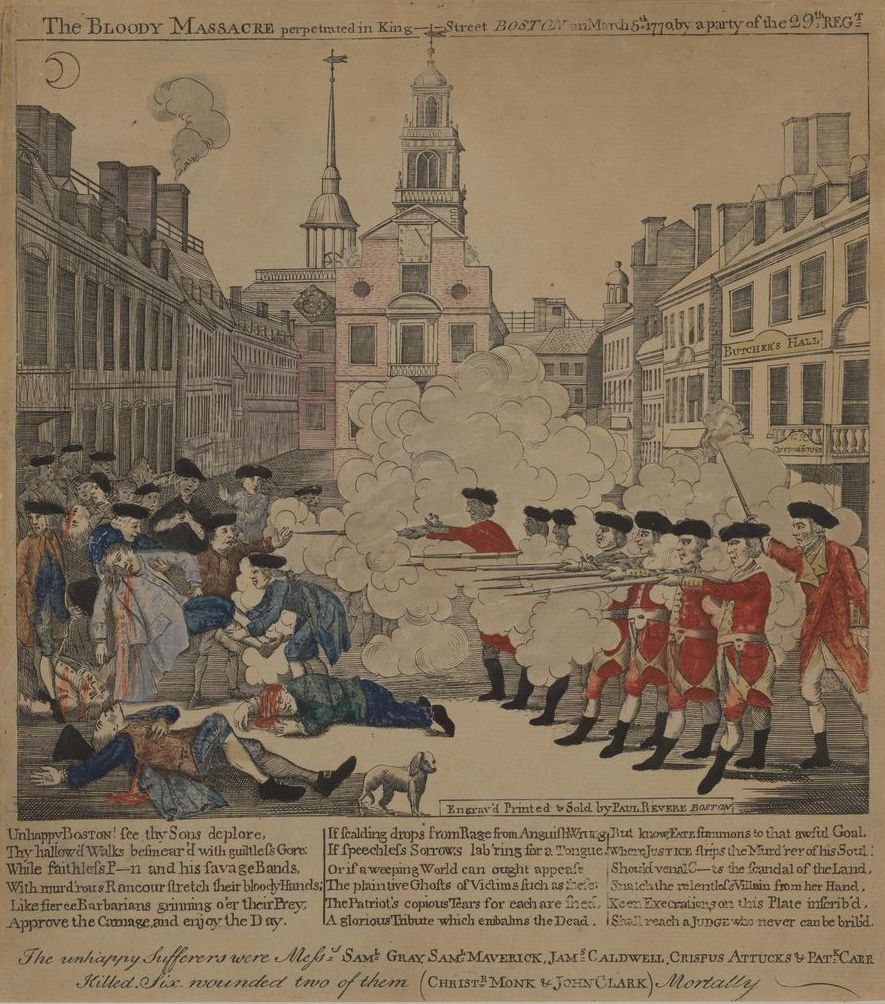
Paul Revere (1735-1818), after Henry Pelham (1748/49-1806)
Boston: Engraved, Printed & Sold by Paul Revere, 1770
Bequest of William H. Scheide, Class of 1936
A media frenzy broke out in the aftermath of the Boston Massacre, as colonial radicals dramatized the story to rally the public against parliamentary taxation and military occupation. Revere’s infamous engraving, advertised for sale three weeks after the event, depicts the confused affray as a deliberate slaughter. Disciplined soldiers mercilessly fire into an unarmed crowd, their loyalty symbolized by a dog. Widely circulated, this image stoked outrage against the presence of a standing army in a liberty-loving British colonial town like Boston.

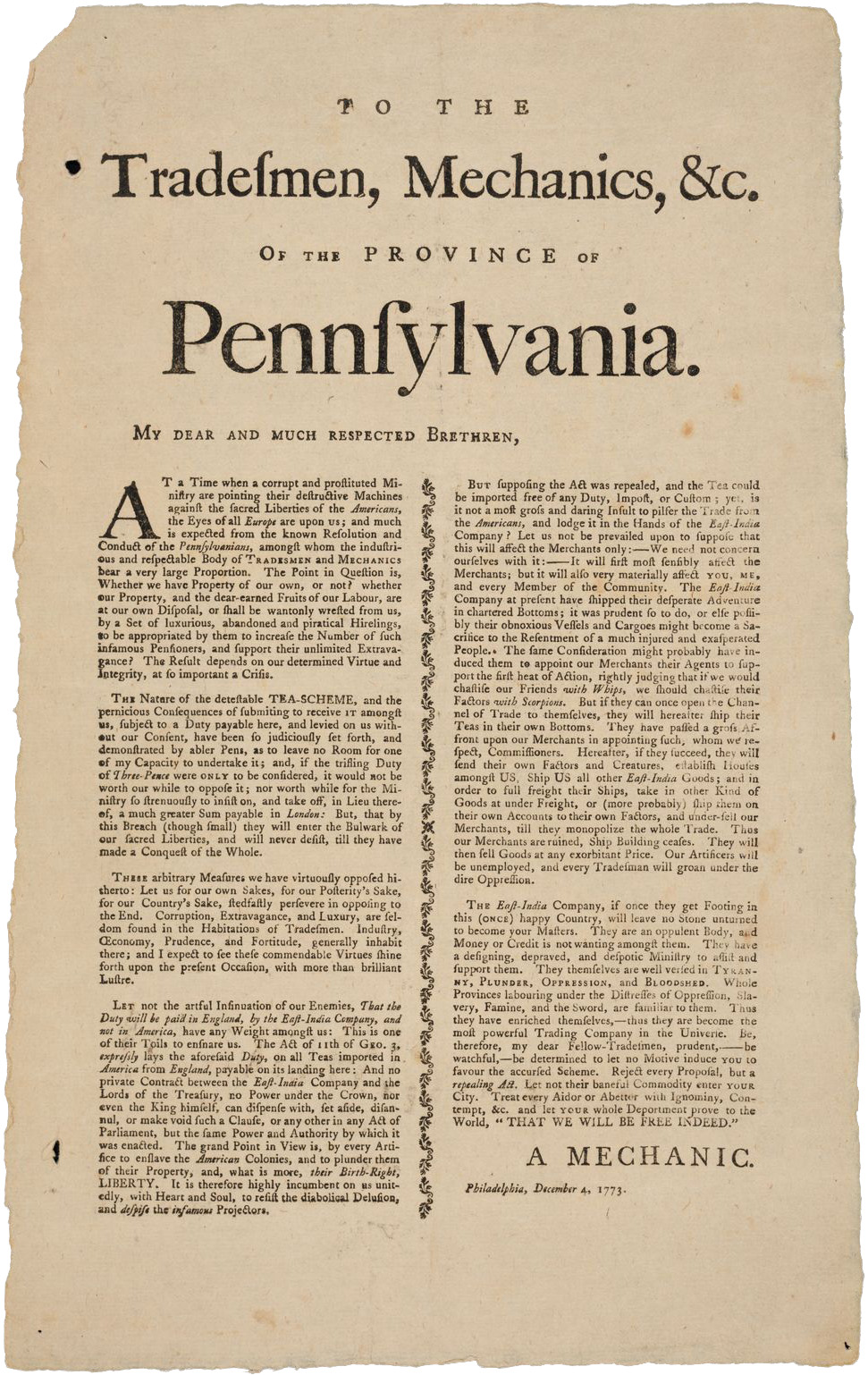
To the Tradesmen, Mechanics, &c. of the Province of Pennsylvania, 1773
Bequest of William H. Scheide, Class of 1936
The 1773 Tea Act, intended to bail out the troubled British East India Company, actually lowered the cost of British tea in America. But many saw it as a scheme to seduce colonists into paying a tax on tea passed without their consent. Denouncing the Act as an attack on liberty and an effort to “enslave” the colonies, this broadside mobilized a common trope of colonial rhetoric to stoke resistance among working-class Pennsylvanians.
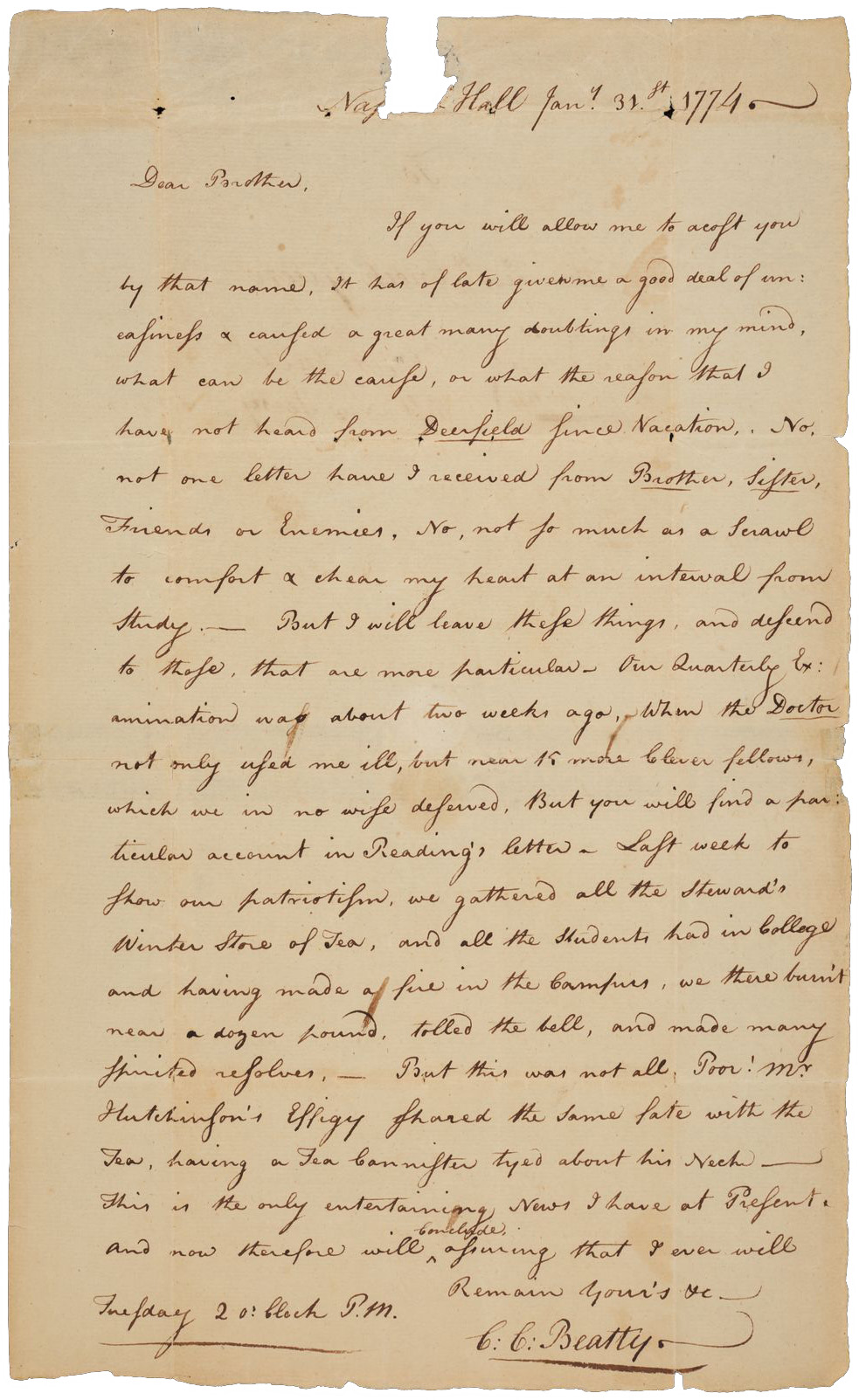
Letter from Charles Clinton Beatty (1756-1776), Class of 1775, to Enoch Green, Class of 1760, January 31, 1774
In December 1773, to prevent their neighbors from purchasing taxed tea, the Sons of Liberty dumped 342 chests of East India Company tea into Boston Harbor. Across British America, communities followed Boston’s lead, demonstrating solidarity through the ceremonial destruction of tea. In Princeton, the college students staged a protest of their own. “To show our patriotism,” this undergraduate reported, students burned the college’s store of tea along with an effigy of Massachusetts Governor Thomas Hutchinson, rang the bell in Nassau Hall, and “made many spirited resolves.”
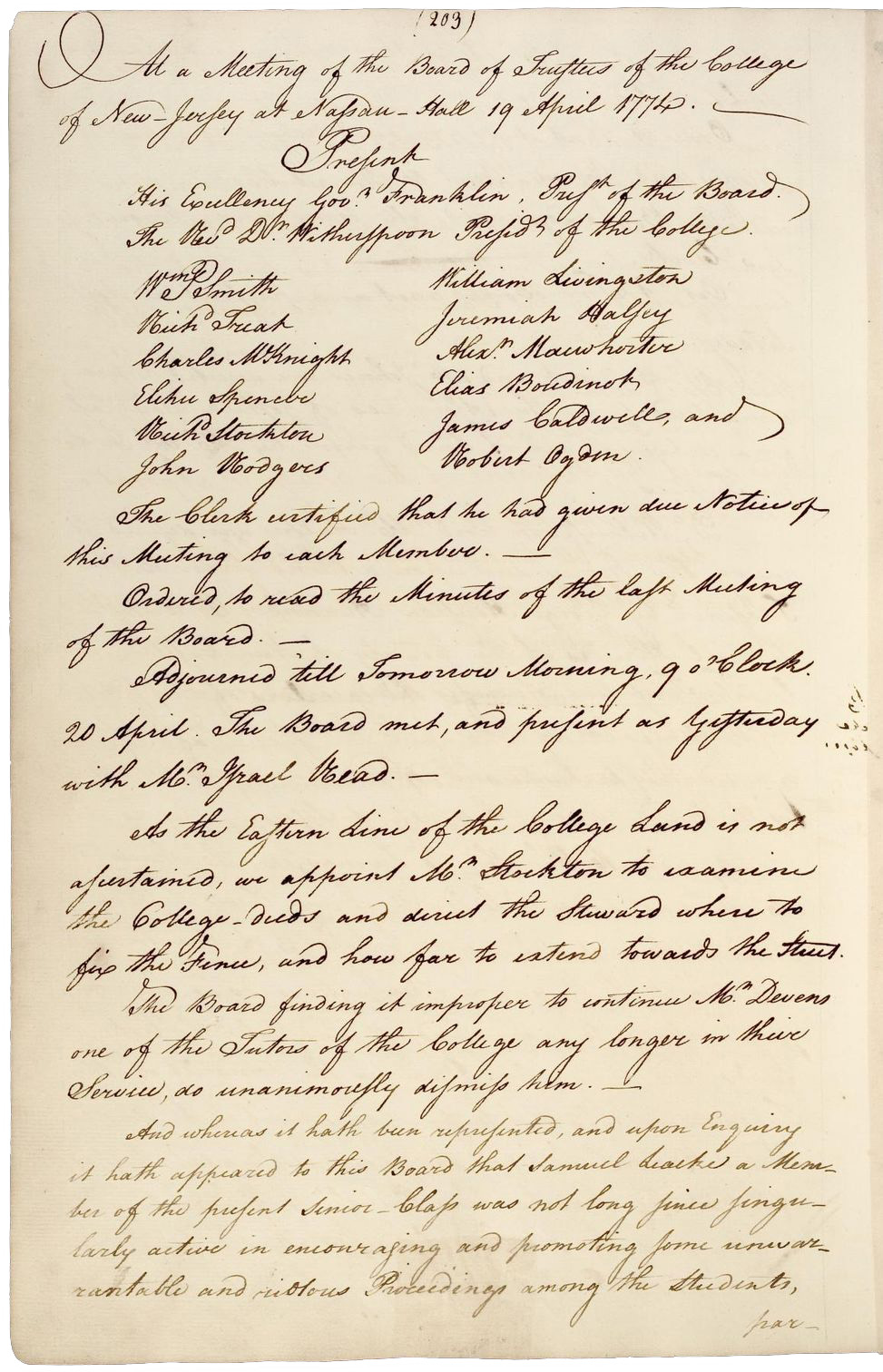
Board of Trustees Minutes, April 19, 1774
Samuel Leake was top of the class of 1774, due to deliver the Latin salutatory oration at commencement. But when revolutionary fervor swept campus, he became a prominent leader in student protests. As punishment for instigating the “riotous Proceedings” against the Tea Act, the Board of Trustees—led by Benjamin Franklin’s son William, a staunch loyalist and New Jersey’s last royal governor—rescinded Leake’s graduation honors. Though he later became a successful Trenton lawyer, Leake is not known to have participated in any form of politics after college.