The Beginnings of the Floating World in Print
The three items in this section are the earliest known printed examples of ukiyo-e (pictures of the floating world). All three are believed to have been created by the same anonymous artist (or group of artists), often referred to as the “Kanbun Master” because they were active around the Kanbun era (1661-1673). They pre-date the work of the earliest documented print artist, Hishikawa Moronobu.

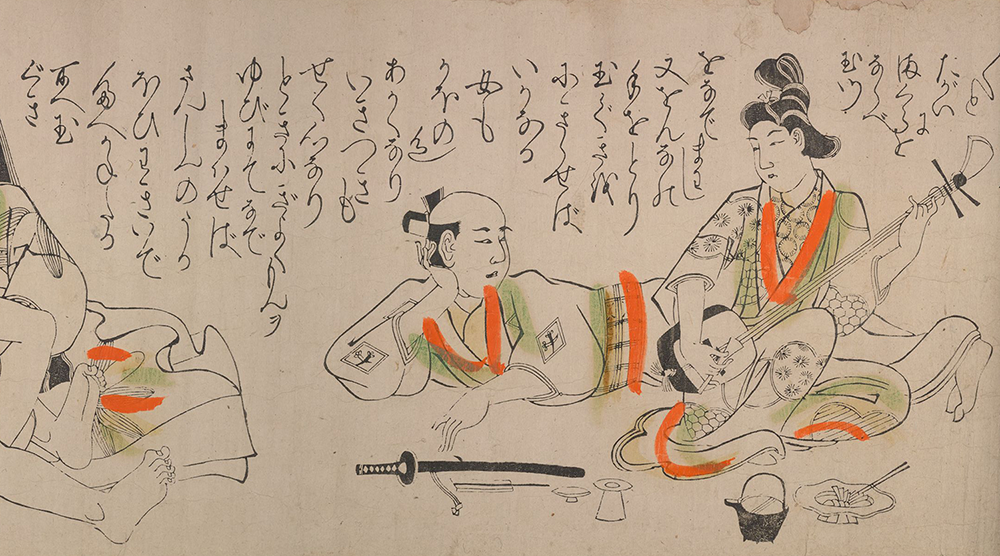
1. [Pillow Pictures (Four Scenes of Lovemaking)] / [枕絵図巻], circa 1660
Artist unknown (Kanbun Master)(active 1660–1673)
Handscroll (hand-colored print)
[Japan]: Publisher unknown, Manji 3
作者不詳 (寛文大師) (作画期 1660-1673)
墨摺筆彩
一巻
[日本]: 出版社不明, 万治 3年頃
This handscroll fragment is believed to be the earliest extant example of printed ukiyo-e. Its orange-red and green colors, loosely hand-painted over black woodblock-printed lines, was typical of books in the 17th century. While four scenes remain, the scroll traditionally would have included 12. This innocuous image of a courtesan entertaining her samurai client suggests that this is the beginning of the scroll—an inoffensive invitation to move forward to the more sexually explicit scenes that follow.

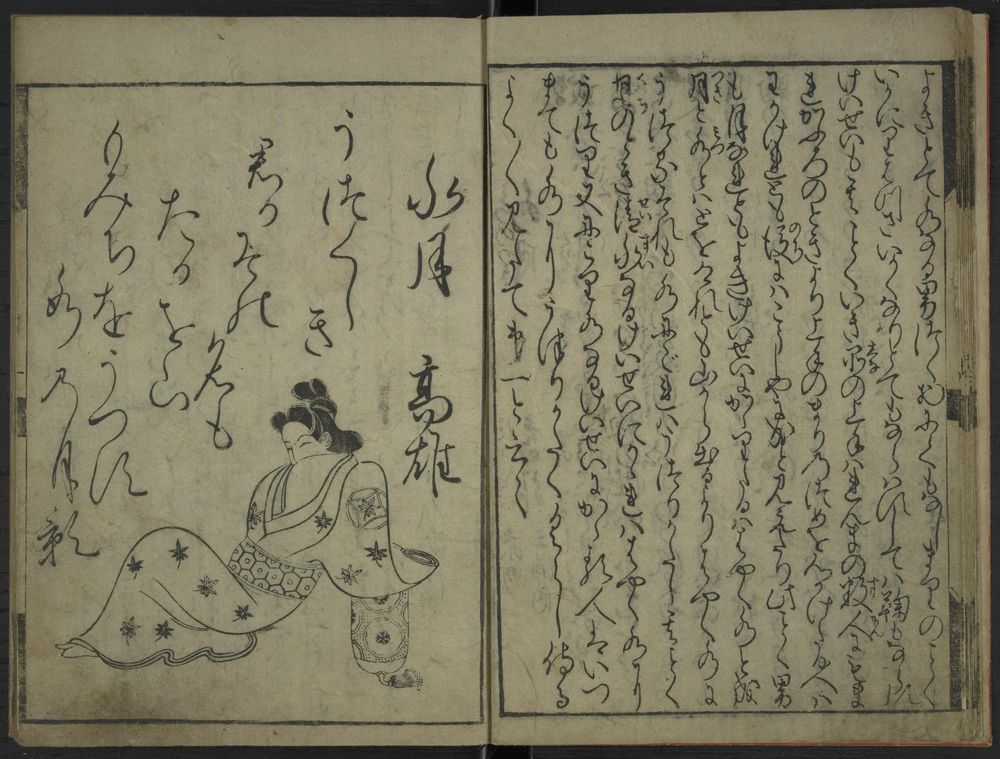
2. Yoshiwara kagami [Mirror of the Yoshiwara] / 吉原かがみ, circa 1660
Artist unknown (Kanbun Master) (active 1660–1673)
One volume
Edo: Urokogataya, Manji 3
作者不詳 (寛文大師) (作画期 1660-1673)
一冊
江戸: 鱗形屋, 万治 3年頃
Courtesan critiques (yūjo hyōbanki 遊女評判記) were among the most commercially successful publications in the late 16th century. This book, a kind of directory, features 28 courtesans, each surrounded by a “comic verse” (kyōka 狂歌) that cleverly incorporates her name. The main text takes the form of a courtesan’s answers to customer questions about ‘the way of love,’ and appears to have been copied from an earlier book published about the Kyoto pleasure quarters. A map of the Yoshiwara district was included, allowing patrons to find the location of courtesans that interested them.

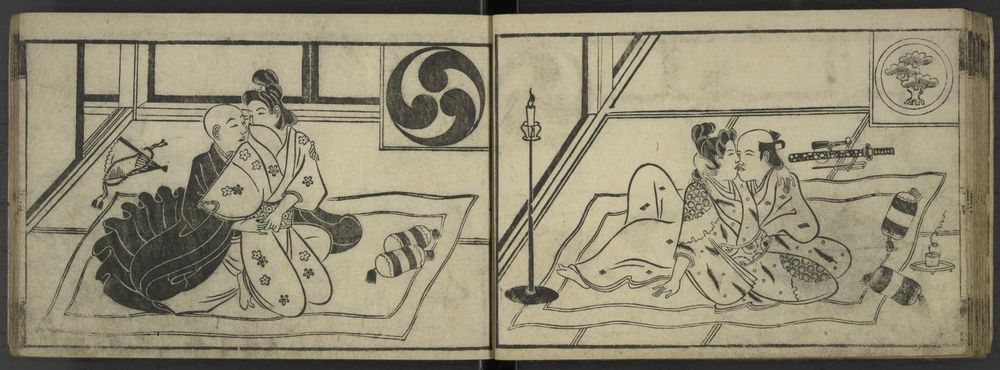
3. Yoshiwara makura-e [Yoshiwara Pillow Pictures] / 吉原枕絵, 1660
Artist unknown (Kanbun Master) (active 1660–1673)
One volume
Edo: Publisher unknown, Manji 3
作者不詳 (寛文大師) (作画期 1660-1673)
一冊
[江戸]: 出版社不明, 万治 3年
Both a guide to the Yoshiwara pleasure district and a sex manual, this is the earliest extant work of printed ukiyo-e with a publication date. It illustrates 46 courtesans entertaining clients of all kinds (including the monk on the left). All of the women can be identified by their crests in the upper corner of each page and can therefore also be located on the Yoshiwara map found in Mirror of the Yoshiwara #2. This is the only existing copy of the book.

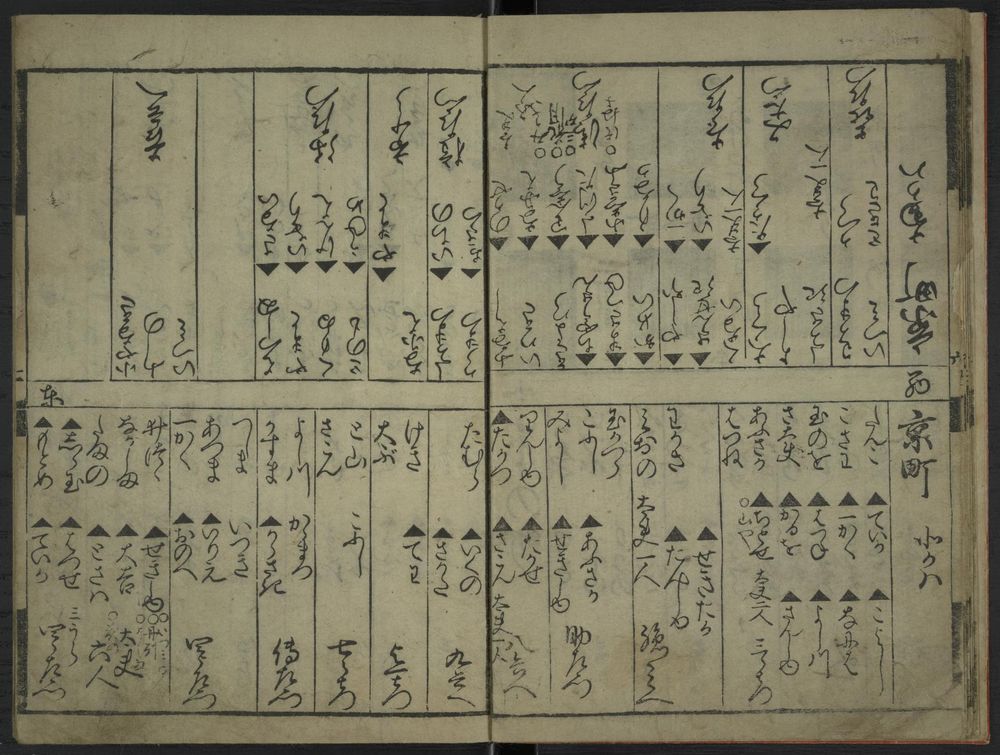
4. Yoshiwara kagami [Mirror of the Yoshiwara] / 吉原かがみ, circa 1660
Artist unknown (Kanbun Master) (active 1660–1673)
One volume
Edo: Urokogataya, Manji 3
作者不詳 (寛文大師) (作画期 1660-1673)
一冊
江戸: 鱗形屋, 万治 3年頃
Detail of the 14-page schematic map of the Yoshiwara pleasure quarters found at the beginning of Mirror of the Yoshiwara [#2]. (The locations of courtesans in both this book and in Yoshiwara Pillow Pictures [#3] can be found using this map.)