Banned Books (1660-1868)
- 1661—Government warns against the publication of materials deemed unflattering to the Tokugawa government (and other members of the samurai class) and the publication of “amorous books” (kōshokubon 好色本).
- 1722—Kyōhō Reforms: Government attempts to impose their mandated social structure in Japan. Published material disrespecting class hierarchy, erotic books, and books related to current events, gossip, or the Tokugawa family are banned. All books are required to include the names of all parties responsible for the publication.
- In response, erotic books are published without any publication information to avoid government censorship. Instead, artists and authors often identify themselves with hidden “poetic pseudonyms,” which allow them to only be identified by those in the know.
- 1790-1800—Kansei Reforms: Government focuses on the publication of seditious materials. Publishers are warned to avoid extravagant printing as part of a strict policy to discourage the consumption of luxury goods.

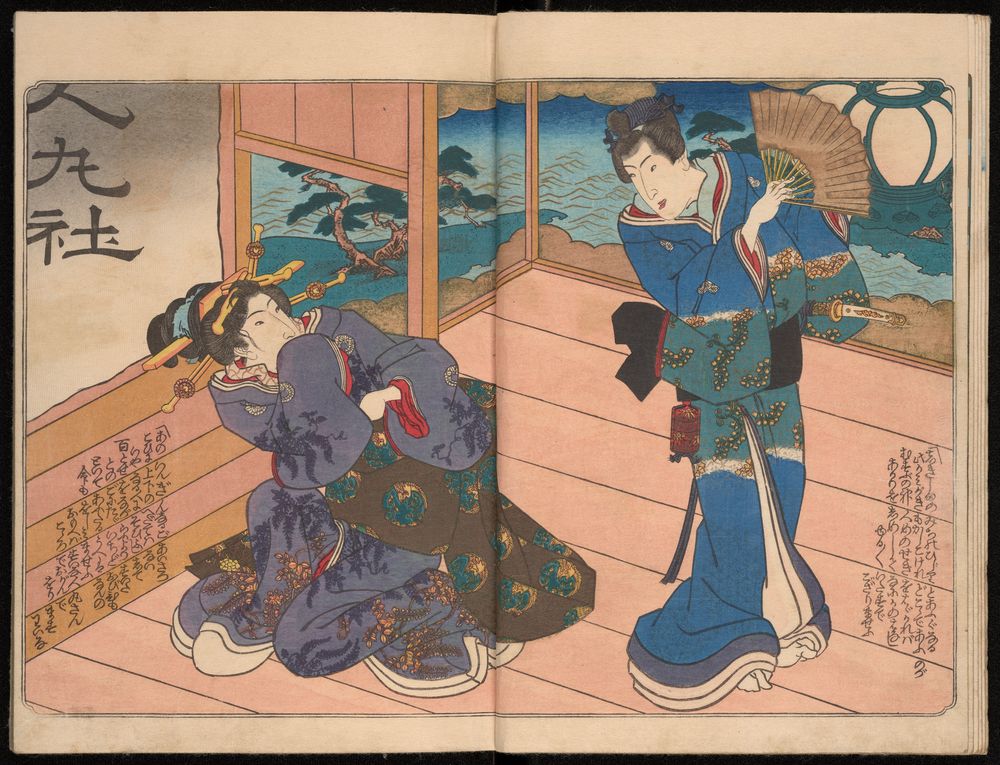
31. Enshi gojūyojō [The Amorous Murasaki Finds Pleasure in Fifty or More Chapters] / 艶紫娯拾餘帖, circa 1835
Utagawa Kunisada (1786-1864); Author: Ryūtei Tanehiko (1783-1842)
Three volumes
[Japan]: Publisher not identified, circa Tenpō 6
歌川国貞 (1786-1864); 著者: 柳亭種彦 (1783-1842)
三巻三冊
[日本]: 出版社不明, 天保 6年頃

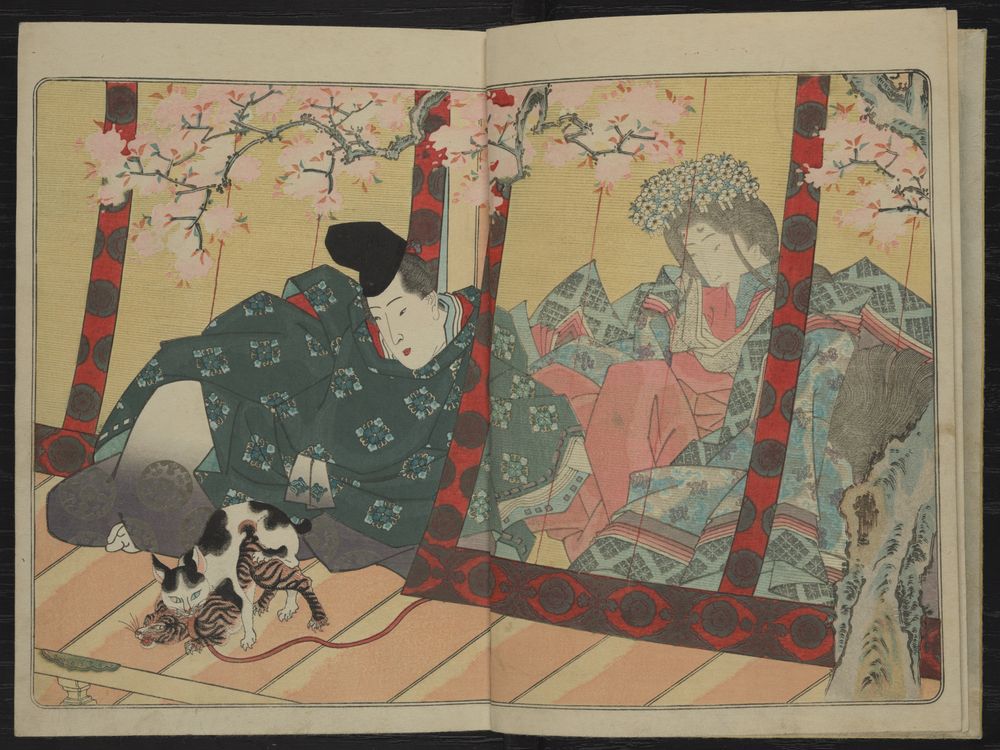
32. Kachō yojō azuma Genji [Deep Feelings of Birds and Flowers: Genji of the East] / 花鳥余情吾妻源氏, circa 1837
Utagawa Kunisada (1786-1864); author: Ryūtei Tanehiko (1783-1842)
Three volumes
[Japan]: Publisher not identified, circa Tenpō 8
歌川国貞 (1786-1864); 著者: 柳亭種彦 (1783-1842)
三巻三冊
[日本]: 出版社不明, 天保 8年頃

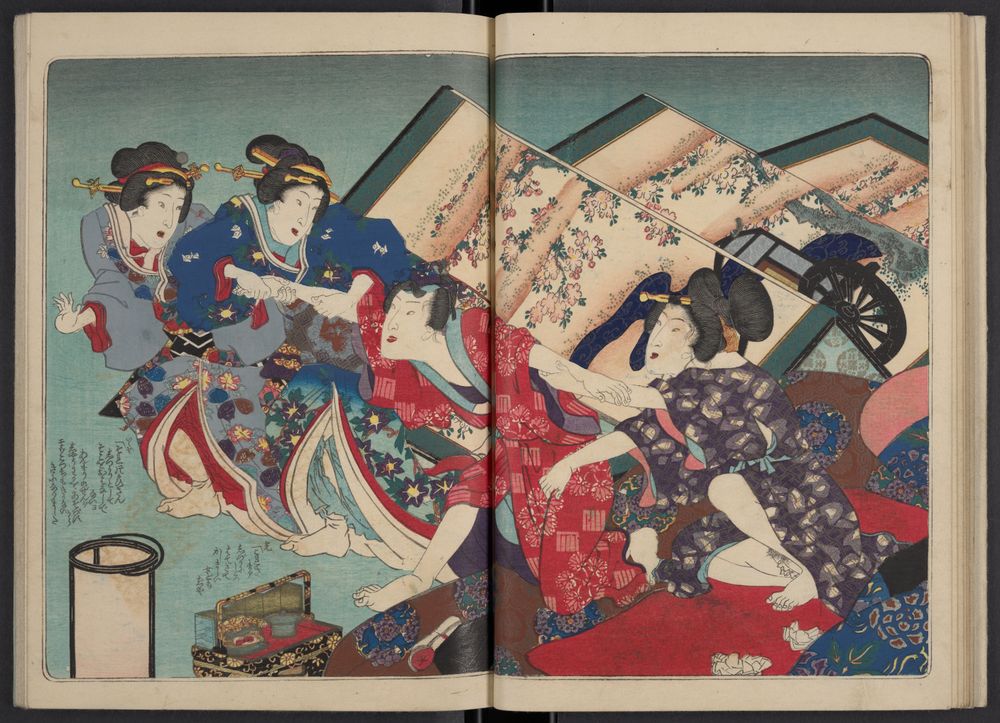
33. Shō-utsushi aioi Genji [A True-Life Devoted Genji] / 正冩相生源氏, circa 1851
Utagawa Kunisada (1786-1864); Author: Ryūtei Tanehiko (1783-1842)
Three volumes
[Japan]: Publisher not identified, circa Kaiei 4
歌川国貞 (1786-1864); 著者: 柳亭種彦 (1783-1842)
三巻三冊
[日本]: 出版社不明, 嘉永 4年頃
Much of Kunisada’s early fame and popularity can be credited to his dynamic book illustrations for author Ryūtei Tanehiko’s blockbuster parody of the 11th-century classic, The Tale of Genji. Written in serialized form between 1829 and 1842, Nise Murasaki inaka Genji (The Fake Murasaki and the Rustic Genji) chronicled the many amorous adventures of its Genji-like protagonist, Mitsuuji, which was discretely illustrated in black and white by Kunisada. Its overwhelming popularity and brisk sales undoubtedly led to the publication of these three erotic and luxurious color-printed erotic versions.
Known as “The Three Genji,” (san Genji 三源氏), these books were illegally published. The first two titles [#31, #32] are believed to have been part of an 1842 government book-burning, which included 11 of Kunisada’s erotic books and the woodblocks used to print them. The publishers and artists of all of these illegal books were taken into custody. Kunisada, however, may have been tipped off to the raid because he had just left on a long pilgrimage and could not be arrested.
These extravagantly produced editions of the “three Genji” also violated sumptuary laws. Printed in rich, expensive color on thick luxurious paper, the images have been enhanced with embossing, burnishing (shomenzuri 正面摺), metallic pigments, gold leaf, mica, and crushed mother-of-pearl. Also striking is Kunisada’s use of the synthetic, deeply saturated Prussian blue (berorin). The lavish printing suggests private sponsorship for an elite audience.

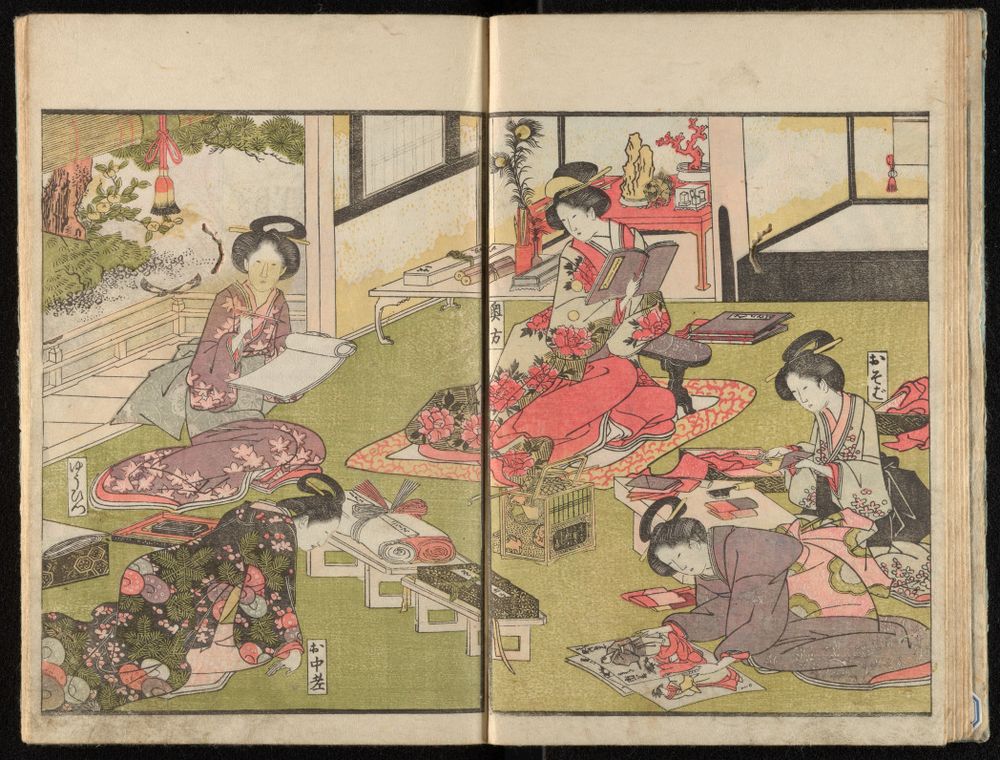
34. Ehon imayō sugata [Picture Book of Modern Forms and Figures] / 絵本時世粧, 1802
Utagawa Toyokuni (1769-1825)
Two Volumes
[Edo]: Kansendō (Izumiya Ichibē), Kyōwa 2
歌川豊国 (1769-1825)
二巻二冊
[江戶]: 甘泉堂 (和泉屋市兵衛), 享和 2年
As outlined in the preface, this book is about modern women of all kinds in scenes from their daily lives. They are presented in order of their perceived morality (based on class). Here, for example, women of the high-ranking samurai class pursue polite activities. Like Sukenobu’s 100 Women [#35,#36], this book flouted the 1789 edict banning the depiction of women of different social classes in a single publication and the book was censored. In subsequent printings, the women’s names (in the cartouches beside them) were removed, leaving them blank.

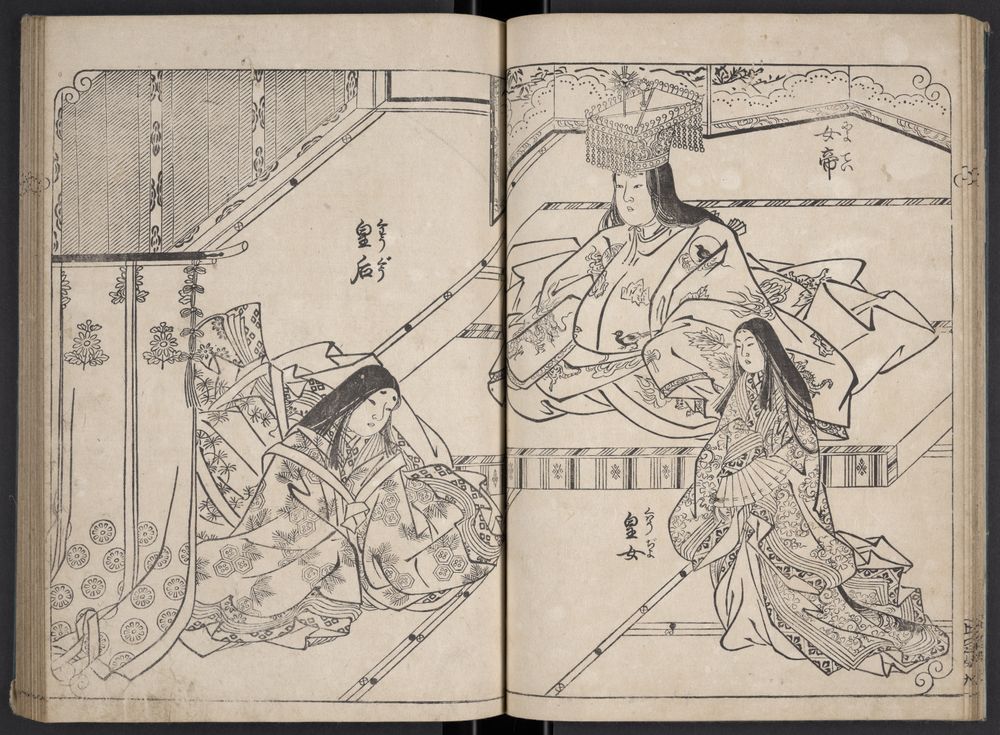
35. Hyakunin jorō shinasadame [One Hundred Women Classified According to their Rank] / 百人女郎品定, 1723
Nishikawa Sukenobu (1671-1750)
Two volumes
Kyo[to]: Hachimonjiya Hachizaemon, Kyōhō 8
西川 祐信 (1671-1750)
二巻二冊
京[都]: 八文字屋八左衛門, 享保 8年
Published in 1723, this seemingly innocuous, non-erotic book was banned by government censors. Although Kyoto artist Sukenobu was famous for his erotica, this book was probably banned for its politically seditious disrespect of the social hierarchy: the inclusion of women of different social classes in a single publication. Viewing its two volumes here in correct order (right to left), the book begins with the empress herself. This illustration was eliminated in later editions, but the book was still listed on the 1770 banned book list compiled by publishers.

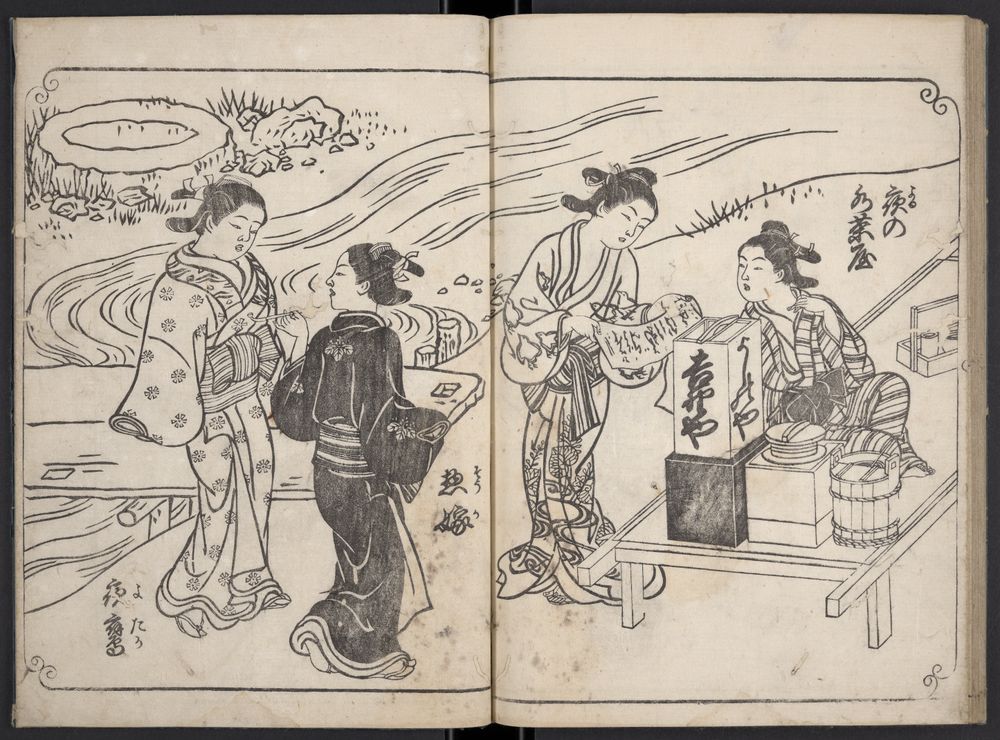
36. Hyakunin jorō shinasadame [One Hundred Women Classified According to their Rank] / 百人女郎品定, 1723
Nishikawa Sukenobu (1671-1750)
Two volumes
Kyo[to]: Hachimonjiya Hachizaemon, Kyōhō 8
西川 祐信 (1671-1750)
二巻二冊
京[都]: 八文字屋八左衛門, 享保 8年
While Volume One focuses on the empress and–in descending order of status–other women of the upper classes, Volume Two turns to the courtesans of the pleasure quarters of Edo, Kyoto, and Osaka. It ends with the streetwalkers (yotaka (nighthawks) 夜鷹) seen here. The depiction of the women in both volumes is indistinguishable—all are elegant—an added affront to the Tokugawa government’s mandated social order.

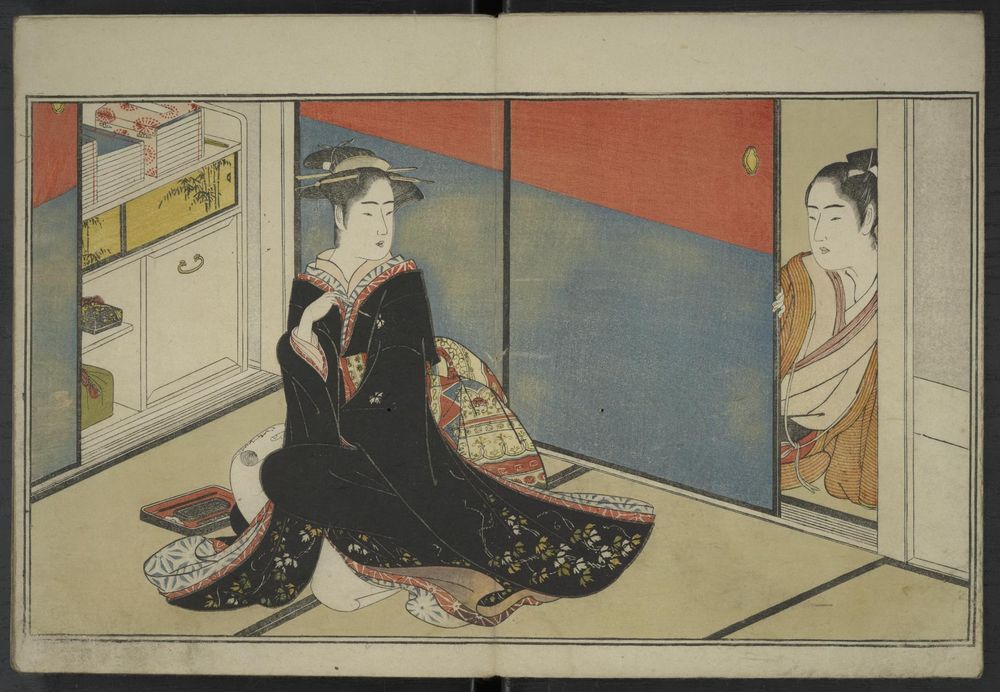
37. Haikai yobuko-dori [Haikai Poetry Book of the Cuckoo or Worshipping a Woman’s Privates at Night] / 拝開夜婦子取, circa 1788
Katsukawa Shunshō aka Jintaku Sanjin (1726-1793)
One volume
[Japan]: Publisher not identified, circa Tenmei 8
勝川春章 (腎澤山人) (1726-1793)
一帖
[日本]:出版社不明、天明 8年頃
Late 18th century diaries note that some of the wealthiest samurai of the time owned copies of this book, even though it defied strict laws banning erotica. Its lavish production also flaunted sumptuary regulations. To avoid potential punishment, there is no publishing information. Shunshō is only identified in the preface by his “erotic pseudonym,” Jintaku Sanjin. This is the only one of the 19 erotic books by Katsukawa Shunshō to be printed in color, and this copy is a rare first printing of the book.

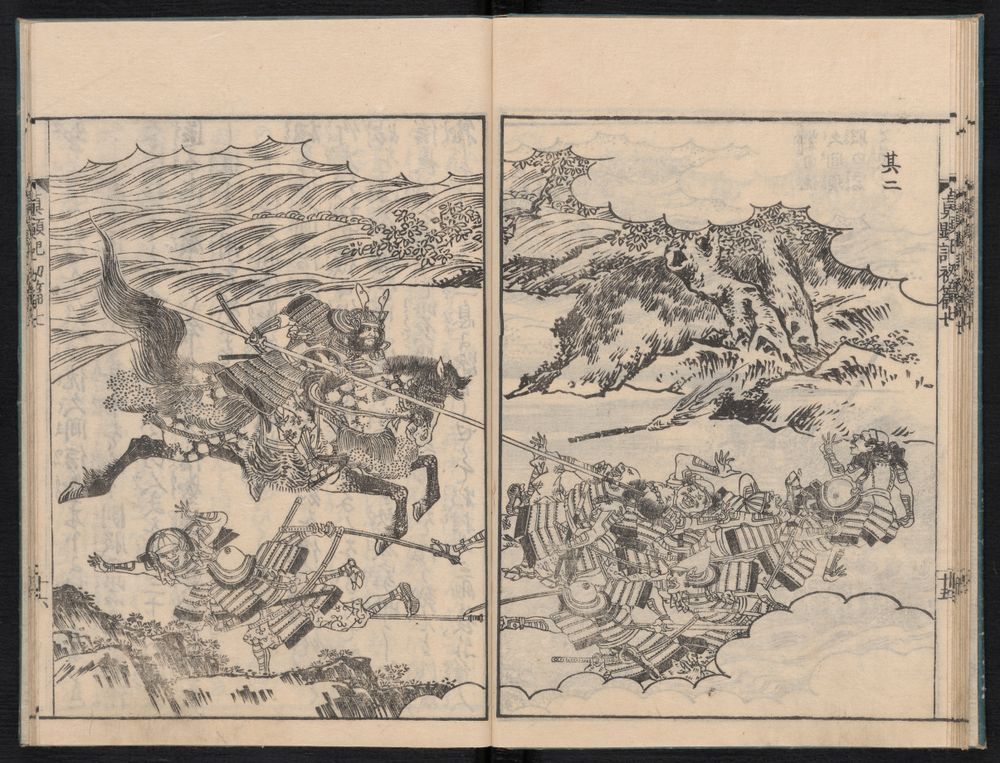
38. Ehon taikōki [Picture Book: Annals of the Regent (Hideyoshi)] / 繪本太閤記, 1797-1802
Okada Gyokuzan (1737-1808); Author: Takeuchi Kakusai (1770-1826)
84 volumes
Osaka: Katsuoya Rokubē, Kansei 9 - Kyōwa 2
岡田玉山 (1737-1808); 著者: 武内確斎 (1770-1826)
七編八四冊
大阪: 勝尾屋六兵衞/ 寬政 9年- 享和 2年
Despite edicts in 1722 that specifically forbade references to the Tokugawa family, this 84-volume illustrated tale was published in installments over six years. Names were changed, but it was clearly an account of the life of the imperial regent, Toyotomi Hideyoshi (1537-1598), whose heirs and successors were killed by the first Tokugawa shōgun to gain control and rule Japan. Ironically, this book fueled a fad for books and prints about Hideyoshi, but in 1804 this and other published material about the regent were banned in a major government crackdown.

![image of the front cover of Ehon taikōki [Picture Book: Annals of the Regent (Hideyoshi)]](/uploads/spotlight/attachment/file/8385/ehon_taikok_pt4v9cover.jpg)
39. Ehon taikōki [Picture Book: Annals of the Regent (Hideyoshi)] / 繪本太閤記, 1797-1802
Okada Gyokuzan (1737-1808); Author: Takeuchi Kakusai (1770-1826)
84 volumes
Osaka: Katsuoya Rokubē, Kansei 9 - Kyōwa 2
岡田玉山 (1737-1808); 著者: 武内確斎 (1770-1826)
七編八四冊
大阪: 勝尾屋六兵衞/ 寬政 9年- 享和 2年
Even the covers of this book were boldly designed. Here, embossed into the thick paper, are the crests (mon 紋) of the historical predecessors of Ieyasu, the first Tokugawa shōgun (1543-1616), with whom he had had complicated histories: the Japanese quince (top left) of Oda Nobunaga (1534-1582) and the flowering paulownia (bottom right) of Toyotomi Hideyoshi. These relief-molded (kataoshi 型押し) motifs appear on the covers of all 84 volumes.

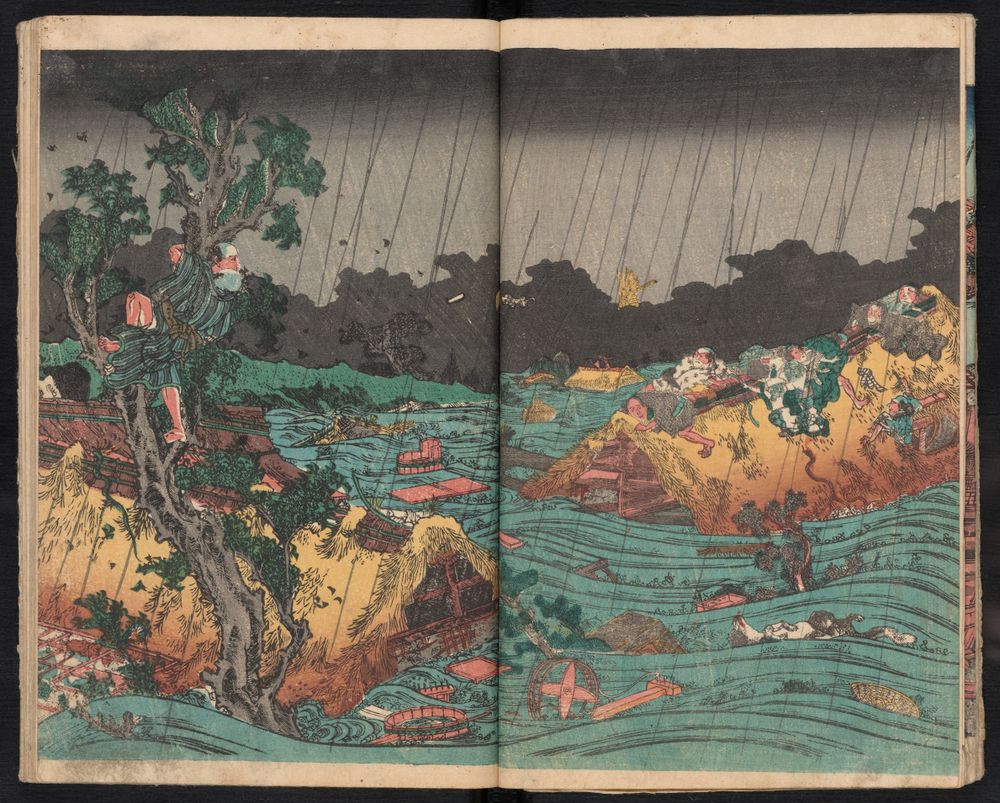
40. Ansei fūbunshū [Natural Disasters of the Ansei Period] / 安政風聞集, circa 1856
Utagawa Yoshitsuna (active 1848-1868); Editor: Kinton Dōjin aka Kanagaki Robun (1829-1894)
Three volumes
[Japan]: Publisher not identified, circa Ansei 3
歌川芳綱 (作画期 1848-1868); 編集者: 金屯道人(仮名垣魯文)(1829-1894)
三巻三冊
[日本]:出版社不明, 安政3年頃
Influenced by the Neo-Confucian notion that during a virtuous reign daily life was uneventful, the government outlawed the publication of “newsworthy material,” which they construed as criticism of their rule. This book was immediately banned for its harrowing portrayal of disastrous events that occurred during the first two years of the Ansei period (1854-1860). Using powerful images, eyewitness accounts, and religious and mythological explanations, it particularly focuses on the tragedies related to the 1856 typhoon and subsequent flooding that took 10,000 lives.