Mid to Late 17th-Century Books

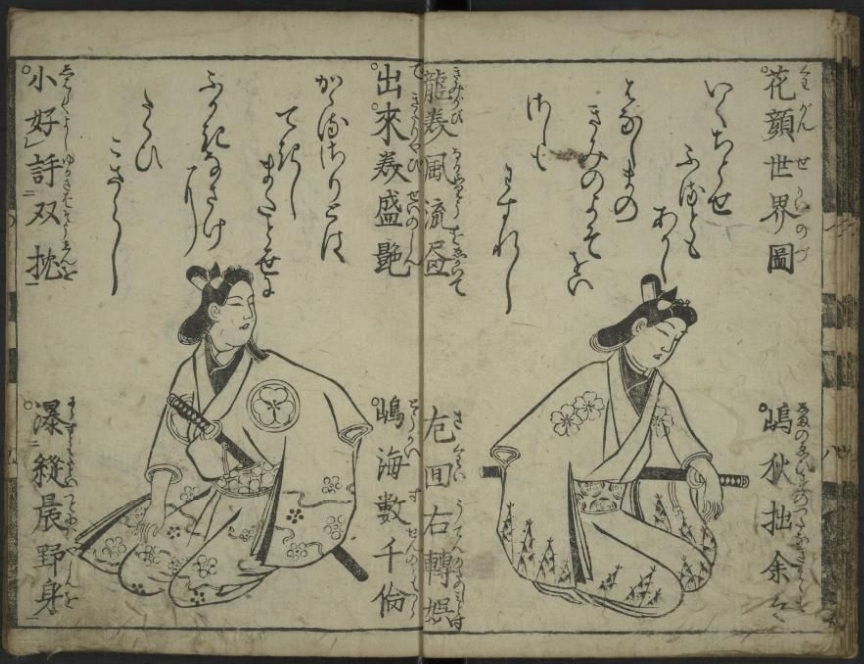
5. Enka tozengusa [Essays in Idleness from the Greenroom] / 垣下徒然草, 1671
Artist unknown
One volume
Edo: Urokogataya, Kanbun 11
作者不詳
一冊
江戸: 鱗形屋, 寛文 11年
Another of the popular late 17th century “critique books” (see #2), this one focuses on young male kabuki actors, each paired with comic poems incorporating their name. An assessment of their beauty and “charm” follows the 24 illustrations. The book’s title is derived from the 14th-century Essays in Idleness [Tsurezuregusa] by the Buddhist monk, Kenkō. By referencing his musings on ephemerality, the publisher hints at the fleeting nature of the actors’ youth and beauty and—possibly—the need to own this book that captures both. This is the only extant copy.

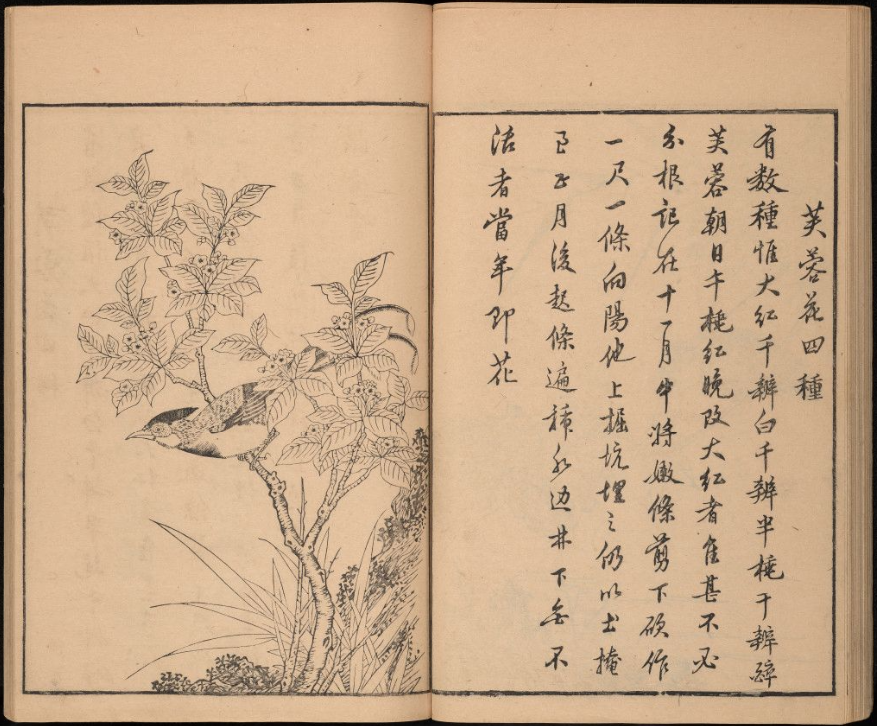
9. Hasshū gafu [Primer on Eight Varieties of Painting] / 八種畫譜, 1672
Huang Fengchi (1558-1626), original Chinese artist
Eight volumes
Edo: Tōhonʼya Tahei; Kyoto: Tōhonʼya Seiē, Kanbun 12
黄鳳池 (1558 –1626)
八冊
江戶: 唐本屋太兵衛; 京都: 唐本屋清兵衛, 寛文 12年
Imported Chinese books were greatly admired, but expensive and hard to obtain. Savvy publishers would therefore copy and more cost-effectively reprint them for the mass market. This is the Japanese edition of the original title: Tang shi hua pu [Picture Book of Tang Dynasty Poems 唐诗画谱] (1620-28). It features poems from the Tang dynasty (618-907) and a complete collection of classical Chinese painting models. While sold as painting manuals (gafu), books like these were also purchased by the general public for viewing pleasure.

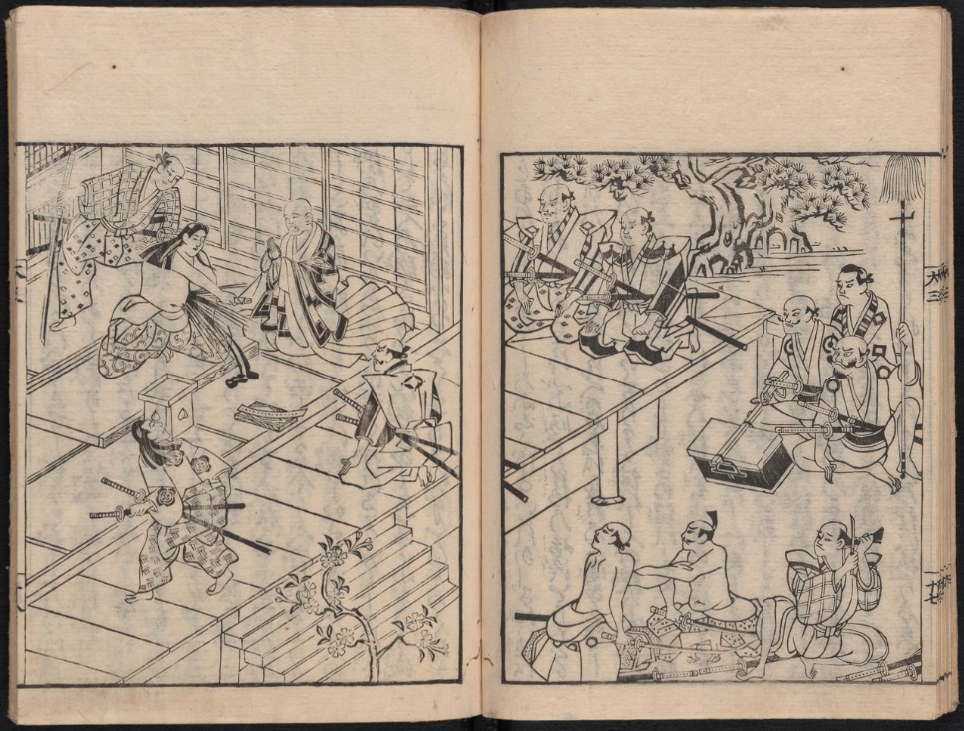
10. Nanshoku ōkagami: honchō waka fūzoku [The Great Mirror of Male Love: The Custom of Boy Love in Our Land] / 男色大鑑: 本朝若風俗男色, 1687
Yoshida Hanbē (died circa 1693); Author: Ihara Saikaku (1642-1693)
Eight parts in ten volumes
Osaka: Fukaeya Tarōbē han; Kyoto: Yamazaka Ichibē, Jōkyō 4
吉田 半兵衛 (1693年頃に死去); 著者: 井原 西鶴 (1642-1693)
八巻十冊
大阪: 深江屋太郎兵衛 と京都: 山崎曉市兵衛, 貞享 4年
Considered a masterpiece of floating world literature (ukiyo-zōshi 浮世草子), this book is a collection of 40 tales about the romantic relationships between men and adolescent boys. Illustrations are not erotic, but depict key dramatic moments in the stories. Here, a boy is forced to commit ritual suicide (seppuku 切腹) for killing the samurai suitor who threatened his life. Breaking all records in 17th-century publishing, the book appeared in many editions. This is one of only two known copies of the first deluxe printing.

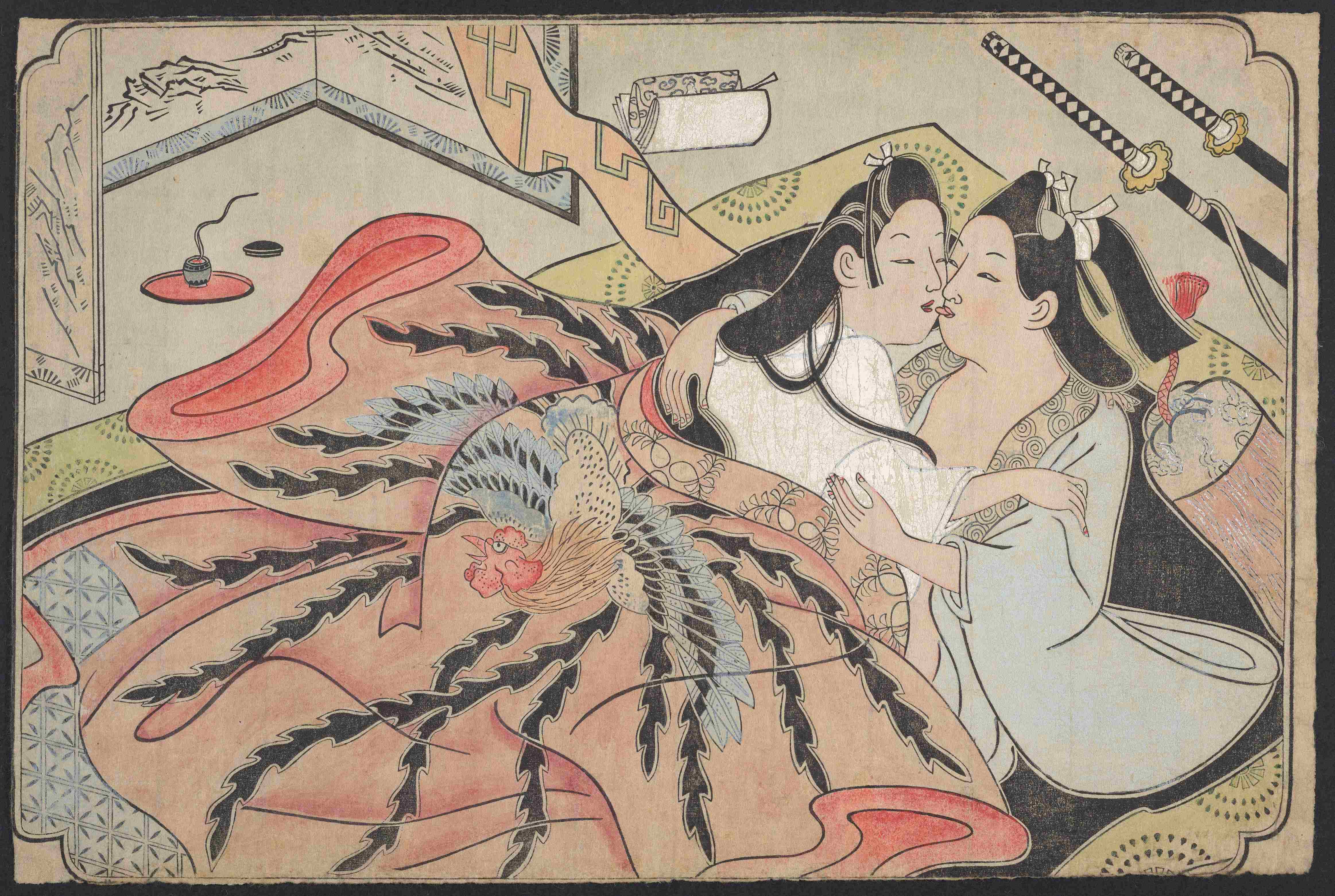
11. [Scenes of Lovemaking (Pillow Pictures)] / [枕絵図巻], circa 1681-1688
Sugimura Jihe (active 1681-1704)
Set of 12 hand-colored prints
Edo: Hangiya Chōjirō, Tenna-Jōkyō eras
杉村治兵衛 (作画期 1681-1704)
手彩色木版画十二枚セット
江戶: 板木屋長次郎, 天和 ~ 貞享期
A Yoshiwara courtesan and a young samurai (identified by the two swords) make love under a robe elaborately decorated with a phoenix design. Early publishers produced prints like this in sets of 12 to mirror the 12-scene format of erotic handscrolls that were hand-painted by ukiyo-e artists for an elite clientele. Printed on high-quality paper and professionally hand-colored with fine pigments, this set (of which nine prints survive) would also have been created for a wealthy customer.

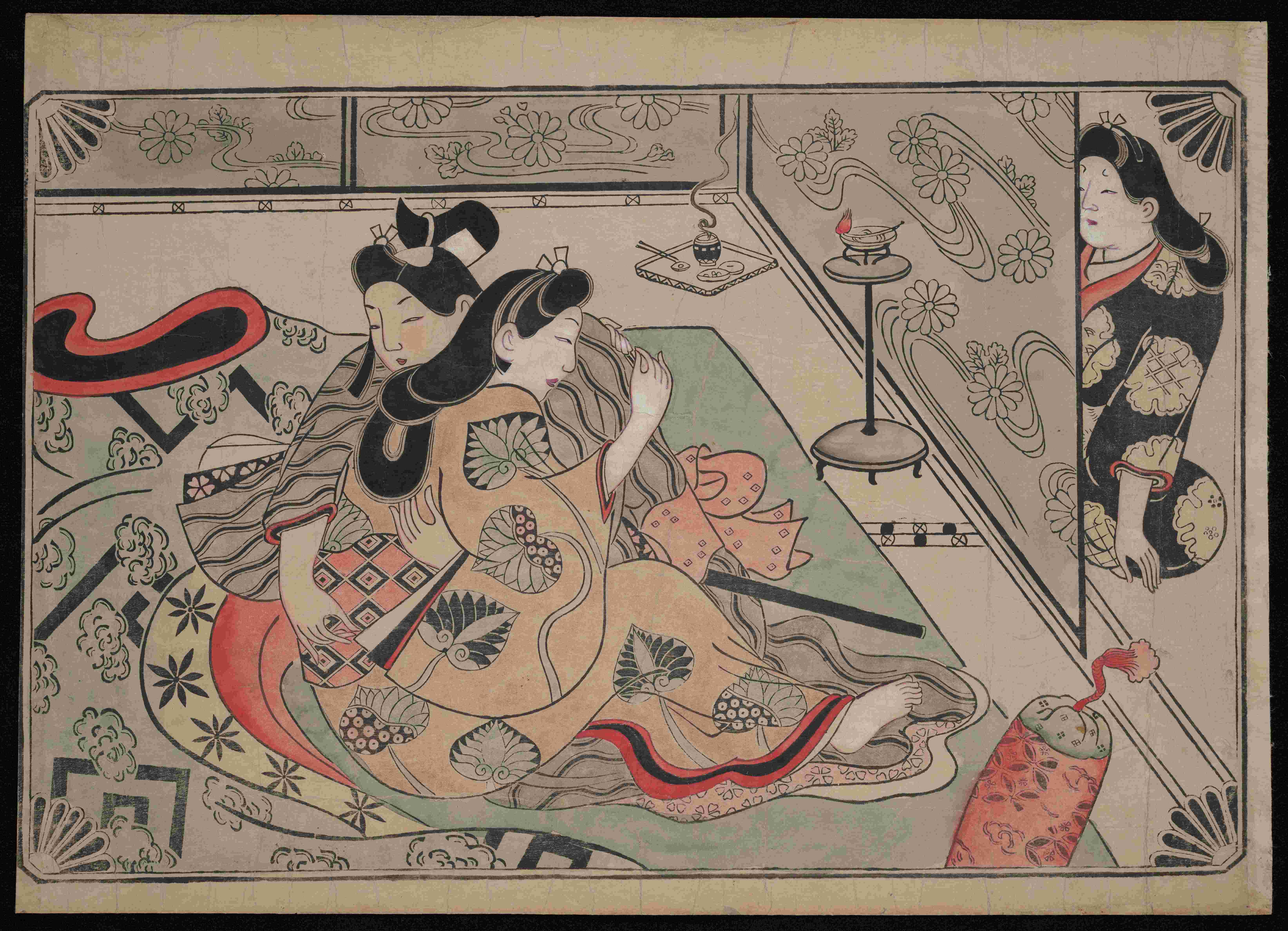
12. [Scenes of Lovemaking (Pillow Pictures)] / [枕絵図巻], circa 1681-1688
Sugimura Jihē (active 1681-1704)
Set of 12 prints hand-colored prints
Japan: Publisher unknown, Tenna-Jōkyō eras
杉村治兵衛 (作画期1681-1704)
手彩色木版画十二枚セット
江戶: 出版社不明, 天和 ~ 貞享期
Books and prints by Jihē were influenced by and were often attributed to his older contemporary, Hishikawa Moronobu, the “father of ukiyo-e.” In the early 20th century, however, Jihē’s name was found to be hidden within some of his designs, changing the authorship of many works. Here, for example, in this print, the name Sugimura (his last name–not his artist name, Jihē) is worked into the design of the obi sash worn by the reclining courtesan.

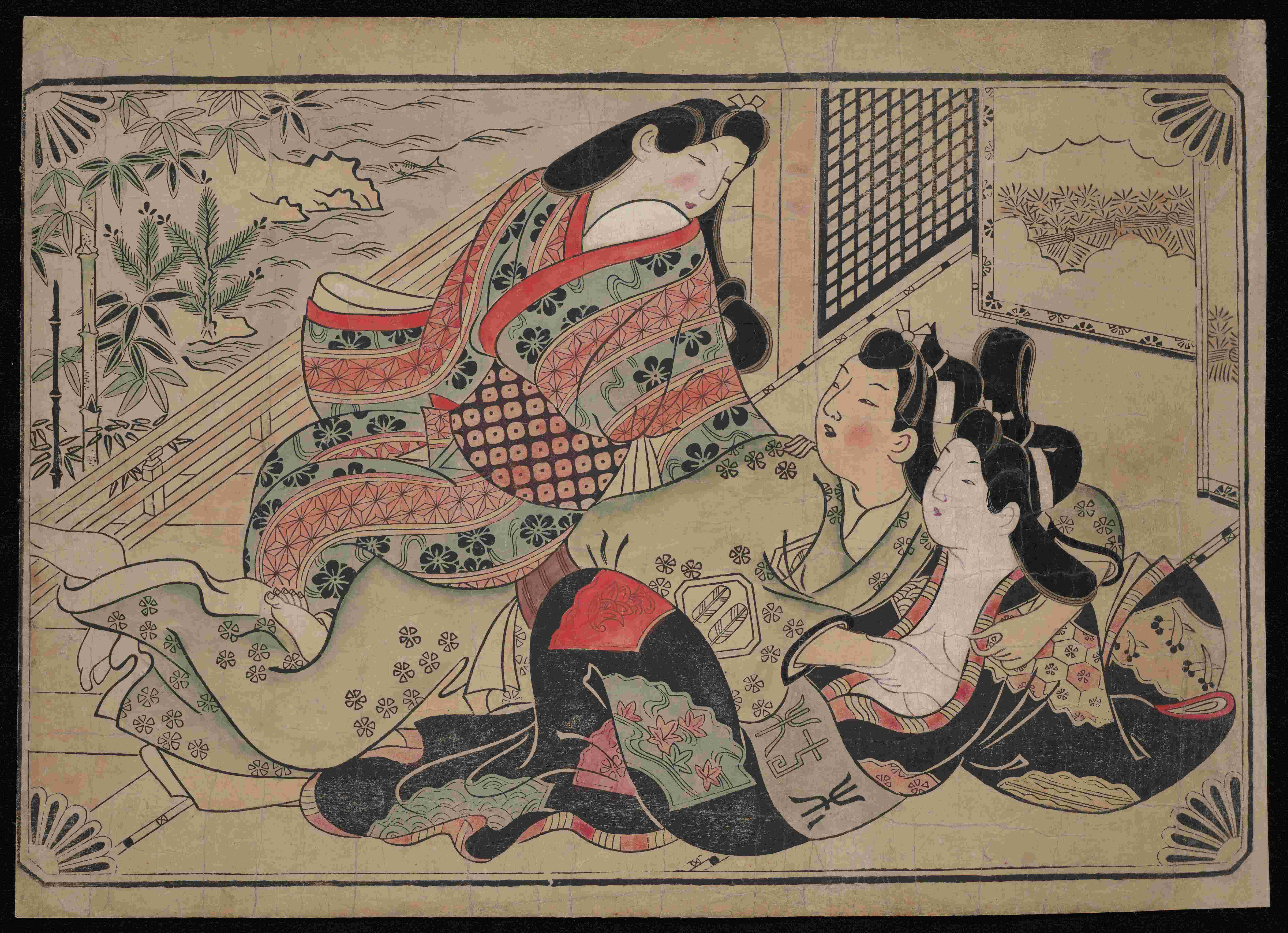
13. [Scenes of Lovemaking (Pillow Pictures)] / [枕絵図巻], circa 1681-1688
Sugimura Jihē (active 1681-1704)
Set of 12 prints hand-colored prints
Japan: Publisher unknown, Tenna-Jōkyō eras
杉村治兵衛 (作画期1681-1704)
手彩色木版画十二枚セット
江戶: 出版社不明, 天和 ~ 貞享期
A member of the samurai class, Jihē was the cousin of Sugimura Kihē, one of the legendary 47 Ronin and, based on a court deposition, he was probably still alive when their trial took place in 1703. Two-thirds of Jihē’s output is believed to have been shunga (春画 “spring pictures” or erotica). In this print, an embrace between a courtesan and her samurai lover is observed by her yarite (遣手), typically the job of a retired courtesan or the tea house (brothel) owner.