Travel, Famous Places (meisho 名所), and the Tōkaidō Road
Because of an easing of travel restrictions and a network of roads constructed by the Tokugawa government, travel and tourism became extremely popular in Japan from the 17th century onward. Widespread interest in touring led publishers to publish travel-related books for both explorers and armchair travelers. Most popular were books about the Tōkaidō Road.
Adventure was promised to those who traveled Japan’s 300-mile-long Tōkaidō Road from the 17th to early 20th century. Illustrated books and prints created and fostered a perception that it was more than a thoroughfare. Much like the legendary Route 66 in America, it was a destination in and of itself. So powerful was the art and literature related to the Tōkaidō that even as the road itself fell into disuse (superseded by the railroad and a modern highway system), it remained—and remains today—a part of Japan’s collective consciousness.

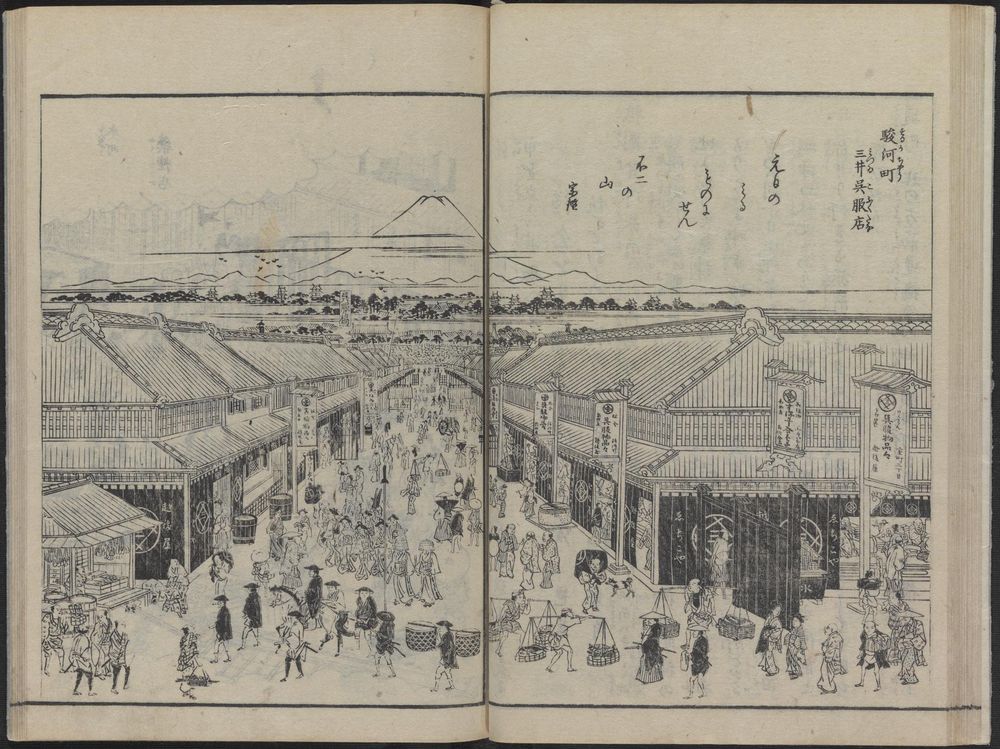
46. Edo meisho zue [Illustrated Guide to the Famous Sites of Edo] / 江戶名所圖會, 1834-1836 (Preface: 1829)
Hasegawa Settan (1778-1843); Authors: Saitō Chōshū (1737-1799); Saitō Yukitaka (1772-1818); Saitō Gesshin (1804-1878)
Seven parts in 20 volumes
Tōto (Edo): Suharaya Mohē and others; Suharaya Sasuke, Tenpō 5-7
長谷川雪旦 (1778-1843); 著者: 斎藤長秋 (1737-1799); 斎藤幸孝 (1772-1818); 斎藤月 (1804-1878)
七巻二十冊
東都 (江戸): 須原屋茂兵衛...[その他の出版社]; 須原屋佐助, 天保 5-7年
Written and edited over 40 years by three generations of the Saitō family, these 20 volumes are a window into the world of Japan’s capital city, Edo, in the early 19th century. Lively commentary and more than 600 illustrations offer not only detailed descriptions of the city, but a sense of their history, mythological origins, culture, and religious life of Edo’s surrounding regions. Here, the view of Mount Fuji lends an auspicious air to Suruga’s Street’s bustling textile district and to the Mitsui Gofukuten shop, which later became Japan’s first modern department store.

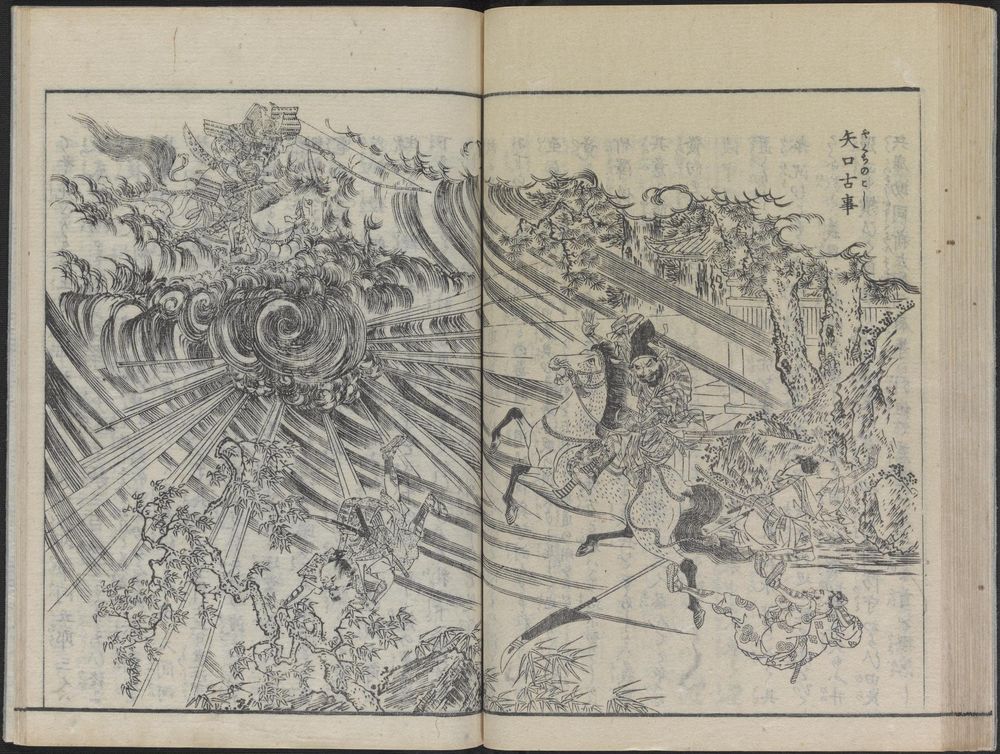
47. Edo meisho zue [Illustrated Guide to the Famous Sites of Edo] / 江戶名所圖會, 1834-1836 (Preface: 1829)
Hasegawa Settan (1778-1843); Authors: Saitō Chōshū (1737-1799); Saitō Yukitaka (1772-1818); Saitō Gesshin (1804-1878)
Seven parts in 20 volumes
Tōto (Edo): Suharaya Mohē and others; Suharaya Sasuke, Tenpō 5-7
長谷川雪旦 (1778-1843); 著者: 斎藤長秋 (1737-1799); 斎藤幸孝 (1772-1818); 斎藤月岑 (1804-1878)
七巻二十冊
東都 (江戸): 須原屋茂兵衛...[その他の出版社]; 須原屋佐助, 天保 5-7年
Like many late 18th and 19th century guidebooks, this book offered its readers more than pictures and descriptions of cities and landscapes. Here, the ghost of 14th century folk hero Nitta Yoshioki (died 1358), a samurai drowned by his enemies in Edo’s Tama River, takes his revenge on them with a massive fireball. Tokyo (Edo) is still home to the shrine built to appease this ghost.

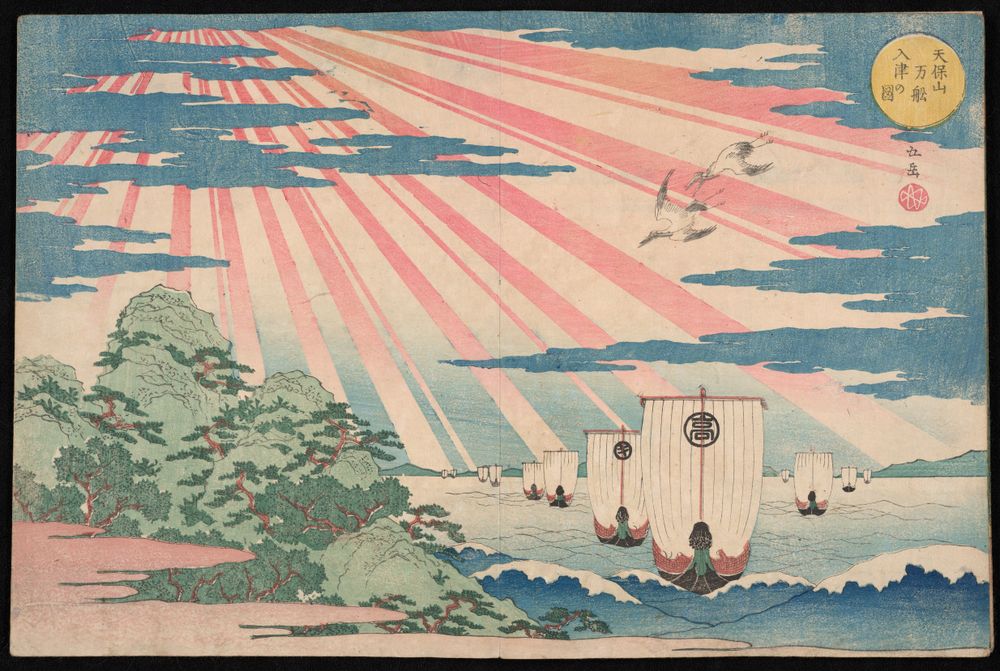
48. Naniwa meisho tenpōzan shōkei ichiran [Famous Places of Osaka: Views of Mount Tenpō at a Glance] / 浪花名所天保山勝景一覧, 1834
Yashima Gakutei aka Yashima Gogaku (1786-1868)
One volume
Edo: Eijudō Nishimuraya Yōhachi; Osaka: Kyobundō (Shioya Kisuke), Tenpō 5
八島岳亭 (八島五岳) (1786-1868)
一帖
江戶: 永寿堂西村屋与八; 大坂: 巨文堂(鹽屋忠兵衞), 天保 5年
In 1831, a 132-feet high artificial mountain, called Mt. Tempō, was created through the dredging of excessive sediment at the mouth of the Aji River in Osaka. It was soon developed into a tourist destination—a famous place (meisho 名所)—and a popular subject for woodblock prints. In this scene entitled 10,000 Ships Entering the Harbor at Mt. Tenpō (Tenpōzan mansen nyūshin no zu), cranes fly overhead as cargo ships sail into the harbor at sunset.

49. Naniwa meisho tenpōzan shōkei ichiran [Famous Places of Osaka: Views of Mount Tenpō at a Glance] / 浪花名所天保山勝景一覧, 1834
Yashima Gakutei aka Yashima Gogaku (1786-1868)
One volume
Edo: Eijudō Nishimuraya Yōhachi; Osaka: Kyobundō (Shioya Kisuke), Tenpō 5
八島岳亭 (八島五岳) (1786-1868)
一帖
江戶: 永寿堂西村屋与八; 大坂: 巨文堂(鹽屋忠兵衞), 天保 5年
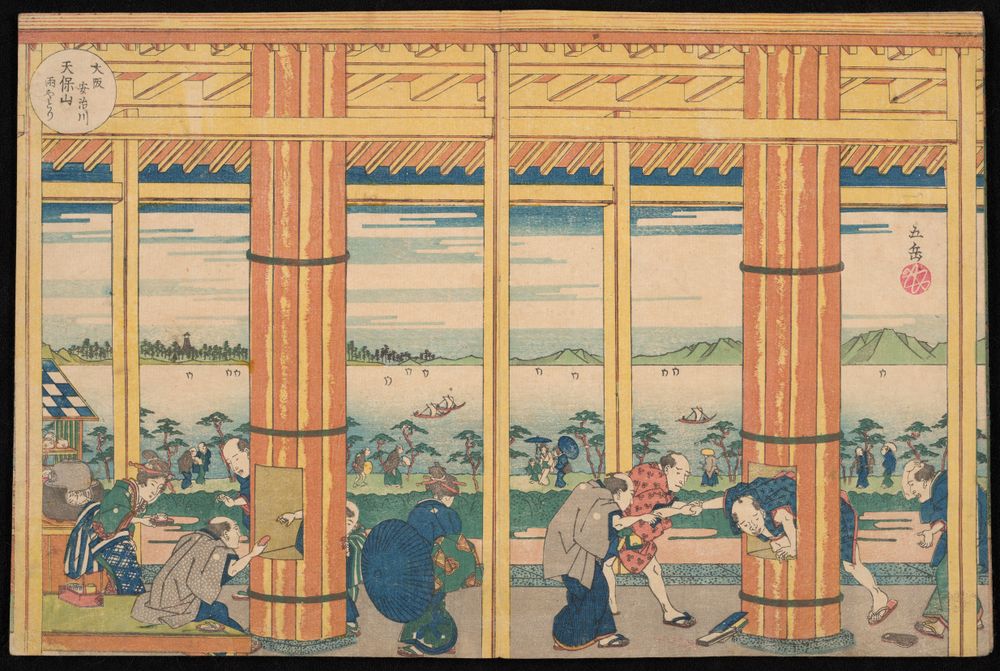
In this scene, Escaping the Rain at Mt. Tempō (on the) Aji River, Osaka (Osaka Ajikawa Tempōzan amayadori), visitors crawl through pillars with holes that are the exact dimension of the nostrils of the Great Buddha at the Tōdaiji (temple) in Nara to bring them good health and good luck. In the 1820s, publishers began using an imported synthetic blue pigment—berorin (Berlin) or “Prussian blue”—in woodblock printing. More stable than vegetable dyes, it allowed for deeper richer color and the luxury of many shades of blue.

50. Naniwa meisho tenpōzan shōkei ichiran [Famous Places of Osaka: Views of Mount Tenpō at a Glance] / 浪花名所天保山勝景一覧, 1834
Yashima Gakutei aka Yashima Gogaku (1786-1868)
One volume
Edo: Eijudō Nishimuraya Yōhachi; Osaka: Kyobundō (Shioya Kisuke), Tenpō 5
八島岳亭 (八島五岳) (1786-1868)
一帖
江戶: 永寿堂西村屋与八; 大坂: 巨文堂(鹽屋忠兵衞), 天保 5年
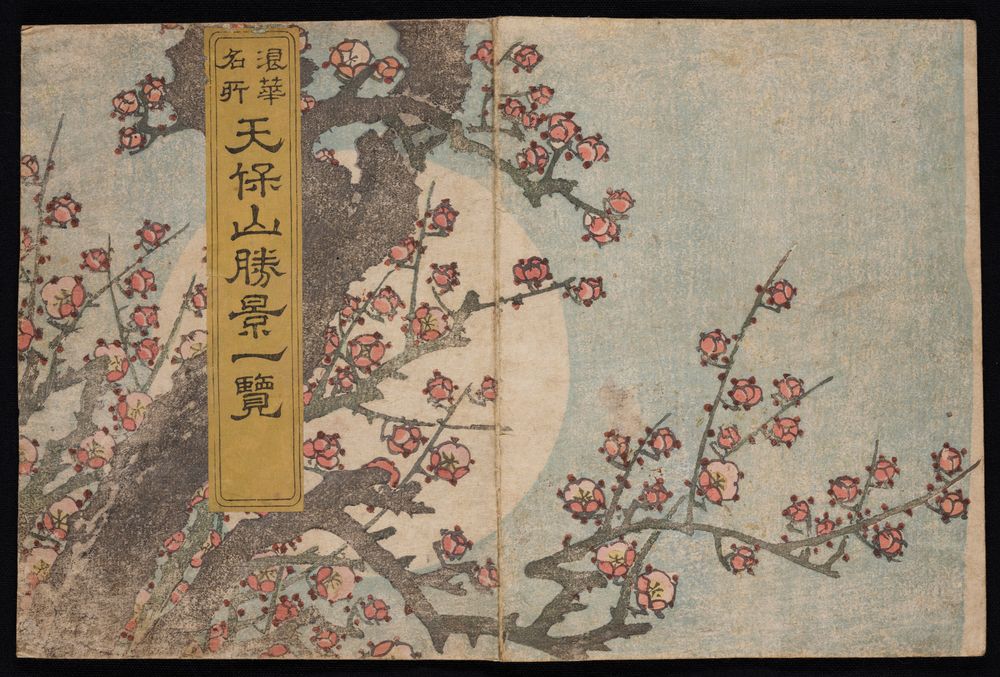
A work of art in its own right, this design of a plum tree in moonlight spans the covers of this very lavishly produced publication. Unfortunately, because of the large size and beauty of this book, it was often decimated to be sold as individual prints. An auction blurb from 1919 notes that only a few copies were known at that time, and a book published two years earlier remarked that even the individual prints were rare. With the destruction of the books, most of these covers have been lost.

51. Hokuetsu seppu [Snows of the North Country] / 北越雪譜, 1836-1842
Suzuki Bokushi (1770-1842); Iwase Hyakkaku (1816-1867); Editor: Santō Kyōzan (1769/1770-1858)
Seven volumes
Osaka: Kawachiya Mohē; Edo: Bunkeidō (Chōjiya Heibē), Tenpō 7-13
鈴木牧之 (1770-1842); 岩瀬百鶴; 編集者: 山東京山 (1769/1770-1858)
七冊
大阪: 河內屋茂兵衛; 江戶:丁子屋平兵衛 (文溪堂), 天保 7-13年
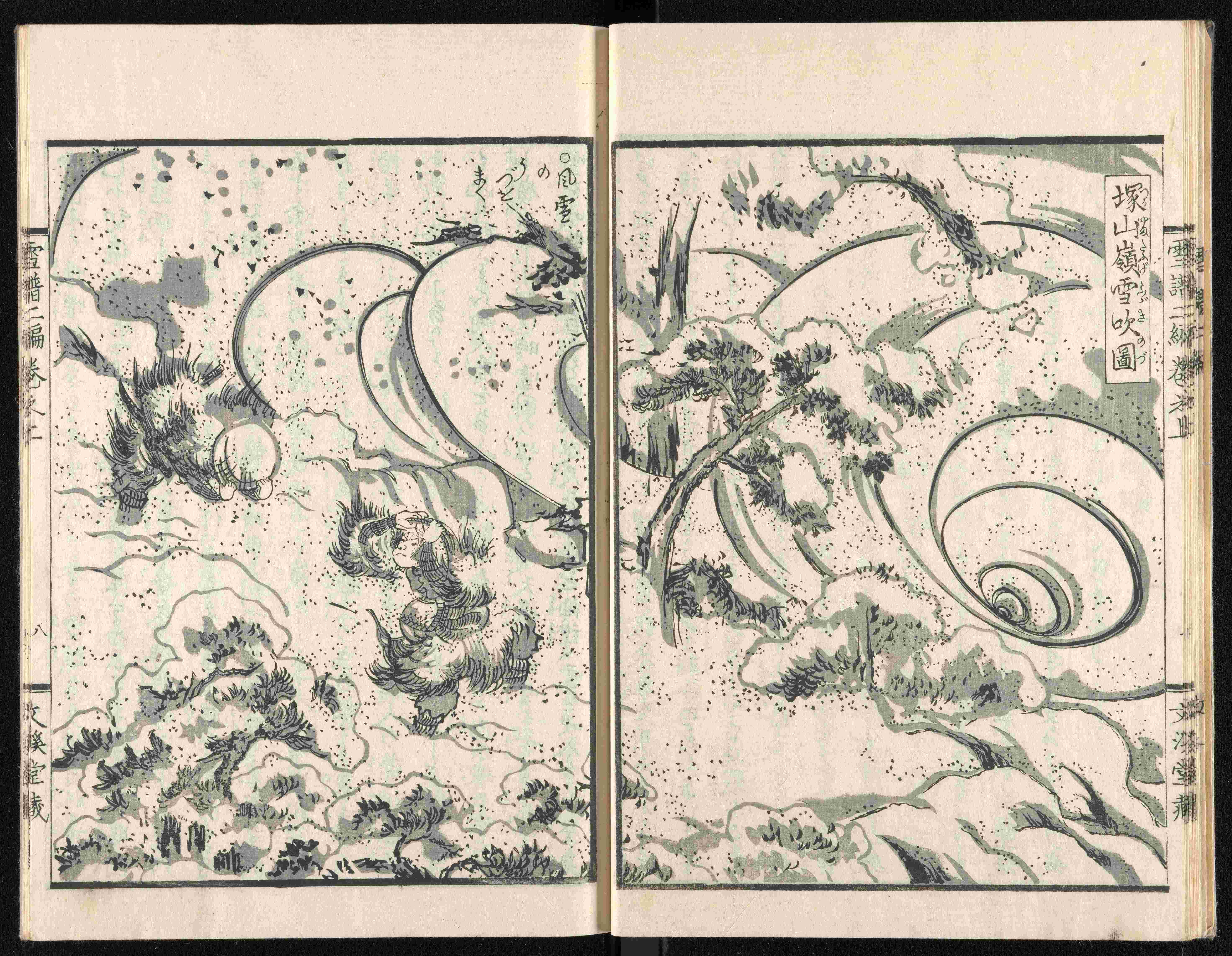
An encyclopedic view of snow-covered northern Japan, this book celebrates its provincial lifestyles and customs, its dialect, folk tales, flora, and fauna—and even encounters with kind yeti-like creatures. It took 40 years to get this book to market because publishers, catering to a sophisticated urban audience, did not believe there would be any interest in a book that focused on country life in the provinces. It was so popular, however, that—in an unusual twist—this second printing was more lavishly published than the first.

52. Hokuetsu seppu [Snows of the North Country] / 北越雪譜, 1836-1842
Suzuki Bokushi (1770-1842); Iwase Hyakkaku (1816-1867); Editor: Santō Kyōzan (1769/1770-1858)
Seven volumes
Osaka: Kawachiya Mohē; Edo: Bunkeidō (Chōjiya Heibē), Tenpō 7-13
鈴木牧之 (1770-1842); 岩瀬百鶴; 編集者: 山東京山 (1769/1770-1858)
七冊
大阪: 河內屋茂兵衛; 江戶:丁子屋平兵衛 (文溪堂), 天保 7-13年
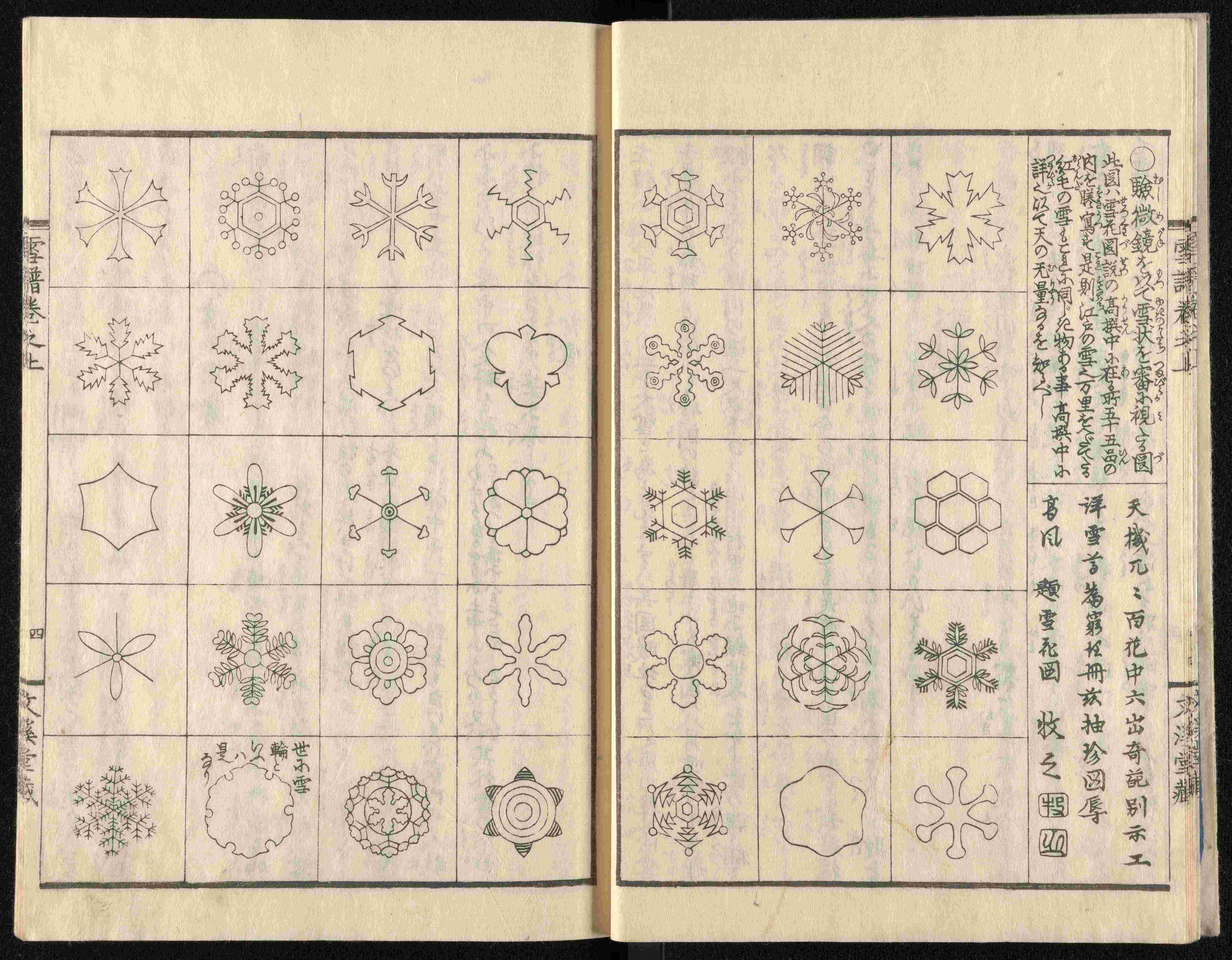
A striking feature of Snows of the North Country is the inclusion of illustrations of “snow flowers”—scientific drawings of snowflakes copied from an earlier but largely unknown book by Lord Doi Toshitsura (1789-1848). When published, these snowflake designs caused an immediate sensation. The motif was immediately adapted for textiles, ceramics, lacquerware, and metalwork across Japan. Ultimately, the importation of these Japanese goods in the 19th century introduced the idea of the snowflake motif to European decorative art.

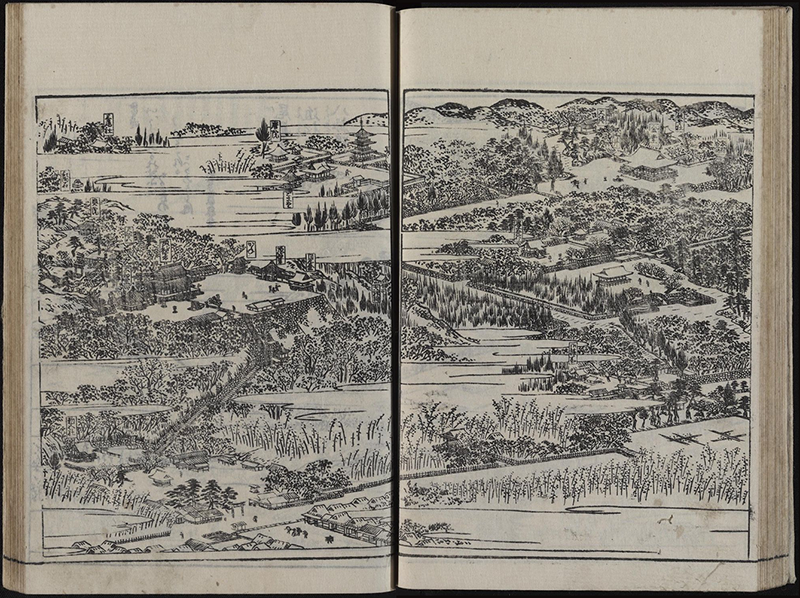
53. Tōkaidō meisho zue [Illustrated Guide to Famous Places on the Tōkaidō Road] / 東海道名所圖會, 1797
Kitao Masayoshi (1764-1824) and Takehara Shunsensai (active 1789-1817); Editor: Akisato Ritō (active 1780-1814)
Six volumes
Keishi (Kyoto): Tanaka Shōbē…[and 8 other publishers]; Tōto (Edo): Kobayashi Shinbē, Kansei 9
北尾政美 (1764-1824) と 竹原春泉斎 ((作画期 1789-1817); 編集者: 秋里籬島 (作画期 1780-1814)
六巻六冊
京師 (京都): 田中庄兵衞...[その他の8社の出版社]; 東都 (江戸): 小林新兵衞...寬政 9年
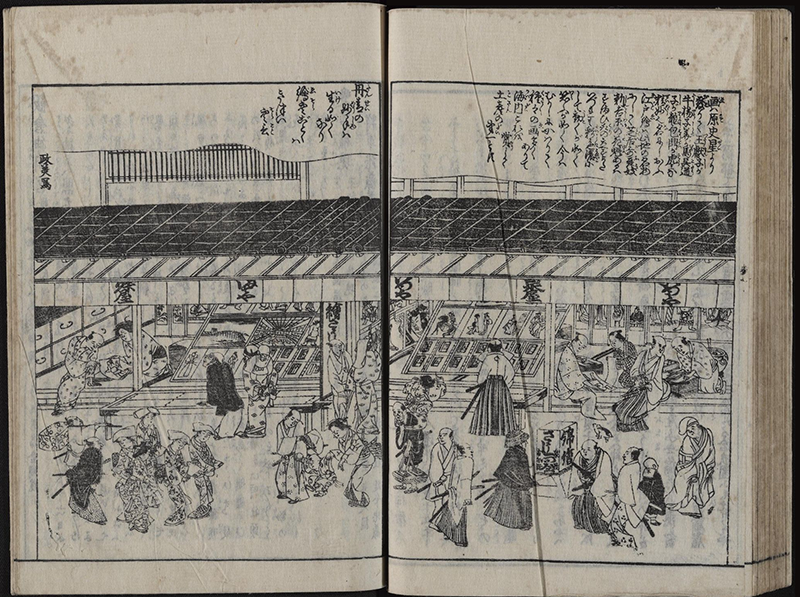
As people began to travel in the 18th century, guidebooks became extremely popular. This is an early example of an illustrated guidebook to notable places along the Tōkaidō Road. In it, each detailed illustration is accompanied by historical, mythological, and commercial information, along with quotations from diaries and literature. It gave the public—travelers and armchair travelers—a visual knowledge of the topography of the Road and a window into life in other parts of the country. It also played an important role in creating the legend of the Tōkaidō.

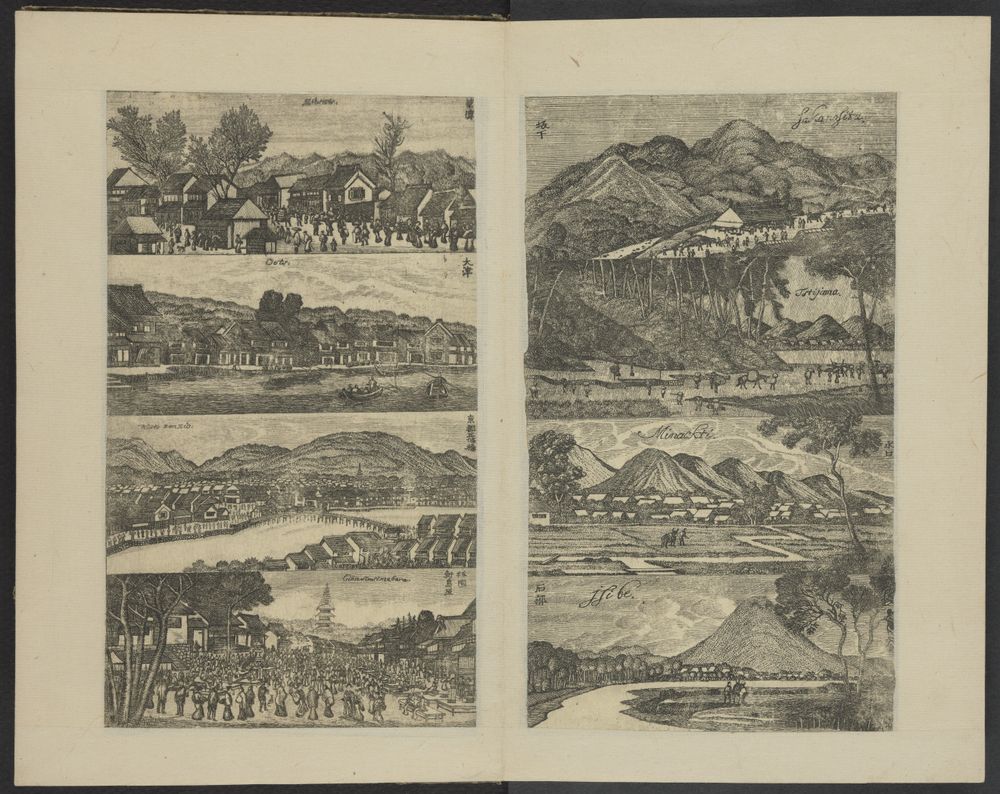
54. Tōkaidō gojūsan-eki [Fifty-three Stations of the Tōkaidō] / 東海道五十三駅, 1844
Yasuda Raishū (1770?-1858)
Orihon (concertina)
[Japan]: Publisher not identified, Tenpō 15
安田雷洲 (1770?-1858)
折り本
[日本]: 出版社不明, 天保15年
Influenced by Dutch engravings in the late 18th century, some Japanese artists began printing with copper plates—a technique which had been rejected when it first appeared in Japan and then restricted by the government in 1839. In this book we see the famous 36 rest stops along the Tōkaidō Road, designed by an artist who studied with and co-illustrated books with Katsushika Hokusai, but ultimately chose to work in the “Western-style” (yoga 洋画) we see here.

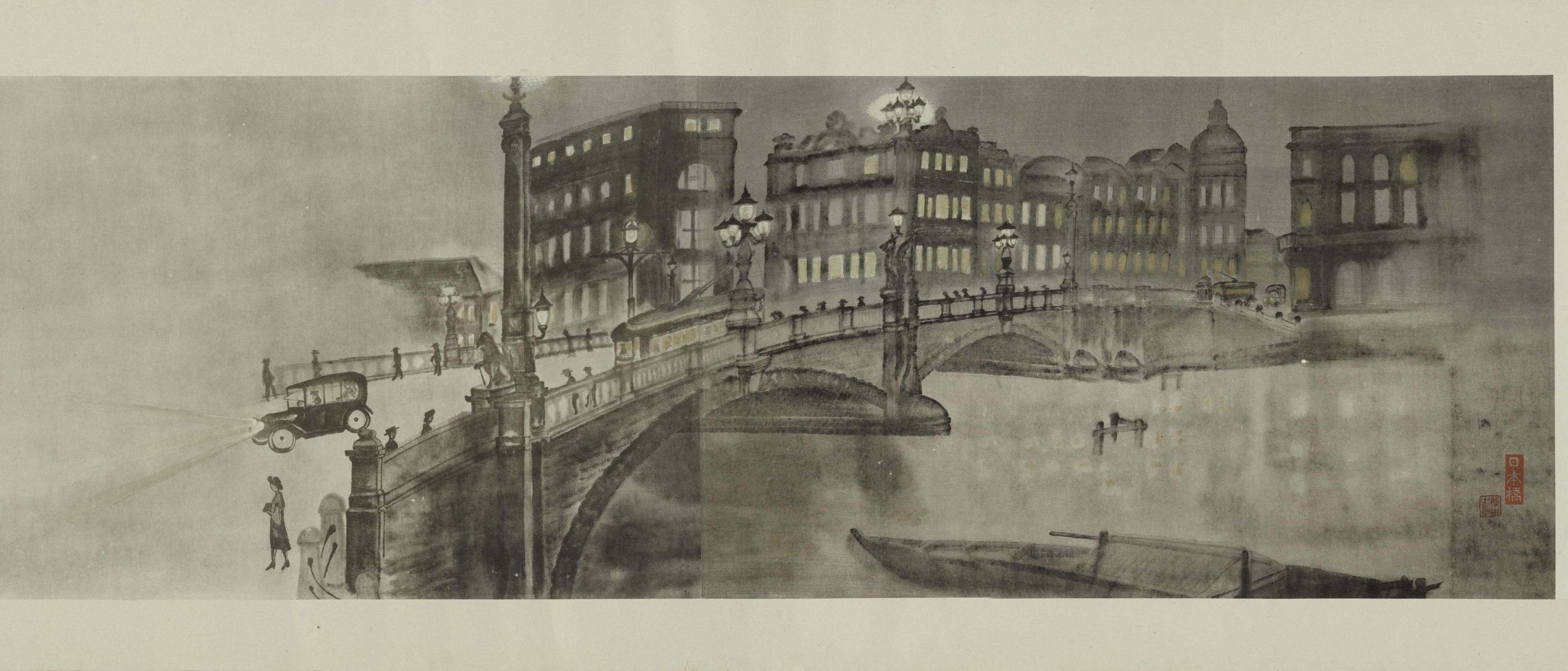
55. Tōkaidō gojūsantsugi emaki [Scrolls of the Fifty-three Stations of the Tōkaidō] / 東海道五十三次絵卷, 1922
Ōtani Son’yū (1886-1939) and Iguchi Kashū (1880-1930)
Eight handscrolls
Kyoto: Nakamura Taikan,Taishō 11
大谷尊由 (1886-1939) と 井口華秋 (1880-1930)
八巻物
京都: 中村大觀, 大正 11年
This illustration of the Nihonbashi Bridge in Tokyo at night—the first scene of the first handscroll in this set—is almost pure collotype, with only touches of gold printed on it to suggest early 20th century artificial lighting. The only scene among the eight scrolls that is not over-printed with rich bright colors, it helps to demonstrate the perceived difference between the modern urban landscape of the the capital and the more traditional world beyond [#56].

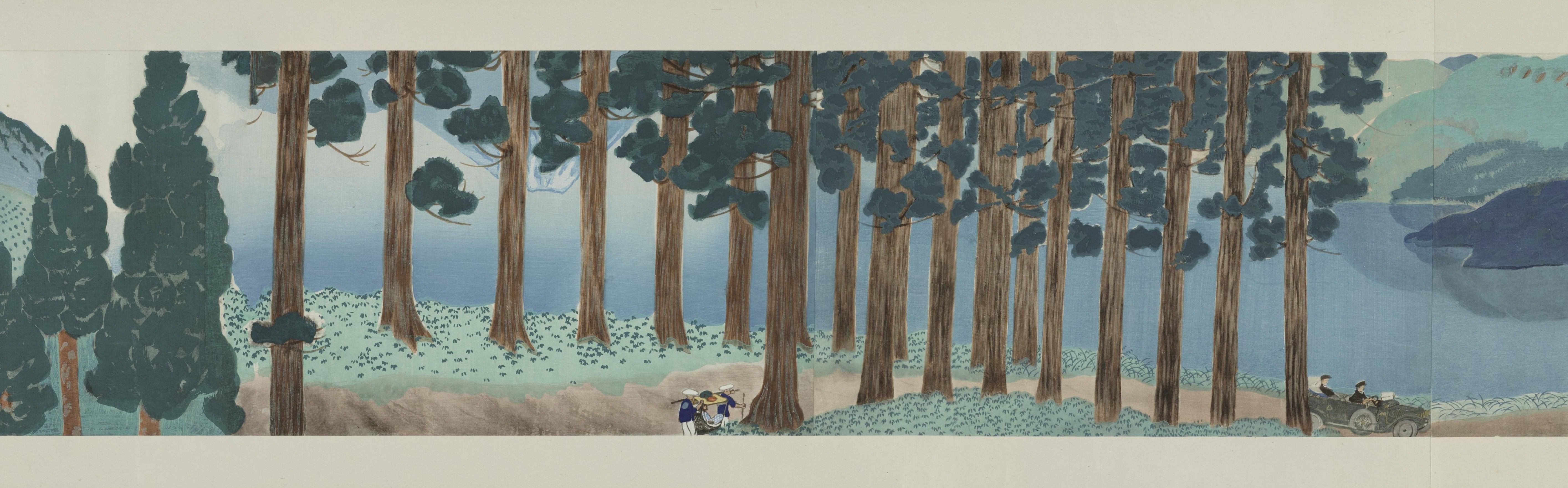
56. Tōkaidō gojūsantsugi emaki [Scrolls of the Fifty-three Stations of the Tōkaidō] / 東海道五十三次絵卷, 1922
Ōtani Son’yū (1886-1939) and Iguchi Kashū (1880-1930)
Eight handscrolls
Kyoto: Nakamura Taikan,Taishō 11
大谷尊由 (1886-1939) と 井口華秋 (1880-1930)
八巻物
京都: 中村大觀, 大正 11年
Inspired by woodblock prints, artists Son’yū and Kashū traveled the Tōkaidō Road and collaborated on a series of “modern paintings" of its legendary post stations. A year later, Nakamura published the paintings as this limited luxury edition of eight handscrolls, using an innovative technique that combined woodblock printing with collotype (at the time, a cutting-edge photographic printing process). Carved woodblocks (created from photographs of the paintings) were printed on top of monochrome collotypes of the paintings in a fusion of traditional and modern printing. Unfortunately, this expensive project bankrupted him.