The Kabuki (歌舞伎) Theatre
Kabuki began in the early 17th century as entertainment performed by female sex workers in Kyoto. Banned because of its questionable morality in 1629, the women were replaced by boys, which also proved morally problematic for the Tokugawa government. In 1652 they ordered that only adult males were allowed to perform and that their forelocks be shaved so there would be no question about their gender, even as they played both male and female roles.
The dramatic tales of the kabuki theatre are told in stylized movement, hand gestures, and facial expressions. A key element is the mie (見栄), a pose that is taken and sustained by an actor or actors to enhance a dramatic moment. It was these poses, filled with emotional intensity, that were used from the 17th century onward in depicting the actors in books, in woodblock prints, and in the advertising outside of theatres.

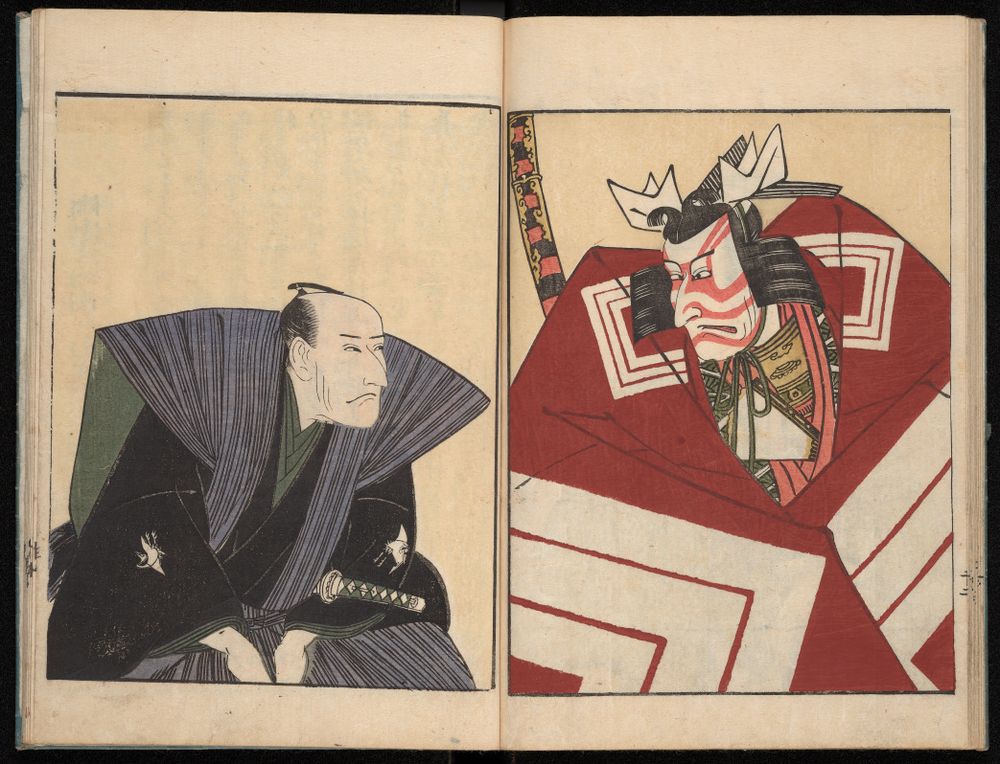
43. Yakusha konotegashiwa [Actors Among the Garden Oaks/ Actors on Two Sides of the Leaf] / 役者此手嘉志和, 1803
Utagawa Toyokuni (1769-1825); Author: Utei Enba (1743-1822)
Two volumes
Tōto (Edo): Enjudō (Maruya Jinpachi), Kyōwa 3
歌川豊国 (1769-1825): 著者: 烏亭焉馬 (1743-1822)
二冊
東都 (江戸): 円寿堂 (丸屋甚八), 享和 3年
Like movie magazines and social media, books and prints made images of popular actors and their theatrical performances available to enthusiastic fans throughout Japan. This book of richly-colored, half-length portraits of kabuki actors caused a sensation when it was published. The public craved innovation in publishing and were thrilled with this new concept of costumed actors in full make-up, paired (on the opposite leaf) with images of how they looked without costumes or make-up in everyday life.

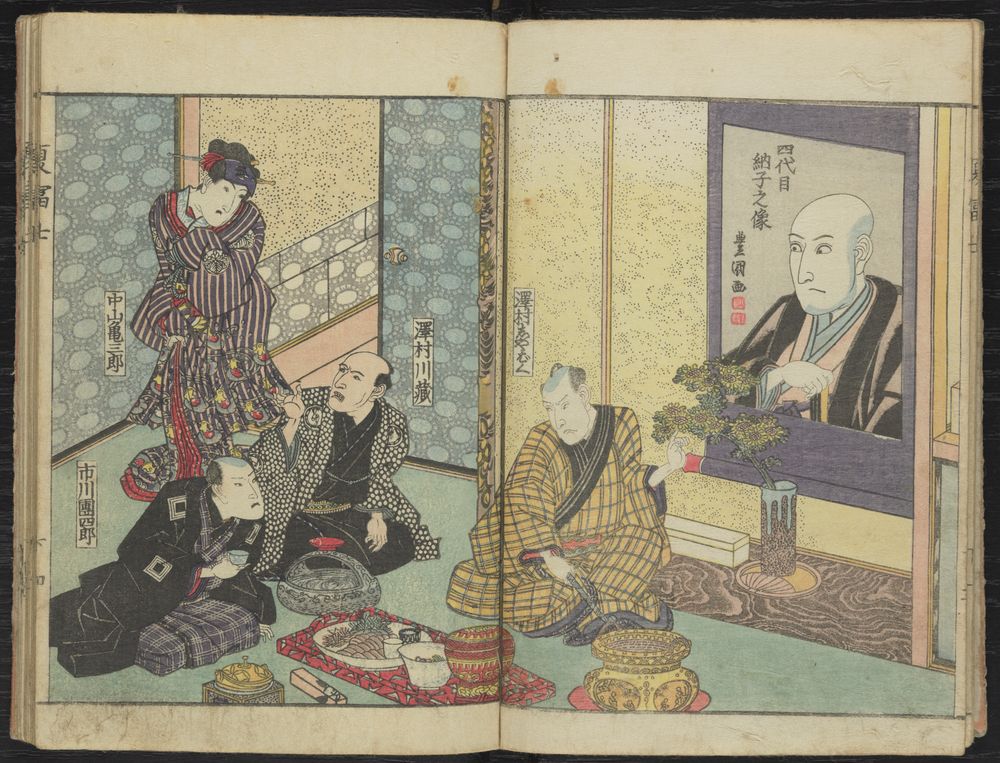
44. Natsu no Fuji [Mt. Fuji in Summer (Actors Without Make-up)] / 夏の富士, 1827-1828
Utagawa Kunisada (1786-1864)
Two volumes
Tōto (Edo): Kinshindo (Moriya Jihē), Bunsei 10-11
歌川国貞 (1786-1864)
二巻二冊
東都 (江戸): 金鱗堂 (森屋治兵衛), 文政 10-11年
This book, by Utagawa Toyokuni’s pupil, presents another take on the theme of actors in their everyday lives—in street clothes and without make-up. The clever title, Mt. Fuji in Summer—meaning Mt. Fuji without its snow-capped peak—alludes to these actors, now unadorned. In this scene of actors conversing in their quarters in front of a memorial actor portrait, however, fans were still treated to a peek at their lavish celebrity lifestyles, with expensive silk clothing and richly appointed surroundings.

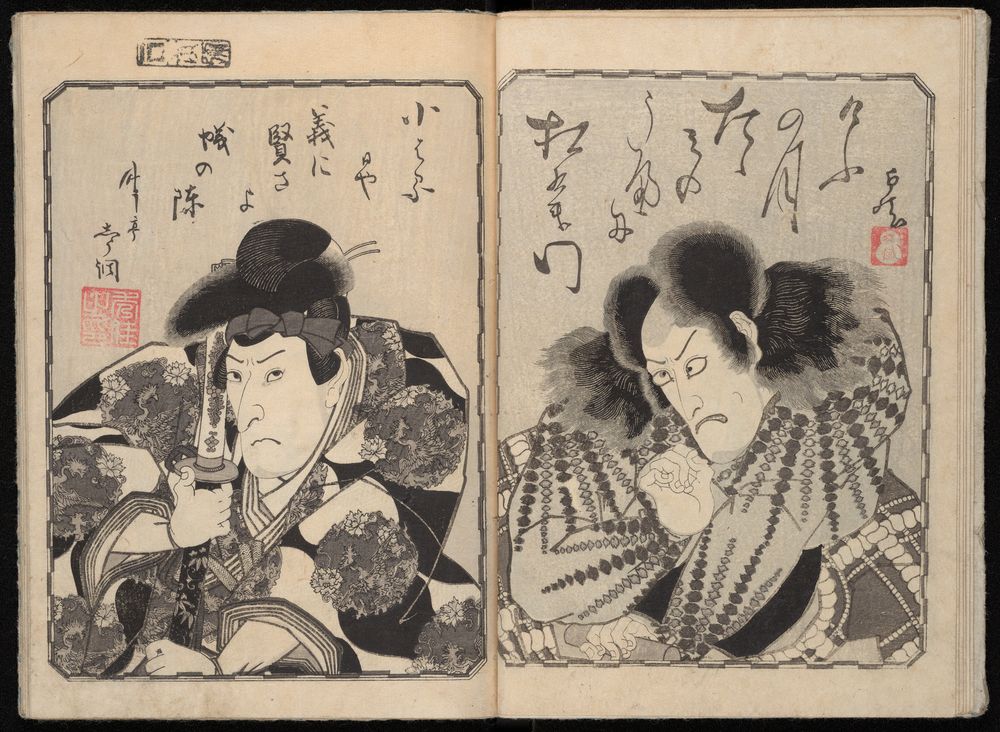
45. Haiyū sanjūrokkasen (Thirty-Six Actor Poets) / 俳優三十六花撰, 1835
Utagawa Kunisada (1786-1864) and Totoya Hokkei (1780–1850)
One volume
Kōto (Edo): Nishimuraya Yohachi; Nakamuraya Katsugorō, Tenpō 6
歌川国貞 (1786-1864) と魚屋北渓 (1780-1850)
一冊
江都 (江戸): 西村屋与八; 中村屋勝五郎, 天保 6年
This parody of the classic Thirty-six Poets theme features portraits of actors and (what are purported to be) their poems. An unusual collaboration between two artists from rival workshops, this was an expensive publication, printed in rich shades of grey and embellished with embossed details that were made by pressing a carved, but un-inked woodblock into the soft, thick paper. Three volumes with 36 actor poets were planned, but the bankruptcy of the publisher resulted in only this single volume of 12 being published.