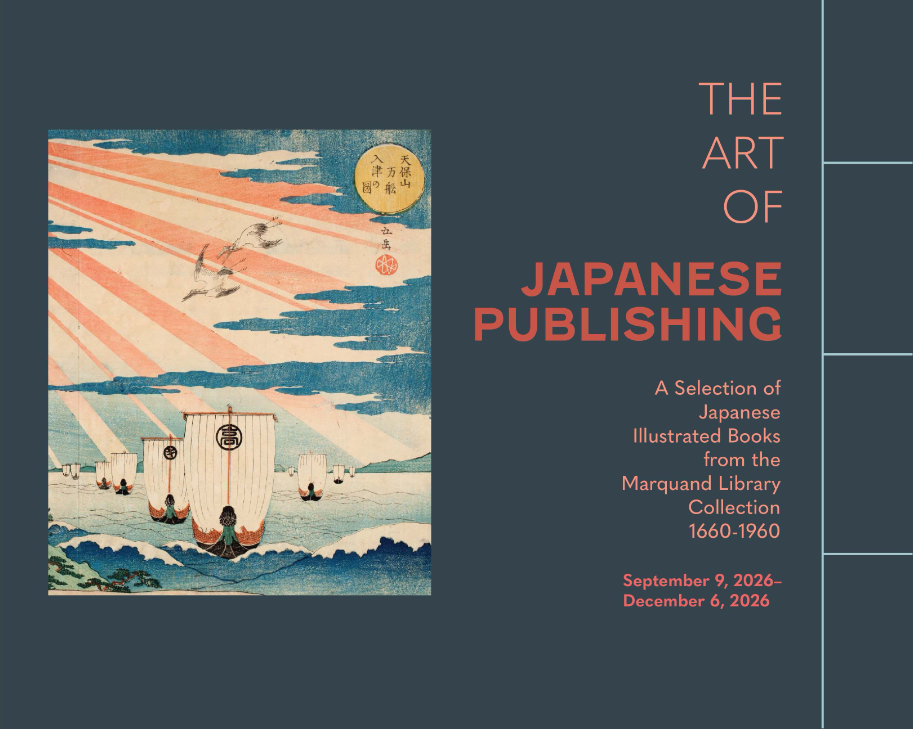
The advent of commercial publishing in 17th-century Japan completely revolutionized the Japanese art tradition. For the first time, art was not exclusively created for the upper classes who could afford to commission it for private use. It was designed and produced for a general audience in the form of illustrated woodblock-printed books.
This artistic revolution was the result of newly-minted publishers in Kyoto, Osaka, and Edo, who began to experiment with woodblock printing—a process that, for over a thousand years, had been restricted to Japanese temples for the production of Buddhist texts. These beautifully illustrated and commercially published books (and subsequent single-sheet prints) not only impacted the Japanese art tradition but, in the 19th century, inspired the Western art movements of Impressionism, Japonisme, and Art Nouveau. The publishing of illustrated books was then revolutionized in the 20th century with the introduction of photography, new printing processes, and artists taking complete control of their work for the first time.

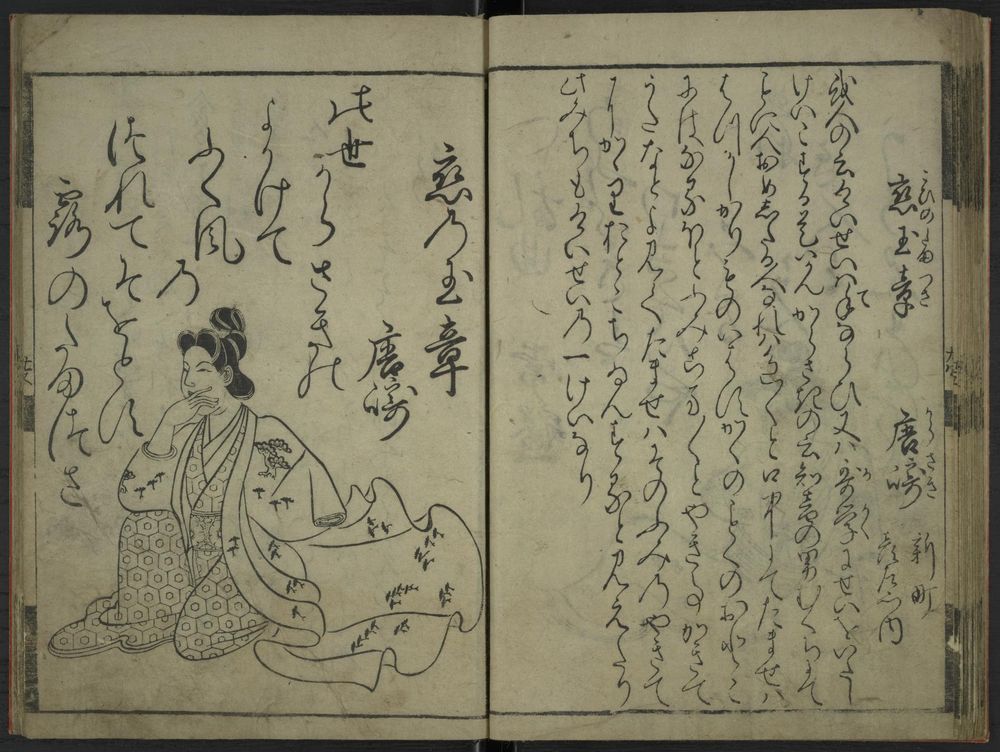
Content warning
BE ADVISED: Some of the artwork and descriptions in this exhibition include references to sexual themes, nudity, and violence.
Please note that homosexuality, an accepted practice in Tokugawa period Japan (1603-1868), followed a pattern of behavior known as “the way of youths” (wakashudō), which involved relationships between men and adolescent boys. It must also be acknowledged that the women who are celebrated in ukiyo-e books and prints were virtually enslaved, or at best indentured servants, purchased by brothel owners as children and trained from childhood to become the “courtesans” (yūjo 遊女) we see in these images. This exploitation and subjugation of women is openly rejected by Princeton University Library. The aim in including these materials in this exhibition is to educate about the attitudes and political and social conditions of the time period.


Please note:
Japanese books are read and should be viewed from right to left.
For the Japanese names in this exhibition the surname is cited first and is followed by the given or artist name.