Highlights from the Late-18th to Mid-19th Century

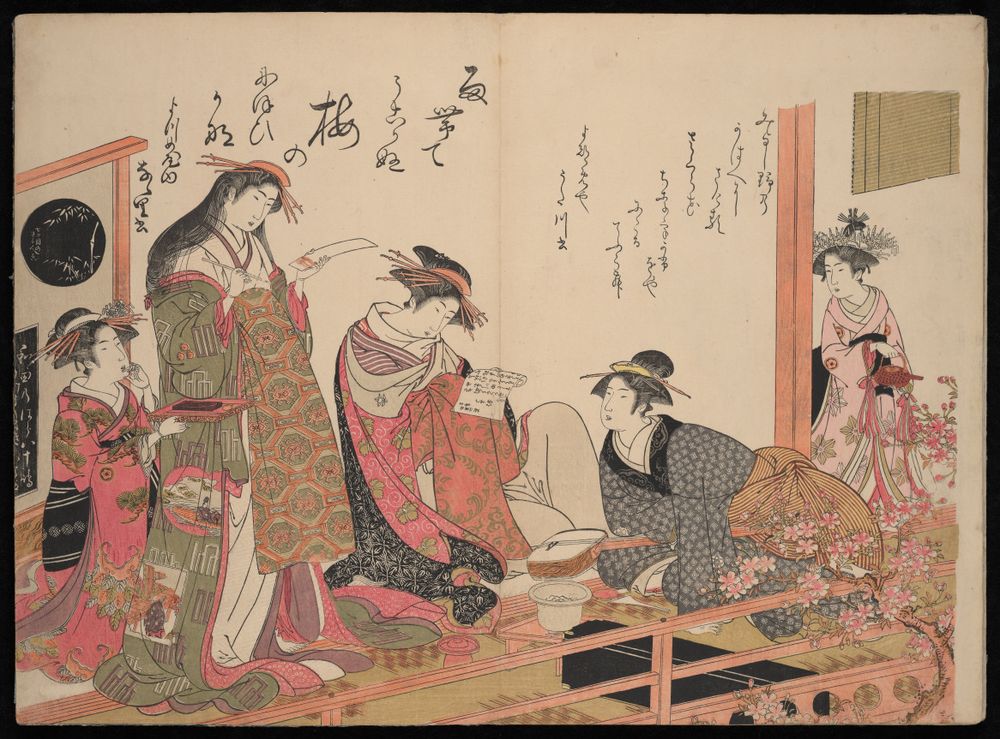
18. Yoshiwara keisei: Shin bijin awase jihitsu kagami [Yoshiwara Courtesans: A New Mirror Comparing the Calligraphy of Beauties] / 吉原傾城新美人合自筆, 1784
Kitao Masanobu aka Santō Kyōden (1761-1816)
One volume
Edo: Kōshodō (Tsutaya Jūzaburō), Tenmei 4
北尾政演 (山東京伝) (1761-1816)
一帖
江戸: 耕書堂 (蔦屋 重三郎), 天明 4年
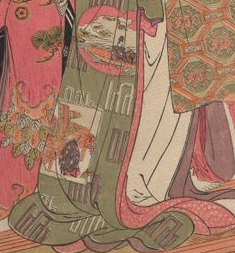
The calligraphy of the culturally refined courtesans of the Yoshiwara is the theme of this book, which presents their portraits and their personal transcriptions of classical poems. One of the most important examples of 18th-century publishing, this book was lavishly produced with 15 richly saturated colors, sprinkled mica powder, and embossed designs (see inset, left). The size alone greatly added to the expense. It is believed that wealthy businessmen in the Yoshiwara pleasure quarters financed the publication to distribute to their best customers as New Year’s gifts.

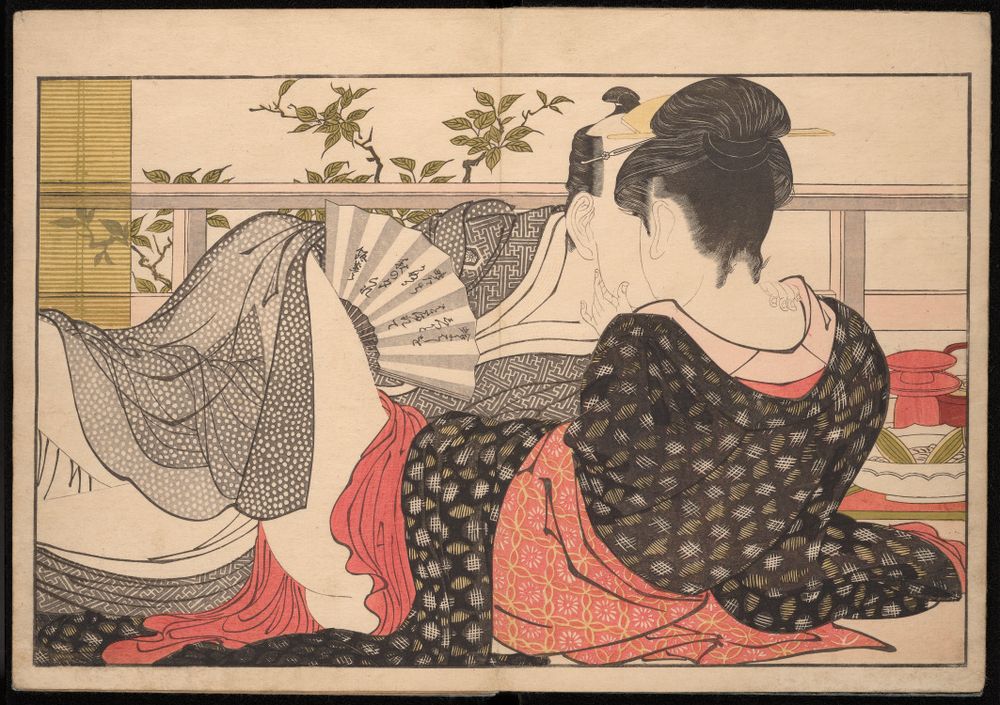
19. Utamakura [Poem of the Pillow] / 歌枕, 1788
Kitagawa Utamaro (1753?-1806)
One volume
Edo: Kōshodō (Tsutaya Jūzaburō), Tenmei 8
喜多川 歌麿 (1753?-1806)
一帖
江戸: 耕書堂 (蔦屋 重三郎), 天明 8年
Believed to be Utamaro’s first erotic book (shunpon 春本), this luxuriously-printed accordion album follows tradition with a set of 12 scenes of sexual encounters. Its most iconic image, seen here, of a courtesan and her client in a teahouse is particularly noteworthy for its unusual composition, allowing a full view of the woman’s sensual neck. The block cutter’s technical skill is evident in the patterned fabrics, especially the gauzy robe that hints but hides. A humorous and suggestive poem graces the fan between them.

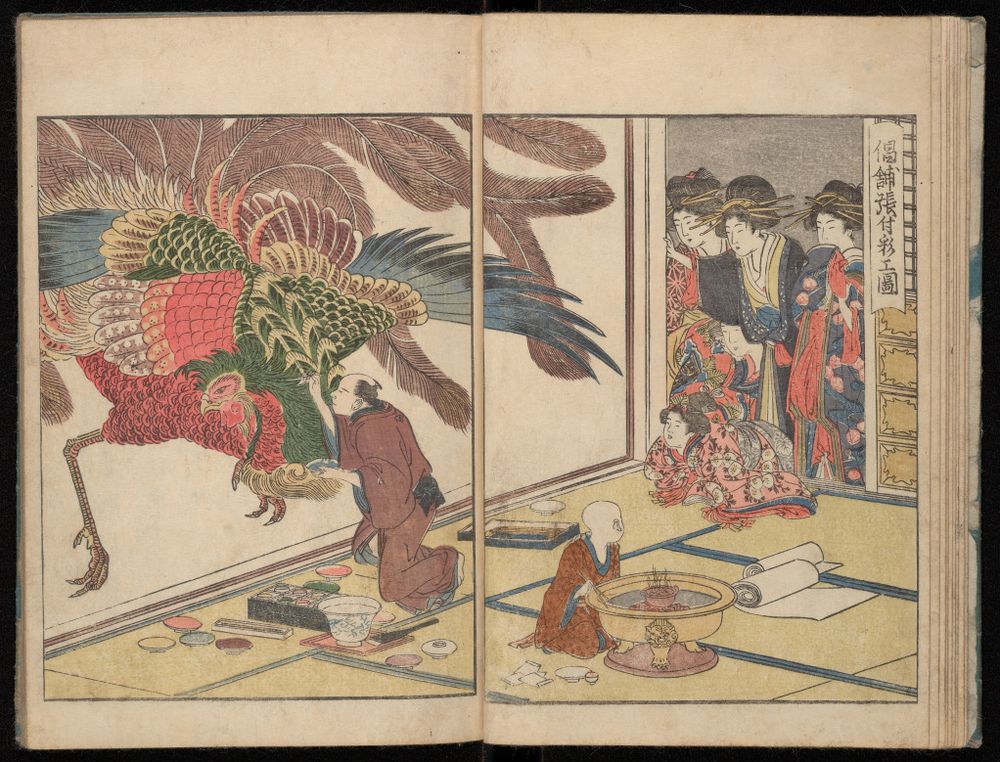
20. Seirō ehon nenjū gyōji [Picture Book of Annual Events of the Green Houses (the Yoshiwara)] / 青樓繪本年中行事, 1804
Kitagawa Utamaro (1753?-1806); Author: Jippensha Ikku (1765-1831)
Two volumes
Edo: Kazusaya Chūsuke, Kyōwa 4
喜多川 歌麿 (1753?-1806); 著者: 十返舎一九 (1765-1831)
二巻二冊
江戶: 上總屋忠助, 享和 4年
A collaboration between the most popular author and most renowned artist of the period, this book was not only admired in Japan, but—90 years later—took Europe by storm. Its entertaining text and exquisitely designed images peek into the world of the festivals and activities taking place at the “green houses,” a poetic euphemism for the Yoshiwara. A frequent visitor to the pleasure quarters, many believe this image of an artist painting the walls of a brothel to be Utamaro’s self-portrait.

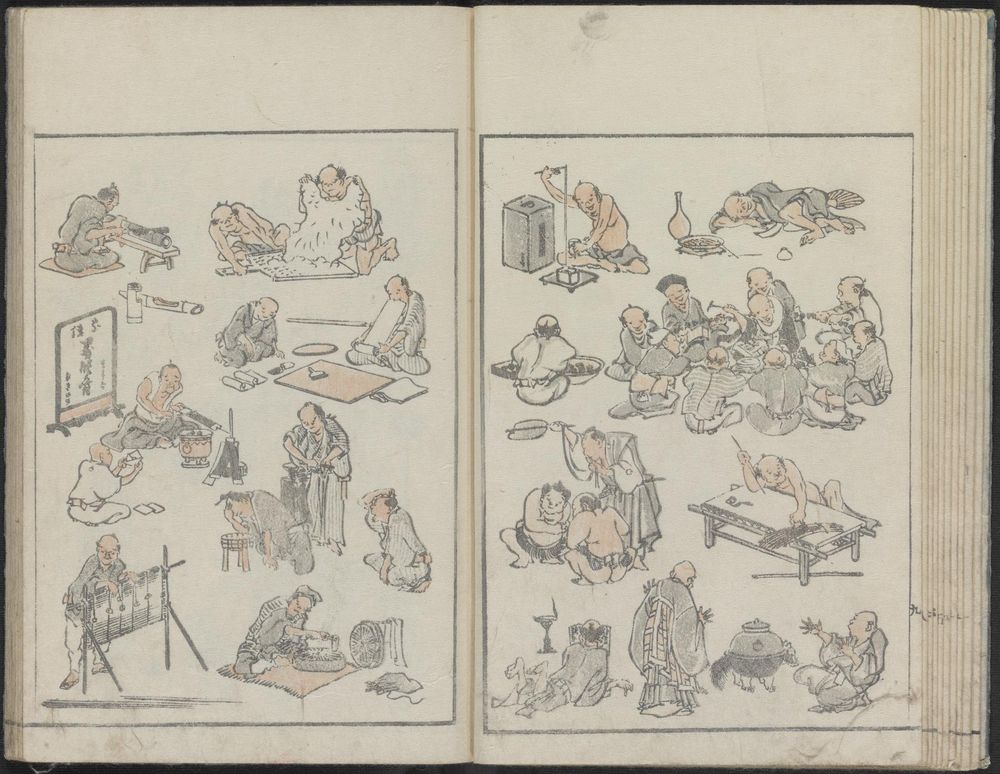
21. Denshin kaishu Hokusai manga [Transmitting the Spirit and Revealing the Form of Things: Random Drawings of Hokusai] or Hokusai manga [The Manga of Hokusai] / 傳神開手北齋漫畵 / 北齋漫畵, 1814-circa 1819
葛飾北齋 Katsushika Hokusai (circa 1760-1849)
15 volumes
Nagoya: Eirakuya Tōshirō, Bunka 11-circa Bunsei 2
葛飾北齋 (1760年頃-1849)
一五編一五冊
名古屋: 永樂屋東四郎, 文化 11年-文政 2年頃
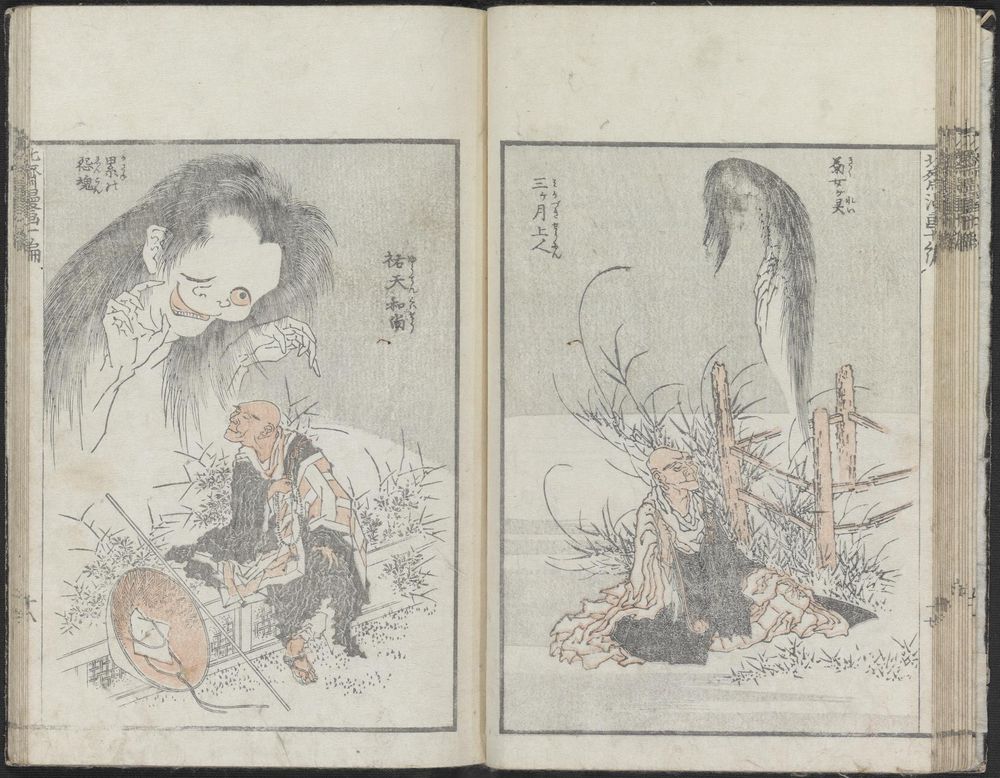
The term manga—which, in the 19th century came to mean “curious, whimsical drawings”—may have been coined by Hokusai who, according to the preface, came up with this title. Hokusai appears to have been reluctant to publish a volume of random drawings, but it proved so popular that 15 volumes were ultimately produced—three after his death with previously unused designs. The thousands of images of all things ‘seen and imagined’ include a variety of people performing an array of activities, deities, animals, birds, bugs, ghosts, flowers, and landscapes.

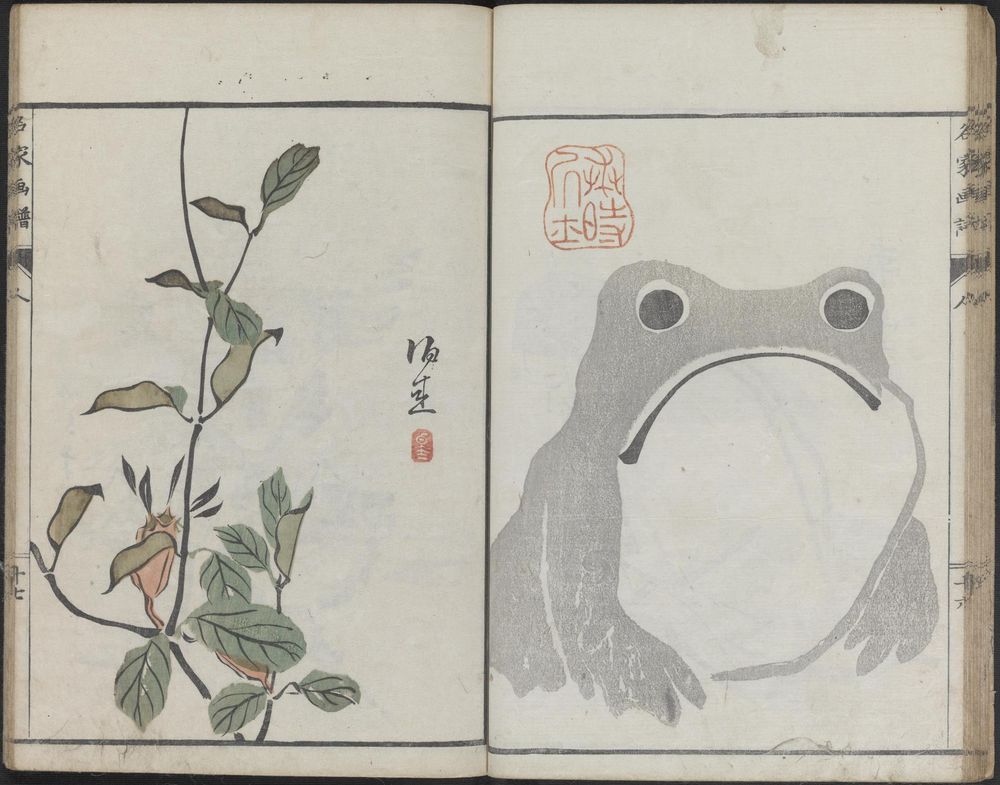
22. Meika gafu [An Album of Pictures by Celebrated Artists] / 名家畵譜, 1814
Mano Tōkei (dates unknown), editor; Various Artists
Two volumes
Nagoya: Tōhekidō (Eirakuya Tōshirō), Bunka 11
真野桃蹊 (?) 編集者; 様々なアーティスト
二冊
名古屋: 東壁堂 (永楽屋東四郎), 文化11年
Work from other prominent “schools” of art was published alongside ukiyo-e. This book is a collection of designs by the most noteworthy Nanga and Kyoto School artists of the Kyoto-Osaka-Nagoya region, printed by one of its most famous publishers. Although it is called a “painting manual” (gafu 画譜), it was not made for practical use alone, but also sold to a general audience that wanted to own and appreciate art. Here, in its original context, is this now ubiquitous frog image by Matsumoto Hōji (active 1780s-1810).

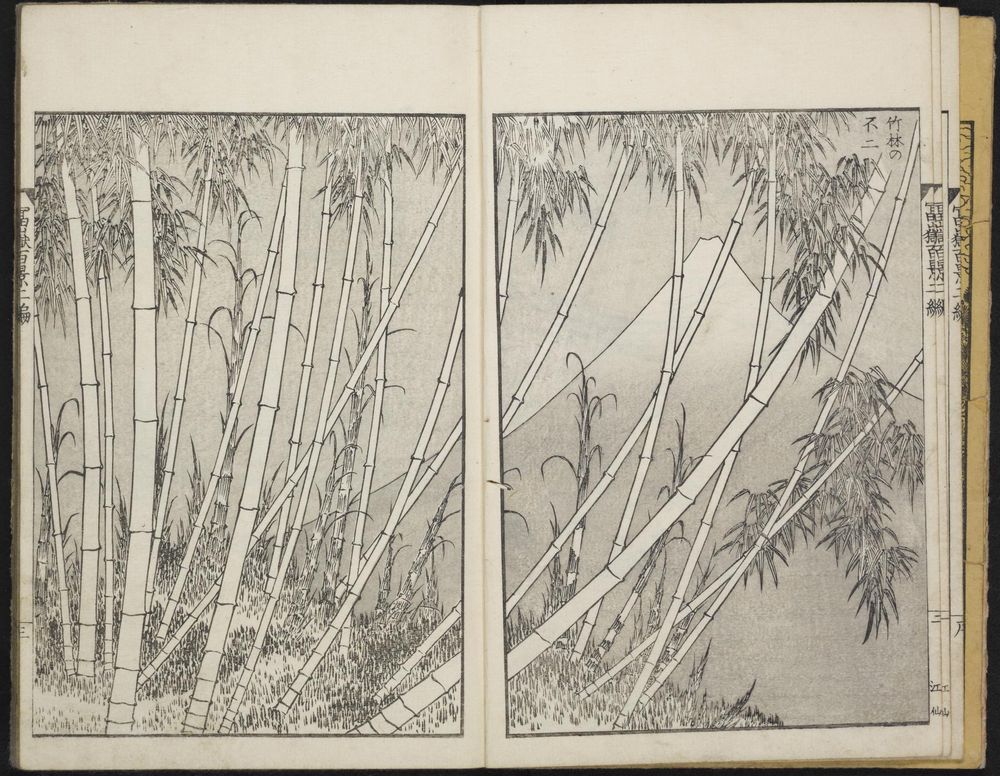
23. Fugaku hyakkei [One Hundred Views of Mt. Fuji] / 富嶽百景, 1834, circa 1837
Katsushika Hokusai (1760-1849)
Three volumes
(Volumes 1 and 2) Edo: Nishimura Yūzō, Tenpō 5-6; (Volume 3) Bishū: Eirakuya
Tōshirō, circa Kōka 4
葛飾北齋 (1760-1849)
三編三冊
(第一編と第二編) 江戶: 西村祐蔵, 天保 5-6年; (第三編) 尾州: 永樂屋東四郎, 弘化4年頃
In this book, Hokusai’s novel and dramatic compositions of the sacred Mount Fuji are expertly printed in subtle gradations of black ink. Reprinted many times in the 19th century, this “Falcon Feather” edition—named for the decoration on the title slips—was the first and finest. Volumes one and two of this edition, printed before the publisher went bankrupt, have salmon-pink covers, embossed with scenes of the classic “Eight Views of Lake Biwa” theme. The third volume was published many years later.

![detail of woodblock-printed and hand-painted “blind” sūtra Each picture is a rebus for a word or syllable, allowing the user to chant the text by simply uttering the names of objects depicted. It begins, soku (rice sheaf), chi (women’s breasts), itsu (number 1), sai (dice), hō (heads of rice stalks)], meaning “(May I) quickly know the Laws (of Buddhism).”](/uploads/spotlight/attachment/file/8372/Mekura_kannon-kyo%CC%84_Ushu_shizuki_ban_p10a.jpg)
24. Namu daihi kanzeon [Glory to Bodhisattva Kannon (Avalokiteśvara)] / Mekura kannon-kyō [“Blind” Kannon-sūtra/ Kannon-sūtra for the Illiterate] / 南無大悲 観世音/ 盲観音経, circa 1800
Orihon (concertina)
Ushū shōnai (Yamaguchi prefecture)
折り本
羽州庄内 (山形県)
![woodblock-printed and hand-painted “blind” sūtra Each picture is a rebus for a word or syllable, allowing the user to chant the text by simply uttering the names of objects depicted. It begins, soku (rice sheaf), chi (women’s breasts), itsu (number 1), sai (dice), hō (heads of rice stalks)], meaning “(May I) quickly know the Laws (of Buddhism).”](/uploads/spotlight/attachment/file/8493/Mekura.jpg)
In Buddhism, the chanting of sūtras was a means of gaining merit toward enlightenment. Calling on Bodhisattva Kannon, Goddess of Mercy, this woodblock-printed and hand-painted “blind” sūtra was published for the illiterate. Each picture is a rebus for a word or syllable, allowing the user to chant the text by simply uttering the names of objects depicted. It begins, soku (rice sheaf), chi (women’s breasts), itsu (number 1), sai (dice), hō (heads of rice stalks)], meaning “(May I) quickly know the Laws (of Buddhism).”