The Curriculum

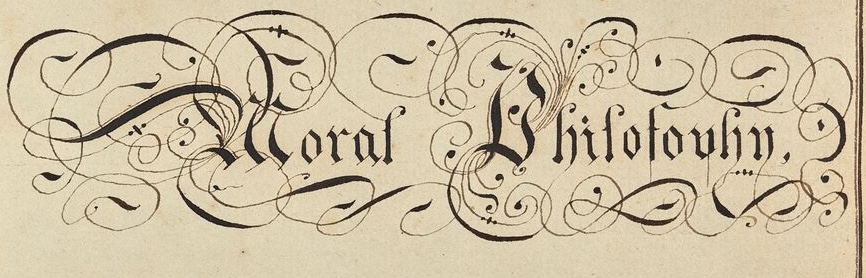
The four class years each had their own curriculum. Admission required proficiency in Latin and Greek, including translating Virgil, Cicero, and the Gospels.
Study advanced from languages to science, geography, mathematics, rhetoric, and logic, and the senior year included courses on oration and moral philosophy. Seniors regularly composed and delivered orations. After final examinations in August, they performed assigned parts at Commencement and graduated as baccalaureī artium (bachelors of arts).

John Witherspoon's Influence
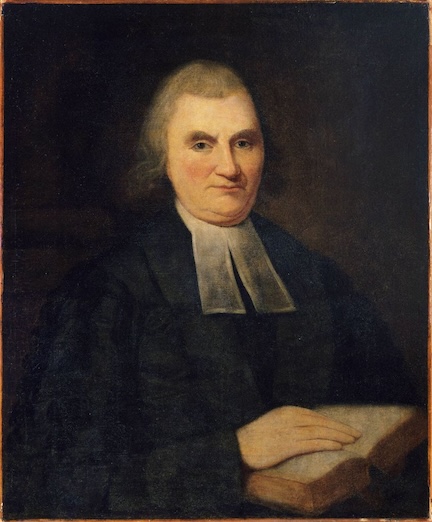
President John Witherspoon introduced lecture-based teaching to Princeton. The senior year formally instructed students on citizenship and statesmanship, including his two courses, Moral Philosophy and Eloquence and Oration. While moral philosophy was common in colonial American curricula, Witherspoon's distinctive lectures were widely copied and distributed.

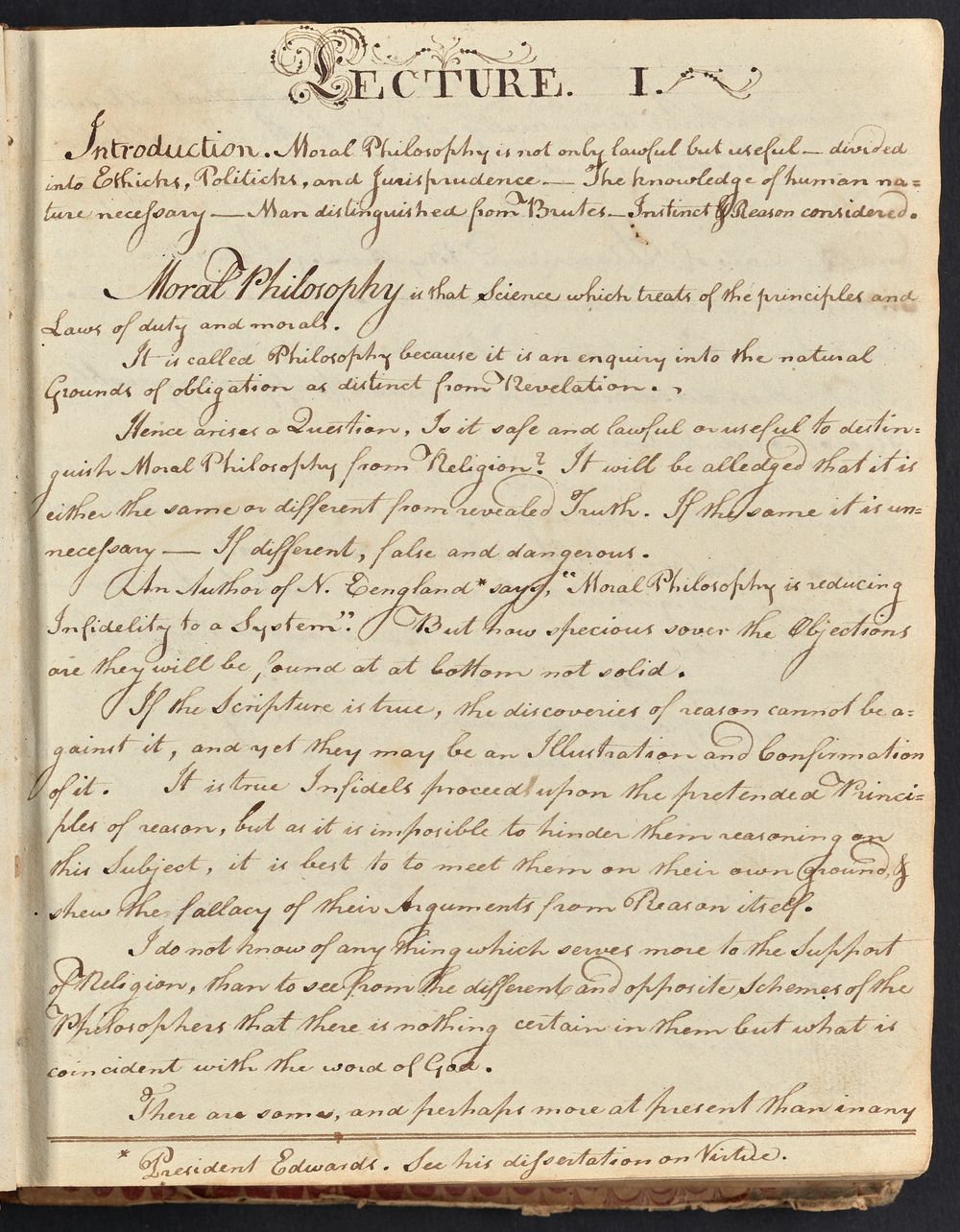
Drawing on European thinkers, especially Scottish Common Sense philosophy and Whiggism, he addressed political science, economics, jurisprudence, and sociology. Witherspoon emphasized civic duty while asserting that political authority derives from the consent of citizens.
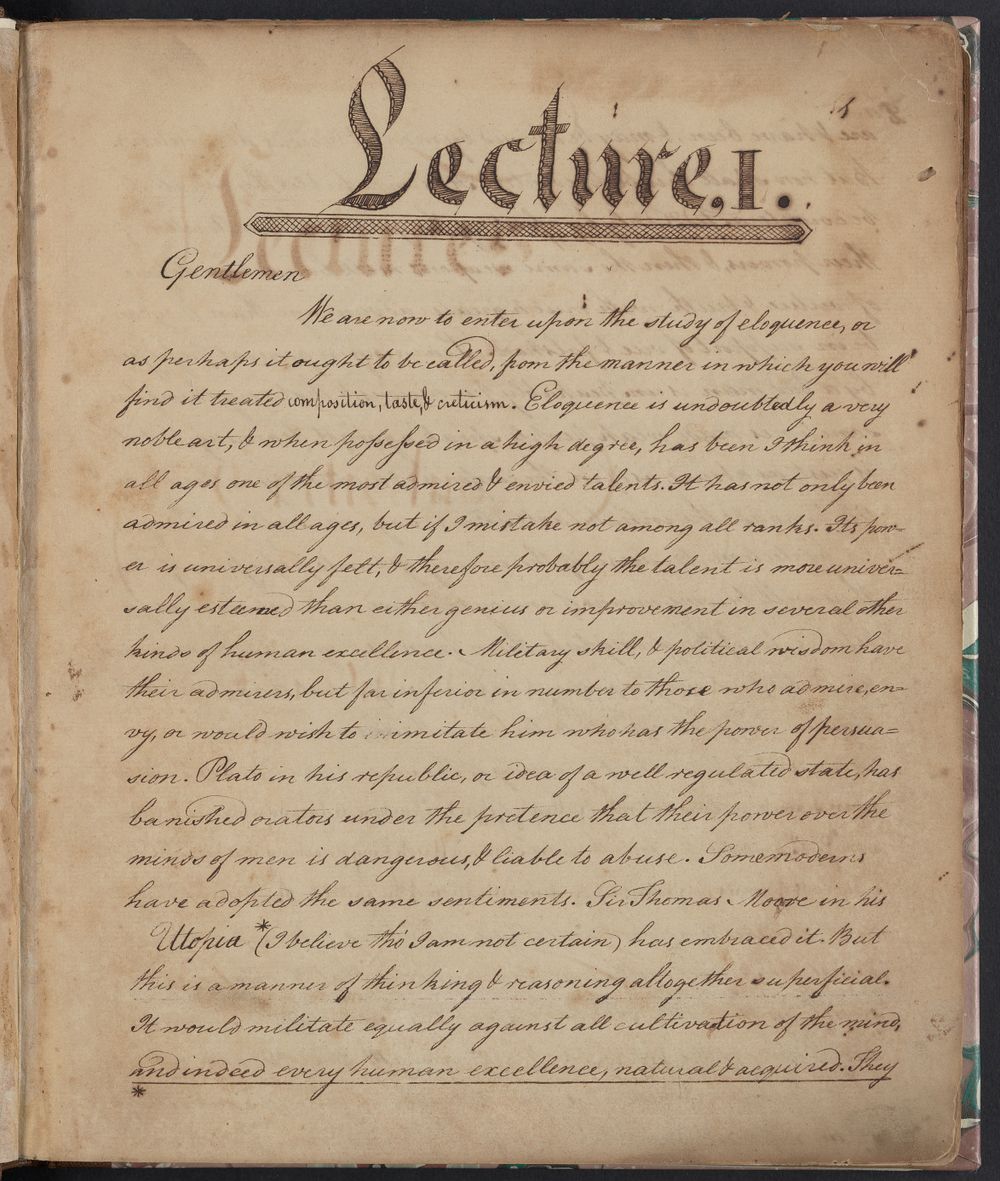
Another important course that Witherspoon taught for the seniors was on oration, elocution, criticism, and debate. Witherspoon emphasized students should not only learn how to think about the responsibilities of citizenship, but also how to effectively express their thoughts to their fellow citizens. This course had a great impact on the training of future American statesmen.
Witherspoon said at the start of a lecture, “Eloquence is undoubtedly a very noble art,” and “Military skill & political wisdom have their admirers; but far inferior in number to those who admire, envy, or would wish to imitate him who has the power of persuasion.”
Grammar School for Boys
A Complete Introduction to the Latin Tongue, 1752
Robert Ross (1726-1799)
Rare Books Collection
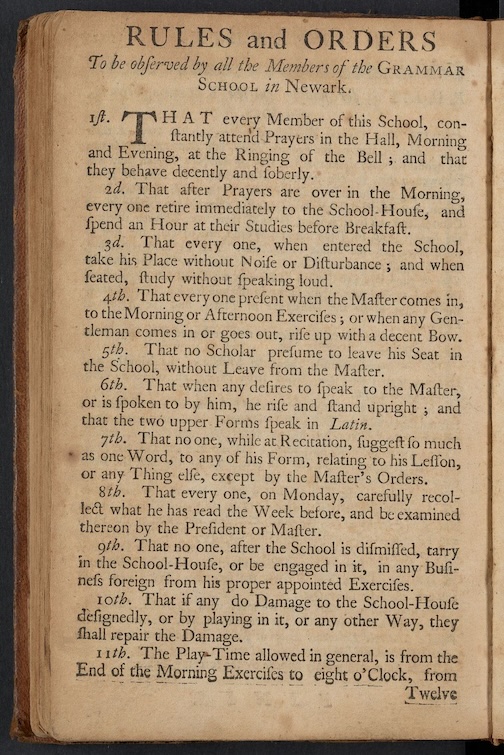
Not only a college, Nassau Hall also had a grammar school for boys to study Latin, which they would need to prepare to enter the College of New Jersey or the other colonial colleges. These students ranged in age from about 13 to 17.
Surviving 18th Century Books
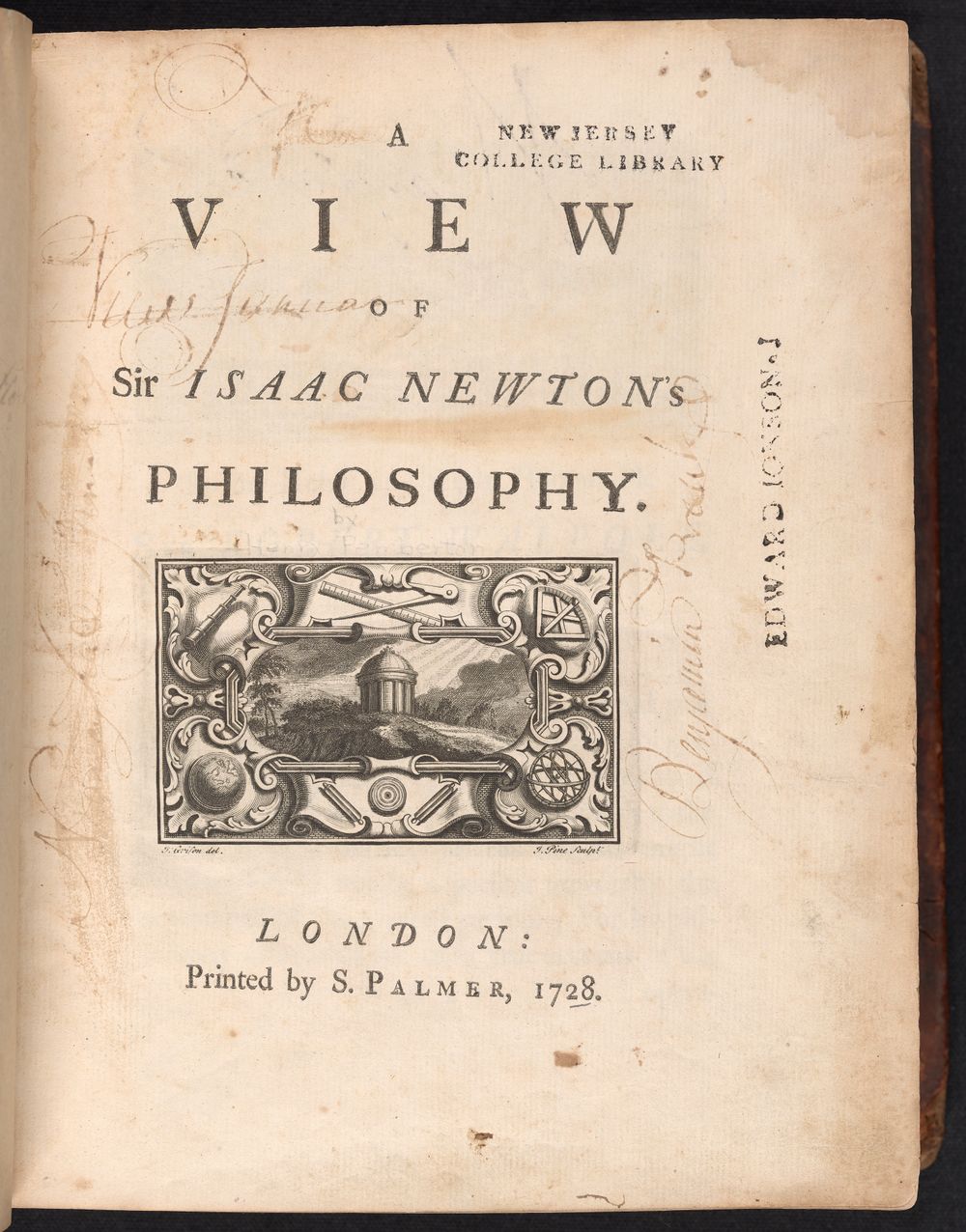
Because Nassau Hall suffered damage caused by its occupation from both the British and American armies in 1776-1777 and 19th-century fires, little of the early book collection survives. These volumes would have been available to upperclassmen before the Revolution.
![John Locke (1632-1704)
Two Treatises of Government, 1764
Rare Books Collection
This volume would have been available to upperclassmen before the Revolution.
It was donated by Thomas Hollis (1720-1774), described in his June 23, 1764 inscription as as “An Englishman, a Lover of Liberty, the principles of the Revolution, & the Protestant Succession in the House of Hanover, [and] Citizen of the World...”](/uploads/spotlight/attachment/file/7990/default__65_.jpg)