Independence Day

In America’s early days as an independent nation, July Fourth was a huge holiday at Princeton. The academic calendar ran from mid-November through late September until 1844, meaning classes were in session and student activities were taking place in July.
In 1786, the faculty ruled that those affiliated with the College should have their own celebration on campus, rather than joining townspeople in the local taverns. Thus, the steward was required to serve a holiday dinner in the refectory.

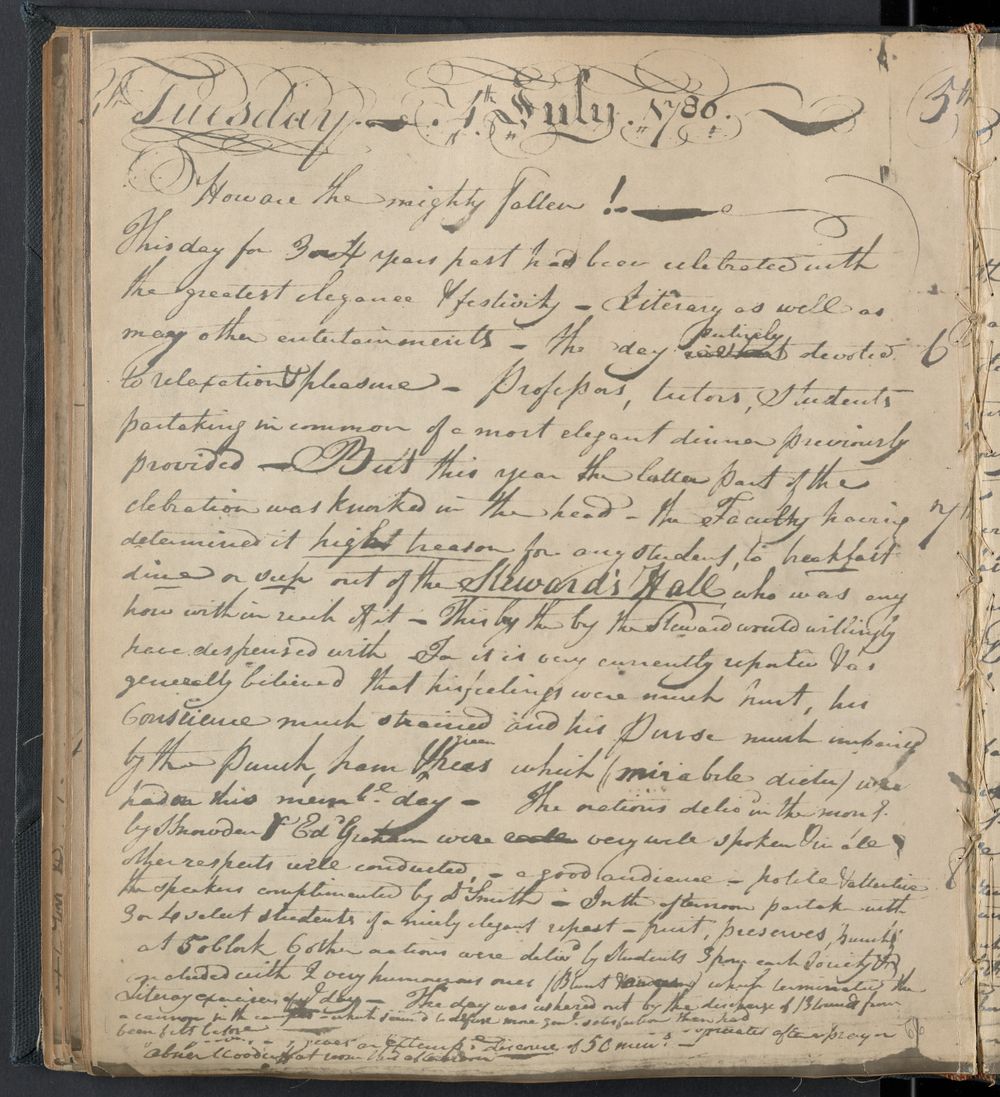
The Journal at Nassau Hall, 1786 (Photostat, undated)
John Rhea Smith ’1787 (1767-1830)
General Manuscripts [Bound] Collection
John Rhea Smith ’1787 wrote in his journal that “the celebration was knocked in the head” by this restriction, and the Steward’s “feelings were much hurt, his conscience much strained and his Purse much impaired by the Punch, ham & green peas which (mirabile dictu) were had on this memorable day.”
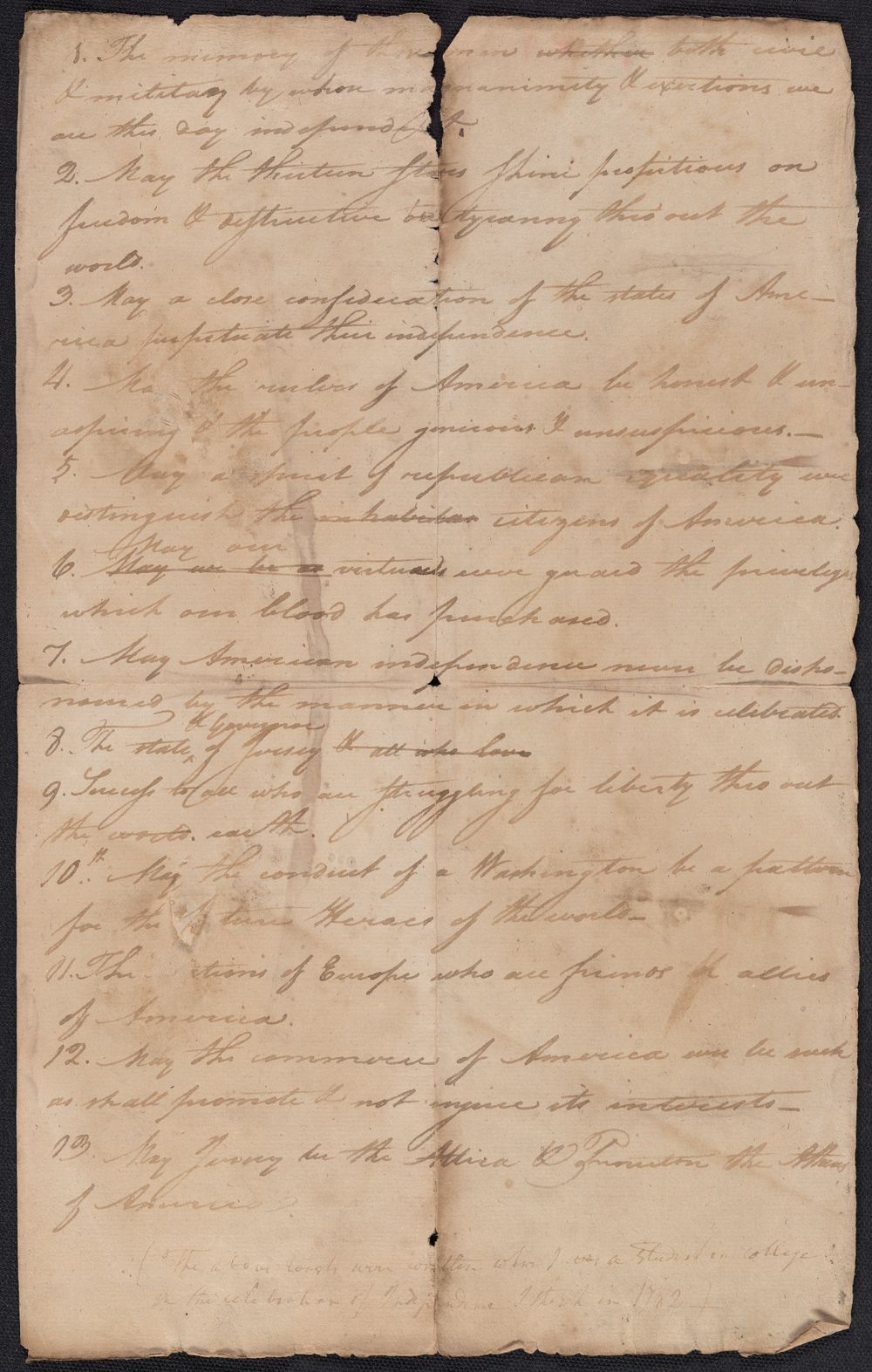
Ashbel Green ’1783 *1785 (1762-1848); Fourth of July Toasts, circa 1783
Office of the President Records
Ashbel Green ’1783 *1785, the Valedictorian for the Class of 1783, later became the eighth president of Princeton.
Green served in the New Jersey militia and entered Princeton as a junior in 1782, with some optimism that Nassau Hall might be salvageable. When celebrations of America’s Independence Day were held in 1783, Green offered 13 toasts in honor of the occasion. Many toasts expressed hopes for the future, including the last: “May Jersey be the Attica & Princeton the Athens of America,” i.e., the state a region of enlightenment, liberty, and civic virtue and the town its intellectual and cultural center.
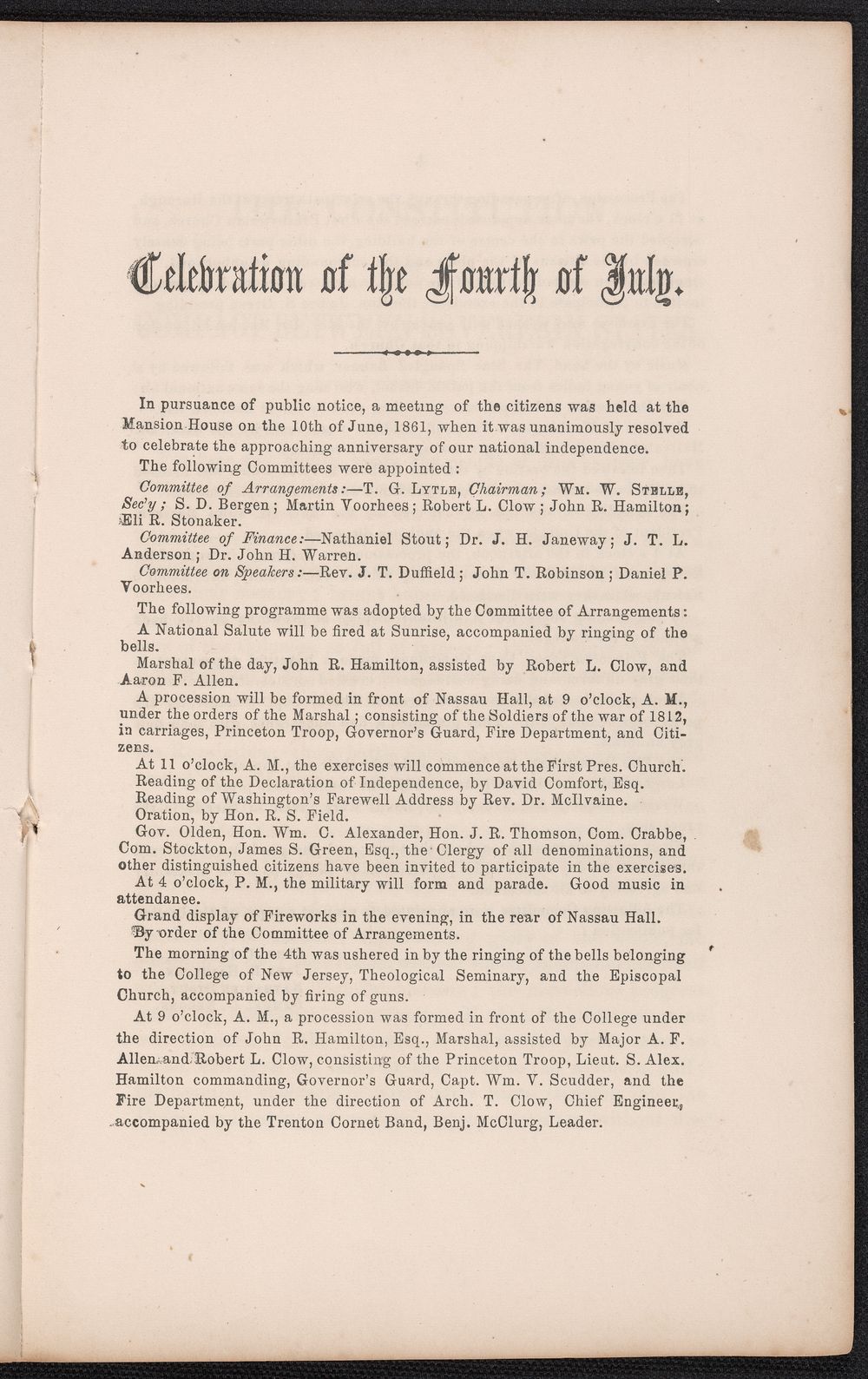
“Celebration of the Fourth of July,” 1861
Historical Subject Files
Celebrating American Independence soon after the Civil War broke out proved poignant for those who attended. The day began and ended at Nassau Hall, with faculty and the College president participating in the program.
Richard S. Field ‘1821 gave the oration, observing that it was difficult to have positive feelings about the nation that day.
“It is my misfortune to be called upon to address you at a time, when, if I were to present to you a picture of our past happiness, it would but embitter the painful reflections, which a contemplation of the present and the future force upon our minds.”