Life at Princeton

For Princeton students, the Revolutionary War was not a distant cause but a lived reality. The conflict disrupted studies, shuttered classrooms, and turned Nassau Hall into both a military barracks and a battlefield.
Yet even amid the uncertainty leading up to the war, students remained deeply engaged in their education and committed to continuing along a path of normalcy. This glimpse into daily life at the College of New Jersey highlights both the close friendships between students and the lively, sometimes unruly nature of campus culture in the 18th century.

“This day I arrived at Princeton, to my great joy, for I longed to return to my old habitation and my only home. … As things appear, I shall live happy this winter. A great number of students are in college. The Junior Class at present consists of 45 and no doubt will yet be increased.”
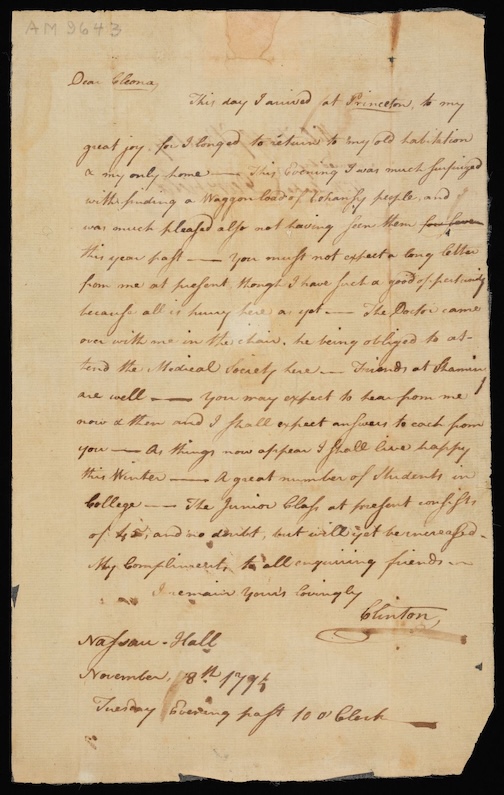
Letter to Betsy (Cleona) Beatty, November 8, 1775
Charles Clinton Beatty ’1775 (1756-1777)
John Beatty Family Collection
In a letter dated shortly after his graduation, Charles Beatty wrote from Nassau Hall.
Just two months later, on January 5, 1776, Charles enlisted in Colonel Moyne’s Pennsylvania battalion. In February 1777, he was tragically killed by the accidental discharge of a musket.

Complaint about the Food
"Old oniony butter and sometimes dry bread, and thick coffee for breakfast" and "Very indifferent dinners,"
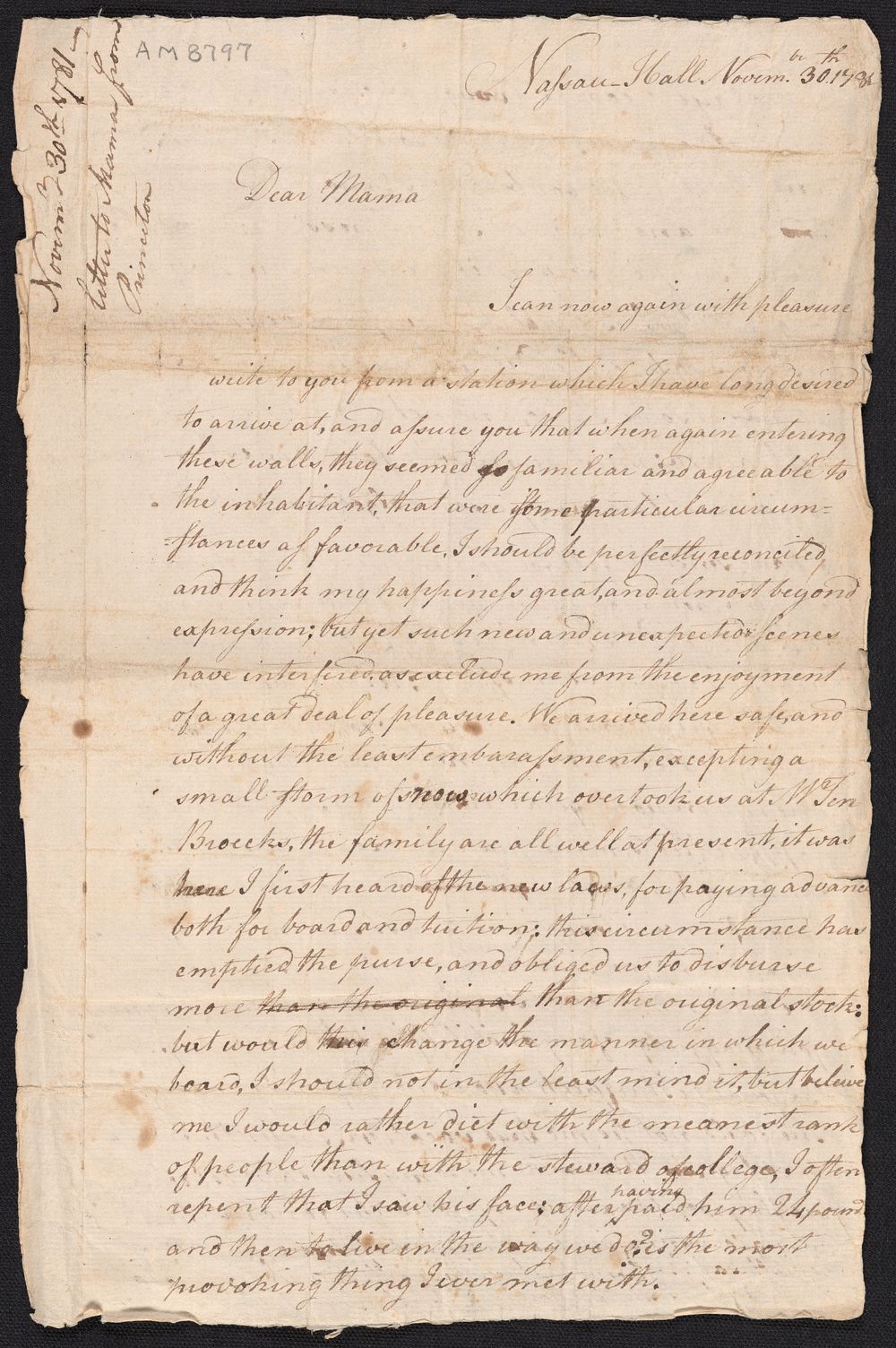
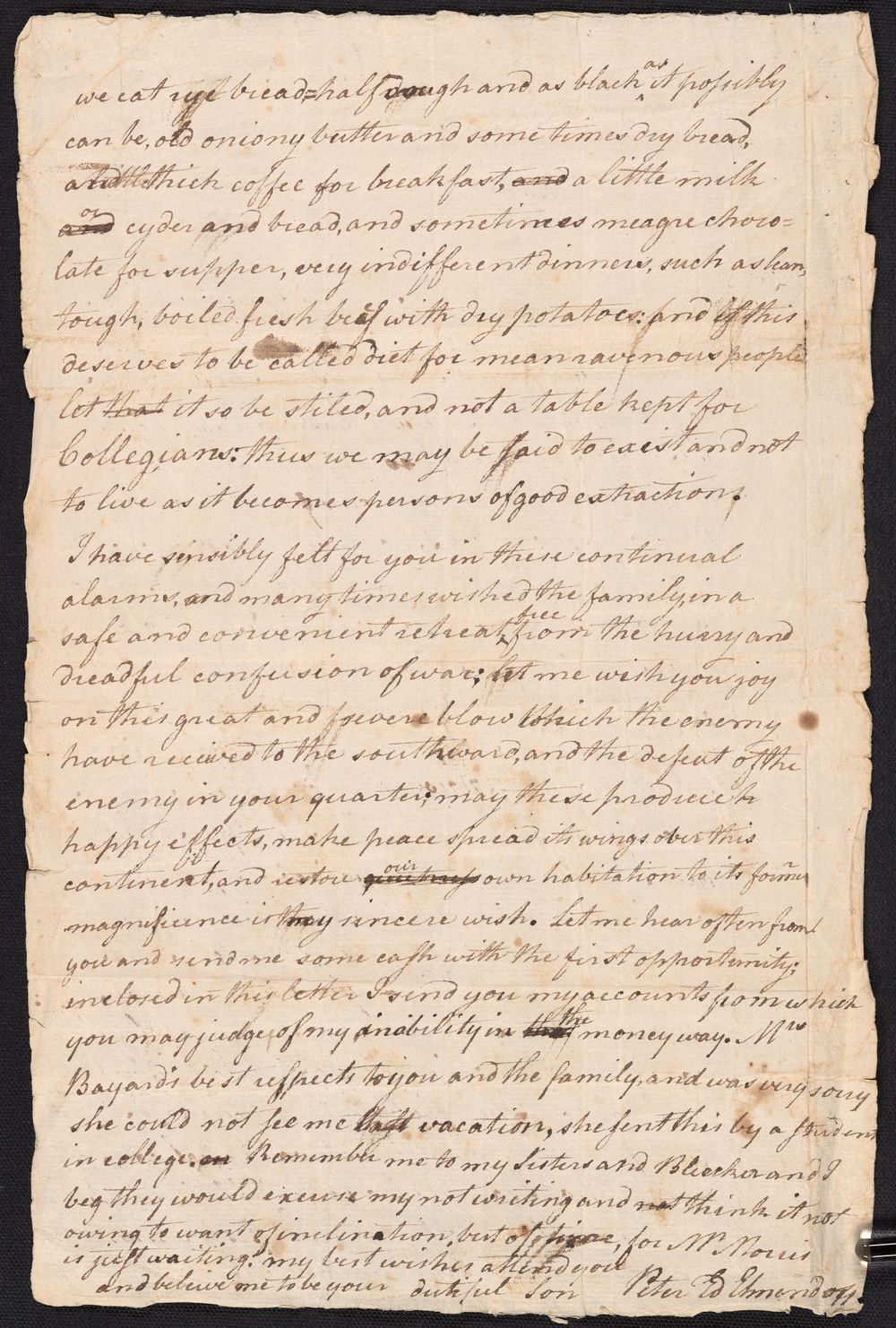
Letter to his mother, Mary Elmendorf, November 30, 1781
Peter Elmendorf ’1782 (1764-1835)
Princeton University Materials Collection
The combination of a typical student experience (complaining about the food) and the “dreadful confusion of war” appear in this letter by a member of Princeton’s Class of 1782 to his mother.
After lamenting about his diet, Elmendorf notes, “I have sensibly felt for you in these continual alarms…” The “great and severe blow which the enemy have received to the southward” the letter describes is almost surely a reference to the British surrender at the Siege of Yorktown six weeks earlier.

Lasting Friendship
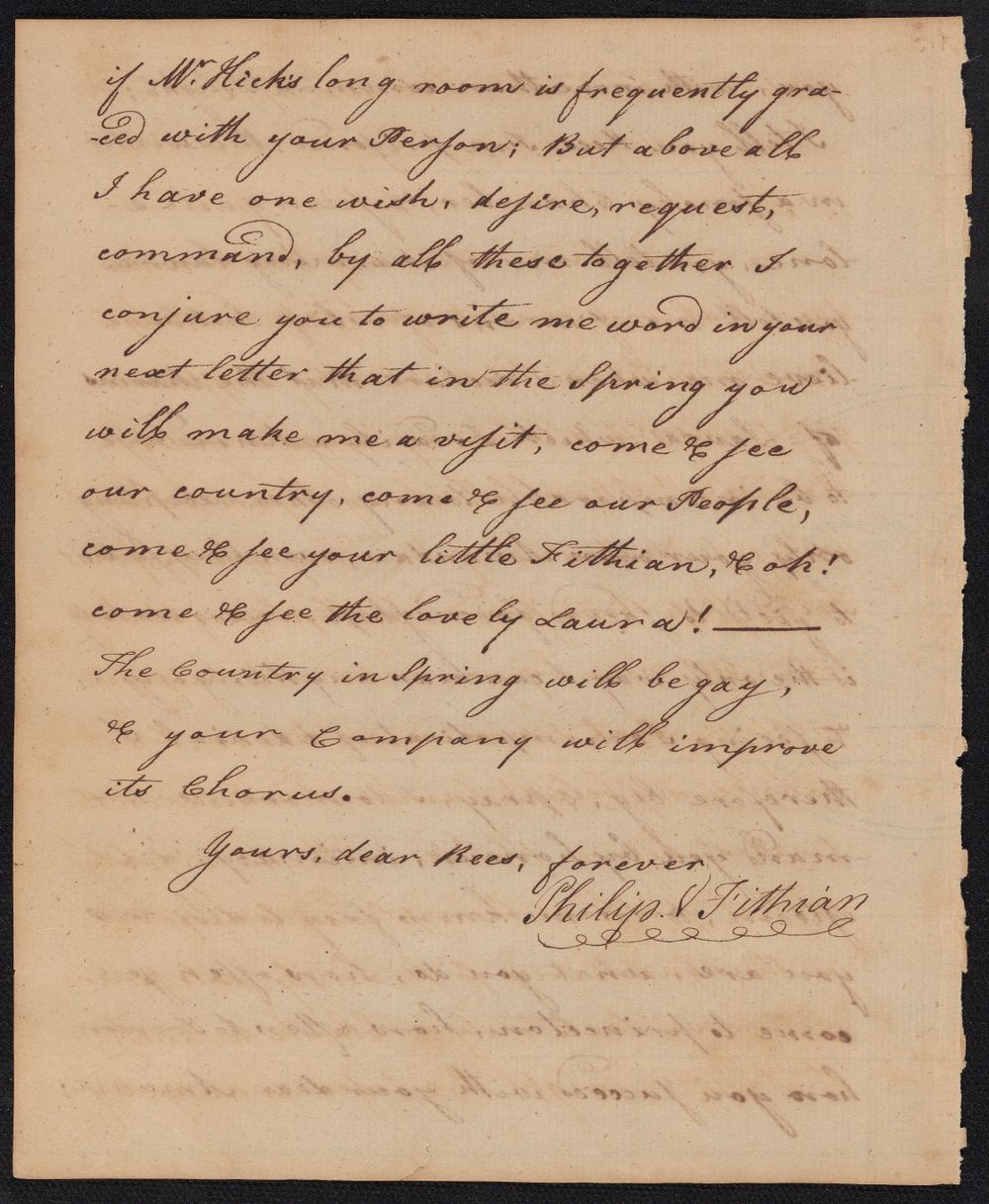
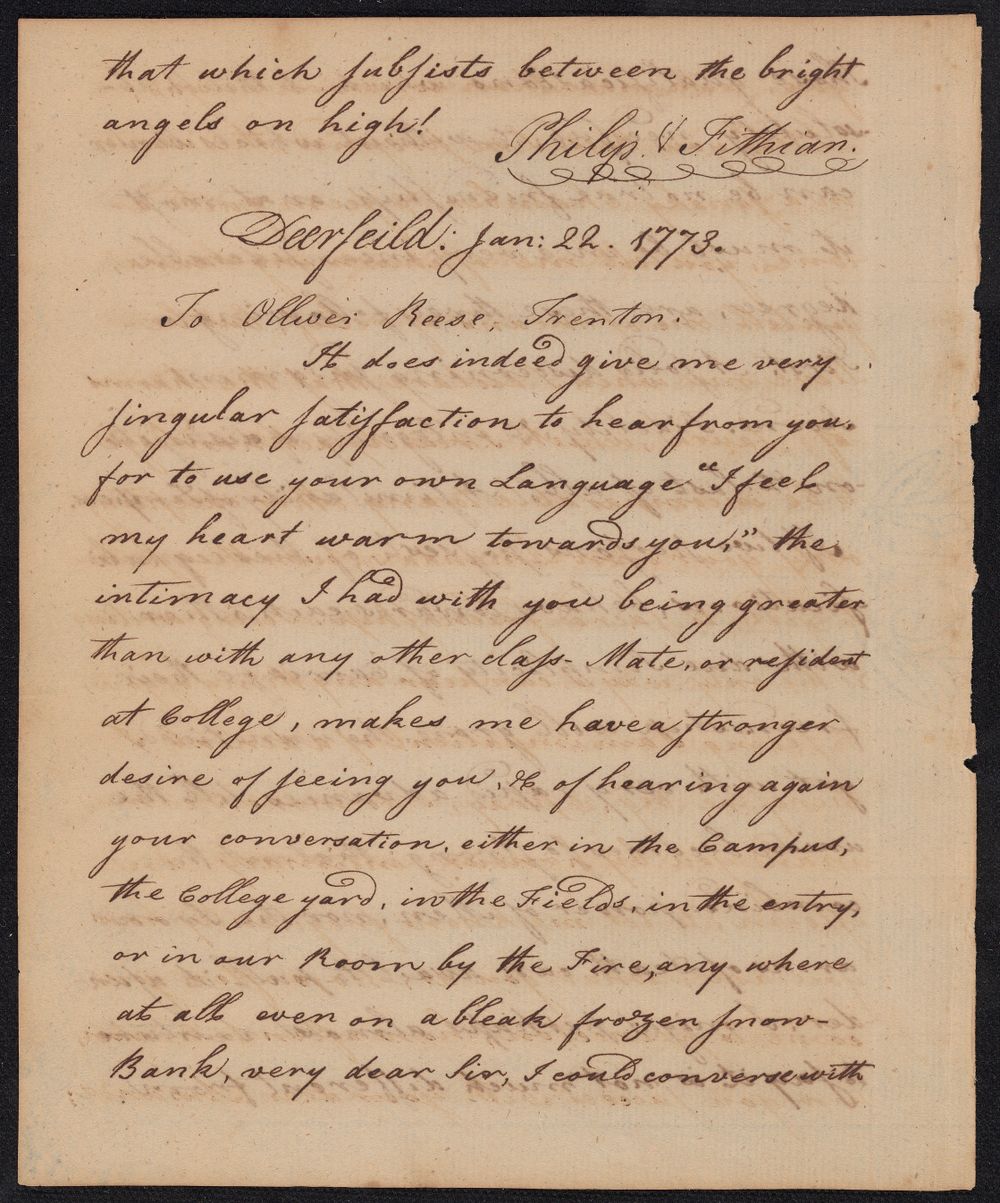
After graduation, Philip Fithian remained in contact with fellow classmate Oliver Reese. Fithian’s excitement to hear from his friend is felt in the letter, reminiscing about their time in Nassau Hall.
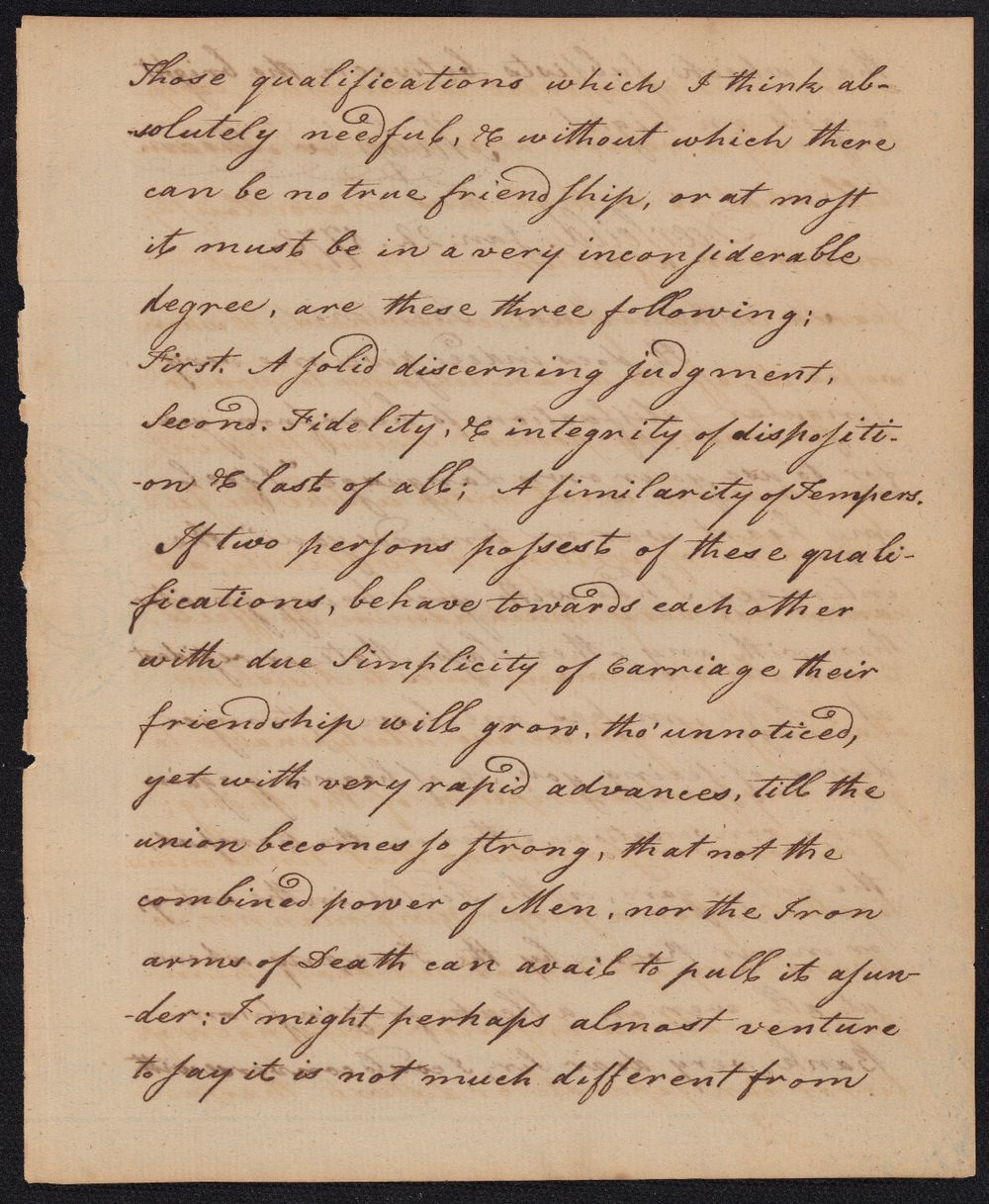
Unruly Nature - Stealing of Hens & Turkeys
Philip Vickers Fithian letter to his father, Joseph Fithian, January 13, 1772
Philip Vickers Fithian ’1772 (1747-1776)
Journals and Commonplace Books, 1766-1776
General Manuscripts [Bound] Collection
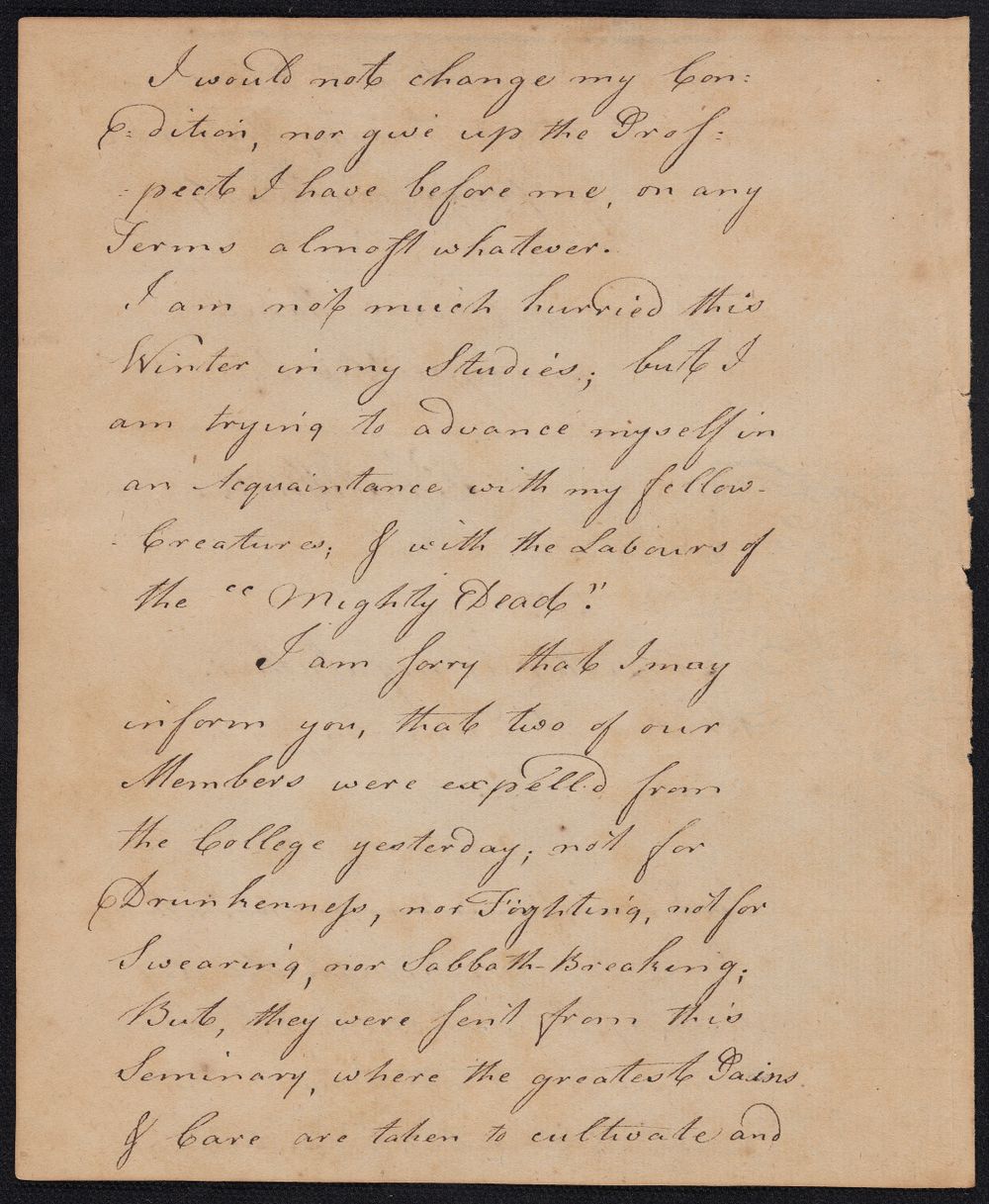
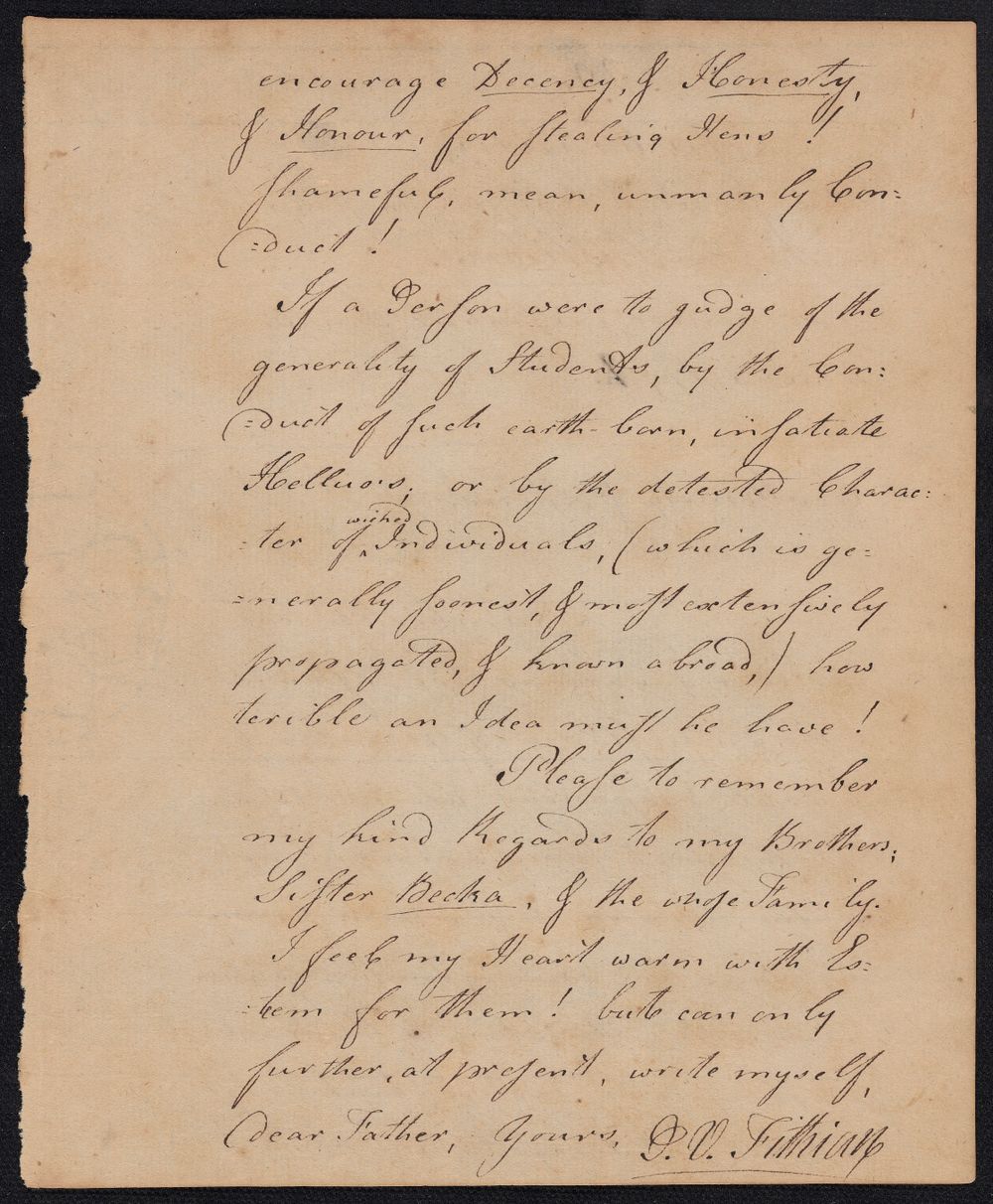
In a letter to his father, Princeton student Philip Vickers Fithian ’1772 offered a lively account of life on campus.
His words reflected the moral expectations placed on students, the personal pride they took in their education, and the reality that they might not always live up to those ideals.
“I would not change my condition, nor give up the prospect I have before me, on any terms almost whatever,” but expressed disapproval of two “shameful, mean, unmanly” classmates recently expelled “not from drunkenness, nor fighting, not for swearing, nor Sabbath-Breaking; But … for stealing Hens!”
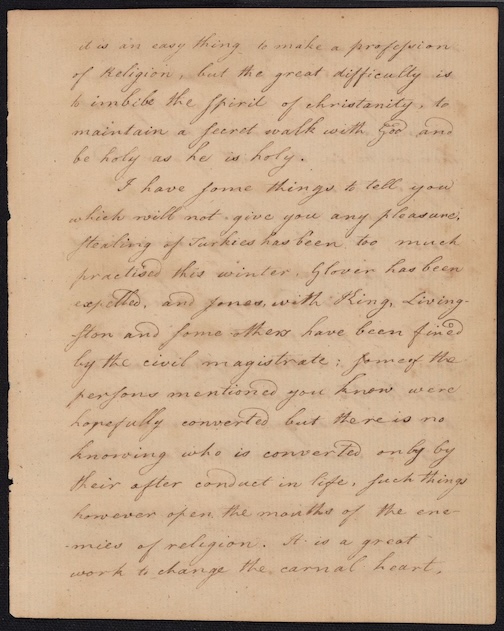
Transcript of a Letter to Philip Vickers Fithian ’1772, January 25, 1773
Israel Evans ’1772 (1747-1807)
Journals and Commonplace Books, 1766-1776
General Manuscripts [Bound] Collection
Israel Evans ‘1772, later a chaplain in the Continental Army during the Revolutionary War, once wrote to his classmate, Philip Fithian ’1772, about a curious issue on campus: the ongoing theft of turkeys.
In his letter, Evans noted that stealing turkeys had become “too much practiced this winter,” showing how student mischief persisted even among future Revolutionary leaders.
This glimpse into daily life at the College of New Jersey highlights both the close friendships between students like Evans and Fithian and the lively, sometimes unruly nature of campus culture in the 18th century.