Changing Roles of the College
On November 29, 1776, word came that British troops were expected to occupy Princeton. Joseph Clark ’1781 wrote that after John Witherspoon told the students he was closing the College that day, they looked at each other in distress. They evacuated as quickly as they could, many leaving everything behind to become the spoils of war for the invading army.
Around 10,000 more troops arrived to join the forces who had been occupying the College and its surrounding tiny town after the British were defeated in Trenton in December.
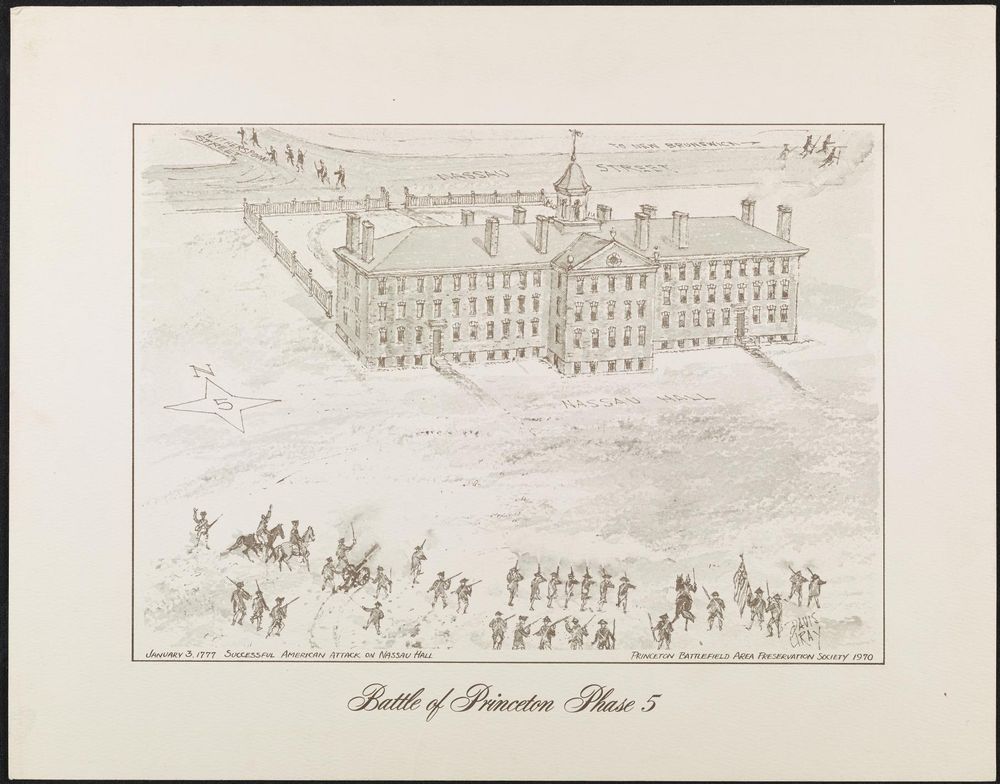

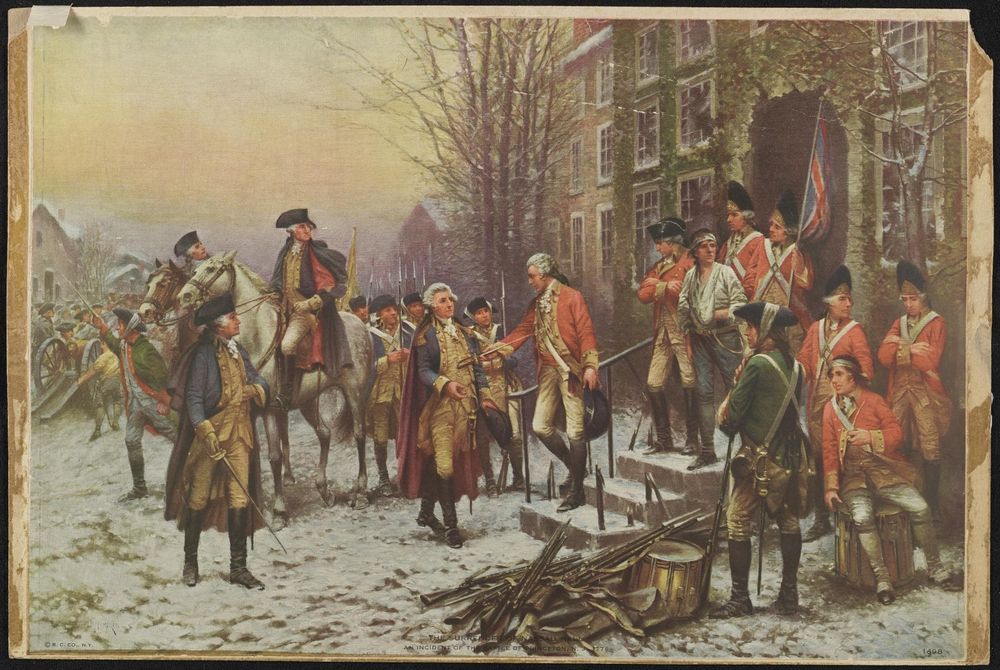
On January 3, 1777, George Washington and the Continental Army arrived in Princeton and fought the British in successive waves on a bitterly cold morning, ultimately sending the enemy on retreat.
The Battle of Princeton allowed the College to resume educating students in the summer of 1777, and, as Thomas Paine put it, “left us with the spirit of conquerors.” The war itself lasted six more years, but historians consider this battle its turning point.


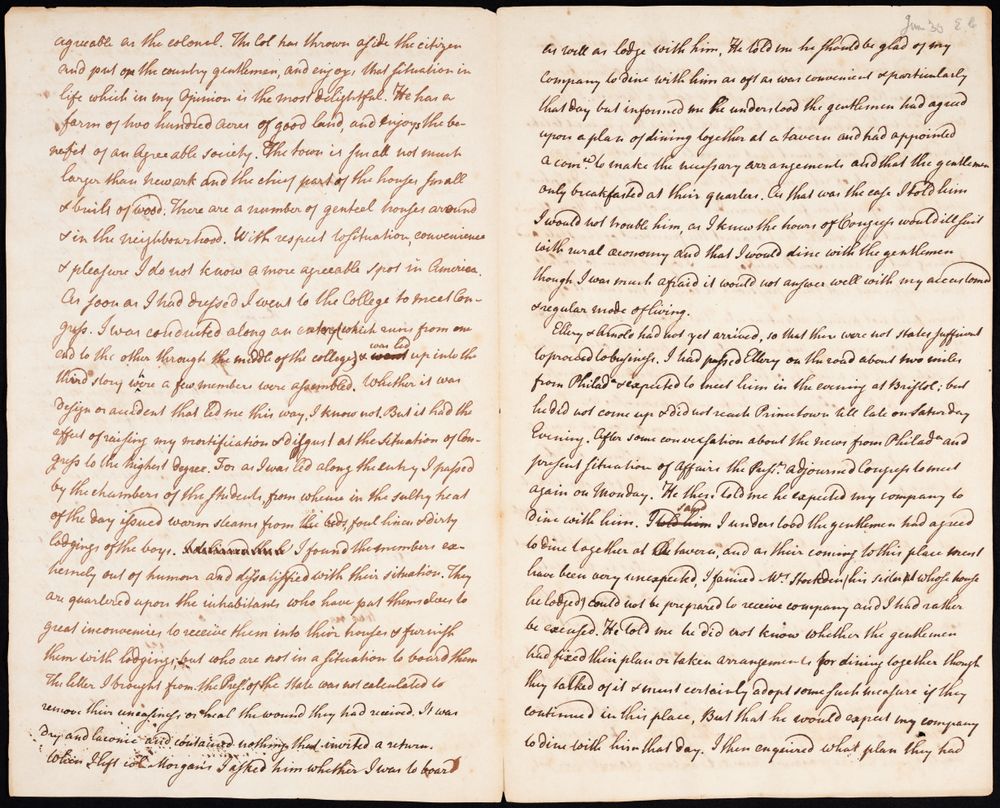
Letter to his wife, Hannah, 1783 June 30
Thomson, Charles (1729-1824)
Charles Thomson Letters
The congressional secretary, Charles Thomson, wrote frequently to his wife in Philadelphia about how much he detested the new location.
In his letter, Thomson described his first impressions of Nassau Hall, which served double duty as the nation’s capitol as well as the home for the College of New Jersey. Whether it was the cramped quarters or the smells of dirty laundry that prompted it, Congress left Princeton for Annapolis after a little over four months.
“For as I was led along the entry I passed by the chambers of the students, from whence in the sultry heat of the day issued warm steams from the beds, foul linen & dirty lodgings of the boys.”
Return to a College
After the Continental Army liberated Princeton, a new session began for the College on July 8, 1777, but the ongoing conflict still intruded on campus life, as did the development of a fledgling national government. Nassau Hall was still severely damaged, and resources were scarce.
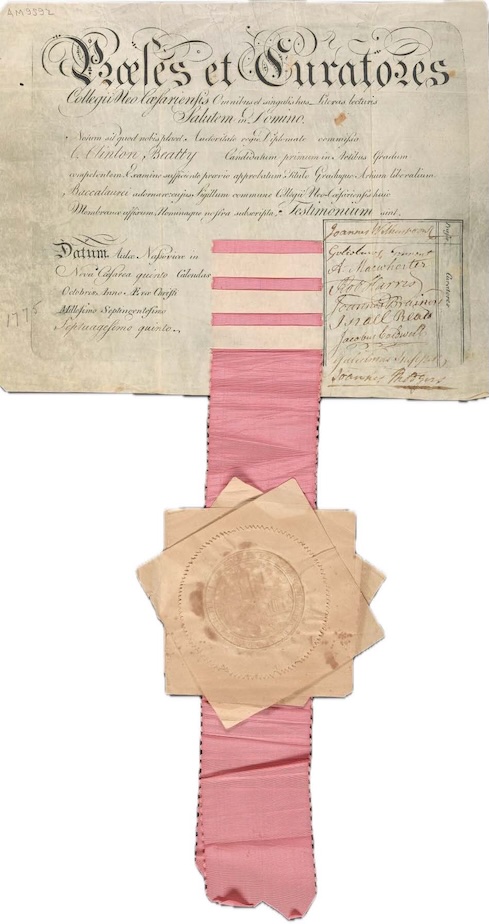
A. B. Diploma, Charles Clinton Beatty, 1775
The College of New Jersey (later Princeton University)
Princeton University Diploma Collection
Princetonians who graduated the year following Charles Clinton Beatty ’1775 had to wait longer for their diplomas, as degree conferral for the Class of 1776 was delayed until May 1777 because the Trustees could not get a quorum amidst the confusion of war.
George Washington and the Confederate Congress attend Commencement, 1783
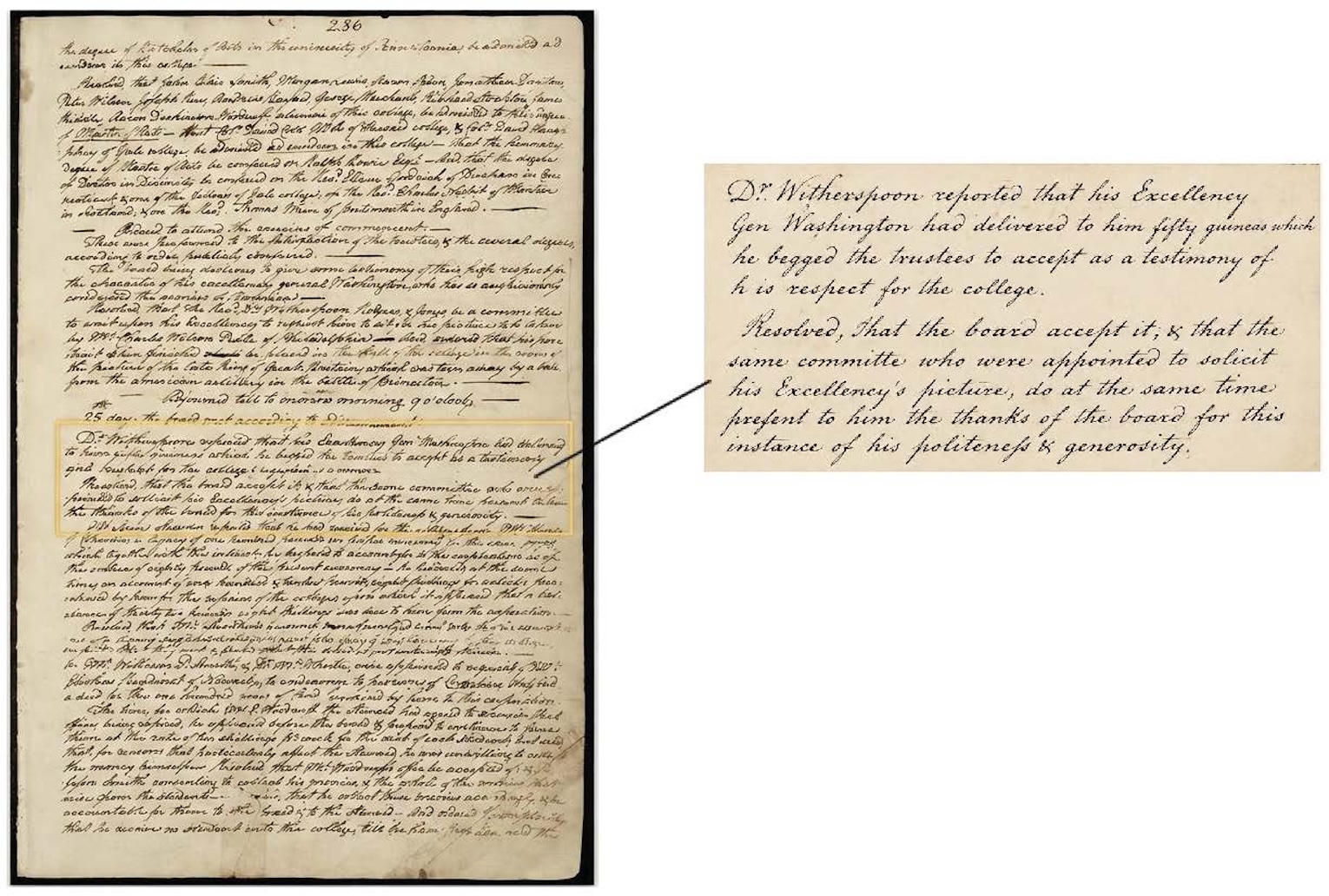
This entry in the Board of Trustees Minutes notes:
"Dr. Witherspoon reported that his Excellency Gen. Washington had delivered to him fifty guineas which he begged the trustees to accept as a testimony of his respect for the College.
Resolved, that the board accept it, & that the same committee who were appointed to solicit his Excellency's picture, do at the same time to him the thanks of the board for this instance of his politeness & generosity."
George Washington had attended Commencement exercises a week earlier, during which the contribution was made to support John Witherspoon’s efforts to raise funds abroad for the College’s postwar reconstruction.
In appreciation, the College commissioned a portrait of George Washington at the Battle of Princeton. This painting hung in the faculty room of Nassau Hall for more than two centuries and is now on view in the Princeton University Art Museum.
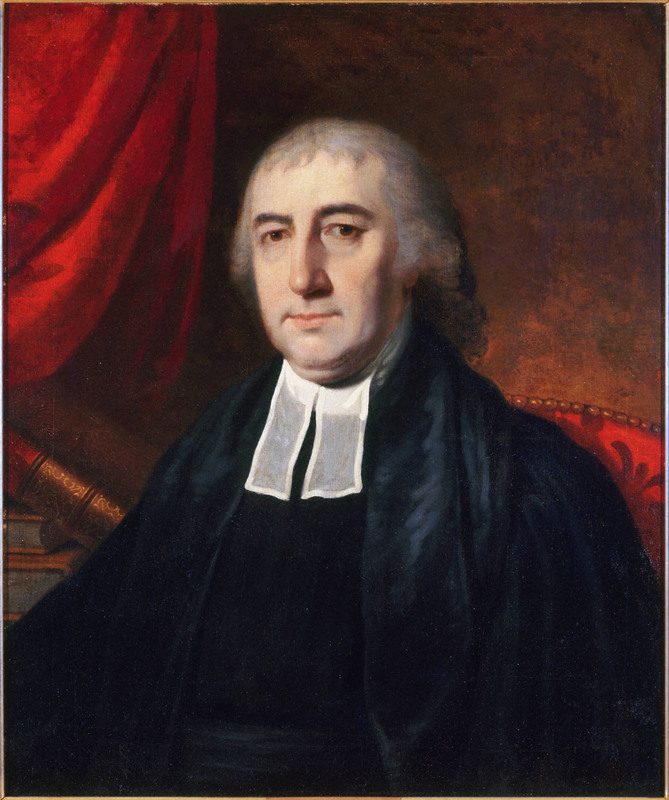
Ashbel Green (1762-1848)
Born in Hanover, New Jersey, Ashbel Green '1783 *1785 attended the College of New Jersey shortly after Nassau Hall was occupied by soldiers from both sides of the Revolutionary War.
Despite the turmoil, Green excelled as a student, earning recognition for his scholarship and discipline. He was an active member of the American Whig Society, where students practiced debate and public speaking.
Green graduated as Valedictorian in 1783, when George Washington and other Revolutionary leaders attended Commencement. He later became a Presbyterian minister, chaplain to Congress, and president of the College of New Jersey from 1812 to 1822.
A Visitor's Point of View of the College
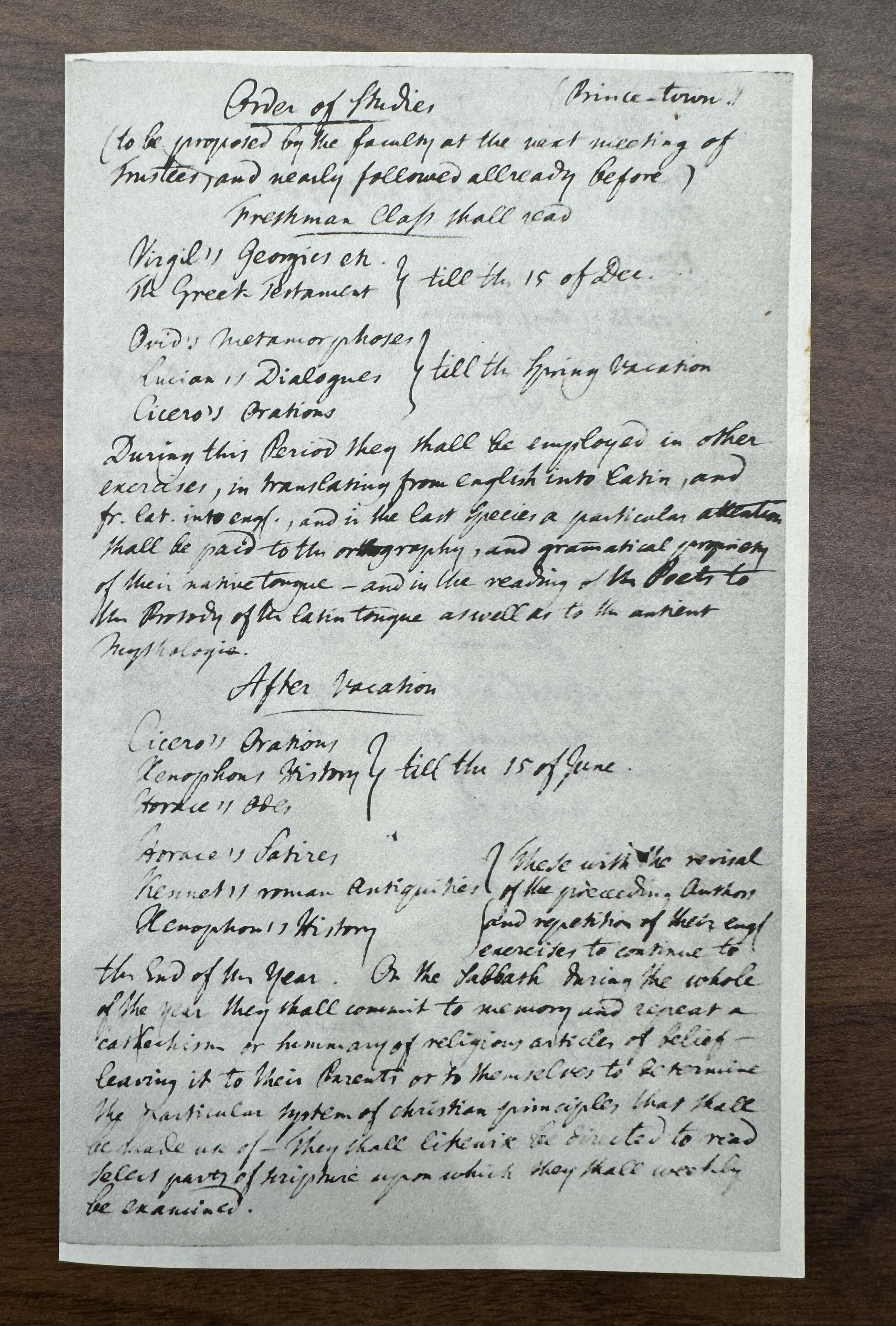
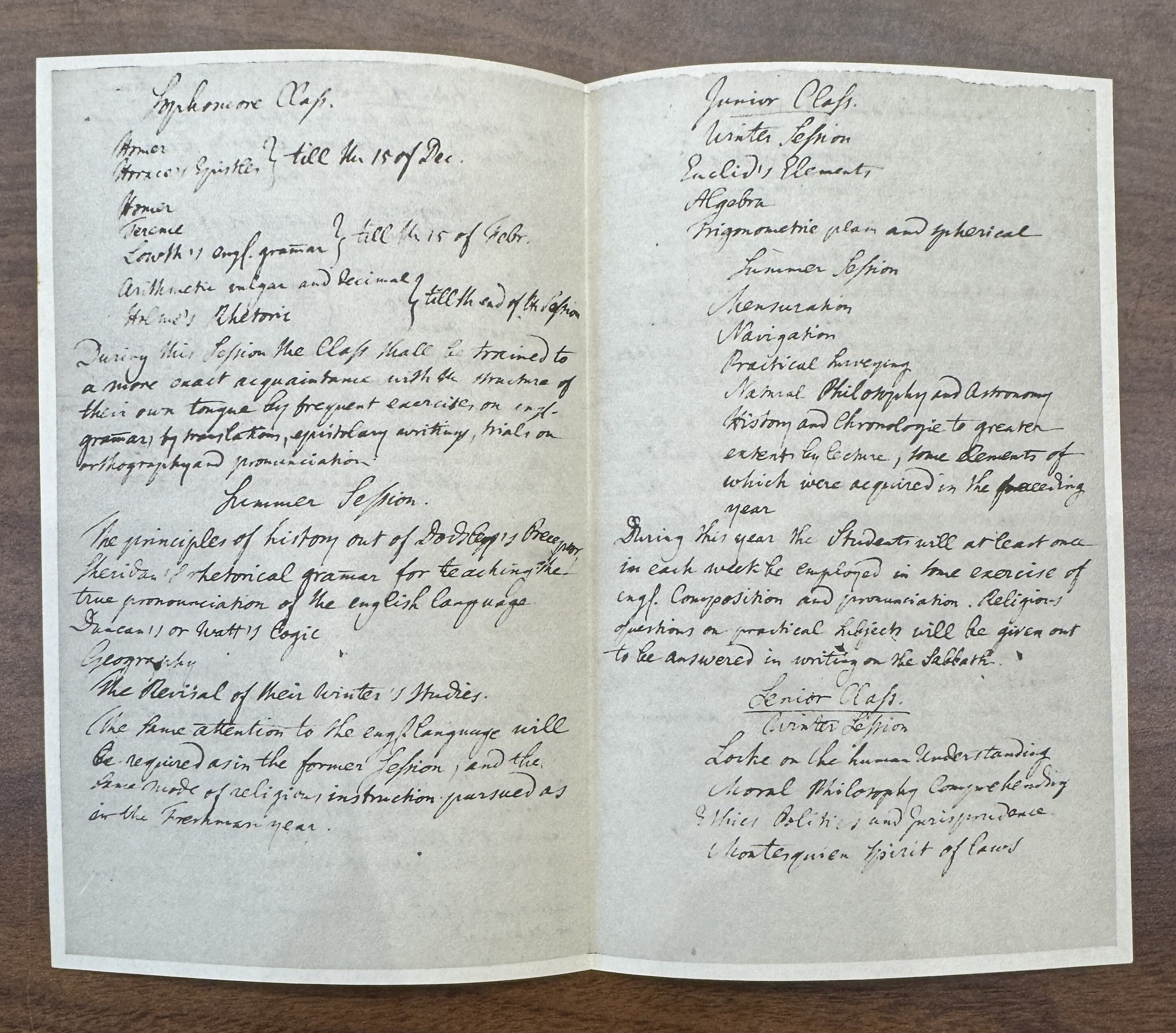
The College of Princetown, 1784 (Reprint, 1949)
Gijsbert Karel van Hogendorp (1762-1834)
Princetoniana Collection
In May 1784, Gijsbert Karel van Hogendorp, a young Dutch nobleman and relative of the new Dutch minister to the United States, visited Princeton. He recorded his impressions of the College and noted faculty discussions of a proposed new “order of studies,” including detailed observations on the curriculum.
Van Hogendorp praised Nassau Hall’s library, writing that it “contains very good books on History and Philosophy,” though it had suffered damage during the British occupation. He also briefly mentioned the Rittenhouse Orrery, an internationally renowned model of the solar system whose wartime damage Americans viewed as symbolic of British cruelty.