The College
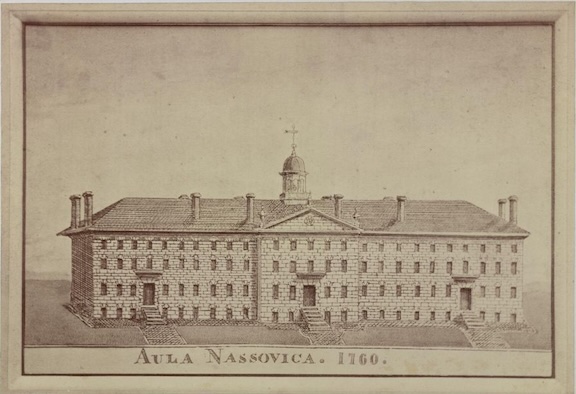

The 18th-century town of Princeton was surrounded by farmland, yet halfway between New York City and Philadelphia along a public road. It was rural, but not isolated; it remained connected by travelers carrying news between the two cities and their ports.
Families sending students to Princeton included farmers, church officials, urban merchants, and others, generally prosperous enough to afford tuition, board, and incidentals. Most students were between 17 and 21, though not all (William Paterson ’1763 at 14 and Thaddeus Dod ’1773 at 33).

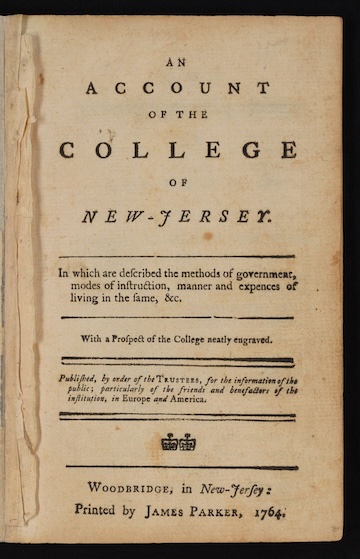
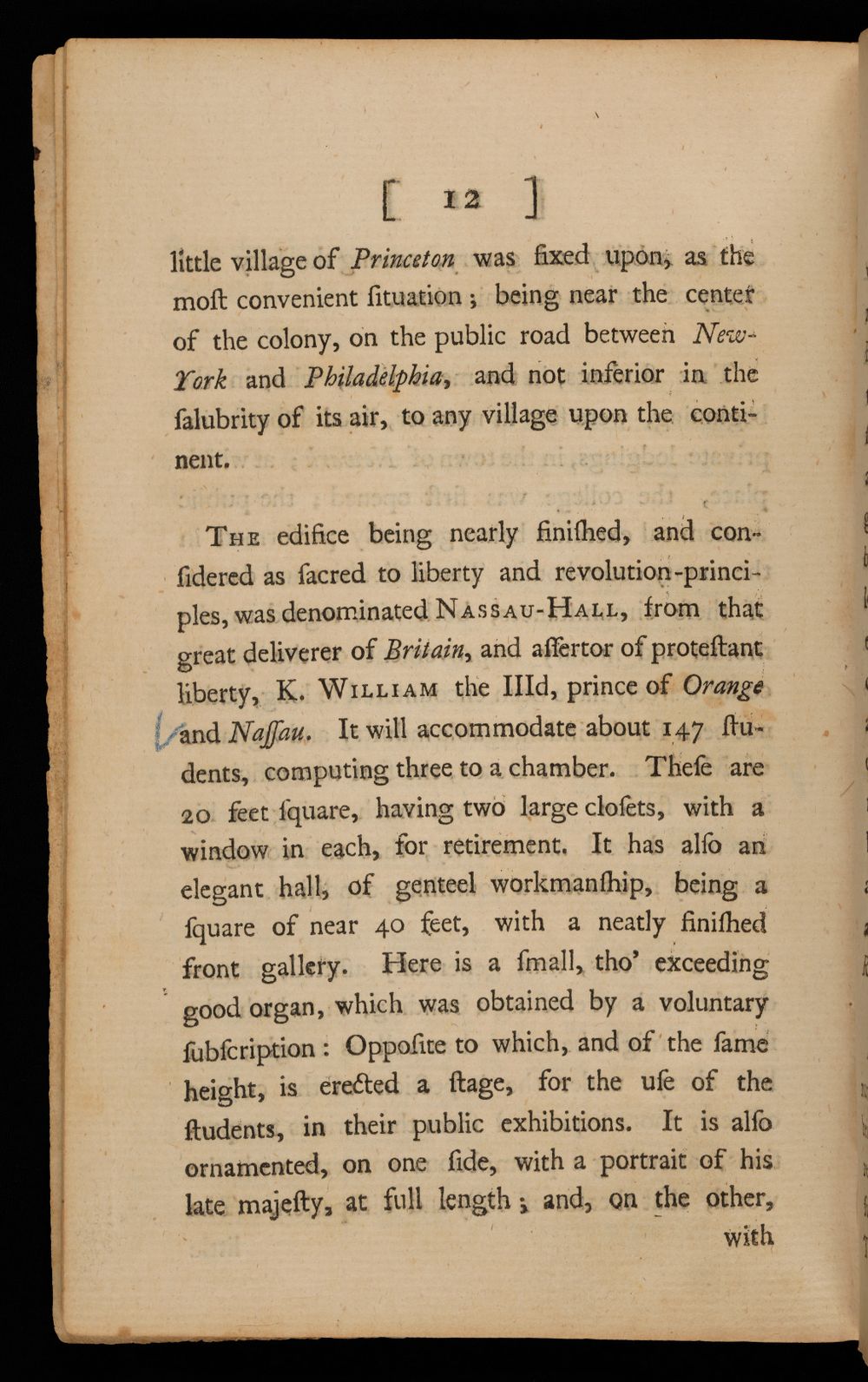
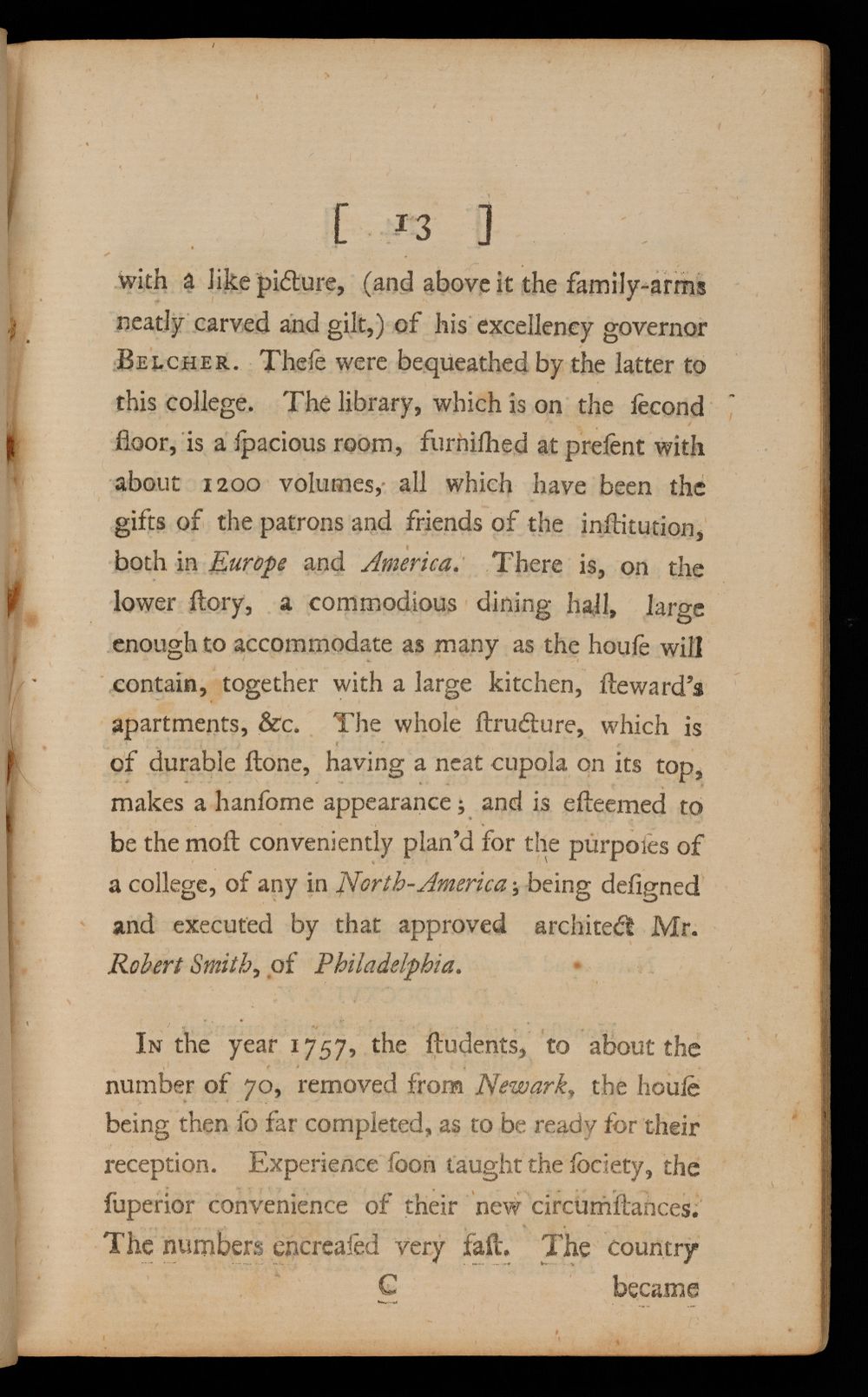
An Account of the College of New-Jersey, 1764
Samuel Blair (1741-1818)
Rare Books Collection
The College created this book in 1764 for use in promotion and fundraising throughout the colonies and abroad. It describes the institution’s history, curriculum, the newly built Nassau Hall, and its amenities, tuition, and fees.
The goal of the College was not only to teach the classics to the students, but “to inspire them with such principles, and form them to such a conduct, as will prepare for sustaining more extensive connections, with the grand community of mankind; and introduce them on the theatre of the world, as useful servants of their country.”
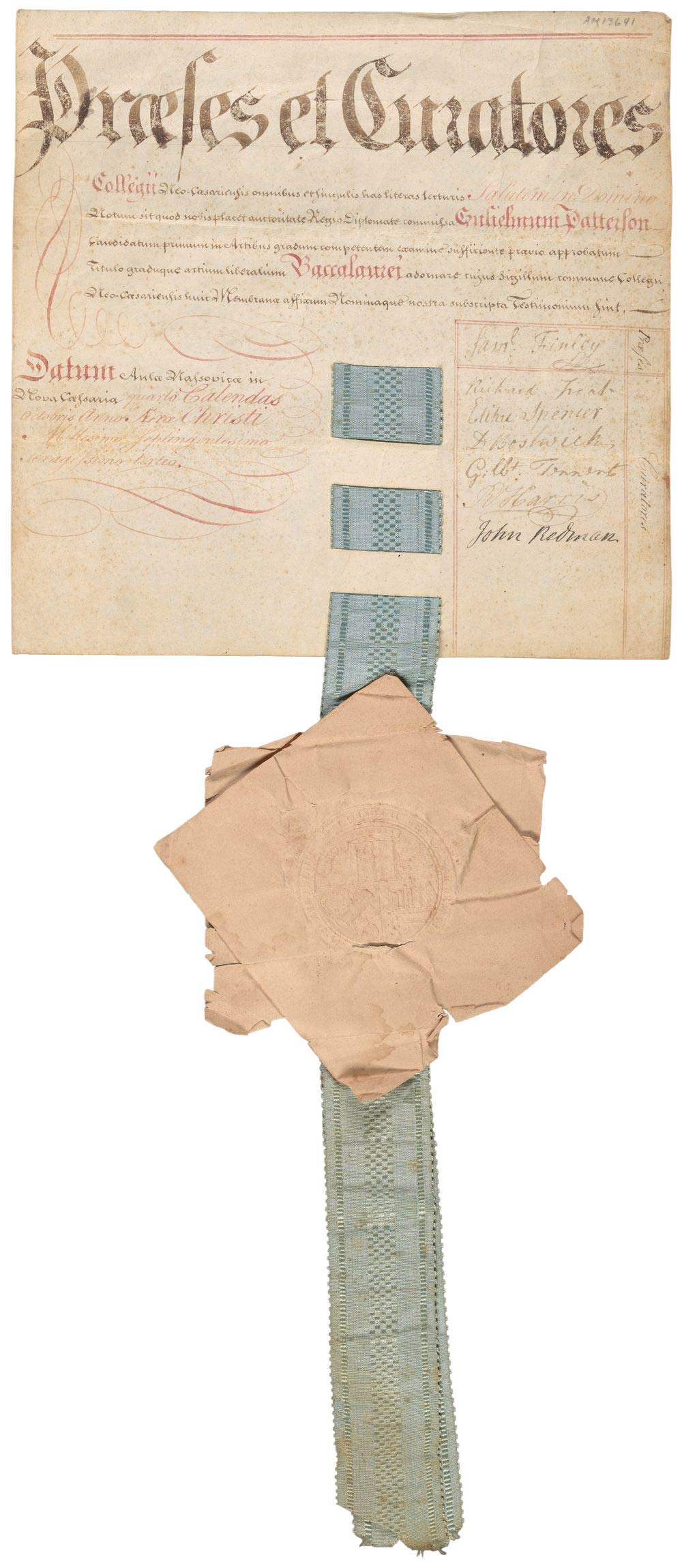
A. B. Diploma, William Paterson, 1763
The College of New Jersey (later Princeton University)
Princeton University Diploma Collection
William Paterson ’1763 *1766 studied law after his graduation from Princeton and served as New Jersey’s first attorney general during the Revolutionary War.
He later held a variety of other prominent government roles, including New Jersey’s governor and an associate justice of the U.S. Supreme Court appointed by George Washington. Some Princetonians who graduated in the decade following Paterson had to wait longer for their diplomas, as degree conferral for the Class of 1776 was delayed until May 1777, because the Trustees could not get a quorum amidst the confusion of war.
College Life in the Eighteenth Century
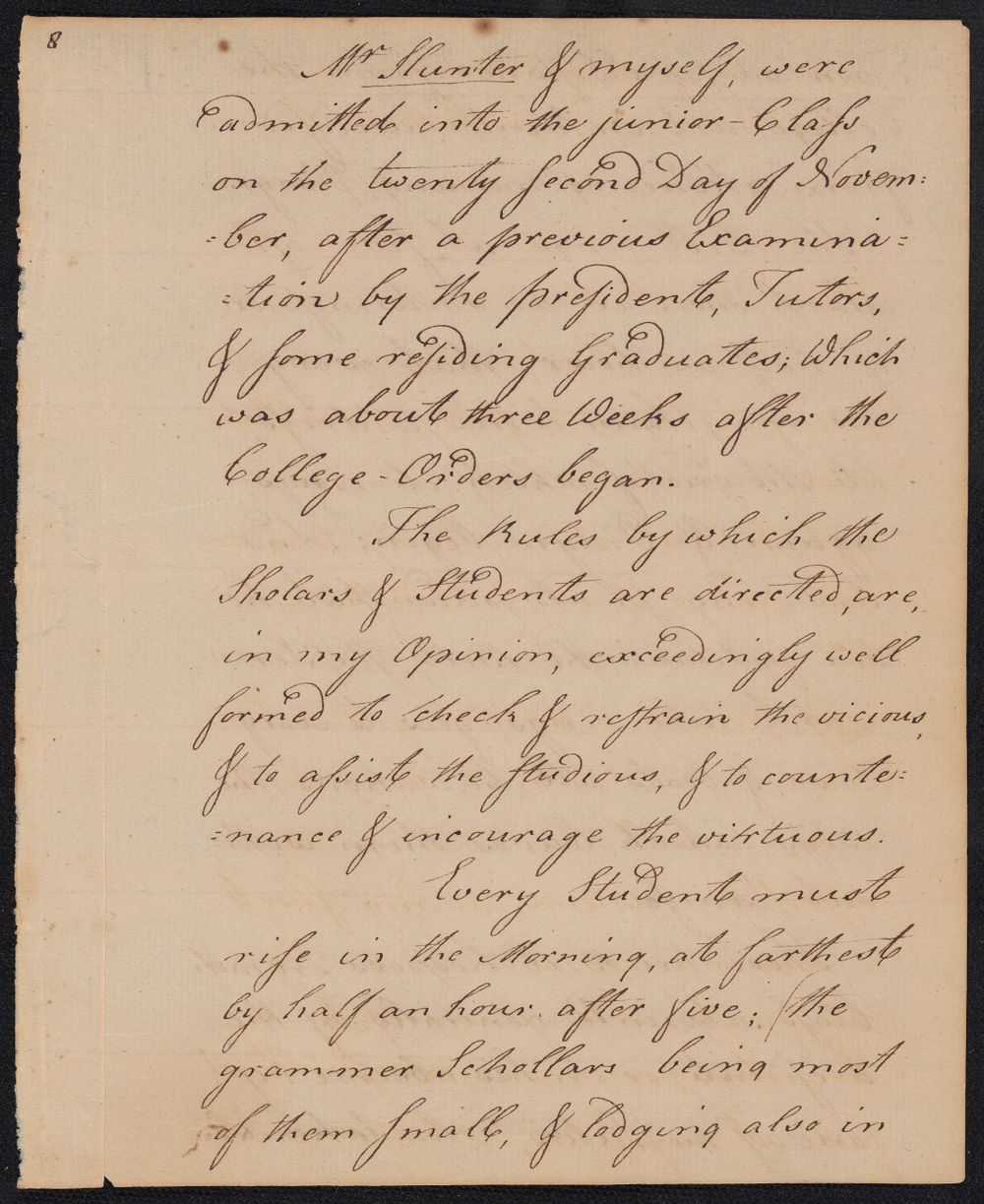
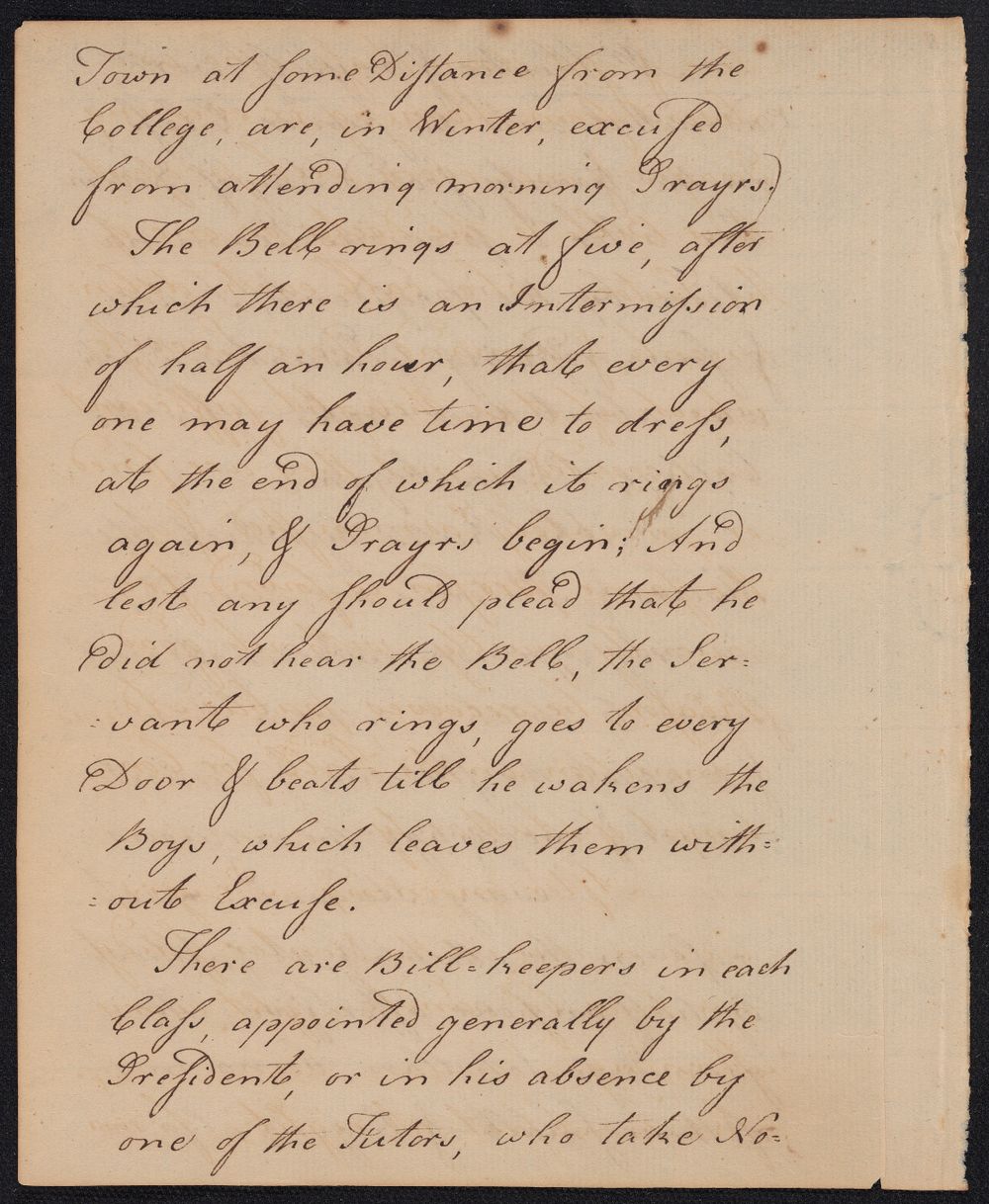
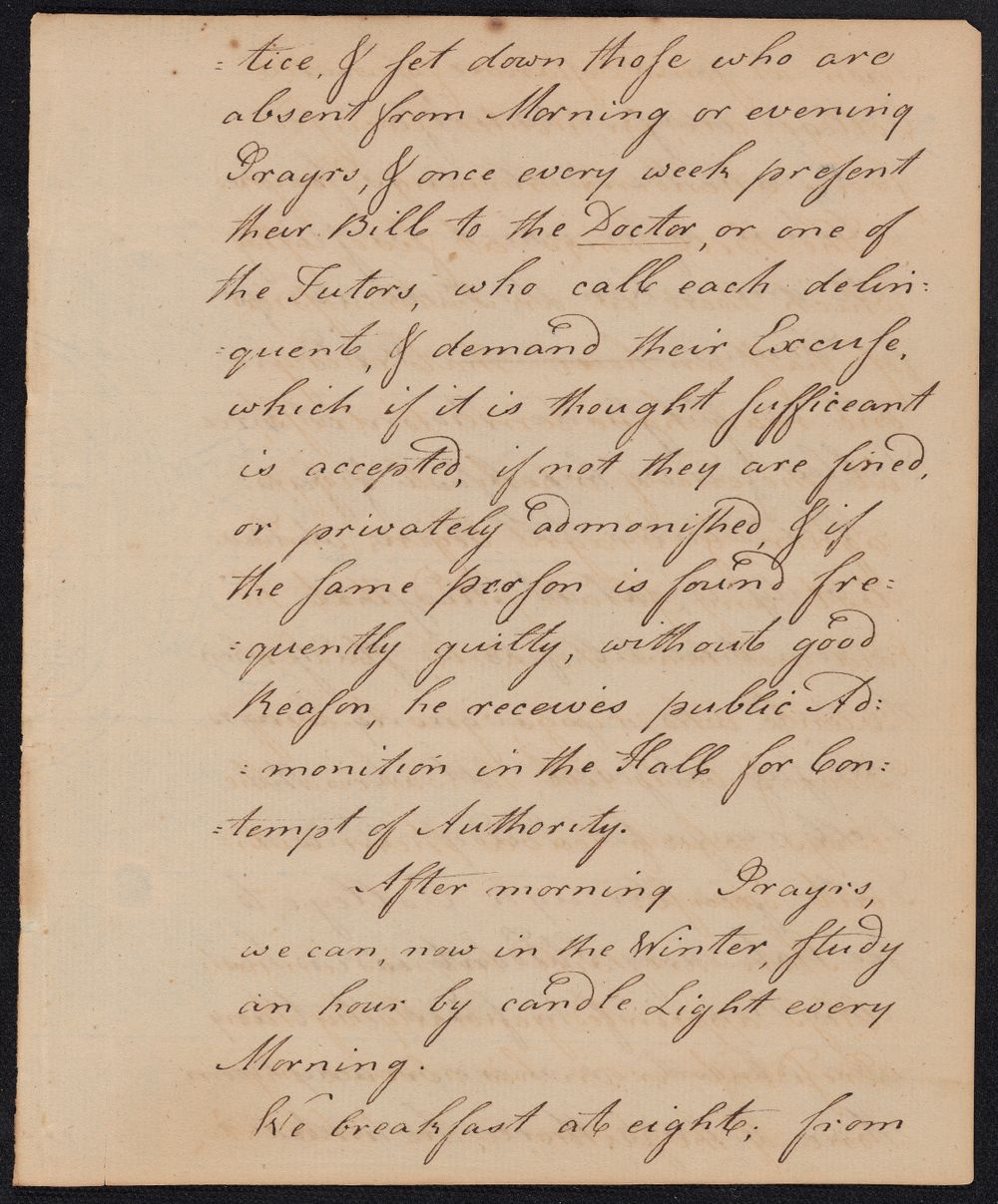
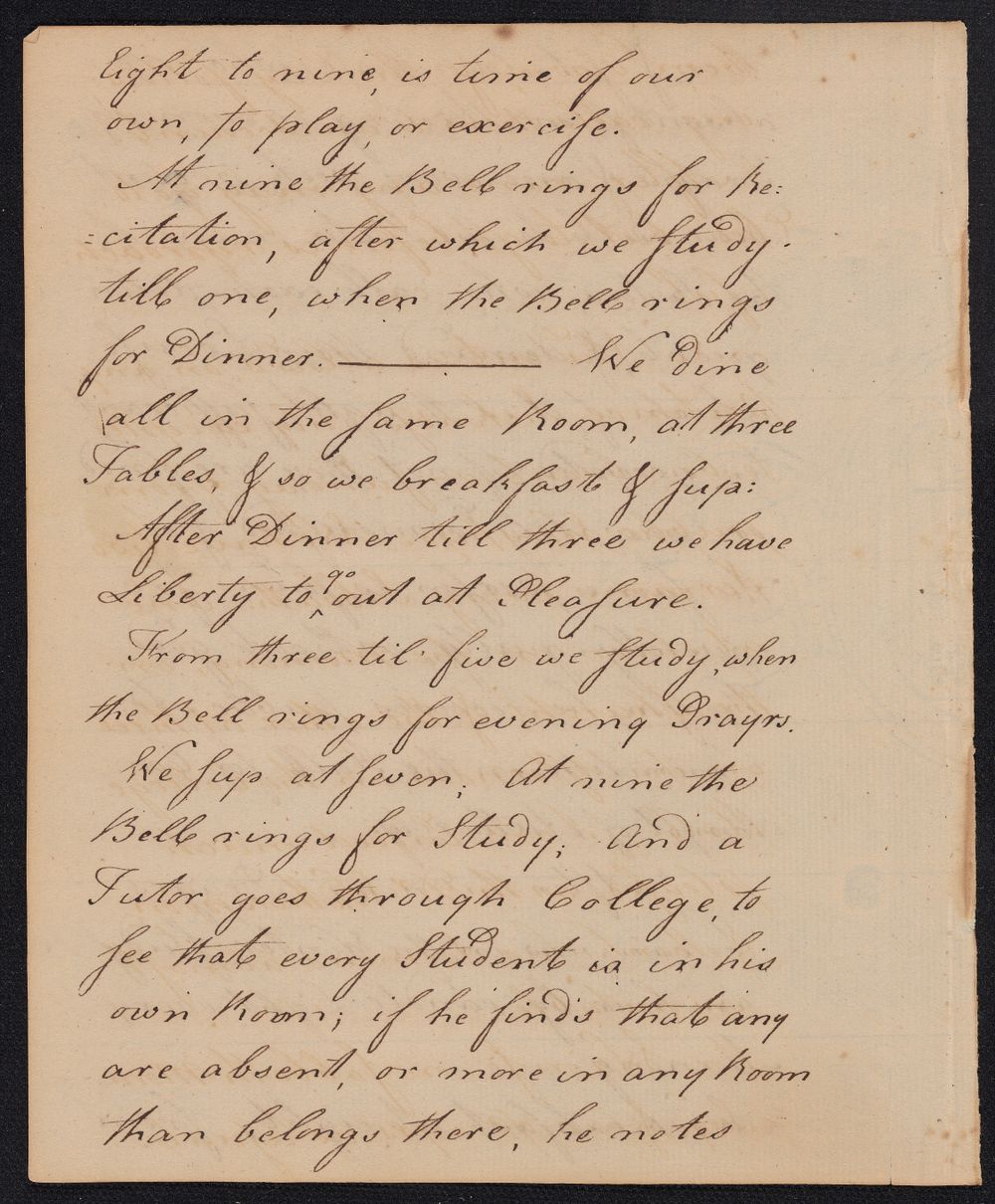
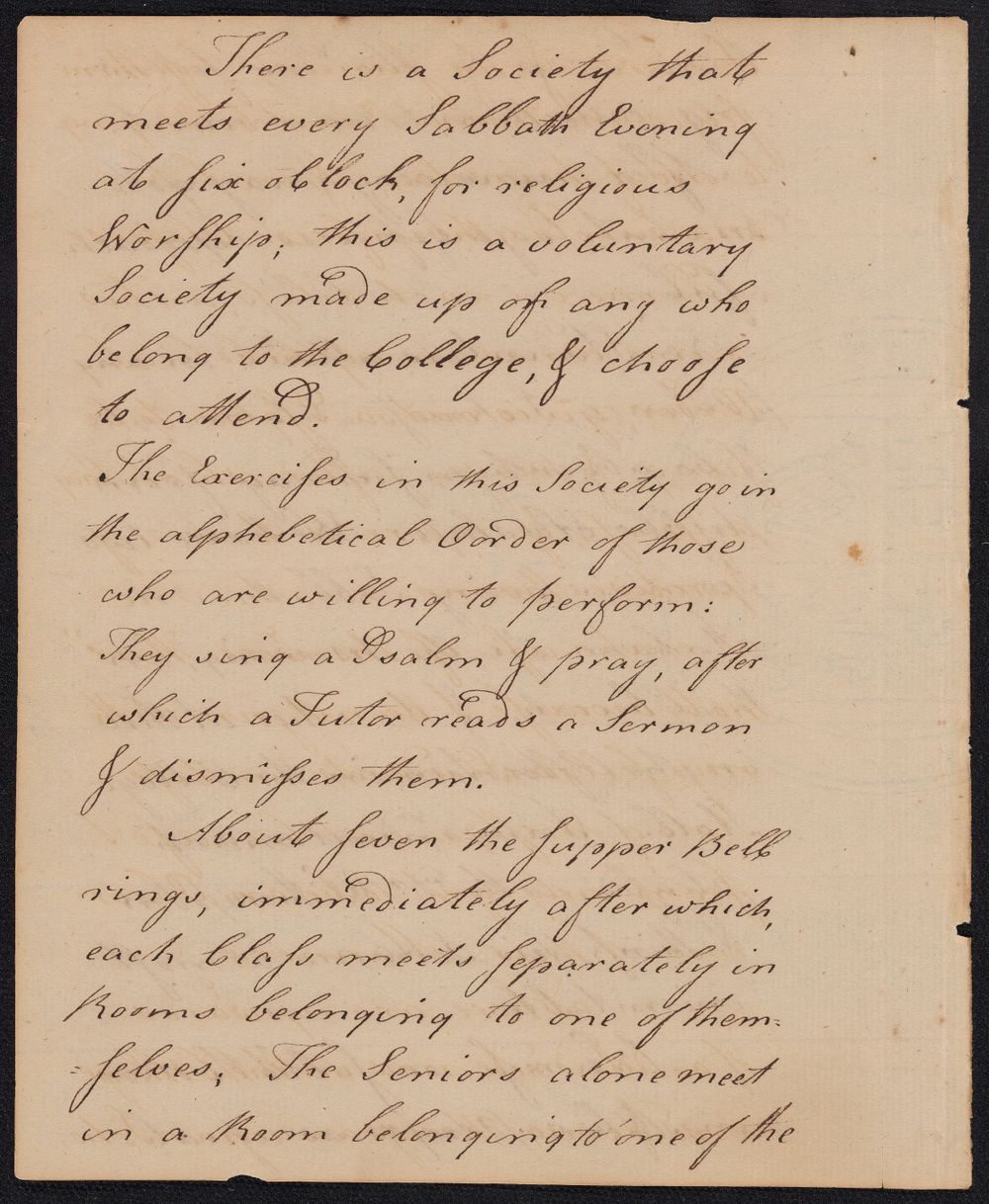
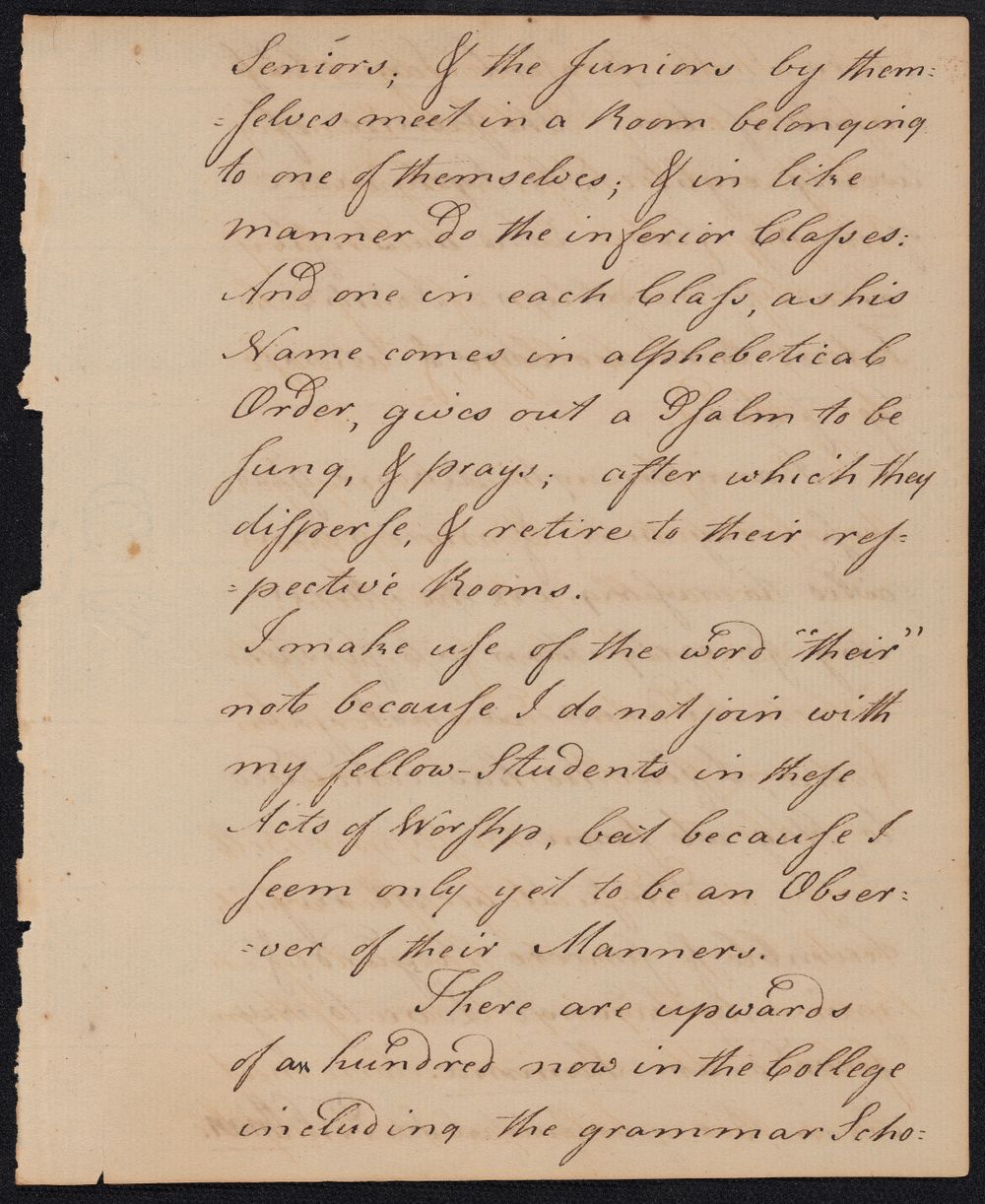
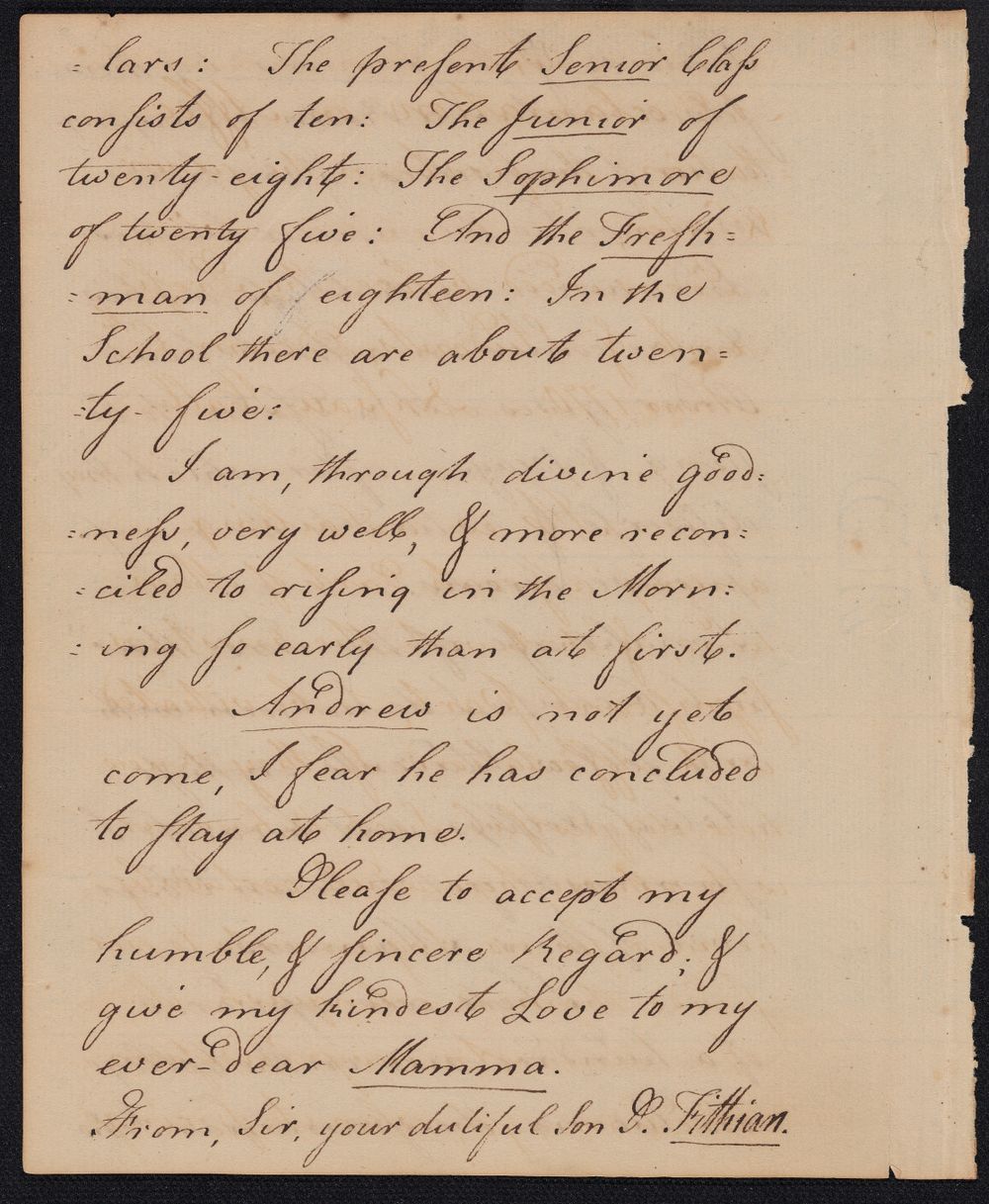
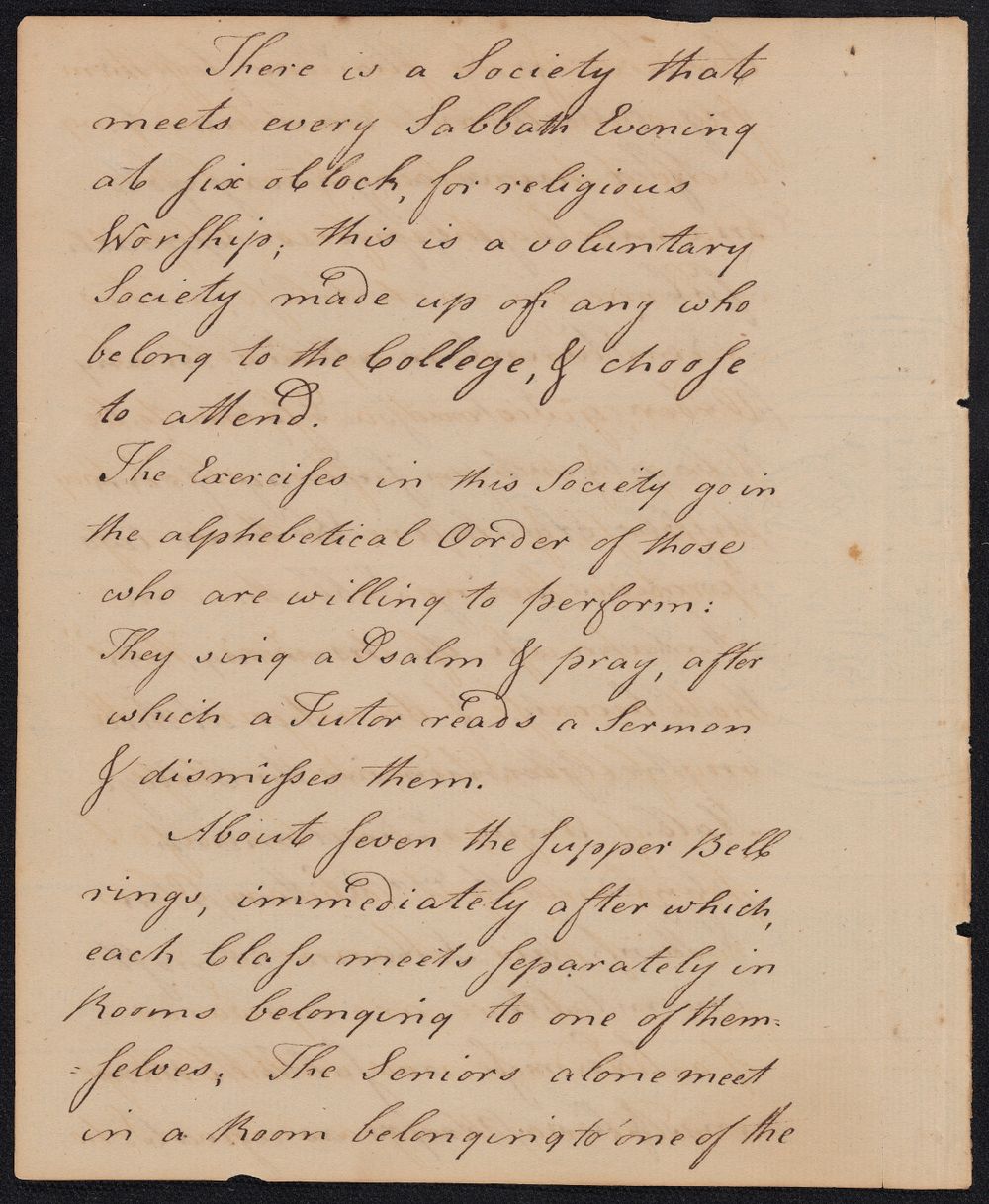
Transcript of a Letter to Joseph Fithian, November 30, 1770
Philip Vickers Fithian ’1772 (1747-1776)
Journals and Commonplace Books, 1766-1776
General Manuscripts [Bound] Collection
Philip Vickers Fithian ’1772 excitedly wrote to his father on November 30, 1770 about his admission to Princeton, “another grand step toward the summit of my wishes.” Fithian entered as a junior professing an intent to catch up academically.
He went on to describe the College rules as “exceedingly well informed to check & restrain the vicious, & to assist the studious, and to countenance & incourage [sic] the virtuous.”

Read the Full Letter:
Fithian's handwritten account describes the daily rhythm of college life, from mandatory morning and evening prayers, to study periods and meals, inspections by their tutors, every part of the day was carefully regulated.
Students who missed prayers or violated college rules could face fines or public repirmands. Fithian goes on to describes voluntary religious societies and class meetings that shaped a student's college life.

Accounts of the College
Thomas Patterson's Account Book, 1774-1776
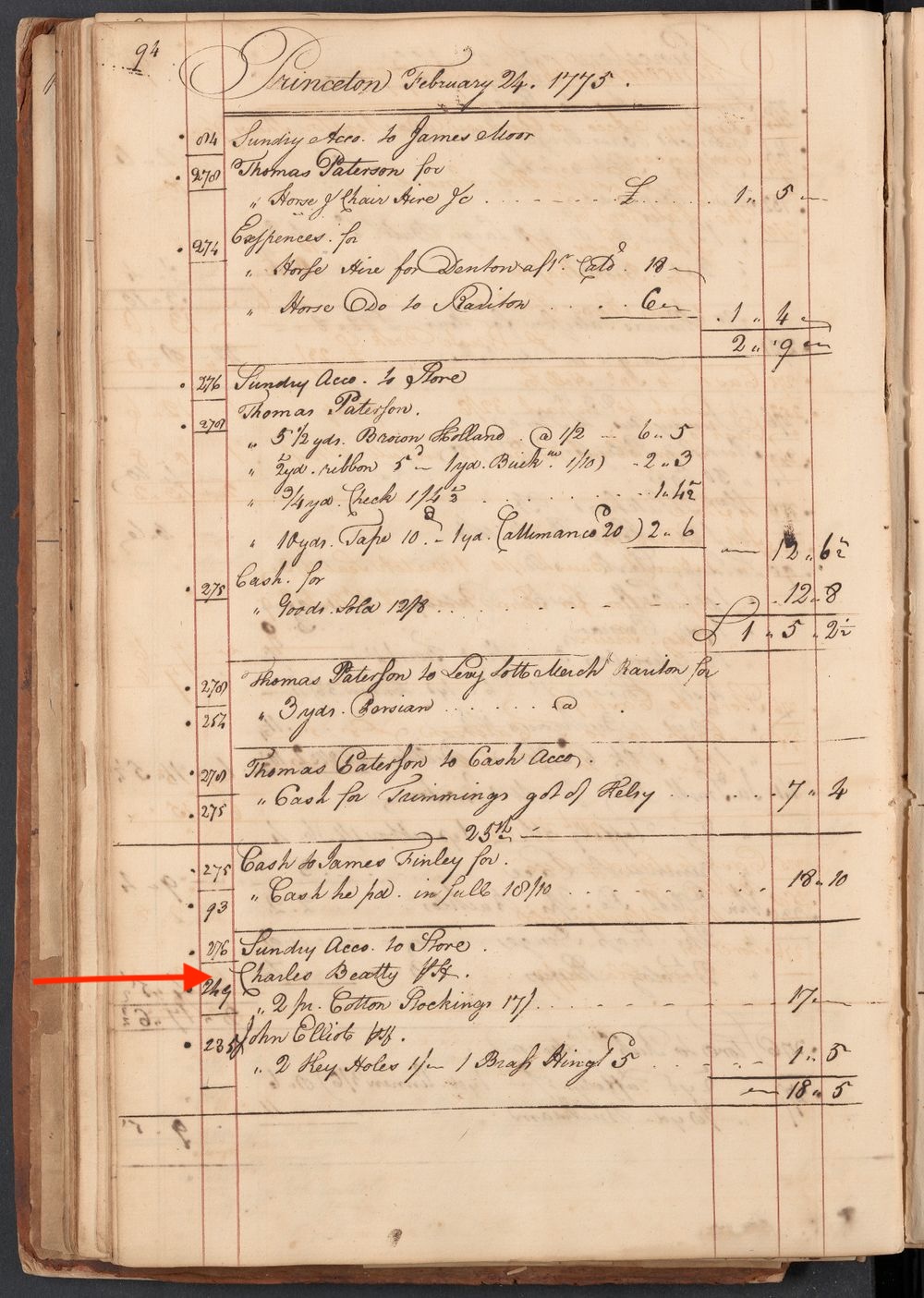
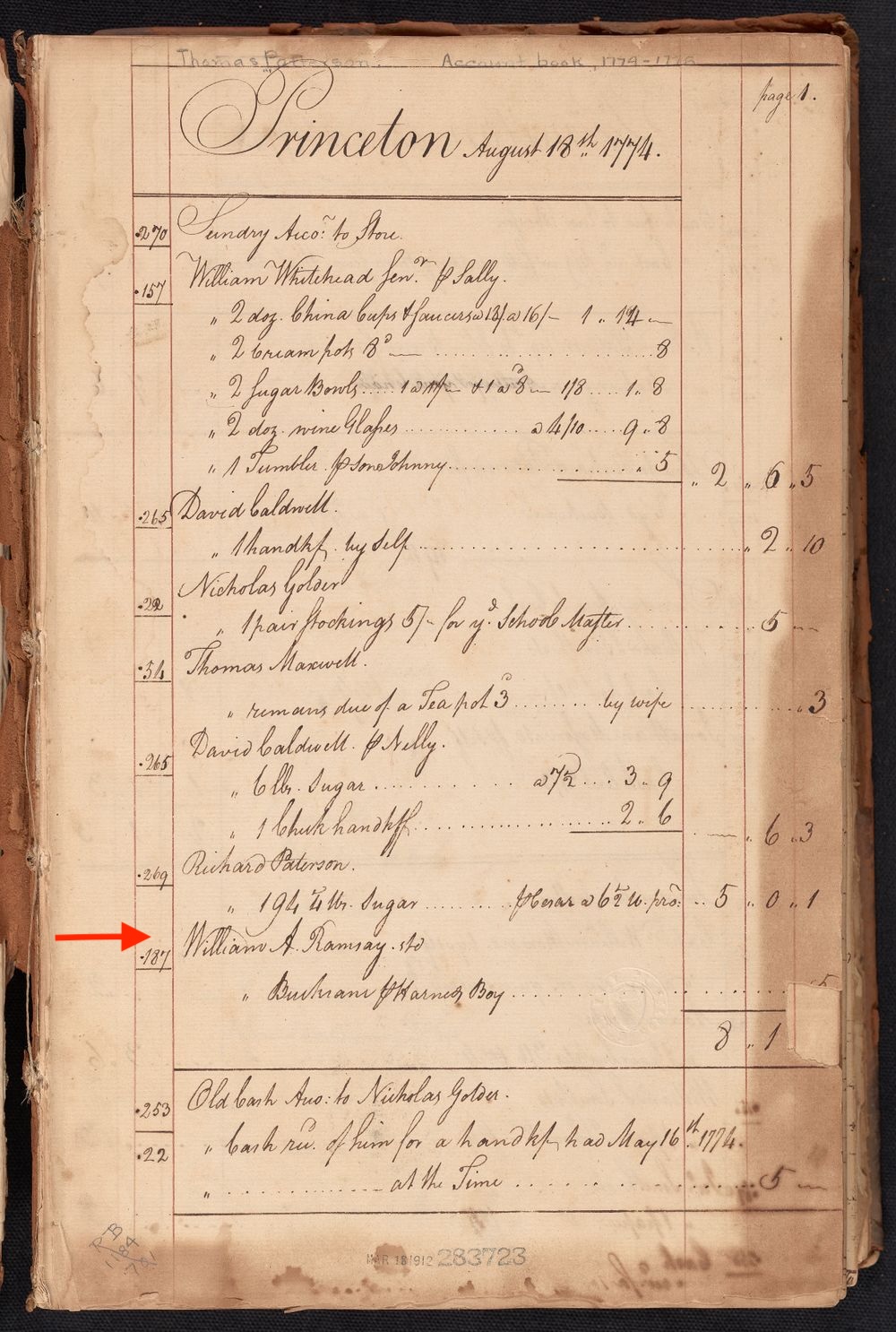
Account Book, 1774-1776
General Manuscripts [Bound] Collection
The Account book kept by Thomas Patterson of Princeton, New Jersey contains accounts for goods purchased at the College of New Jersey, including listing dates, costs, and the names of individuals who made the purchases. Many were students.
The first image includes the entry to Charles Clinton Beatty ’1775. Beatty’s letters to his siblings help to illuminate the Princeton experience during the revolutionary era.
The second image contains the entry of student William A. Ramsay ’1776, whose education was sponsored by George Washington. This entry was made in his junior year.
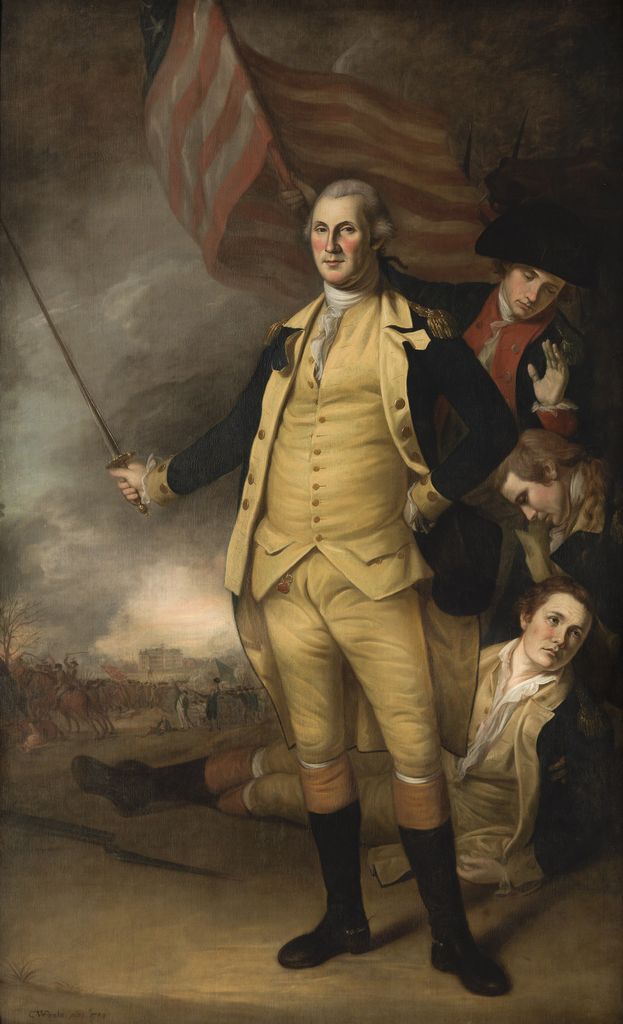
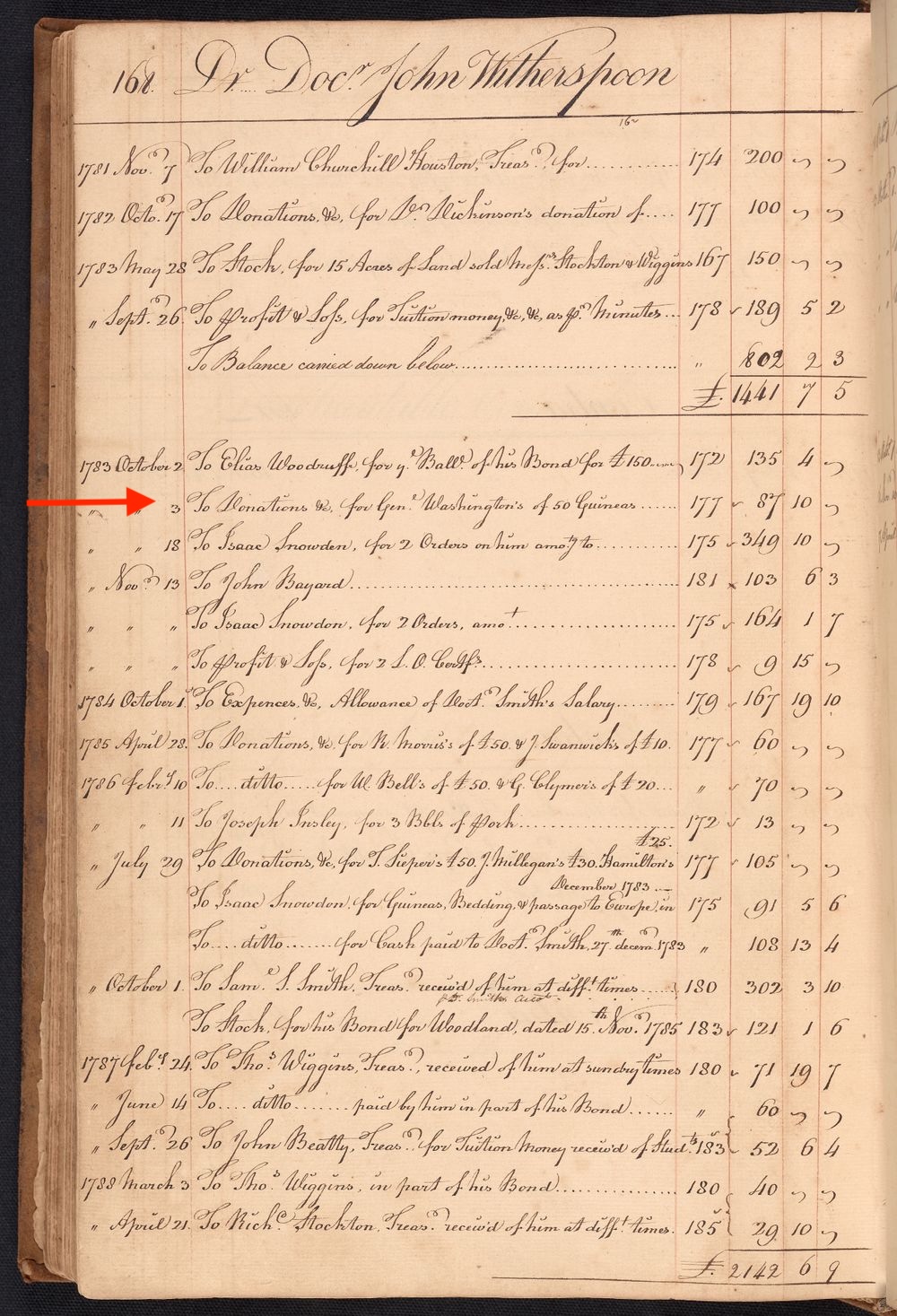
George Washington's Gift to the University, 1783
Washington had attended the College’s Commencement services a week earlier, during which the contribution was made to support President John Witherspoon’s efforts to raise funds abroad for the College’s postwar reconstruction. In appreciation, the College commissioned a portrait of Washington at the Battle of Princeton.
This painting hung in the faculty room of Nassau Hall for more than two centuries and is now on view in the Princeton University Art Museum.