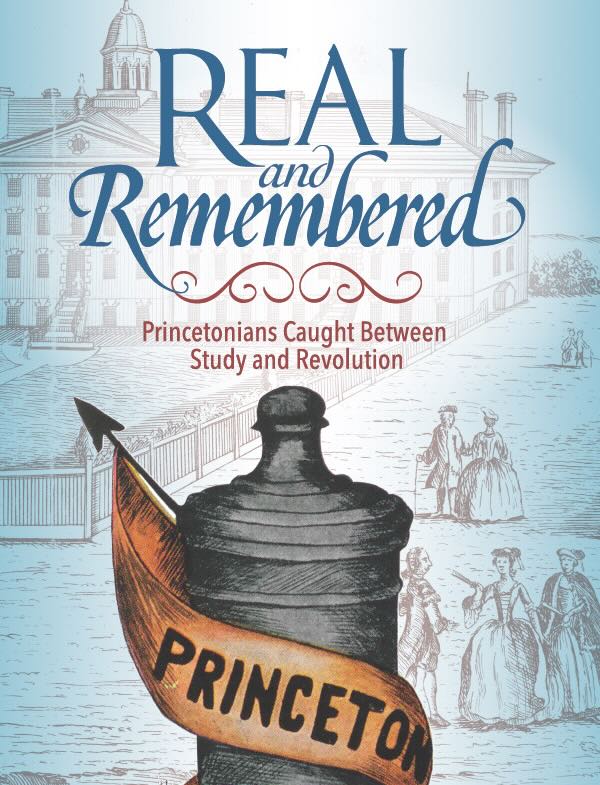

After the passage of the 1765 Stamp Act, Princeton became a center of revolutionary thought and youthful activism. Revolutionary sentiment stirred early on campus, with students protesting British policies by wearing homespun clothing, writing fiery commencement orations, and burning tea. Influenced by figures like College of New Jersey president John Witherspoon and the writings of William Livingston, students engaged in civic debates through rival secret societies that contributed to the era’s literature and discourse. The war directly impacted campus life, with Nassau Hall occupied, classes disrupted, and students leaving to fight. Caught between study and revolution, these young citizens became architects of a new republic.
The Revolution later became a key part of institutional identity and school spirit. Students fought with their counterparts at Rutgers University over control of abandoned British weapons, ultimately making a cannon itself a symbol of Princeton. A mythological George Washington transformed into a friendly mascot who enjoyed the company of the Princeton Tiger helping with athletic victories. Though often somber, as in times of war or national grief, some patriotic celebrations took on an incongruously fanciful quality even when sincere.
This exhibition highlights both the real and remembered Revolution at Princeton, 250 years after the British occupation.
Note: The class years of alumni are noted throughout this exhibition. The University’s convention of designating an undergraduate degree with an apostrophe and a graduate degree with an asterisk has been followed. “James Madison ’1771 *1772” should thus be understood as “James Madison, Undergraduate Class of 1771, Graduate Class of 1772.”
