Shifting Sentiment

Prior to the passing of the Stamp Act of 1765, Princeton students and administrators generally maintained a respectful, though increasingly skeptical, attitude toward British authority.
As fears of Crown overreach grew through the years, many students began to question British control over the colonies and over higher education. While administrators remained cautious to protect the College’s reputation and stability, the arrival of President John Witherspoon, who later became a staunch supporter of colonial rights, marked a turning point. The shifting political climate for independence was reflected in students’ words and actions. Whether through secret society debates or commencement orations, students increasingly voiced a growing desire for American independence and resistance to British rule.

Early Influences
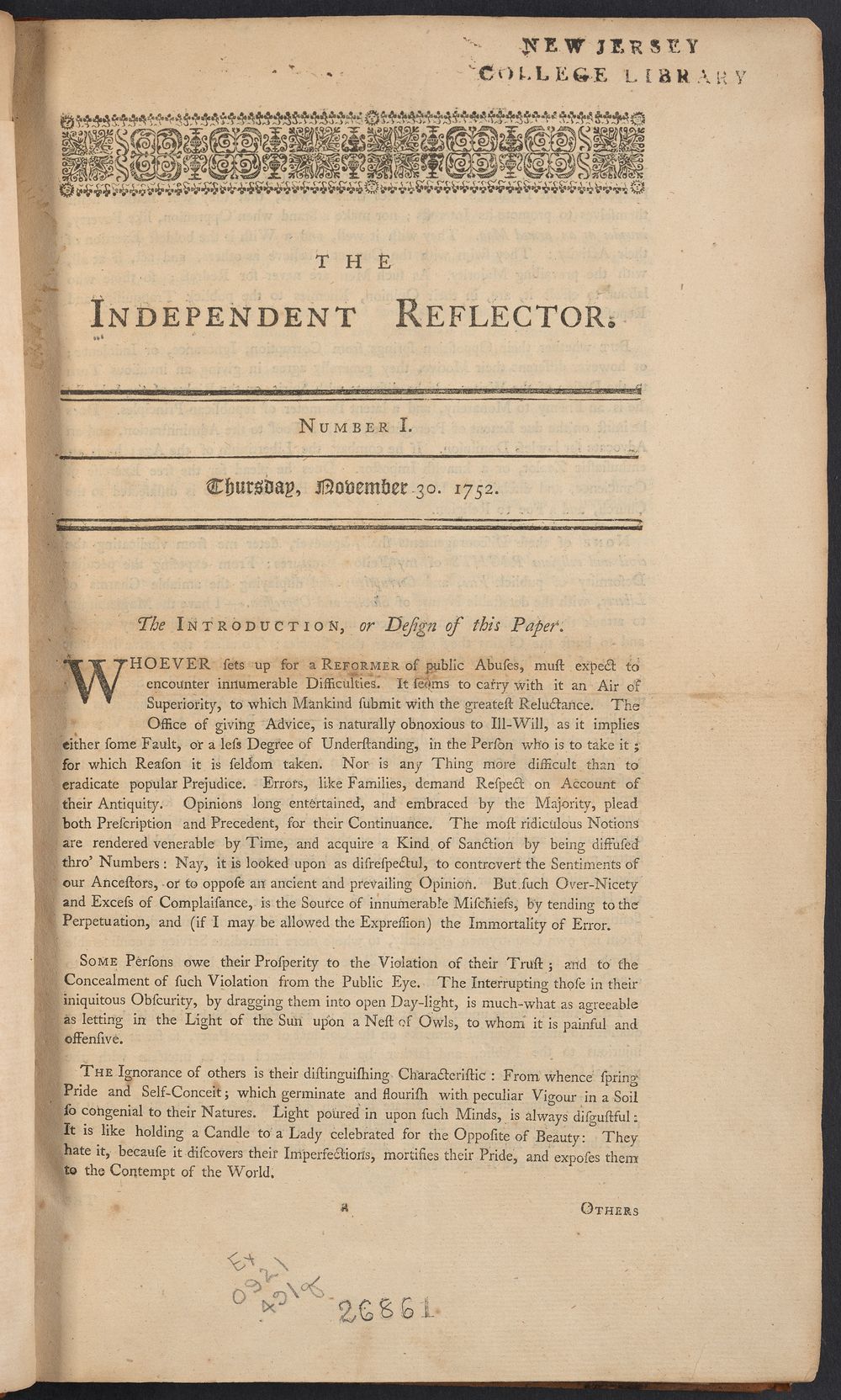
The Independent Reflector, November 30, 1752
William Livingston (1723-1790), editor
Rare Books Collection
The Independent Reflector was the first weekly political journal of its kind in colonial America, written anonymously by William Livingston, later New Jersey’s first state governor and a trustee of the College.
Writing as “the American Whig,” Livingston championed religious freedom, rights of common people, and civic responsibility. His Enlightenment ideas strongly influenced both community leaders and students and helped inspire the formation of the American Whig and Cliosophic Societies, student-led debating clubs that encouraged political discourse and critical thinking at Princeton.
These writings helped students think critically about government, liberty, and conscience, shaping the worldview of many future leaders.

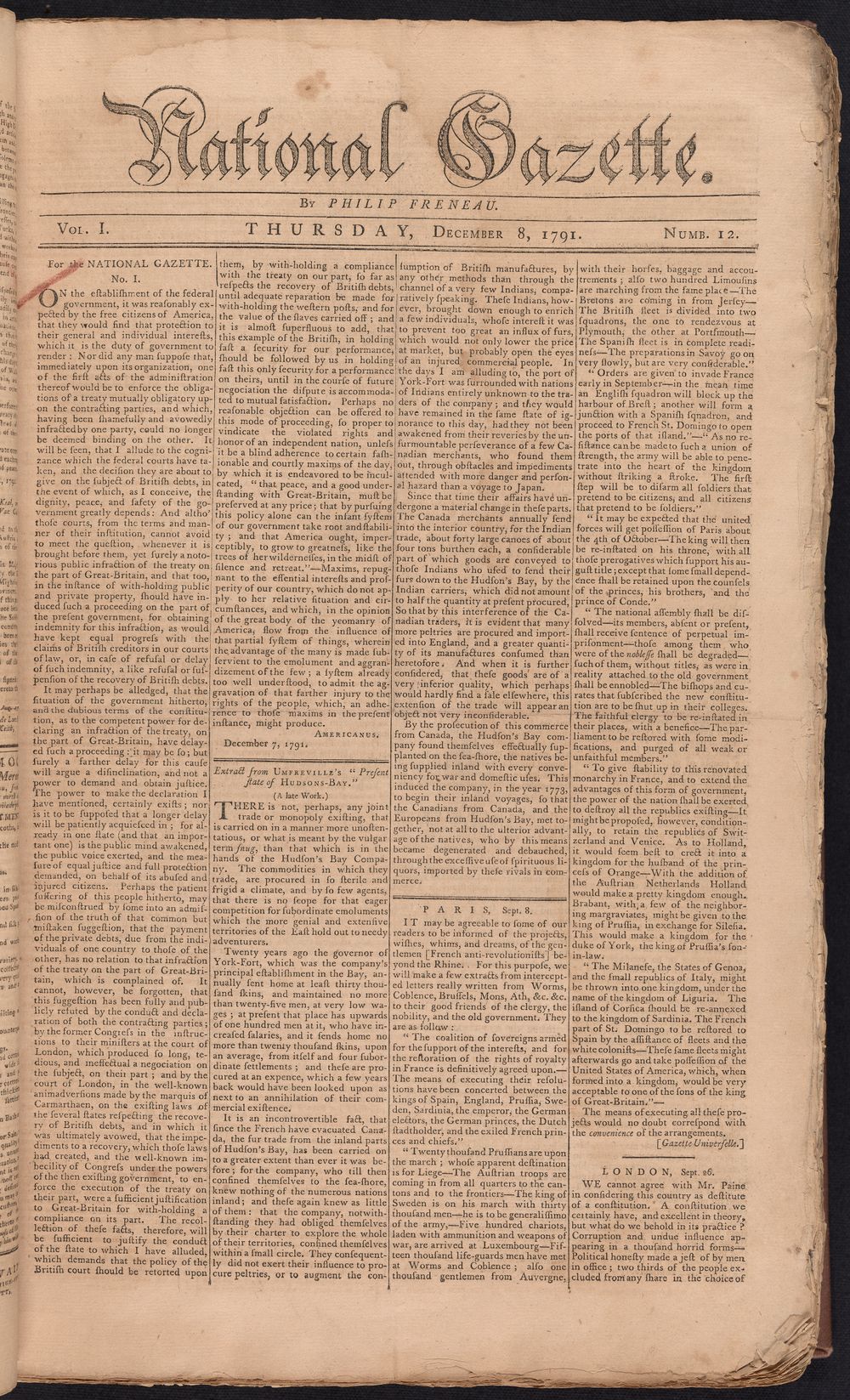
National Gazette, 1791-1793
Philip Freneau '1772 (1752-1832); 2 volumes 1791-1793.
Rare Books Collection
Founded in 1791 and edited by Philip Freneau, a graduate of the College and founder of the Whig Society, the National Gazette was a powerful voice for the emerging Democratic-Republican Party led by Thomas Jefferson and a close friend to Freneau, James Madison ‘71.
The newspaper challenged the Federalist ideas and promoted democratic ideals, states’ rights, and individual liberty. The newspaper became an early battleground for America's first party system and helped define the role of a free press in a democratic society.
Commencement Exercises
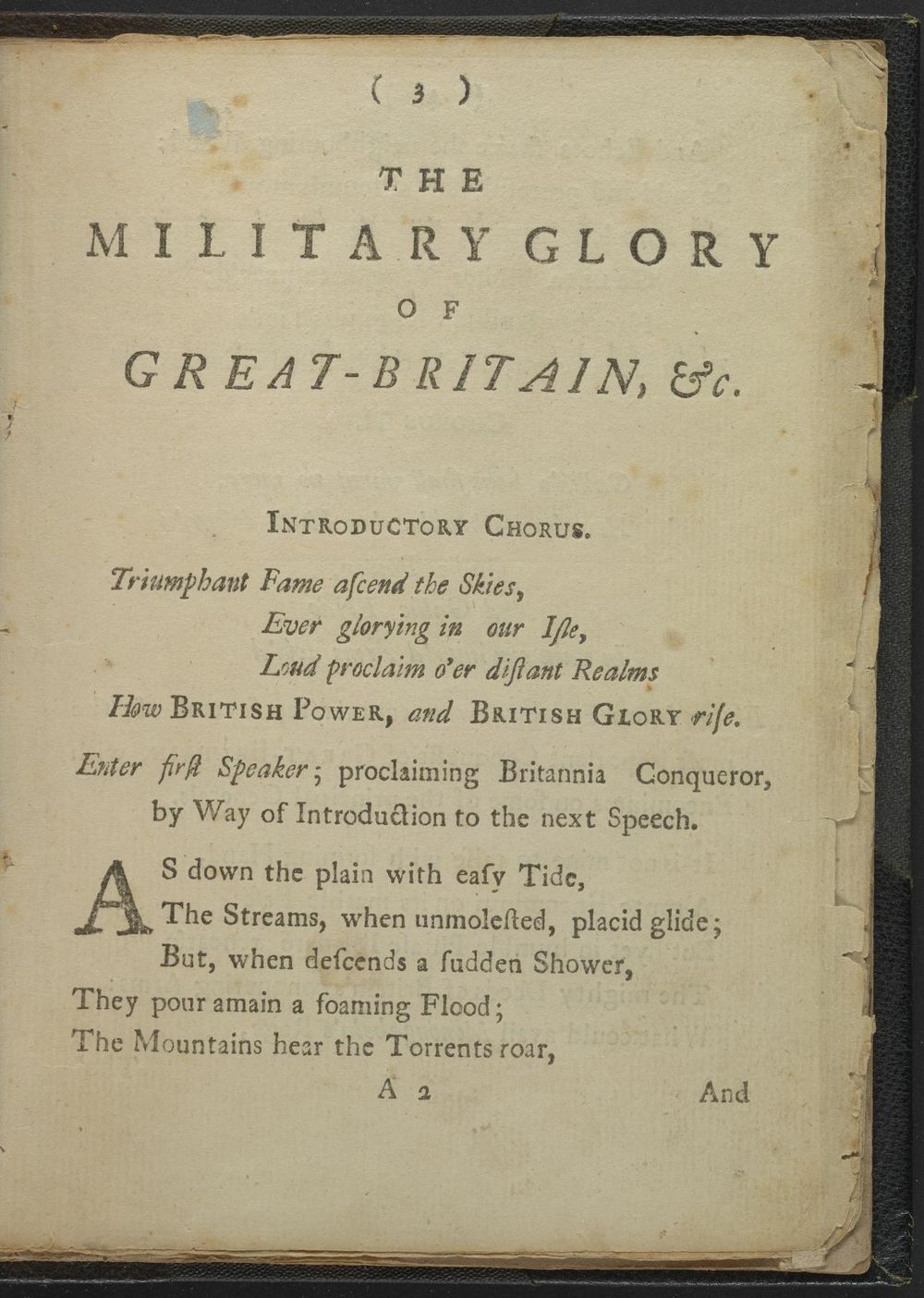
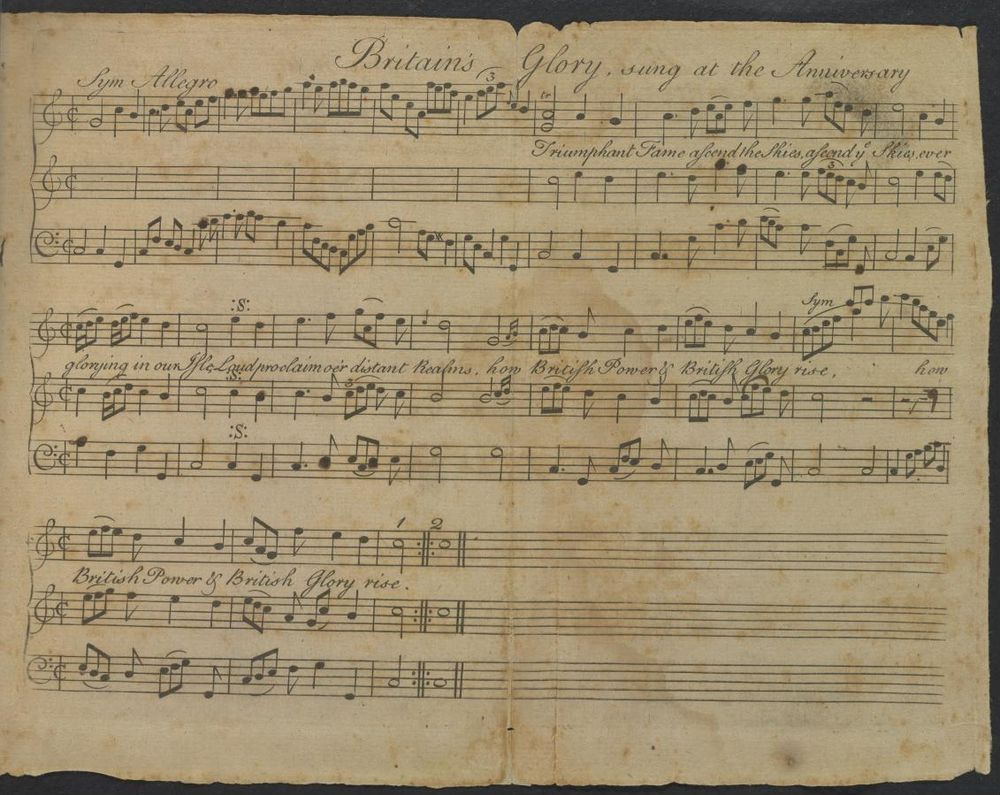
The Military Glory of Great-Britain, 1762
Poetry by Rev. Samuel Davies and Music by James Lyon.
Rare Books Collections
This literary and musical oration offers an insight into campus mindset prior to the Revolution, celebrating British military success in the French and Indian War. Using poetry attributed to Samuel Davies, fourth president of Princeton, and music by James Lyon ’1759 *1762, it reflects strong loyalty to Britain. Graduates performed the piece during Commencement in Nassau Hall on September 29, 1762. However, when Britain raised and enforced taxes on the colonists with the 1765 Stamp Act, the mood started to turn against the British Empire.

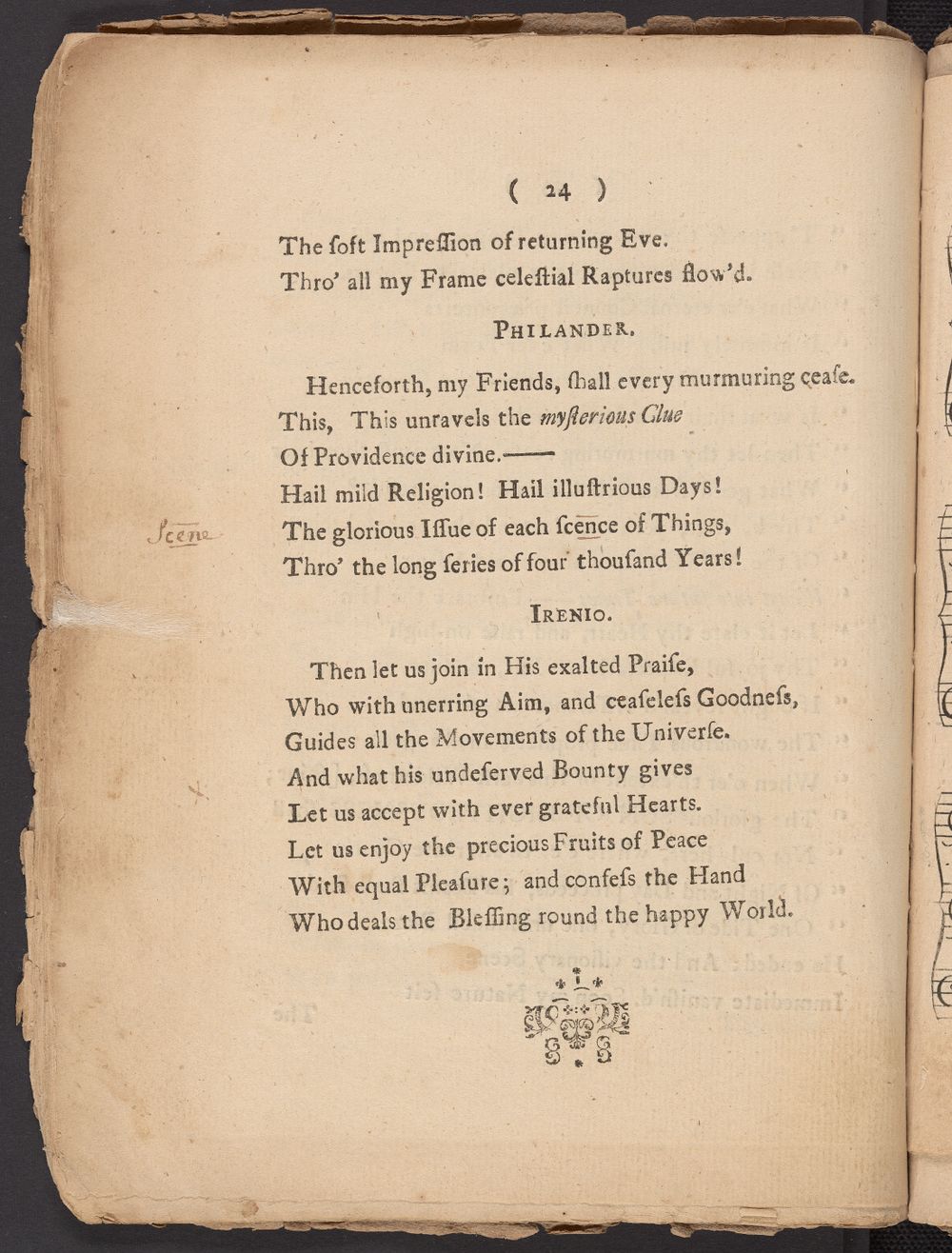
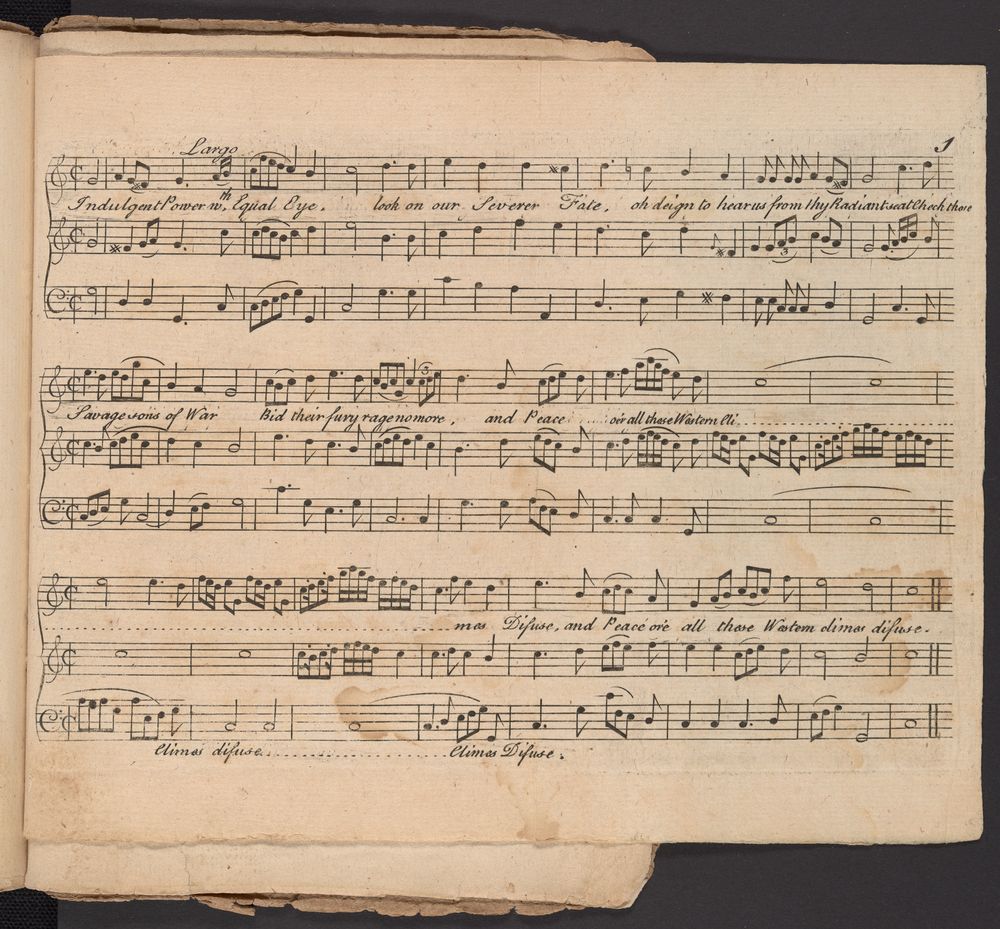
A Dialogue on Peace, 1763
Author and composer unknown
Princeton University Commencement Records
This literary and musical oration offers an insight into campus mindset prior to the Revolution, celebrating British military success in the French and Indian War.
They celebrated peace after the Treaty of Paris, and students on campus performed this patriotic song during the 1763 Commencement ceremony. However, when Britain raised and enforced taxes on the colonists with the 1765 Stamp Act, the mood started to turn against the British Empire.


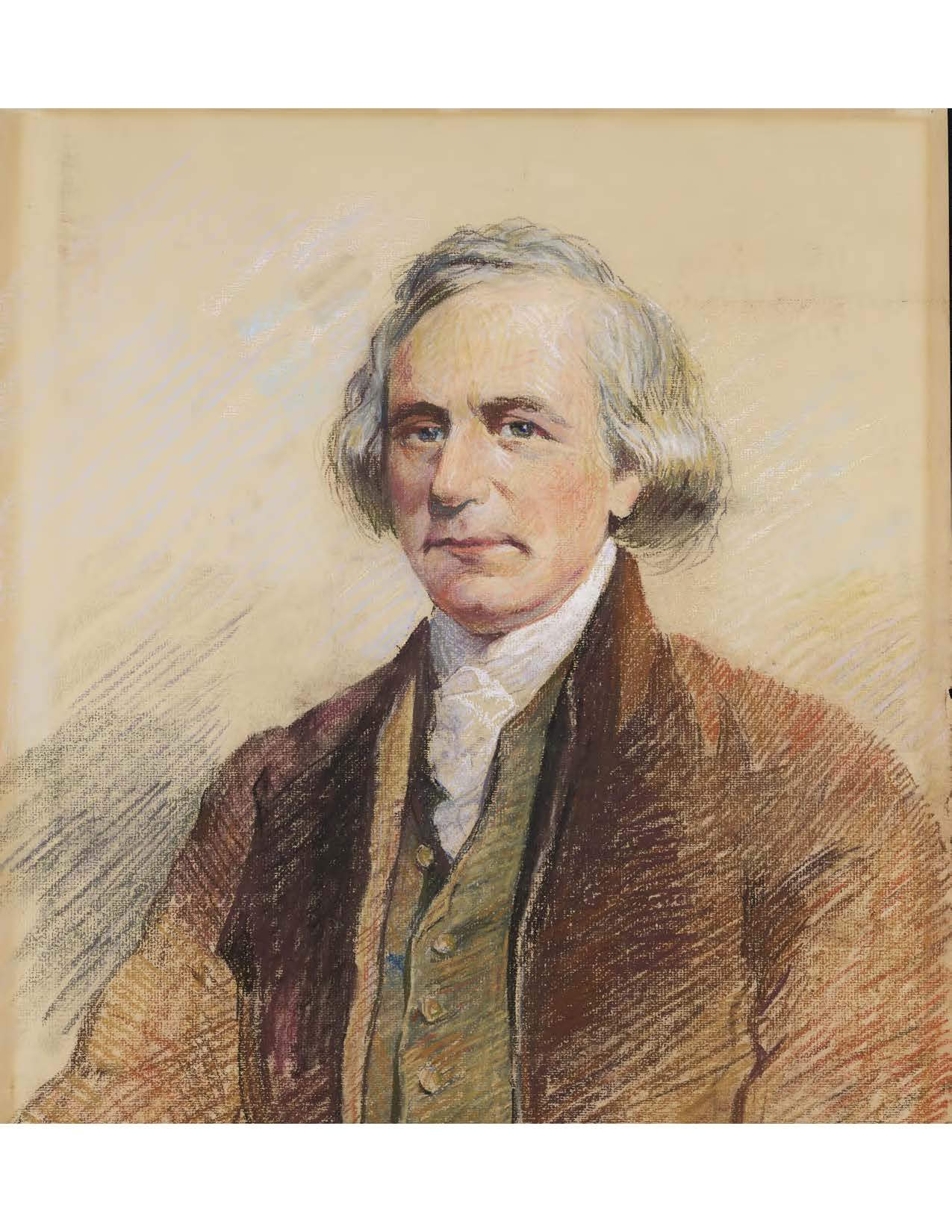
Portrait of Philip Morin Freneau, 19th Century
Unknown artist
American Drawings Collection
Philip Morin Freneau ’1771 was a writer, teacher, soldier, sea captain, and newspaper editor dubbed “poet of the Revolution” because of his writings.
Entering Princeton as a sophomore from New York City, he joined the American Whig Society and honed skills in writing, oratory, and political debate. Friendships with James Madison ’1771 *1772 and Hugh Henry Brackenridge ’1771 *1774 encouraged his literary focus on liberty and America’s future.
At their Commencement, Freneau and Brackenridge presented “The Rising Glory of America,” envisioning an independent national culture. Freneau later edited the National Gazette and remained active and influential until his 1832 death.
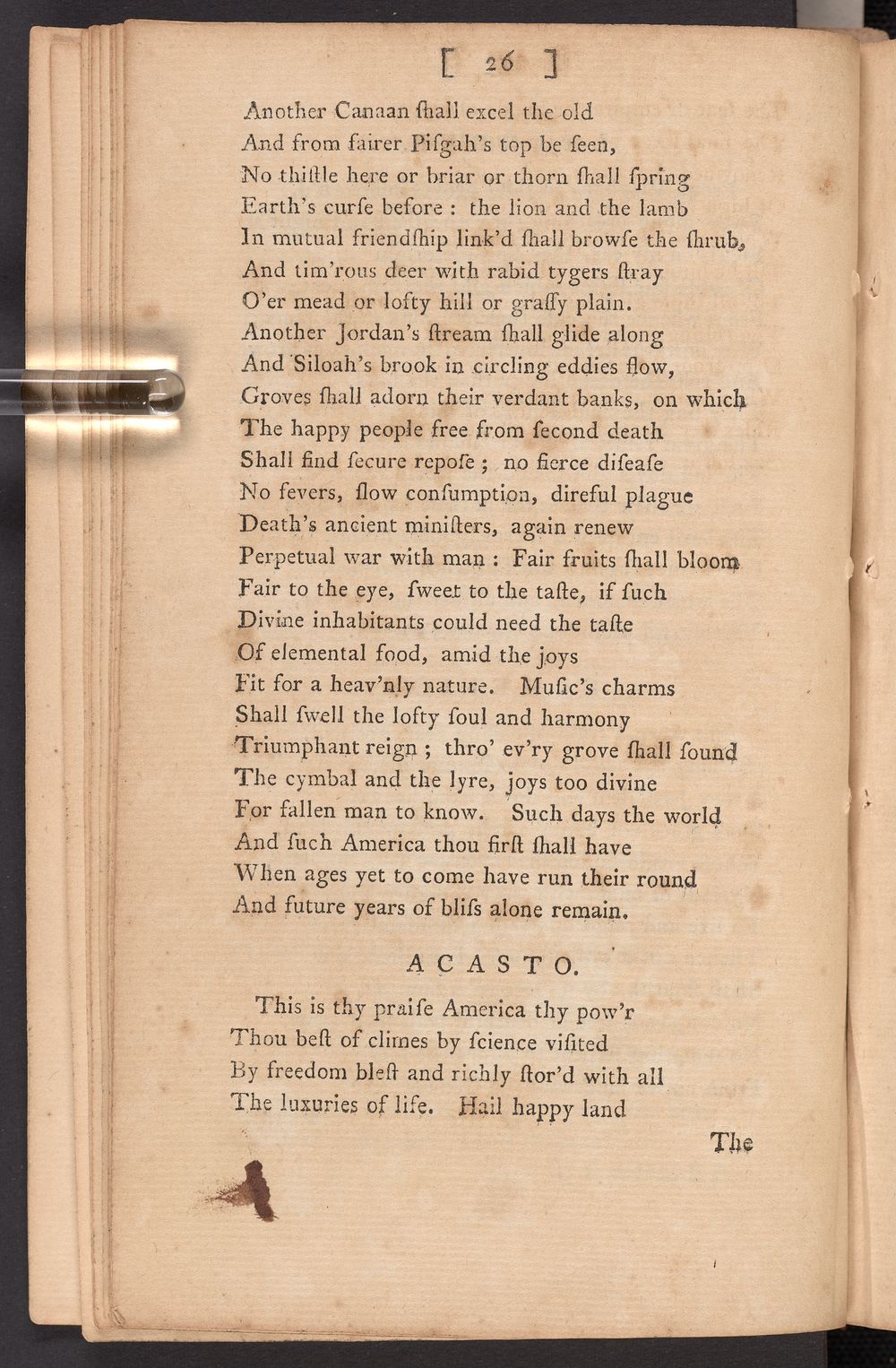
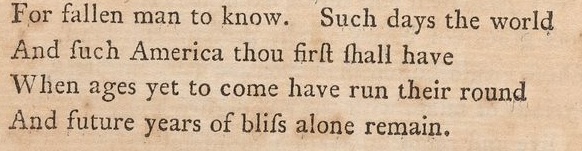
A Poem, on The Rising Glory of America, 1772
Philip Morin Freneau (1752-1832) and Hugh Henry Brackenridge (1748-1816)
Rare Books Collection
Less than a decade after graduates praised Britain as part of the Commencement ceremony, a very different message echoed through Nassau Hall as the Class of 1771 received their degrees. Graduates Philip Morin Freneau ’1771 (later known as the “poet of the Revolution”) and Hugh Henry Brackenridge ’1771 presented a bold vision of America's future. Their work imagined a nation not under British rule, but founded on liberty, artistic expression, intellectual growth, and civic achievements.
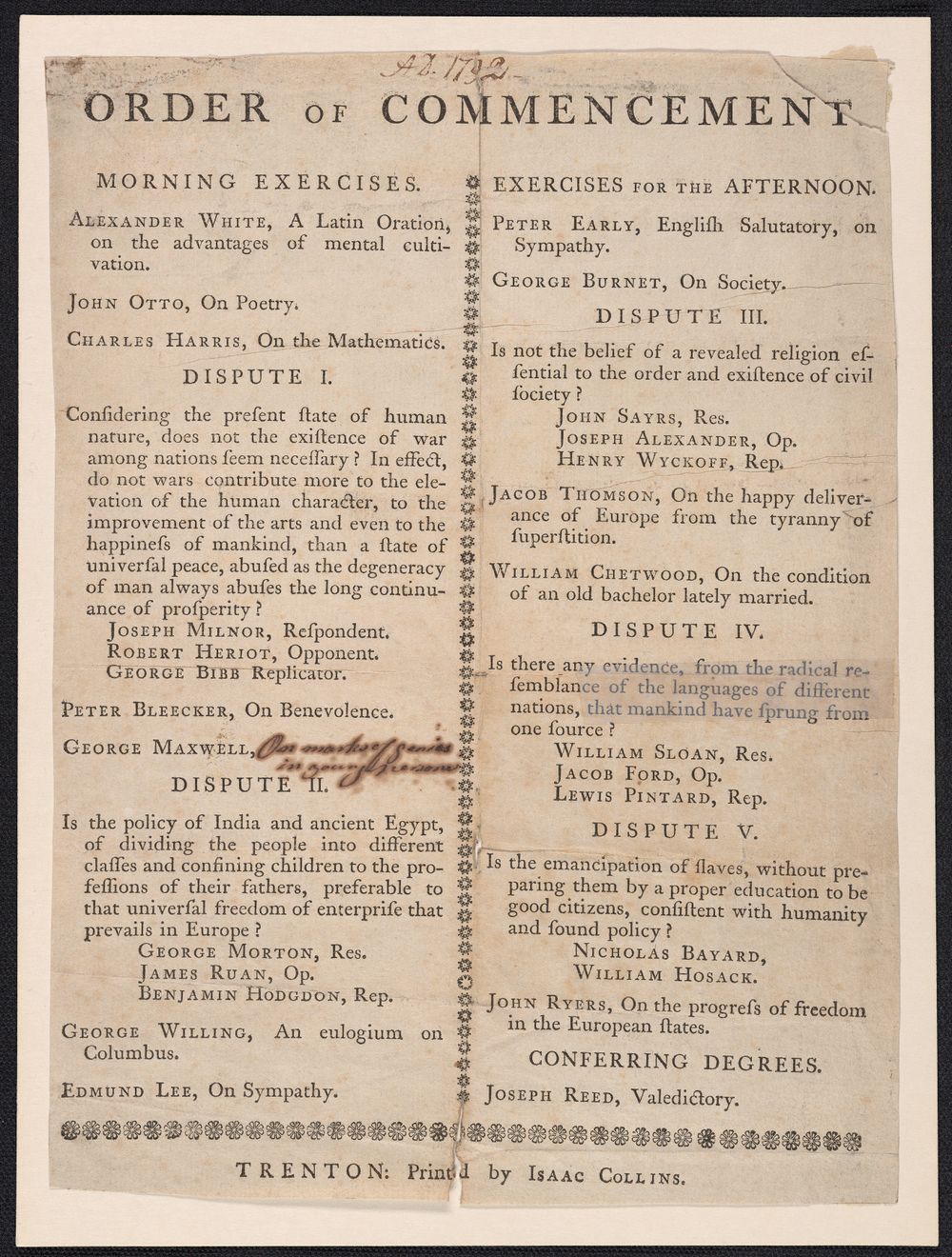
Order of Commencement, 1792
The College of New Jersey (later Princeton University)
Princeton University Commencement Records
This item demonstrates the political focus of debate topics typical of Princeton Commencements and national discussion after the Revolution.
In 1792’s Dispute V, two students were asked to address the emancipation of enslaved people. This example reflects differing student views on slavery and shows how the discussion of the details of emancipation impeded abolitionist progress.
Many Princeton students came from families that enslaved people, and John Witherspoon enslaved two people at his off-campus home, Tusculum.
Other alumni, such as Philip Morin Freneau ’1771, opposed slavery. At Princeton, as within America at large, this fight would last for nearly another century.