Student Activism
In 1774, students at the College burned nearly 12 pounds of tea and an effigy of the Loyalist governor of Massachusetts to protest the British tax on tea.
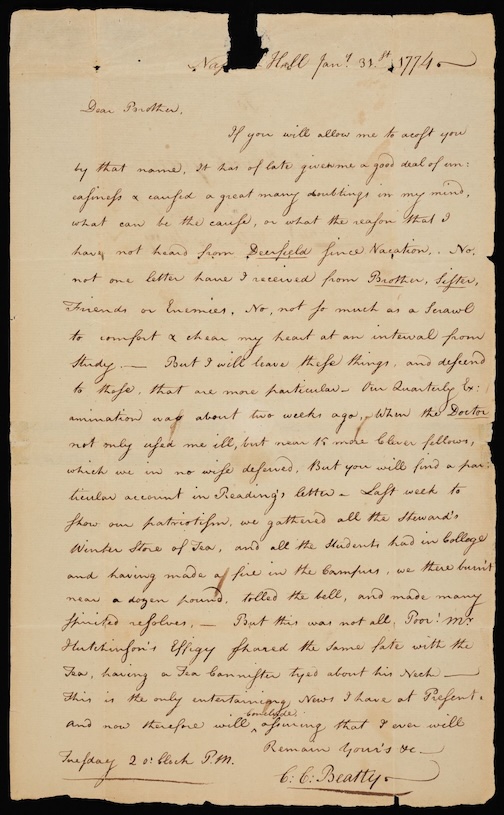
Letter to Enoch Green ’1760, January 31, 1774
Charles Clinton Beatty ’1775 (1756-1777)
John Beatty Family Collection
This was inspired by the Boston Tea Party a month earlier. Charles Beatty ’1775 wrote about this to his brother, Enoch Green ’1760
"We gathered all the steward’s winter store of tea… and having made a fire in the Campus, we there burn’t near a dozen pound, tolled the bell, and made many spirited resolves. But this was not all, Poor! Mr. Hutchinson’s effigy shared the same fate with the tea…"
Student Samuel Leake ’1774, Organizes a Protest
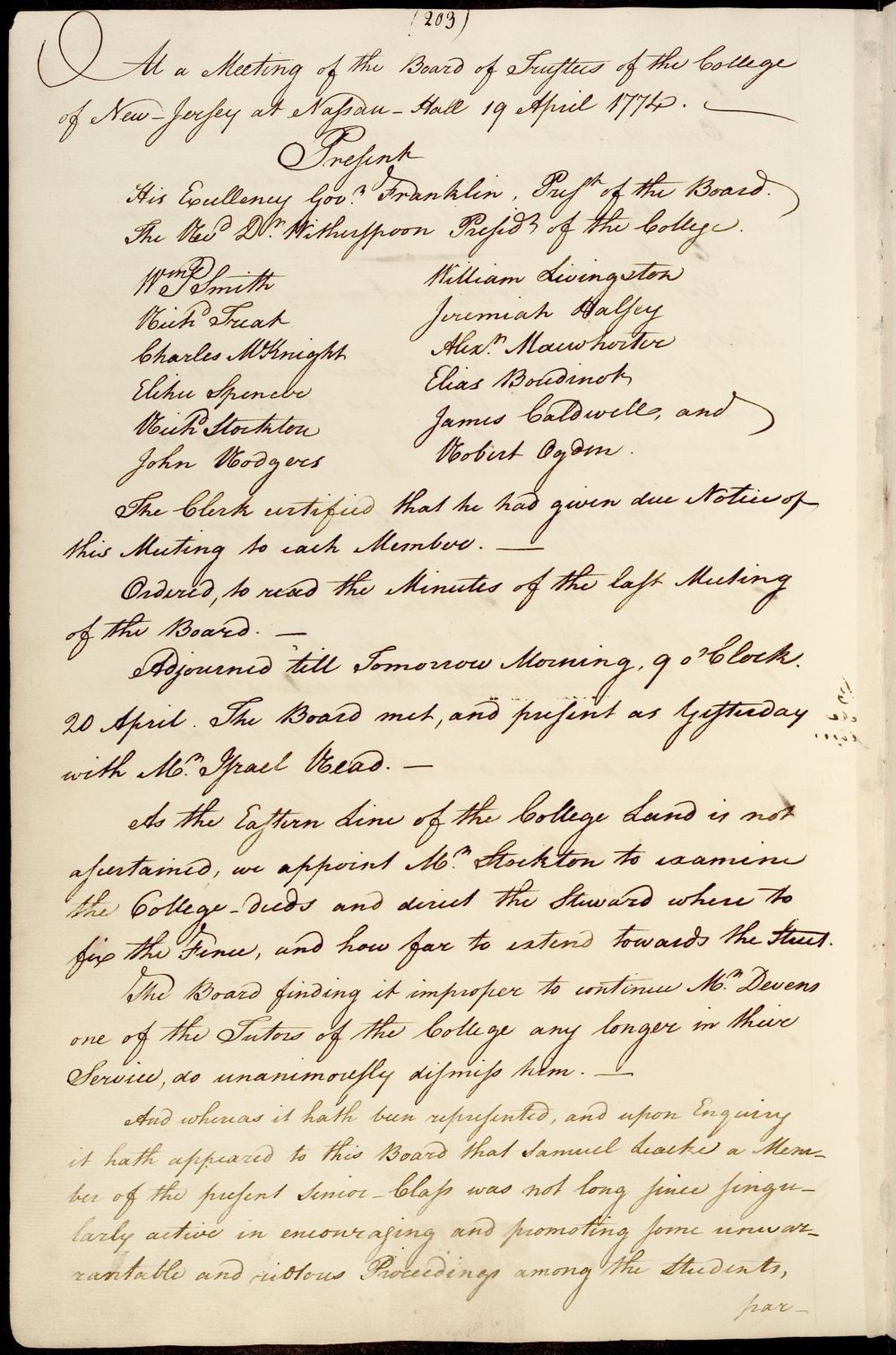
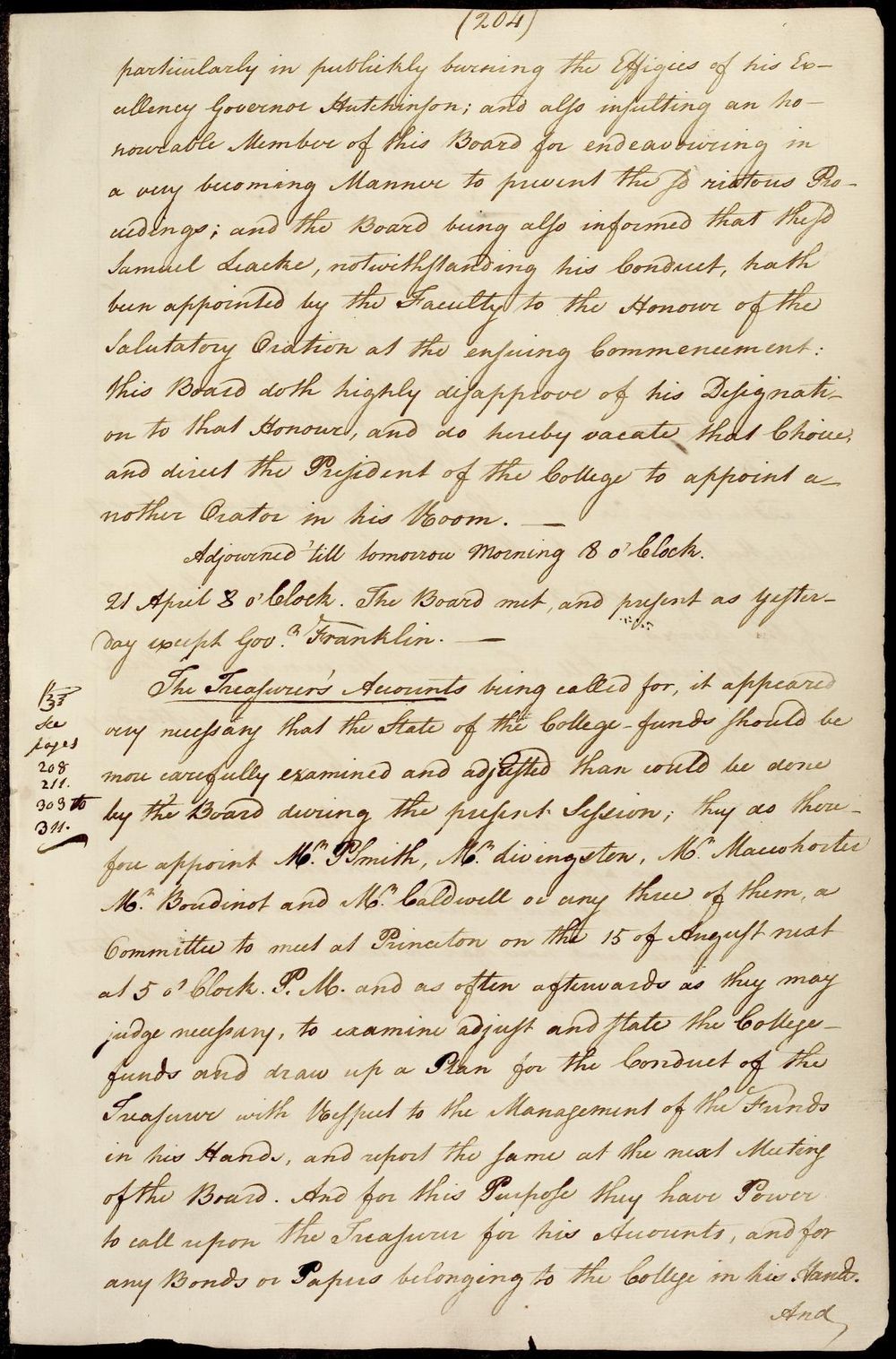
The College of New Jersey (later Princeton University) Board of Trustees Minutes, April 19, 1774
Board of Trustees Records
These minutes record the Board of Trustees deciding to revoke their selection of Samuel Leake ’1774, a senior soon graduating, as Salutatorian. Leake organized a student protest against the British. Students had burned all of the tea on campus as well as an effigy of Massachusetts governor Thomas Hutchinson, a prominent Loyalist, in the “riotous proceedings.”

Samuel Leake (1747-1834)
Nassau Hall Iconography
Samuel Leake of Cumberland County, New Jersey, was named Princeton’s Latin Salutatorian in 1774. That January, he helped organize student demonstrations at Nassau Hall, where they burned 12 pounds of tea and an effigy of Loyalist Massachusetts governor Thomas Hutchinson in solidarity with Boston’s protesters.
As punishment for his role in these “riotous proceedings,” the Board of Trustees revoked his commencement honors, yet they did allow him to graduate.
Although he did not achieve the military fame of some Princeton graduates, Samuel Leake’s leadership in revolutionary protest helped inspire patriotic activism among students.
This letter from Charles Beatty ’1775 to his sister Betsy (Cleona) reveals how students were living and connecting during a turbulent time in history.
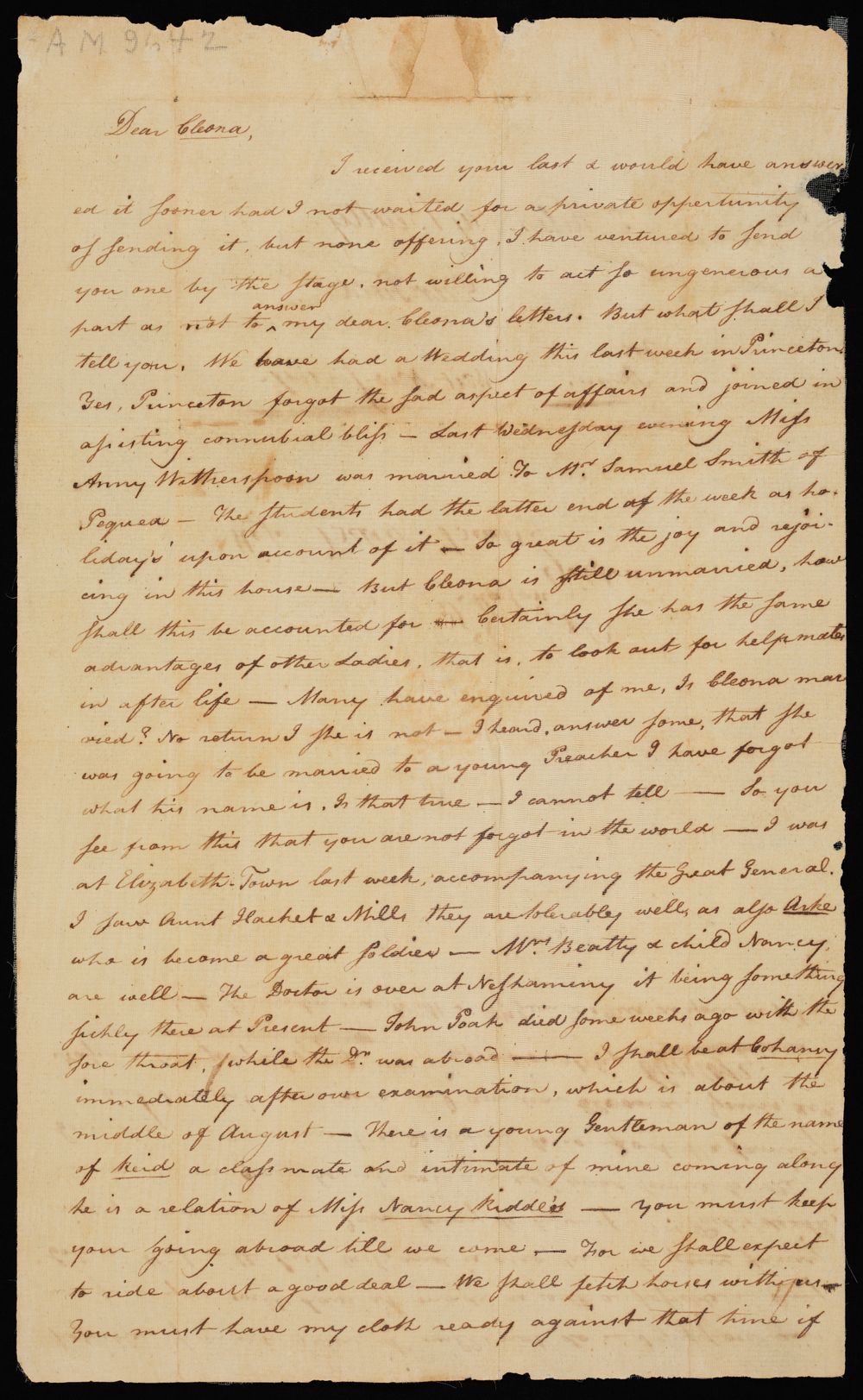
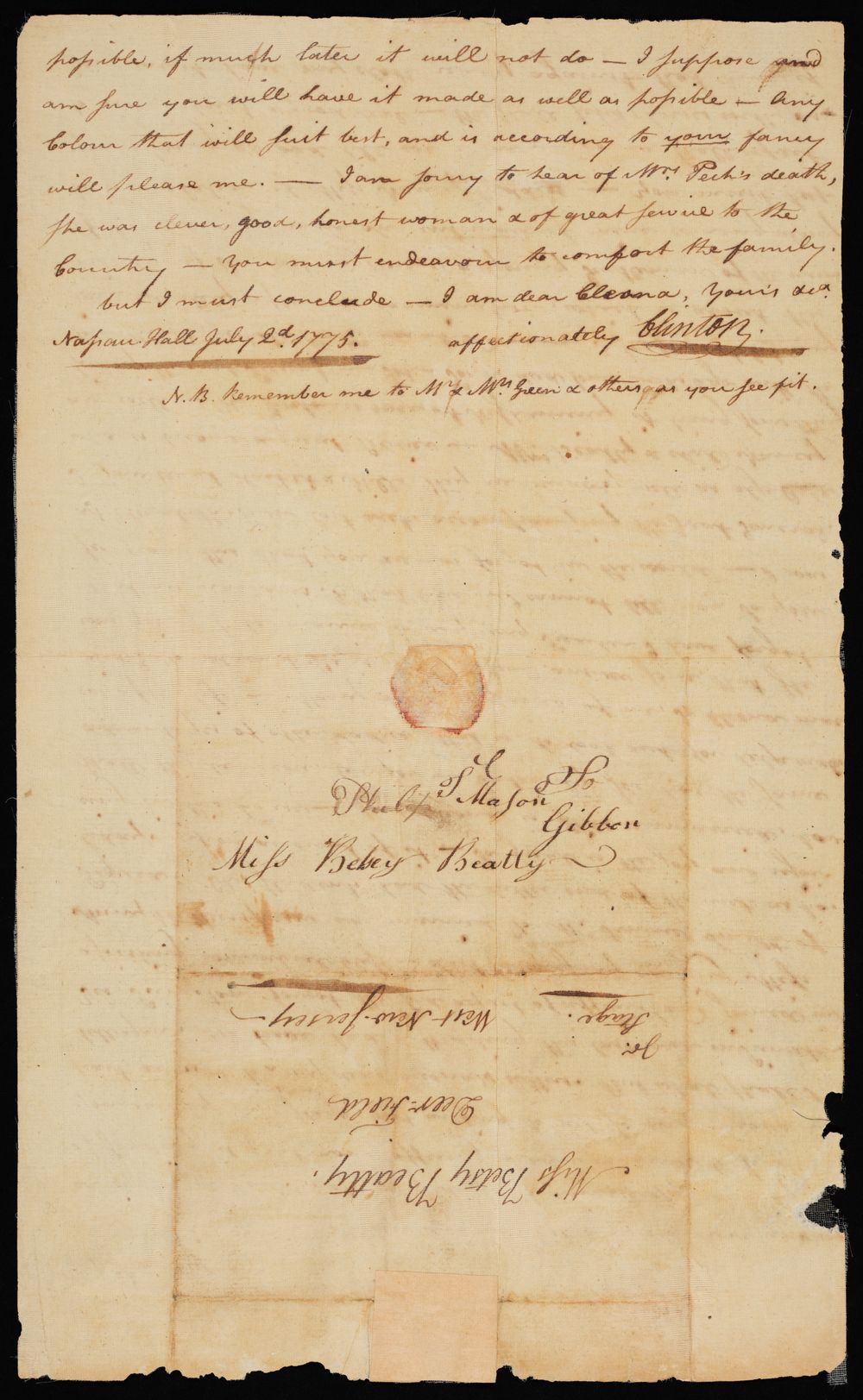
Letter to Betsy (Cleona) Beatty, July 2, 1775
Charles Clinton Beatty ’1775 (1756-1777)
John Beatty Family Collection
Charles describes the wedding of Amy Witherspoon and Samuel Stanhope Smith ’1769, which lifted student spirits, and jokingly mentions rumors that his sister Cleona would marry a “young preacher,” likely Philip Vickers Fithian ’1772.
Toward the end of the letter, he also asks her to send homespun cloth for his Commencement clothes as part of a student protest against British goods. He leaves the details of the type and color of the cloth to his sister.
"...am fine you will have it made as well as possible - any colour that will suit best, and is according to your fancy will please me."