Thomas Paine: "The Age of Reason"
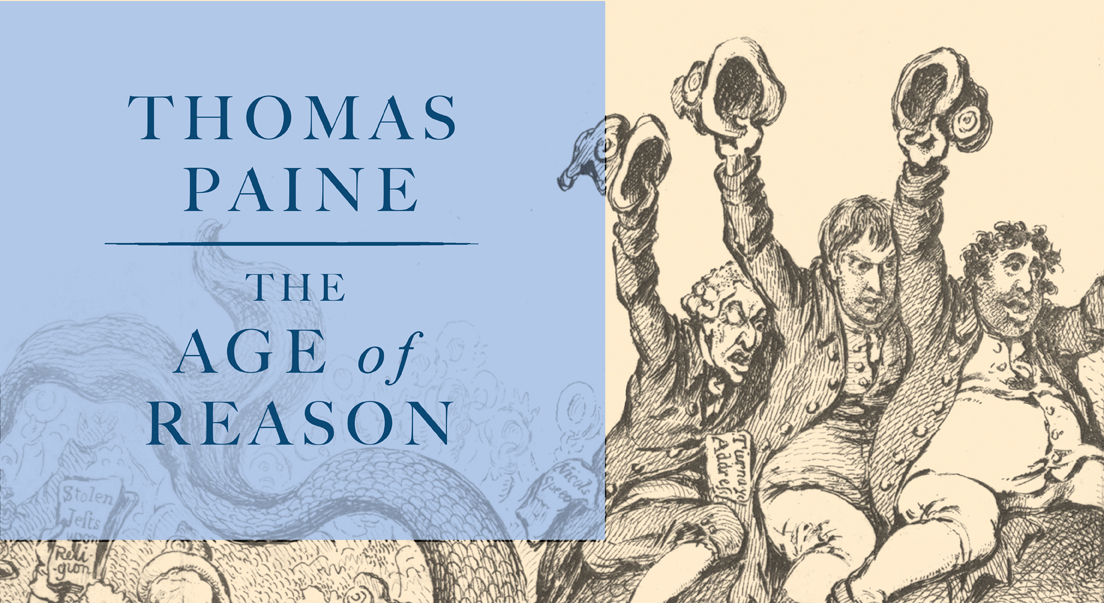

The Enlightenment, a period of engagement with rationalism and individual liberty, is also called The Age of Reason—a phrase that originated with Thomas Paine in his political book of 1791, Rights of Man. In a later work, Paine calls reason “the most formidable weapon against errors of every kind,” saying he has “never used any other.”
However, in his 1794 book titled The Age of Reason Paine addresses religion. Written in Paris during an anti-religious phase of the French Revolution, his work attacks orthodox Christian claims about God, the Bible, and the church. Instead of urging atheism, Paine drew upon the writings of British freethinkers and proclaimed deism, in which a one-personed God is known through reason rather than through revelation and dogma. The Age of Reason has no new arguments but Paine’s conversational style made deistic arguments accessible to many readers.
Paine wrote to influence French revolutionaries, but was ignored there. However, in the United States it both contributed to a brief flourishing of deism and provoked reactions that helped usher in a great revival of trinitarian Christianity in the 19th century.
Unless otherwise indicated (§), all items on exhibit are from the Sid Lapidus '59 Collection on Liberty and the American Revolution, Princeton University Library. All items on loan from other libraries are gifts of Sid Lapidus.


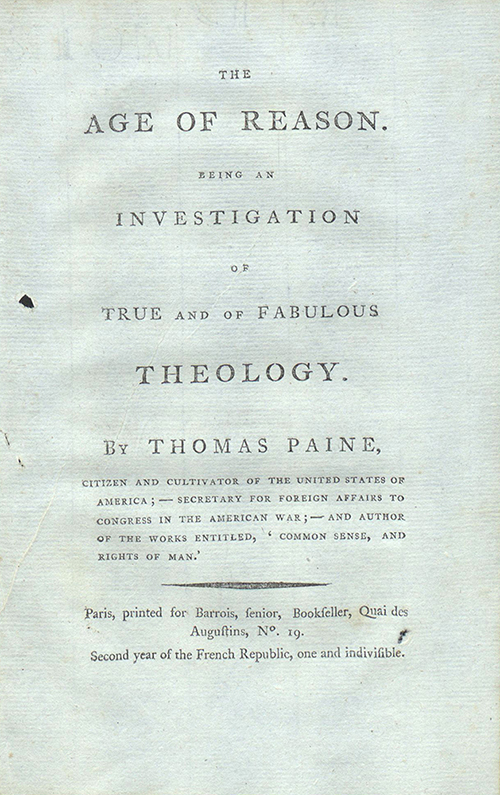
The Age of Reason, Being an Investigation of True and Fabulous
Thomas Paine (1737–1809)
Paris: Printed for Barrois, senior, Bookseller
Paine’s great belief in the power of reason is revealed in his foreword, dedicated to “fellow citizens of the United States.” He calls reason “the most formidable weapon against errors of every kind,” saying he has “never used any other.” This copy is a first edition, printed in Paris; editions printed in London and New York followed, as did a Part the Second that expanded upon Paine’s arguments.
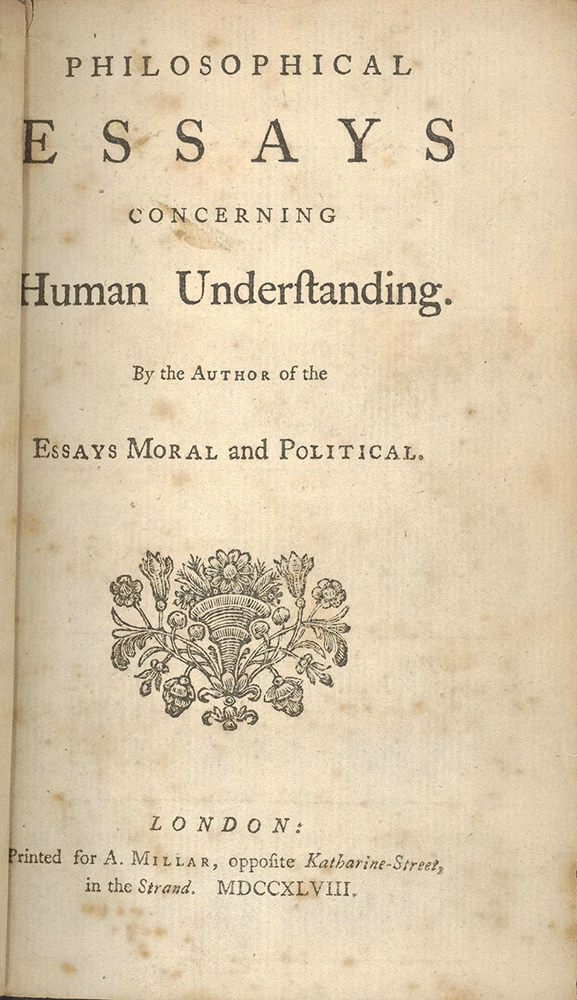
Philosophical Essays Concerning Human Understanding, 1748
David Hume (1711–1776)
London: Printed for A. Millar
Among the thinkers that Paine drew upon was the Scottish philosopher David Hume. His 1748 work (reprinted under its better-known title An Enquiry Concerning Human Understanding) casts doubt upon the reliability of human witness as evidence to be trusted when forming judgments. In these cases, the cause of an effect cannot be discerned. Evidence from the senses is preferred—meaning that the traditions of the Christian faith are called into doubt.
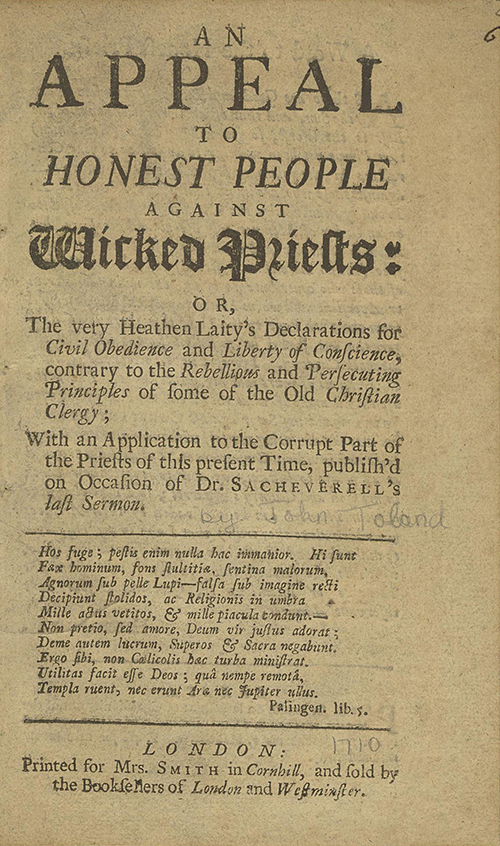
An Appeal to Honest People against Wicked Priests: Or, The Very Heathen Laity’s Declarations for Civil Obedience and Liberty of Conscience, Contrary to the Rebellious and Persecuting Principles of Some of the Old Christian Clergy, 1713
Hierophilus [John Toland (1670–1722)]
London: Printed for Mrs. Smith
A prominent Deist predecessor to Paine was John Toland. He held that religion that relied upon “mysteries”—tenets that cannot be arrived at by pure reason, such as the Trinity—was an absurdity. In this work, published under the pseudonym Hierophilus (meaning “lover of the holy”), Toland argues that the demands of orthodox Christianity for adherence to unreasoned belief are a tool of priests aligned with the state to protect their status. Paine the egalitarian sympathized with sentiments against privilege.
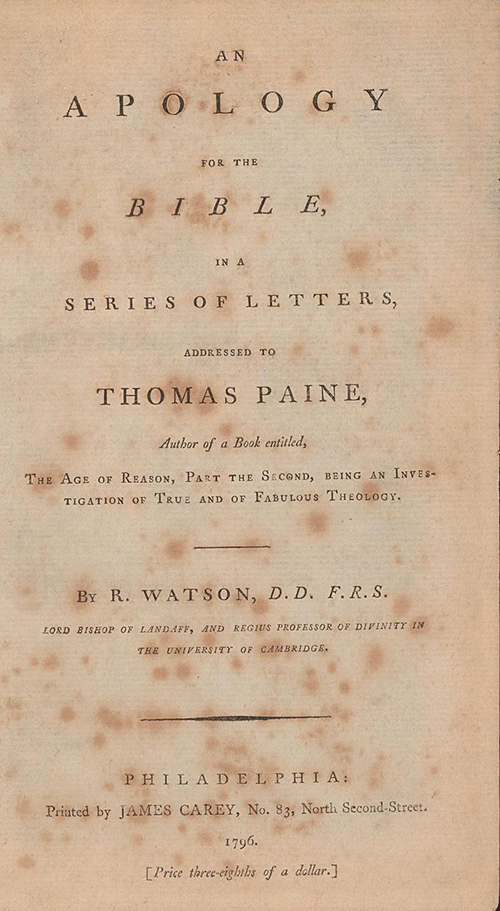
An Apology for the Bible, in a Series of Letters, Addressed to Thomas Paine, 1796
Richard Watson (1737–1816)
Philadelphia: Printed by James Carey
The Age of Reason provoked many responses from Trinitarians, who believe in a three-personed God (Father, Son, and Holy Spirit, who are distinct in their functions but share a single essence.) Richard Watson was the Anglican bishop of Llandaff and frequently defended Christianity against the arguments of Deists. Here he advances commonly accepted beliefs about the authorship and reliability of the Bible in opposition to Paine’s critiques. Such was the interest provoked by The Age of Reason that this rebuttal was published in London, rural England, Ireland, and in five different American editions.
An Answer to Mr. Paine's "Age of Reason", Being a Continuation of Letters to the Philosophers and Politicians of France, on the Subject of Religion, 1794
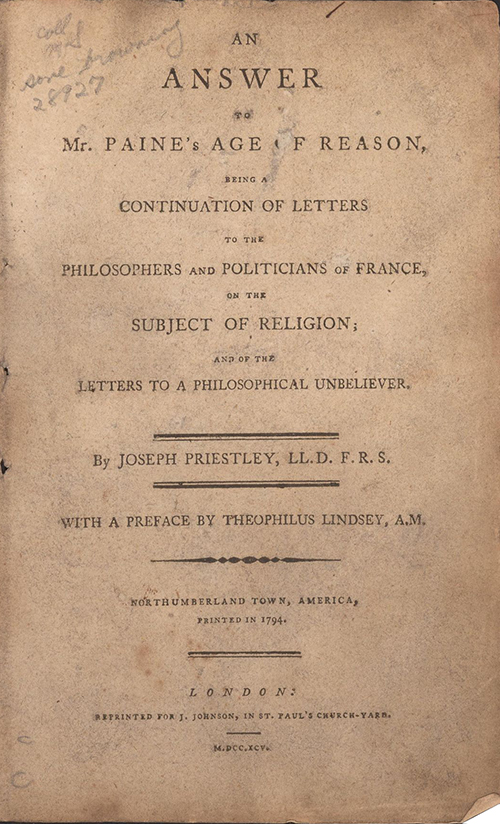
Joseph Priestley (1733–1804)
London: Printed for J. Johnson
While Joseph Priestley is remembered for his discovery of oxygen, he was a prominent theologian, and helped found the Unitarian Church, which rejects the doctrine of the Trinity. However, Priestley accepted other tenets of Christianity. In this work, he critiques Paine as being poorly informed about doctrines that The Age of Reason attacks, and offers that Paine’s insistence on first-hand experiences to form faith had a corrupting influence on morality.
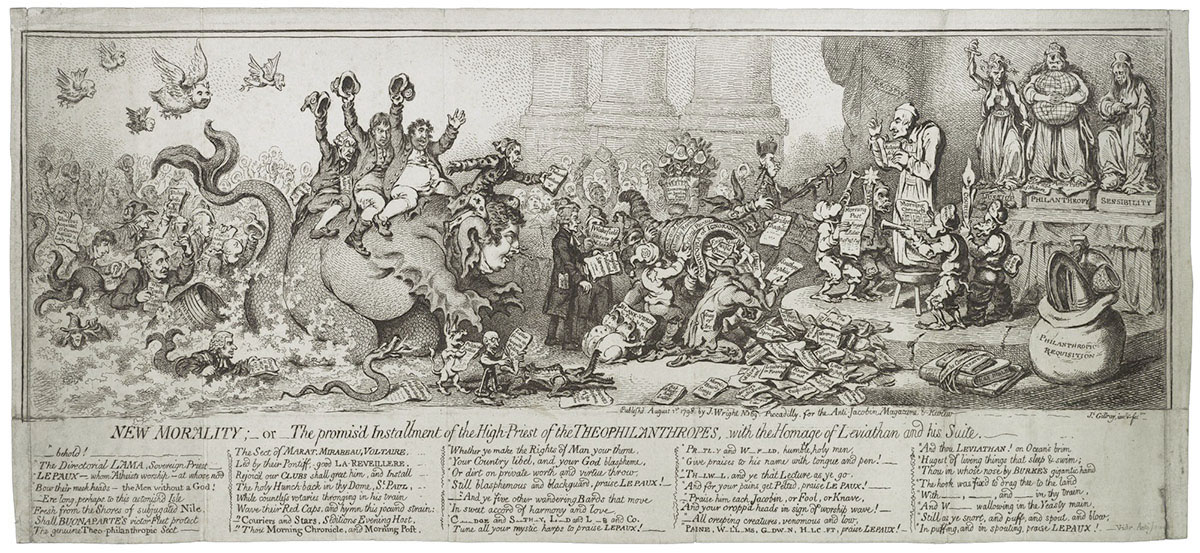
New Morality - Or - The Promis'd Installment of the High-Priest of the Theophilanthropes, with the Homage of Leviathan and His Suite, 1798 §
James Gillray (1756–1815)
London: Printer unknown
In this satirical print, Paine is lampooned as a crocodile in women’s undergarments, part of a procession of republicans whose political reforms lead to the overthrow of traditional religion. In the place of the Christian God, abstract entities shown as horrifying figures are worshiped while the Bible and other holy objects are consigned to the scrap heap. Among the throng is Joseph Priestley, the leading figure of the Unitarians who accept a single-personed God instead of the Trinity (to the right of the monstrous figure with fins and a tail).