The Great Scott
He smiled understandingly—much more than understandingly. It was one of those rare smiles with a quality of eternal reassurance in it, that you may come across four or five times in life. It faced—or seemed to face—the whole eternal world for an instant, and then concentrated on you with an irresistible prejudice in your favour. It understood you just so far as you wanted to be understood, believed in you as you would like to believe in yourself, and assured you that it had precisely the impression of you that, at your best, you hoped to convey.

While some critics understood The Great Gatsby as a great lyrical novel, even those who praised its qualities could not resist promoting the image of Fitzgerald as the young man who wrote about flappers. The book was exceptional because it was well written, but it was also exceptional for “the emergence of Fitzgerald into adult estate,” as Heywood Broun wrote. The Great Gatsby was an improvement, but it was an improvement within the same frame as This Side of Paradise. The author was the same bright young man–-he had simply grown up.


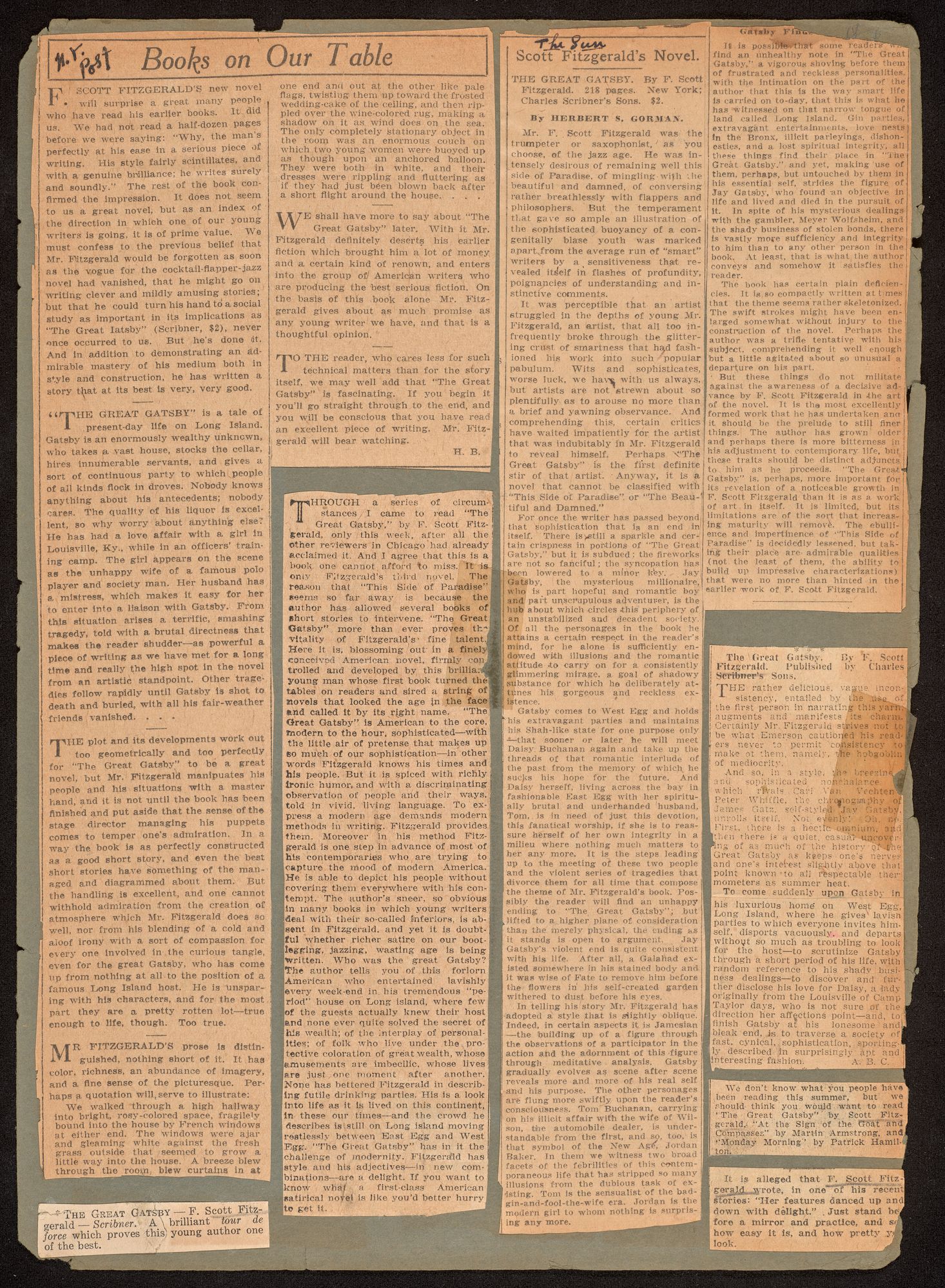
A "New Scott Fitzgerald Emerges" and while The Great Gatsby is contrasted with the content of This Side of Paradise, its authorial voice is not. Contrarily, The Great Gatsby is described as a much more technically proficient book than its predecessors, a novel "one cannot afford to miss." The Fitzgerald narrative adapts to his age, noting that the flappers are older, but essentially...still flappers.
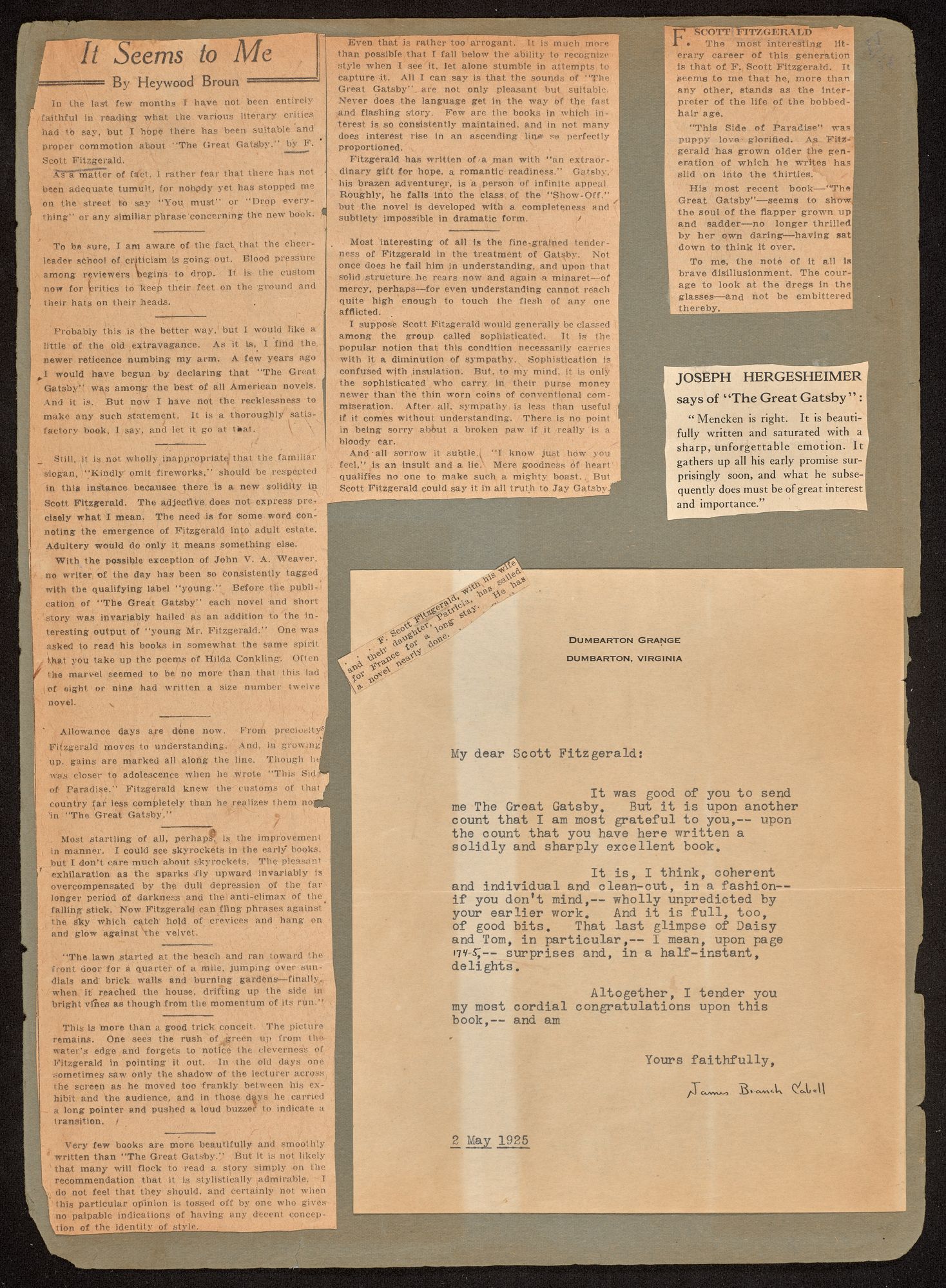
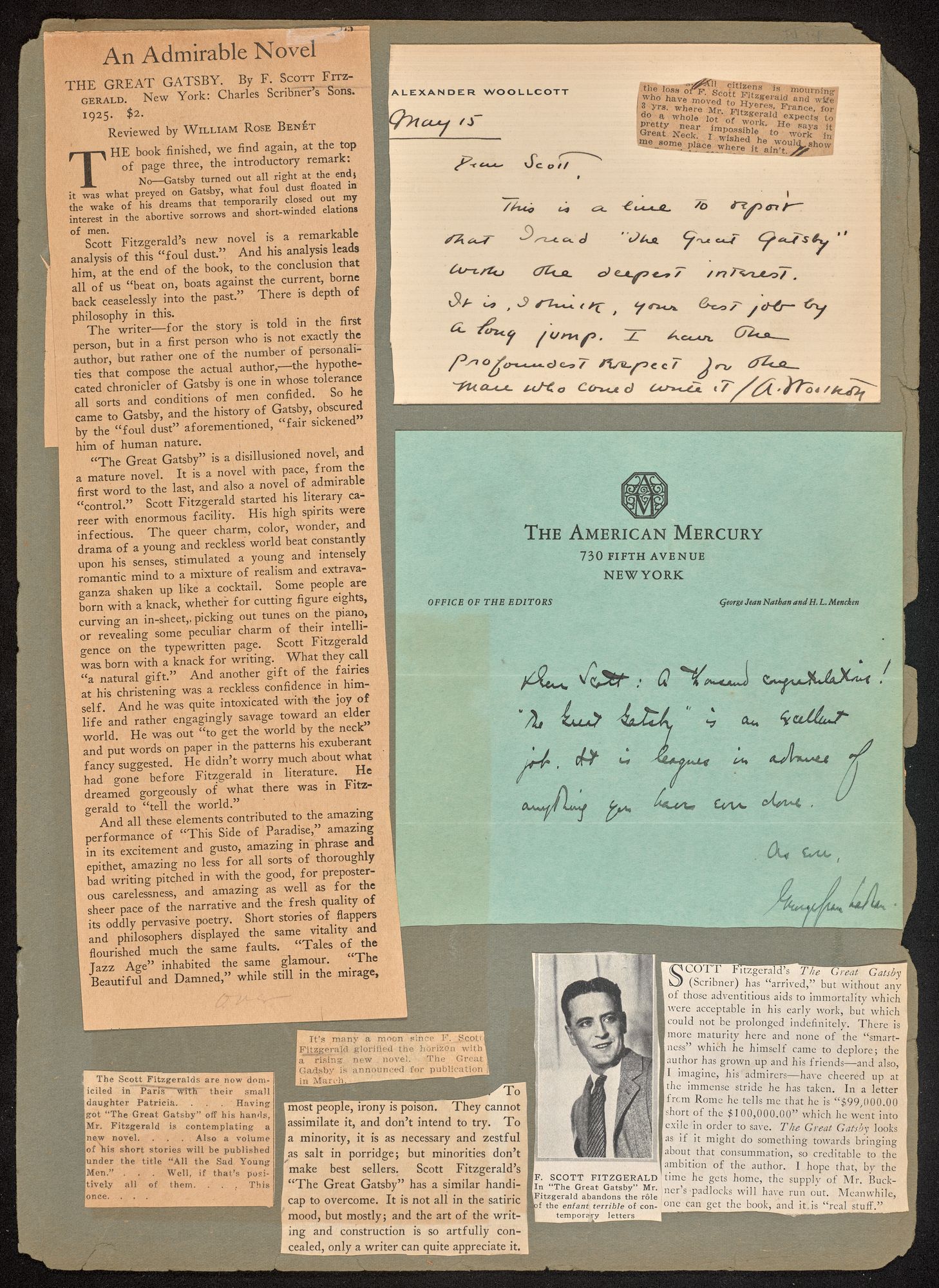
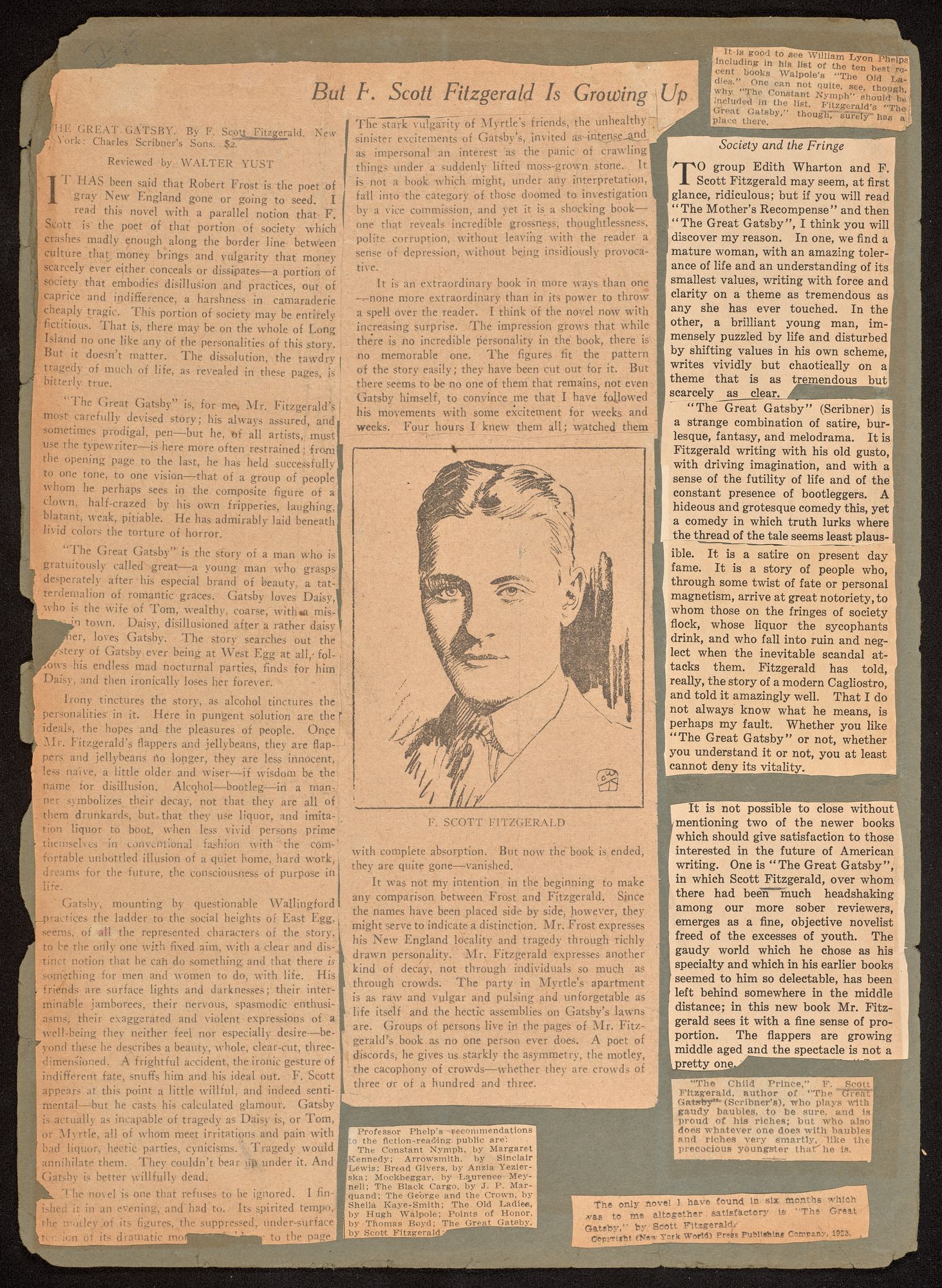
Heywood Broun places Fitzgerald "among the group called sophisticated" as critics laud The Great Gatsby for its maturity. Other critics conflate Fitzgerald with the novel's eponymous character, describing Fitzgerald as a young man filled with aspirations to reach a near-impossible goal, "out to get the world by the neck," who "dreamed gorgeously"-- much like Jay Gatsby himself.
Some critics differentiated between The Great Gatsby and Fitzgerald’s earlier work by focusing on the title character. Gatsby is “life-sized and lifelike;” a “figure” more than a mere character, in the words of reviewer Carl van Vechten. He described Gatsby as having “fidelity not only to his ideal but to his fictions, [and an] incredibly cheap and curiously imitative imagination," expressing admiration similar to the awe felt toward Gatsby by characters in the book. However, this overlooks the reality that Gatsby’s attempt at propping himself up as an impressive figure fails. Jay Gatsby’s fidelity to his ideal is his downfall, which van Vechten misses. Other critics reacted similarly, seeing Gatsby as the exception to the “selfish, vain, empty” characters around him. “Love gives him dignity,” writes one, and “for a moment he is great.” One reviewer even characterizes the novel as the story of a man losing everything and “a love story of present day New York.”
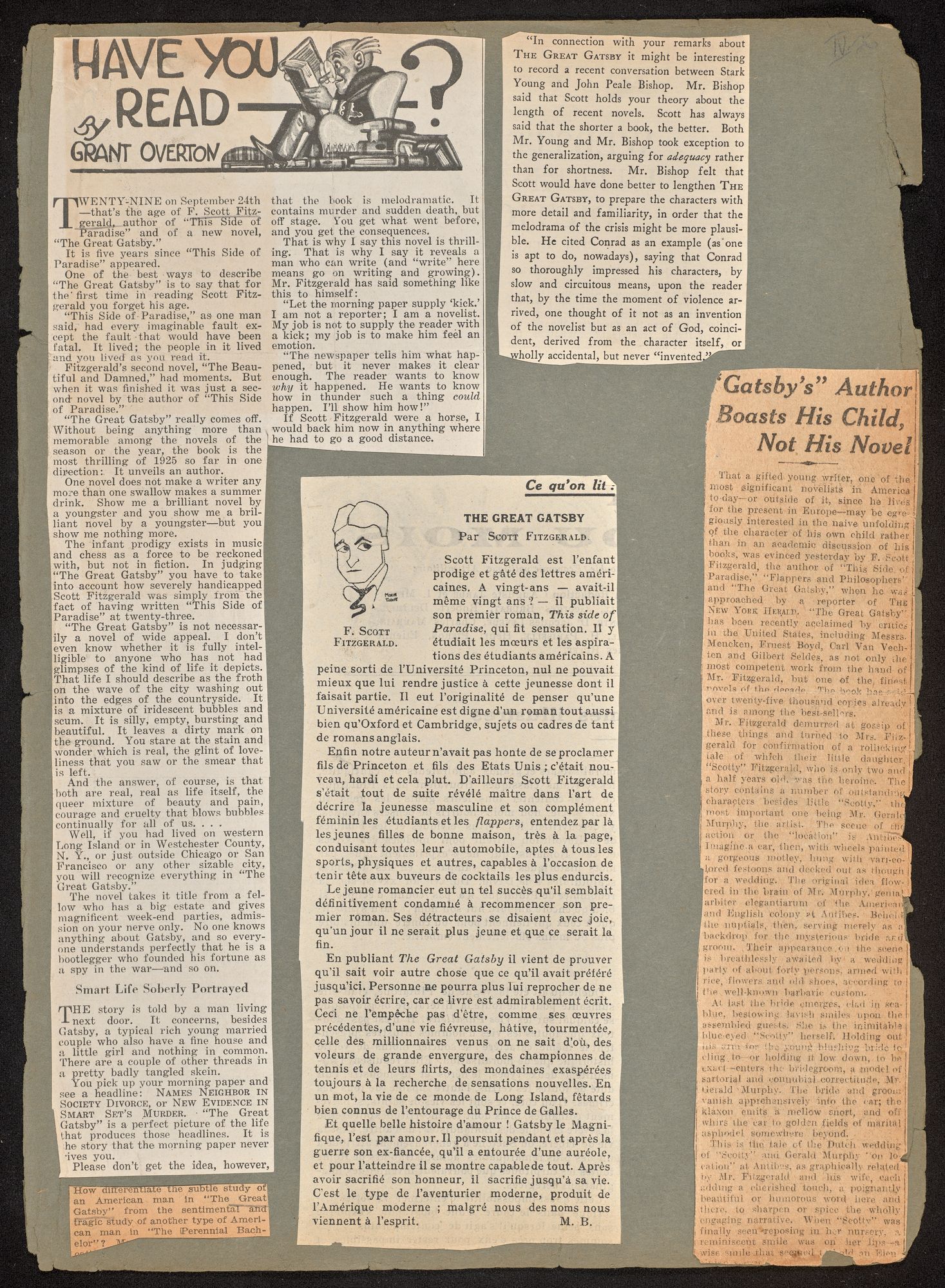

Newspapers expressed surprise at Fitzgerald's prioritization of his family above his work, even as they reported on the activities of said family. The "gifted young writer" and his "flapper" wife going about their business was as newsworthy as The Great Gatsby, and the two are interlinked. In another article, The Great Gatsby somehow becomes a love story more than a tragedy, the sheer grandeur of its story overpowering the consequences.
A narrative of extravagance surrounds the title character just as it surrounds the book itself. In the midst of this celebration is the character of Fitzgerald himself, the “born story-teller,” the “poet of that portion of society which crashes madly enough along the border line between culture that money brings and vulgarity that money scarcely… conceals,” the “poet of discords.” These words from Walter Yust characterize Fitzgerald as emblematic of the moral decay that he wrote about, spectator of a party he began to host without falling victim to its charms himself -- again, very similar to Jay Gatsby.
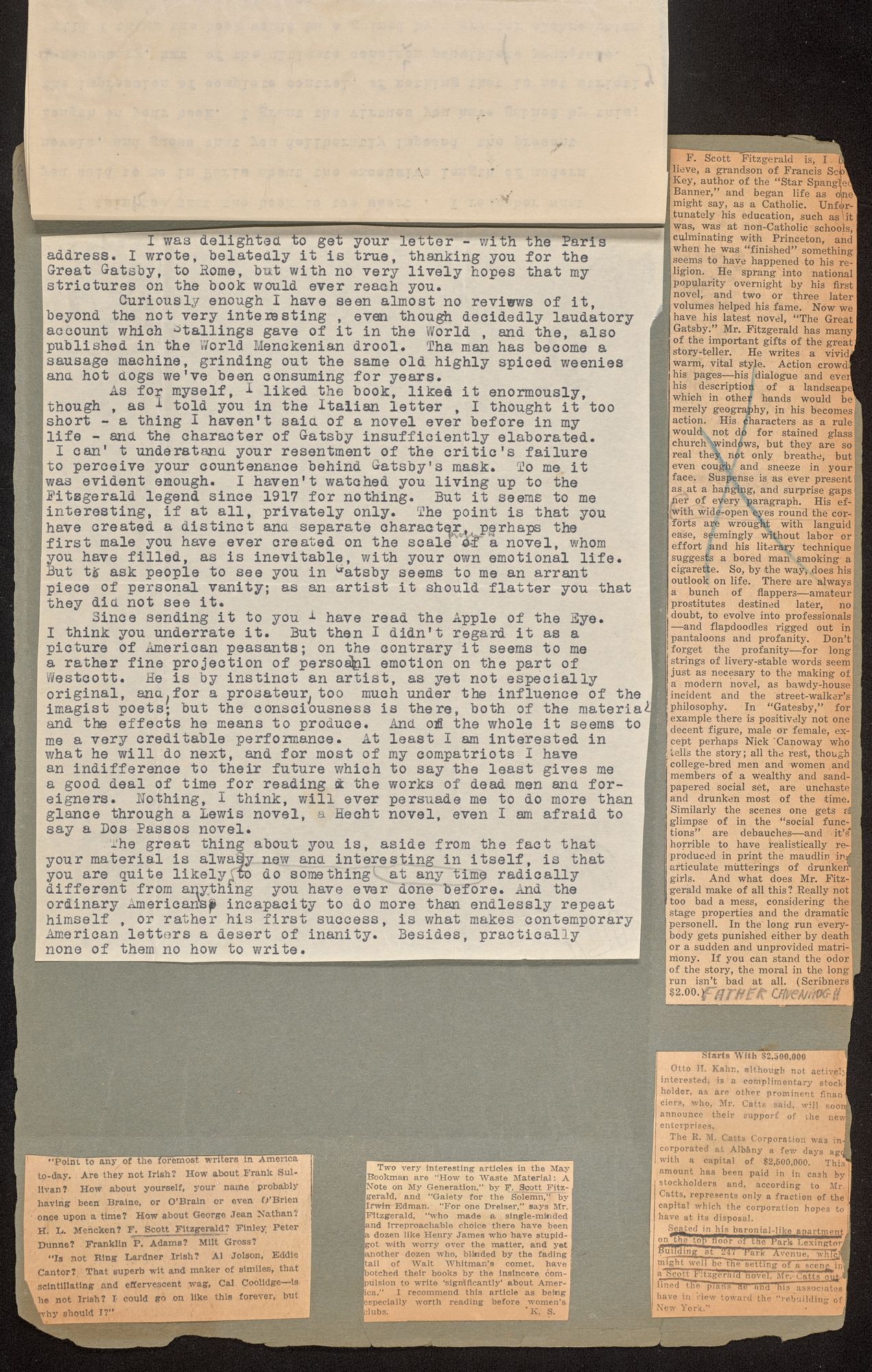
In his scrapbook from the time of The Great Gatsby’s publication, Fitzgerald kept an unsigned letter from a friend congratulating him on the book’s success. It includes the following:
I can’t understand your resentment of the critic’s failure to perceive your countenance behind Gatsby’s mask. To me it was evident enough. I haven’t seen you live up to the Fitzgerald legend since 1917 for nothing.