"How That Boy Can Write!"
She narrowed her eyes and shivered. Lucille shivered. We all turned and looked around for Gatsby. It was testimony to the romantic speculation he inspired that there were whispers about him from those who had found little that it was necessary to whisper about in this world.
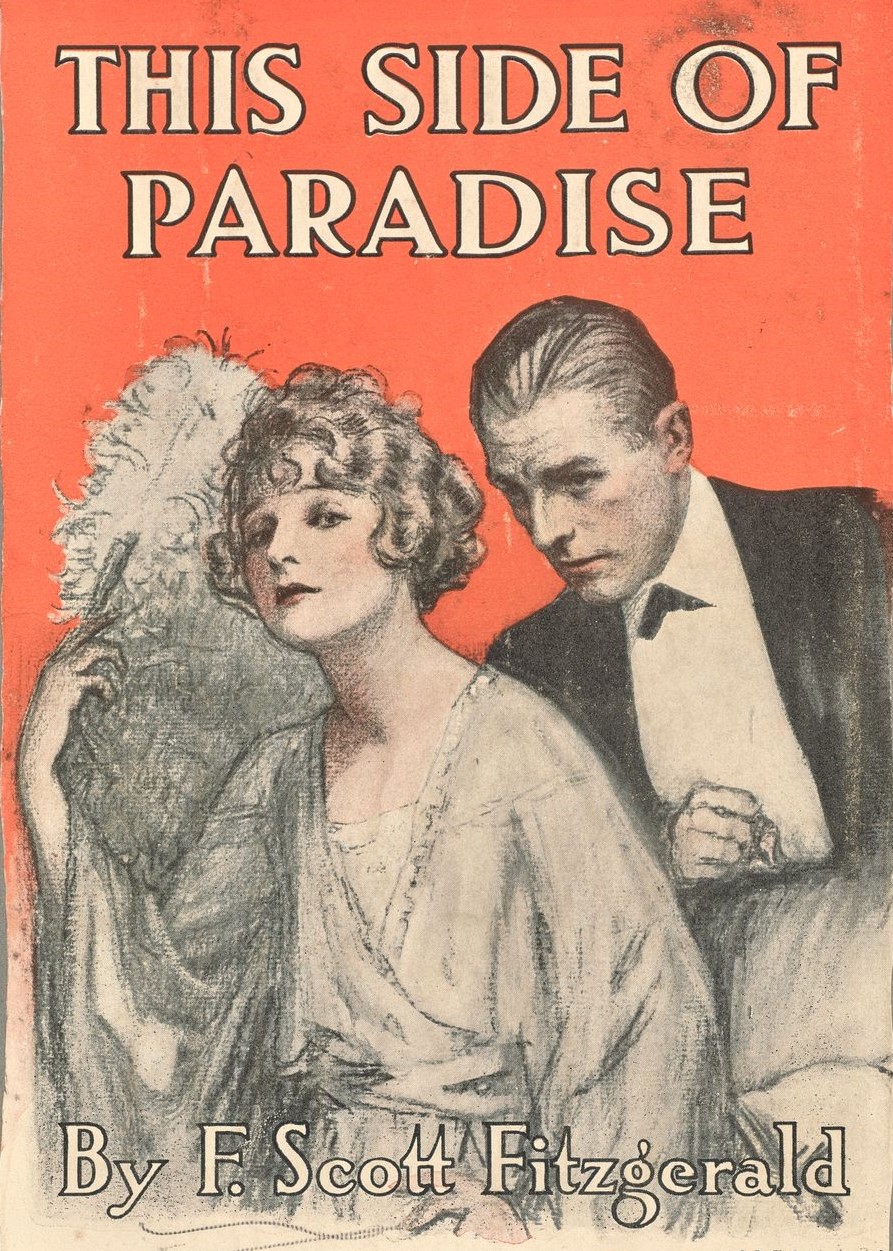
This Side of Paradise, Fitzgerald’s first novel, was published in 1920, just on the cusp of the Jazz Age. It tells a story of Princeton life with elements of Fitzgerald’s own college experience informing its narrative of hedonistic self-discovery, social climbing, and more kissing than previous literary generations found acceptable. Fitzgerald himself, only 23 at the time of publication and just three years after he would have graduated from Princeton, became central to the narrative that formed around the book as its young author. Through the novel, America was introduced to F. Scott Fitzgerald, who would simultaneously become one of the Jazz Age's promoters and icons. The country excitedly witnessed the emergence of a bright young author. As Harry Hansen of the Chicago Daily News put it: “My, how that boy Fitzgerald can write!”


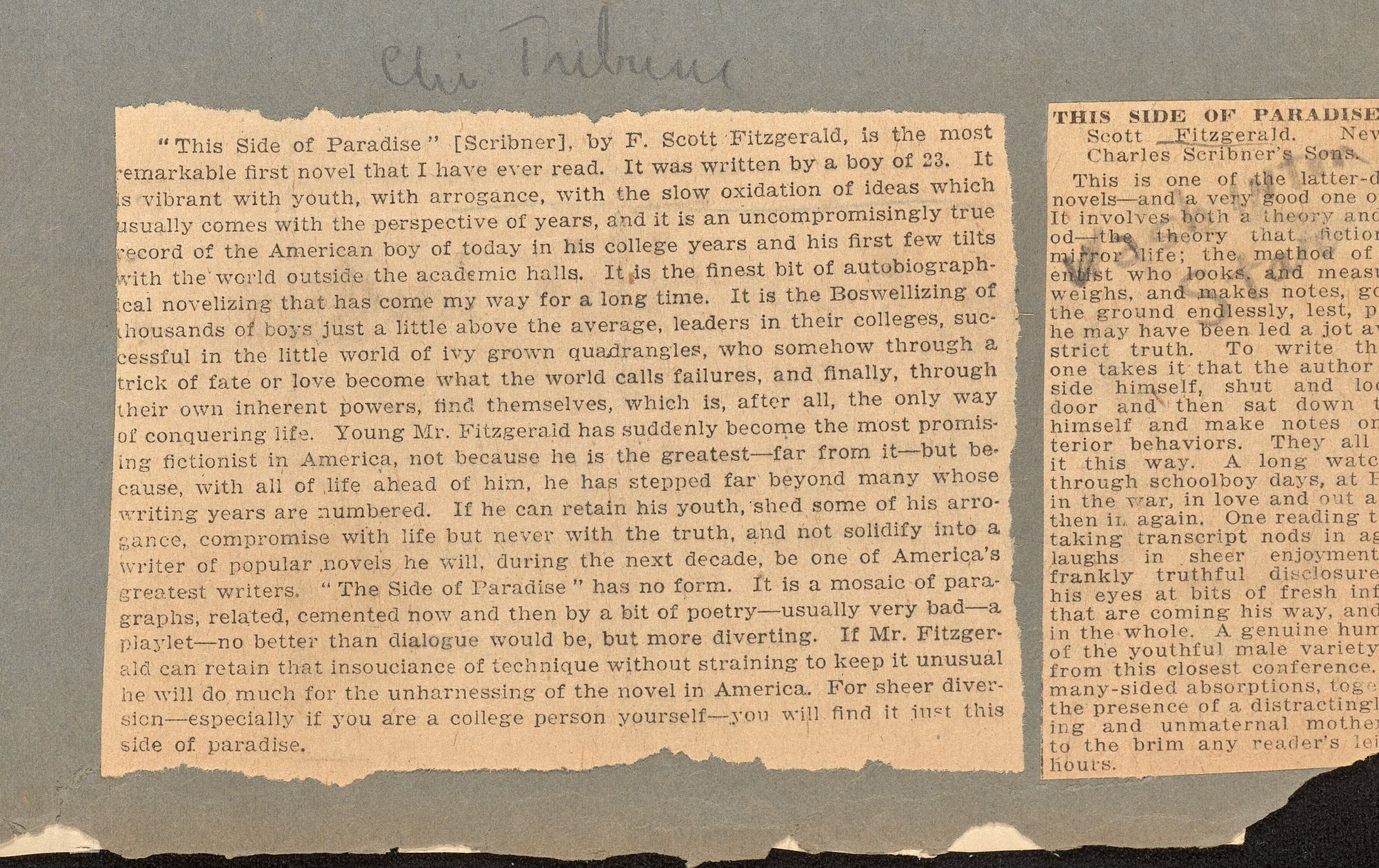
The Chicago Tribune, Chicago American, Philadelphia Gazette, Trenton Times, New York Tribune, Brooklyn Eagle, and New York Inquirer published glowing reviews of This Side of Paradise. It was a very popular book, with its first edition of 3,000 copies selling out in just three days.
The Chicago Tribune told readers to “make a note of the name F. Scott Fitzgerald.” Philadelphia papers called him a “writer worth watching.” His own publisher said that “in spite of his youth, he is on his way to fame,” and the public ran with the image of the young writer making his mainstream market debut breaking new ground as a chronicler of the next generation.
Fitzgerald described This Side of Paradise as “a novel about flappers for philosophers,” and the press ran with it. Despite the sardonic tone of his phrasing, and of the novel itself, the flappers indeed caught the attention of the public. Papers began running articles on how their audience’s popular young daughters might be treated by college students (lots of kissing) or what their sons got up to while away (also lots of kissing). This Side of Paradise made readers aware of the attitudes and practices of youth, which brought acclaim to Fitzgerald at the cost of de-emphasizing his writing skills.


Short book reviews credit the new book "about flappers" as a bestseller and Fitzgerald gets a boost in both name recognition and acceptance of his short stories for publication. The Philadelphia Bulletin, New York Morning World, and Philadelphia Ledger continue to run articles on Fitzgerald, all using the same photograph.
The F. Scott Fitzgerald who entered the American consciousness in 1920 was a sparkling young debutant, whose foray into professional writing was a smash hit. He came onto the scene with an expose of his own past and of the lives of a generation, prompting a discourse on changing morals. This version of him was, in many ways, off from the real thing, but Fitzgerald couldn’t stop it from spreading.


Still more reviews, focusing on a book with "real merit" that is nonetheless "about flappers" more than anything else. The Harvard Crimson quotes This Side of Paradise at length, one of the few sources to do so, while a Dartmouth publication focuses more on the book's connection to Princeton. As his book climbs the bestseller lists, Fitzgerald's home town of St. Paul runs a piece on his life, with similar content to a standard review.