Women in Pants Before the 1890s
Fear of women diverging from gender norms didn’t begin or end in the 1890s.
Depicting women in pants as laughable was a trope that began well before Walker and extended beyond him. The adoption of Amelia Bloomer’s “bloomer costume” aligned the campaign for women’s rights of the 1850s with unconventional ways of dressing in the public mind, and mocking them for it became a quick shorthand for neutralizing the threat they posed to the existing social order. In many ways, Walker’s cartoons harken back to the era of four decades earlier, when widespread lampooning of their fashion prompted women’s rights advocates to abandon pants for a time.
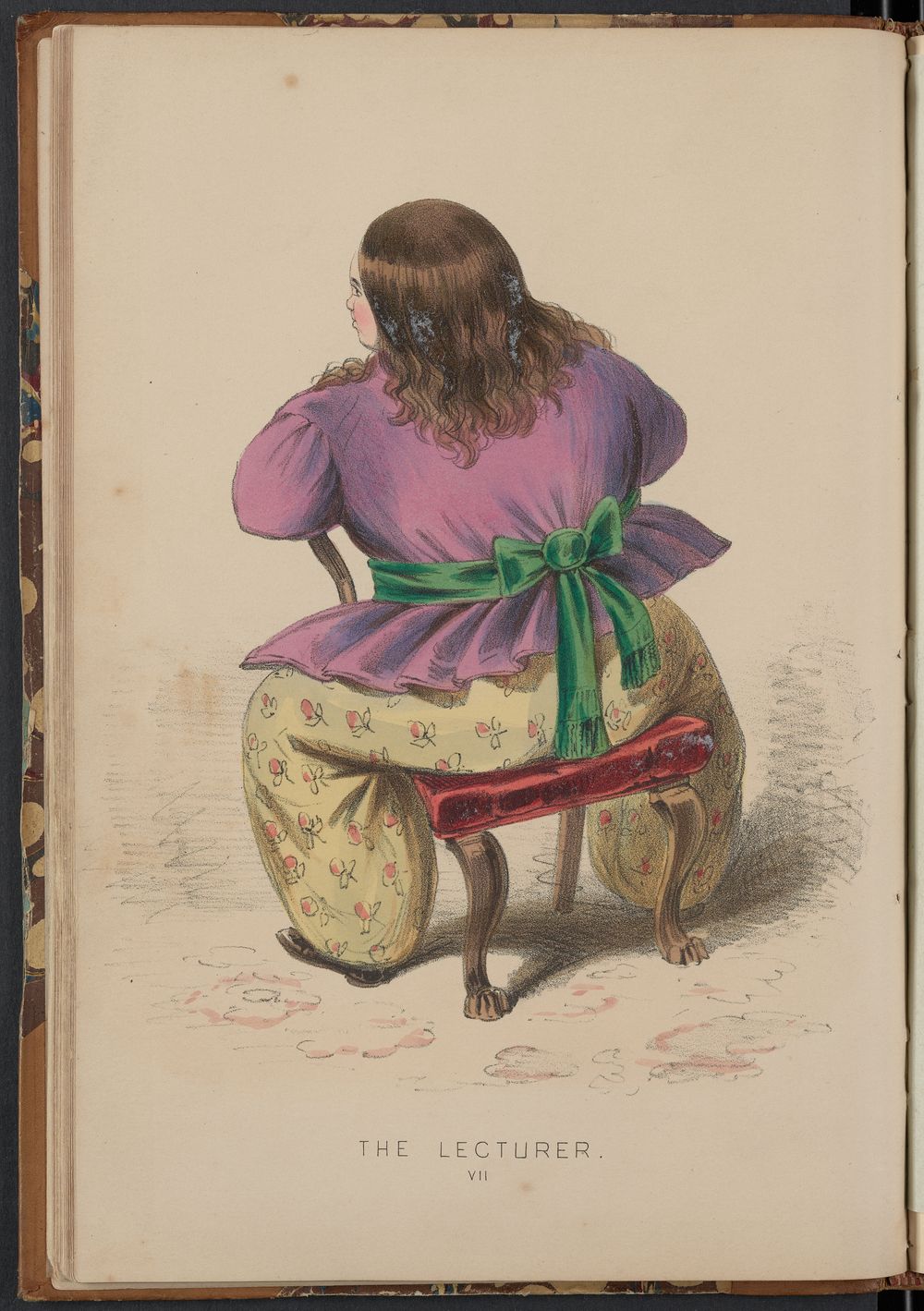
The Beauties of Bloomerism, by "Deborah Dreadnought," 1852
Amelia Bloomer’s influence, along with her published instructions for making bloomers, led to many American and English women adopting this style of dress, but created just as many opportunities for dissent. Bloomer's "costume" was part of the beginning of a larger movement for "rational dress," and were based on traditional Turkish women's clothing. Often, the "bloomers" would be worn under a shortened, knee length skirt, and would typically be loose and flowing, but gathered at the ankles.
This British collection of illustrated satirical poetry is an early example of the mockery women who chose not to wear skirts endured. Written under the false name "Deborah Dreadnought," this book contains poems about caricatures like "The Amazon" and "The Lecturer," all while poking fun at the idea that women might prefer pants for any reason—but especially for something as silly as personal comfort. The multiple illustrations of the book's "Beauties" slouching on chairs with their legs spread, in a much more masculine posture than would have been typical for women of the time, also implied that wearing pants made them inherently less feminine.


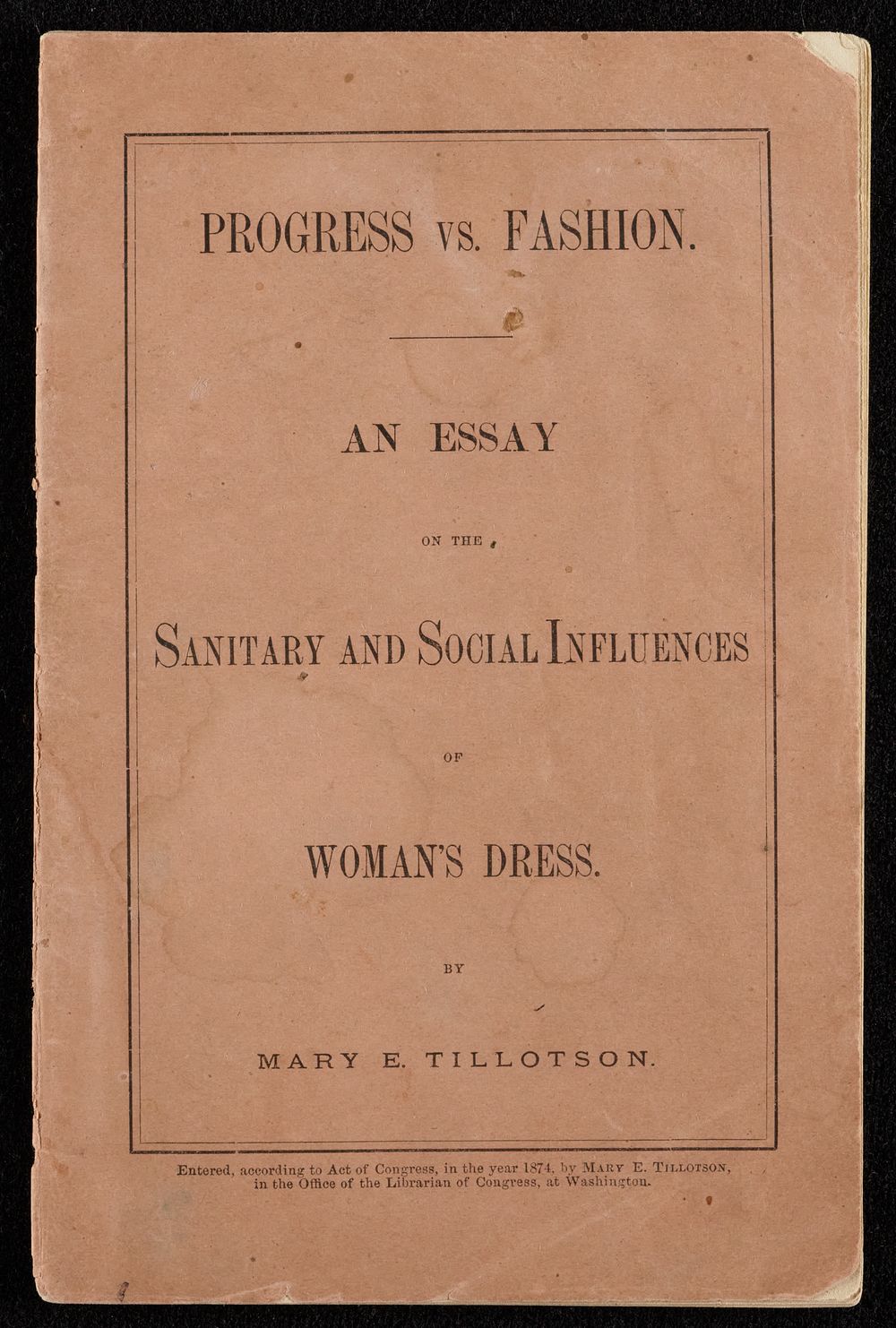
"Progress vs. Fashion," by Mary E. Tillotson, 1873
In the late-nineteenth century United States, fashion was in a particularly over-the-top stage. The period of new wealth later known as the “Gilded Age” meant that women’s clothing in particular was full of ruffles, bustles, layers, and other adornments. Mary Tillotson, another dress reformer and activist, argued in this pamphlet that women–especially the upper class women who dedicated themselves so vigorously to keeping up with these new trends–should instead use their energy to enhance their mental and physical strength. Adopting simple, comfortable trousers rather than the busy fashions of the day was one of her proposed methods of signaling this opinion to others.
It is useless, and measurably inconsistent, to expect men will combine to raise women from subjection while they wear the badges of dependence […] Now men say, “very few could use more privileges: these waddling masses of flounces and humps can’t be benefited by more duties;” failing to see that the higher duties would tend to draw them to higher planes of action.
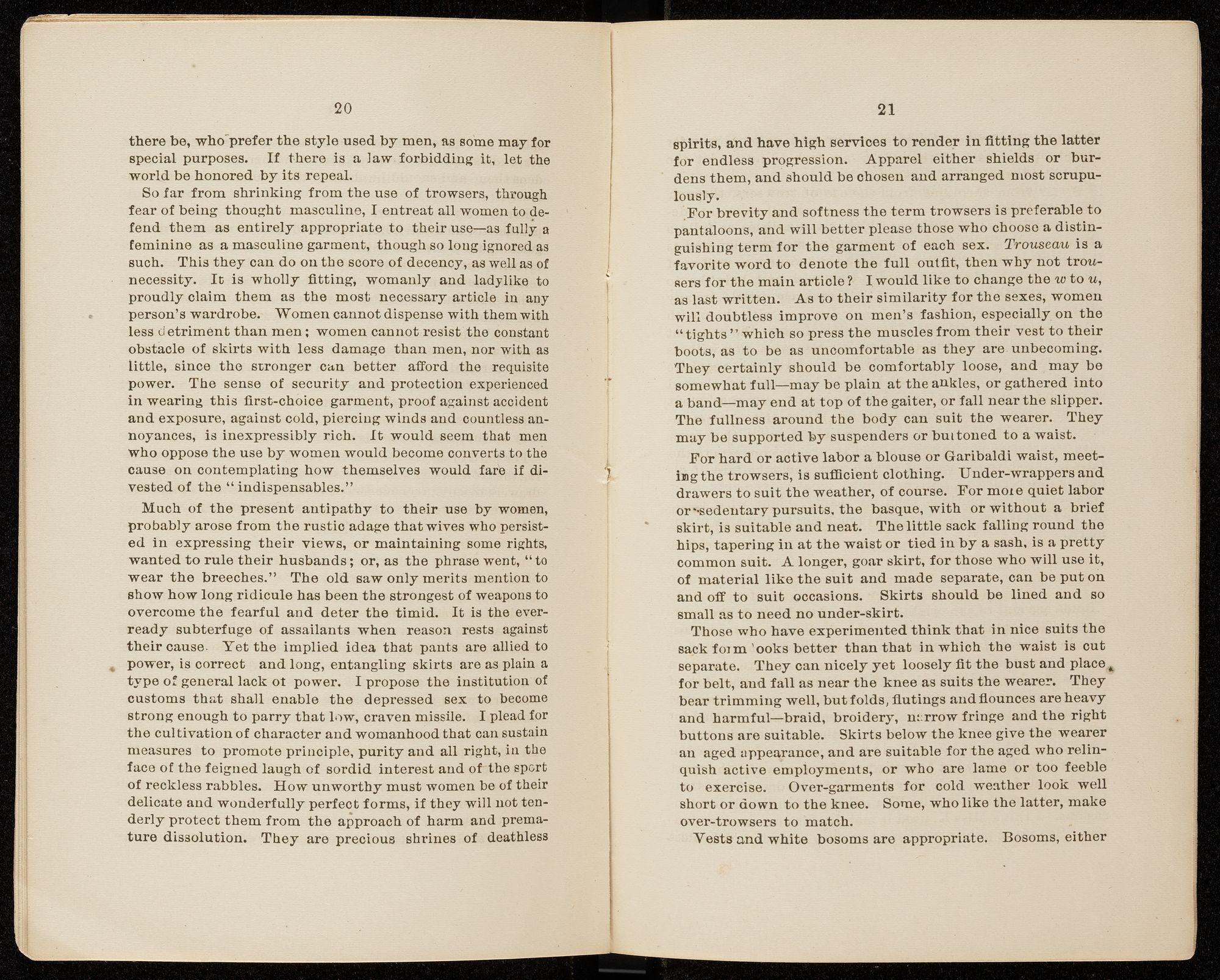
Here, Tillotson remarks on trousers, defending them as "fully a feminine as a masculine garment" and calling for women to utilize them as needed. She also handily dismisses the assumption that women who wish to wear pants are looking to assert power over men by "wearing the breeches," and instead argues, both in this and earlier sections, that both men and women wearing pants will put them on equal footing and cultivate an environment of mutual appreciation and respect.
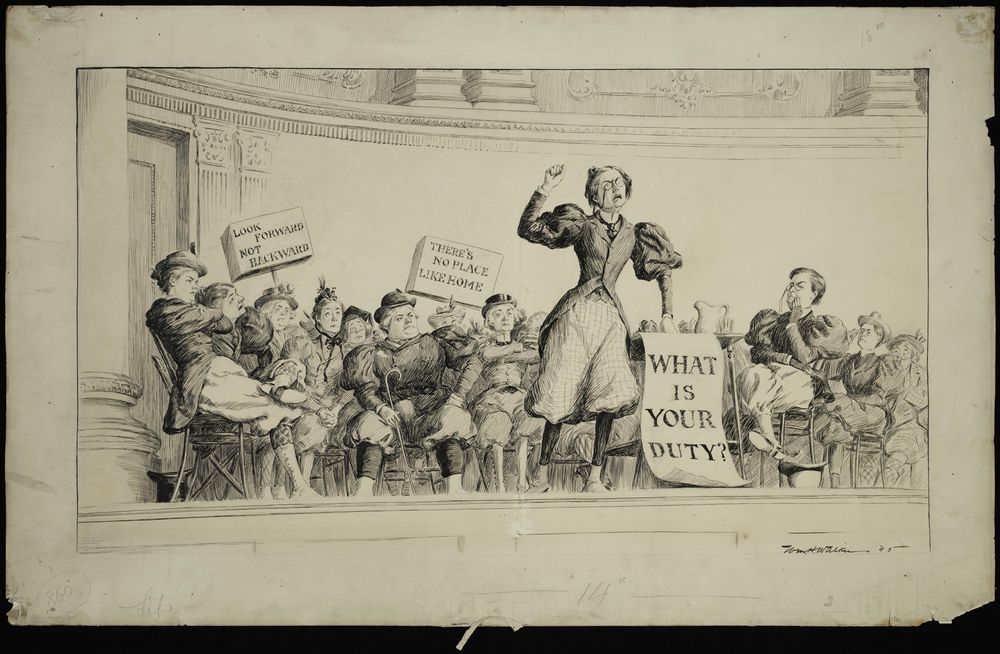
"Convention of the Husband Reform Club," January 23, 1896
Alongside new fashions, women’s clubs and reform movements were becoming increasingly influential throughout Europe, the United Kingdom, and the United States. These clubs provided space for like-minded women to discuss social issues, the welfare of their communities, education, temperance, and—most frighteningly to their opponents—women’s suffrage. In this cartoon, Walker mocks the concept of women's clubs by imaging a "Husband Reform Club" filled with sulky, pants-clad women literally shaking their fists in disapproval at the viewer.
In reality, most women's clubs of this era had begun as literary or social groups that then became focused on finding ways to improve and give back to their communities. These movements ranged from creating libraries, kindergartens, and soup kitchens to protesting child labor, advocating for feminism, temperance, and environmental protection (and, yes, sometimes, wearing pants).