Contemporary Perspectives
Walker's cartoons reveal the fear resting underneath his caricatures of the “New Woman.” Changing social structures and the notion that women might take more expansive roles in society intellectually, politically, and as laborers meant that men like Walker began to worry that their place at the metaphorical head of the table was more precarious than it had once seemed. One day a woman might be wearing pants because it made it easier for her to ride her bicycle, these cartoons suggested, but soon after this first venture into the “man’s world” she would find herself in military dress, taking over the U.S. Navy. Rather than empathizing with women’s rights activists’ desire to share responsibilities in society with men, Walker’s cartoons depicted these societal changes leading to disenfranchised and miserable men blocked off from their rightful place.
Cycling
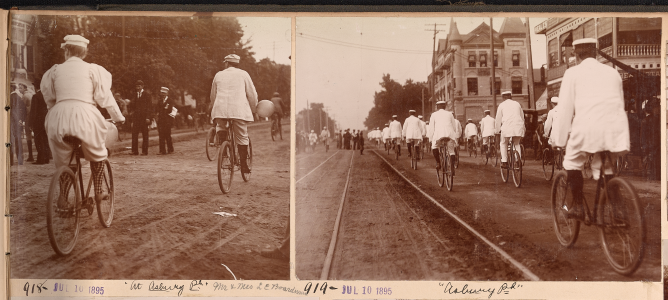
"At Asbury Park", 1895
One reason that pants were an appealing option was because they increased freedom of movement. In the late 19th century, the bicycle had become a popular tool for travel and exercise, and casual cyclists of all genders were beginning to line streets, parks, and beaches. This album from a member of the class of 1895 shows a street full of cyclists at Asbury Park, NJ, including one woman.
Cycling became very popular among women of all ages, and while many women cyclists would enjoy this new form of exercise in contemporary, fashionable dress (which included skirts and corsets) some chose different attire. Women who wanted to avoid getting their skirts caught in bicycle gears generally wore either bloomers or knickerbockers (“knickers”), which were trousers with baggy knees previously worn exclusively by men. Often, these women were critiqued (and some were even arrested and fined for their clothing choices). Cartoons like Walker's mocked women's choice of athletic dress by presenting it as something alien, unbecoming, and above all, ridiculous.
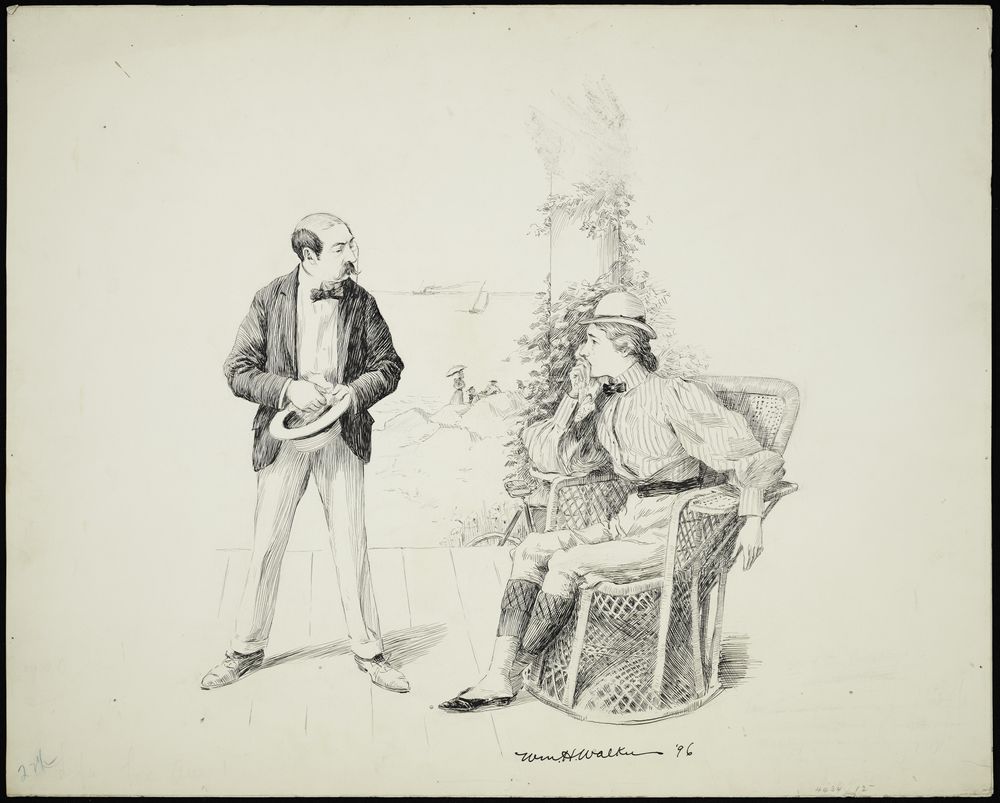
"One of the Penalties," September 3, 1896
Cycling, and other outdoor activities, allowed women to leave the protective sphere of the home and enter public spaces independently and unaccompanied. In an era where social rules for men and women were very strictly defined, and where women were largely seen as inherently and substantially different from men, this concept could be jarring. A woman with her own bicycle could, theoretically, go anywhere she wished (if she could pedal herself there). In order to neutralize the threat this idea posed, the cartoon shown here implies that women, try as they might, cannot escape their societally-defined genders.
When this cartoon depicting a tearful female cyclist appeared in Life, a man warned in its caption, “If you wear those togs you must stop crying and act like a man.” Her inability to truly "act like a man" is the butt of the joke: she may dress like one, may act like one, may even ride a bike like one, but she will never be one and will thus never be afforded the same societal privileges as one.
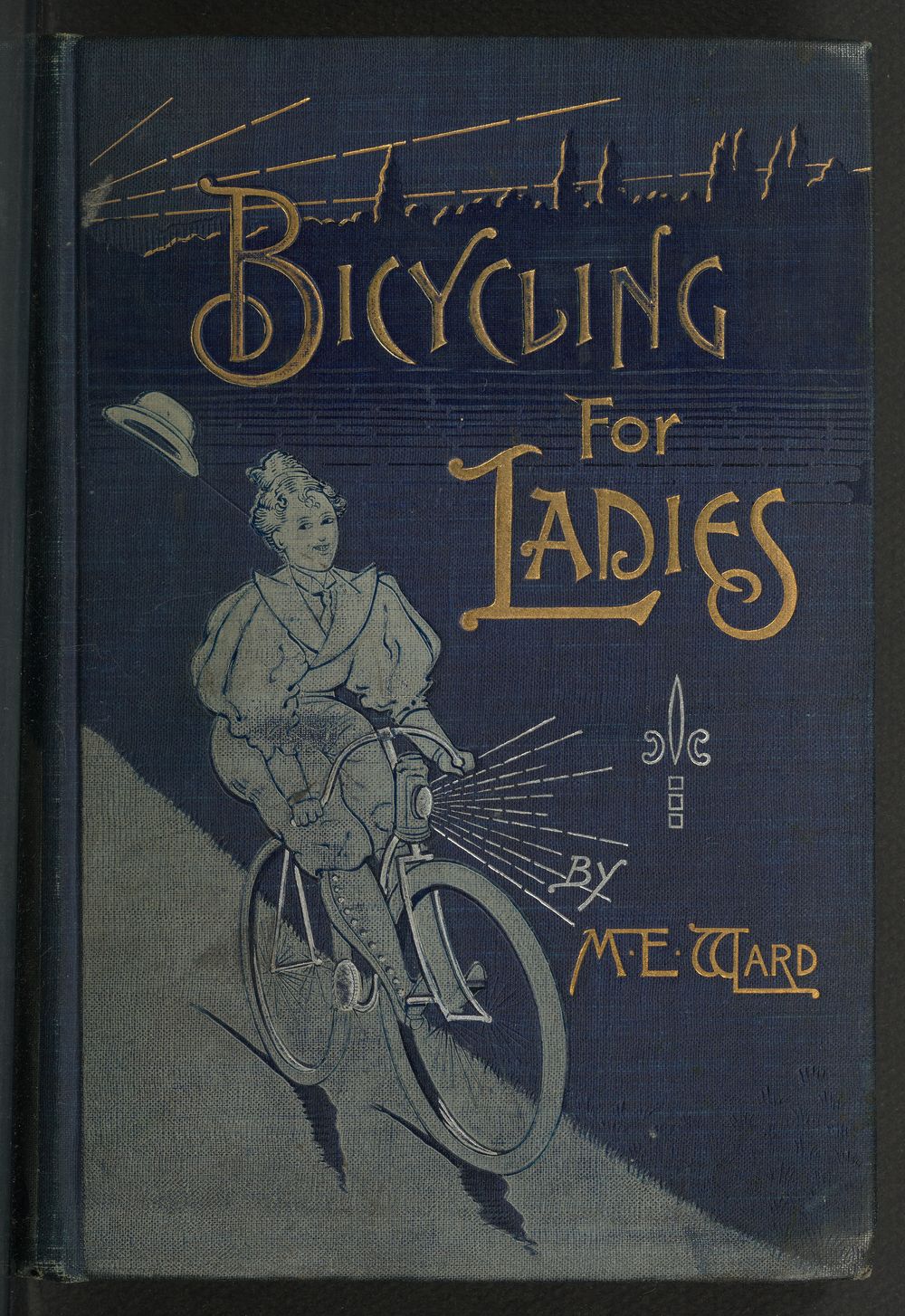
The Common Sense of Bicycling: Bicycling for Ladies, by Maria E. Ward, 1896
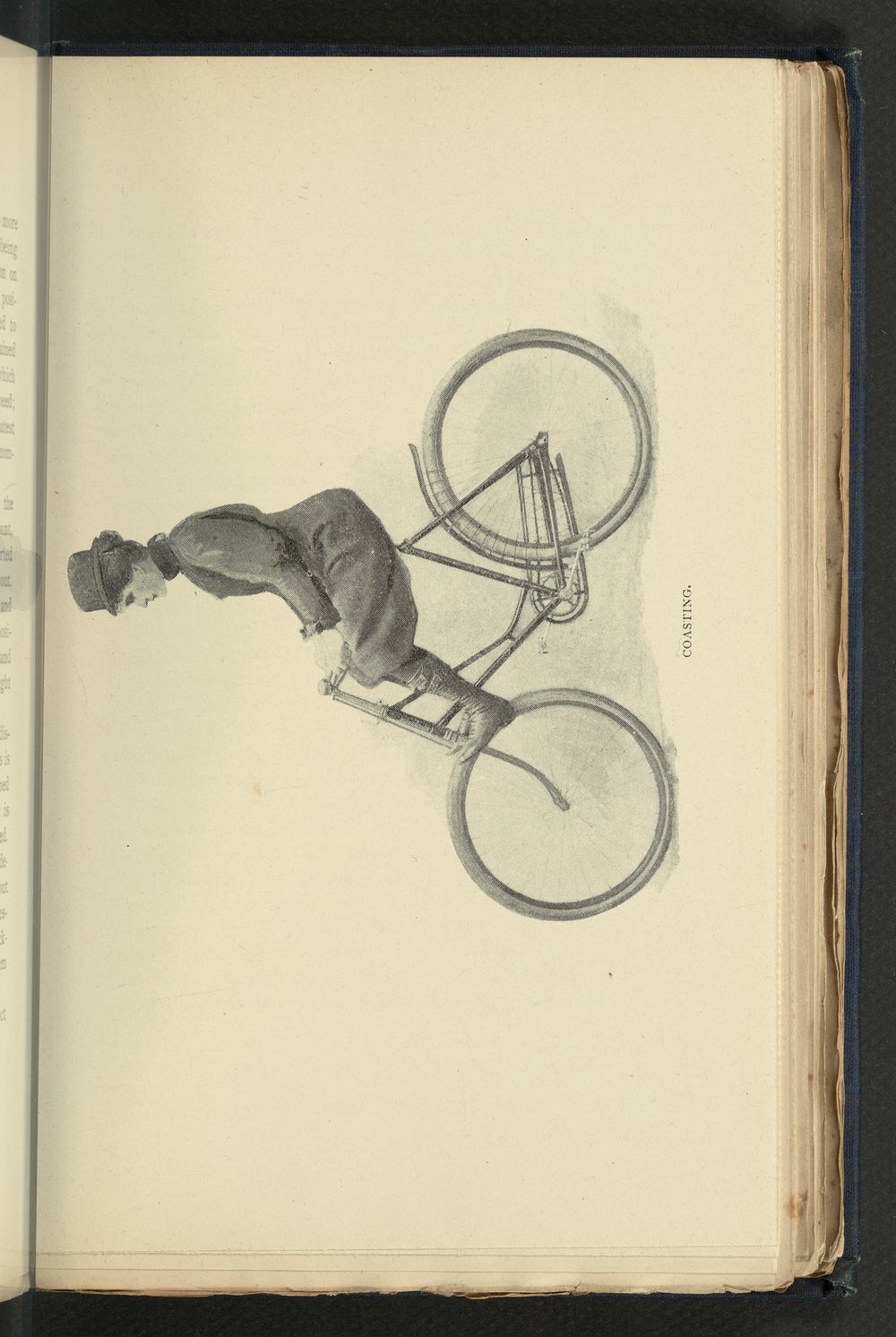
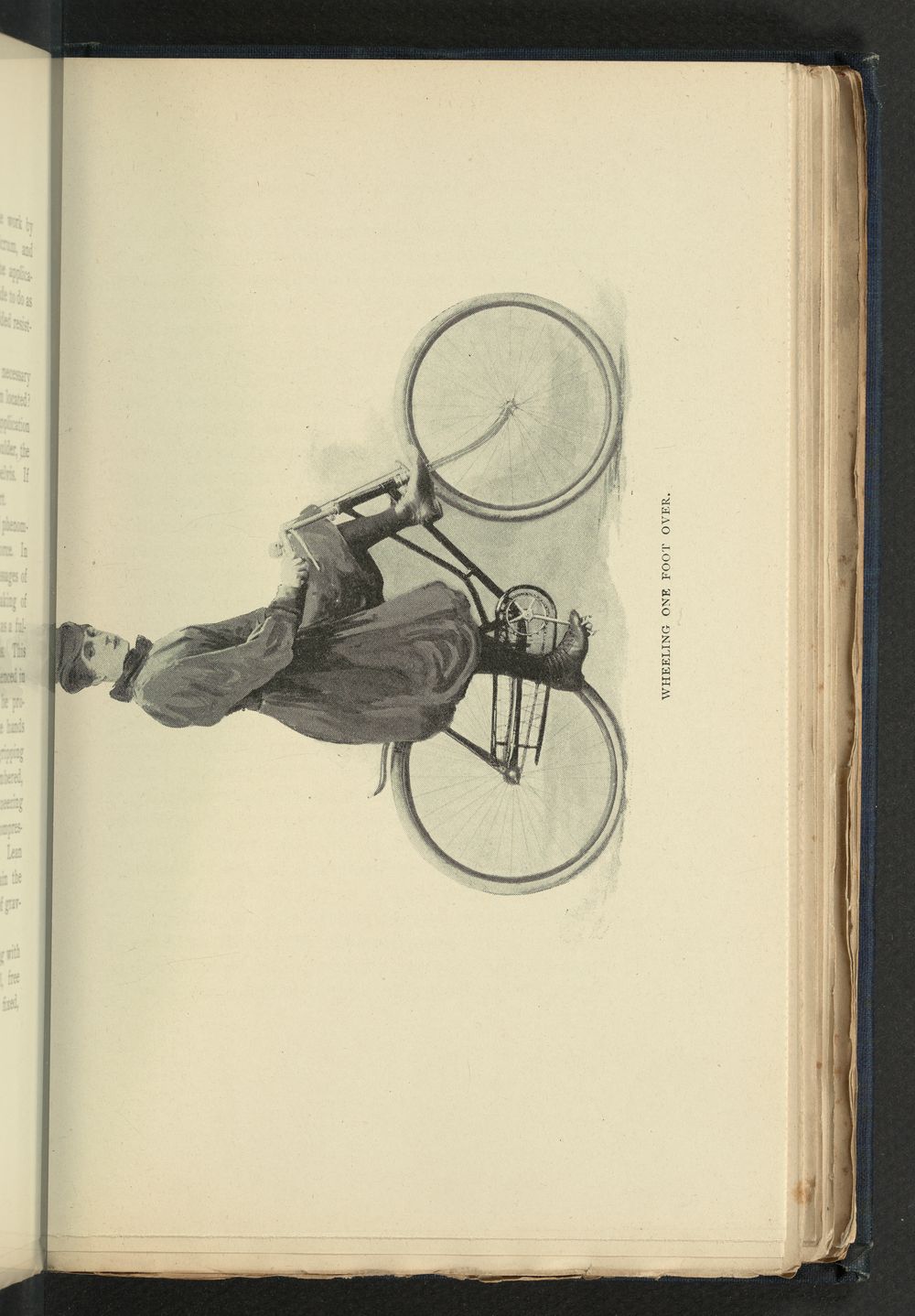
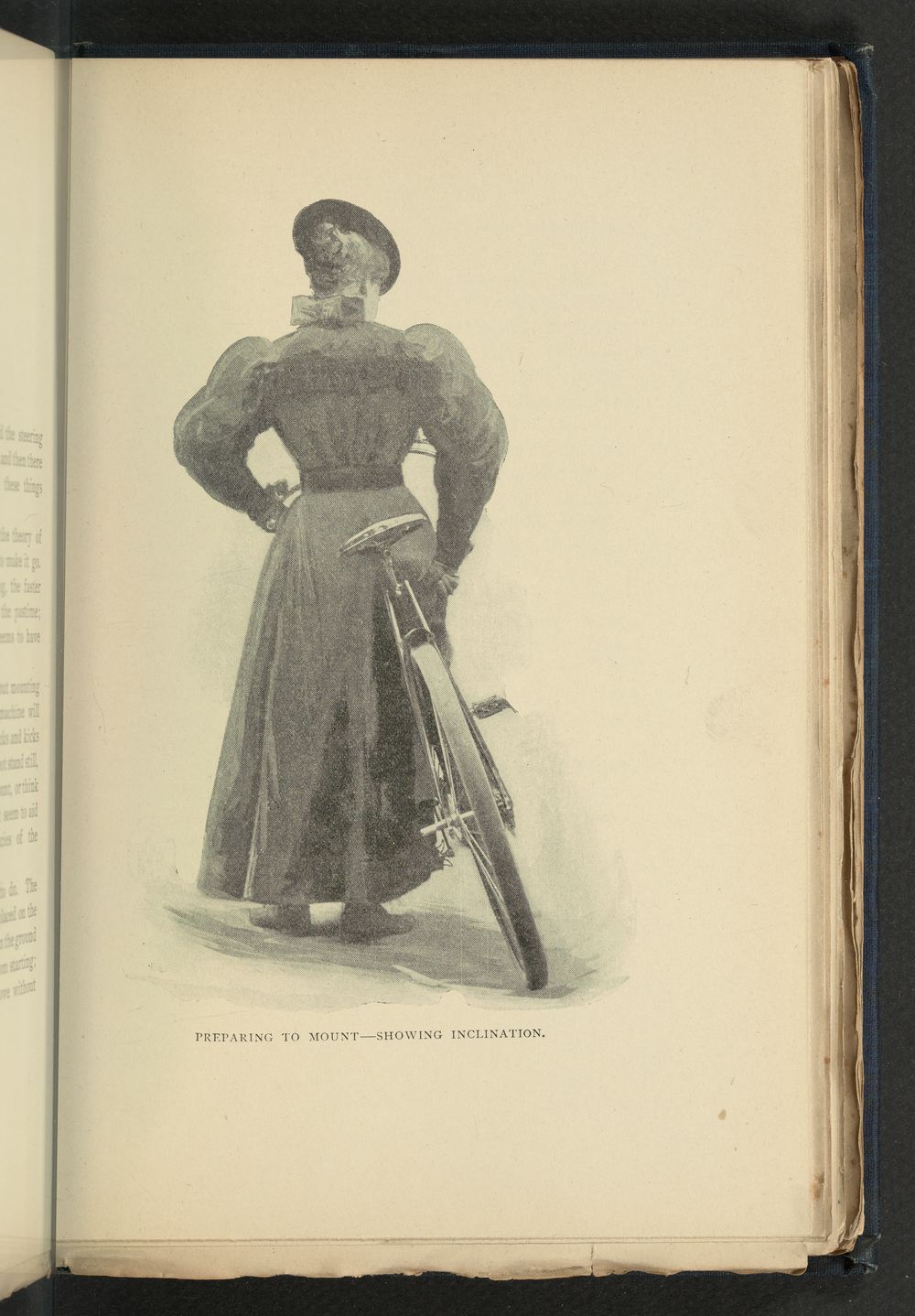
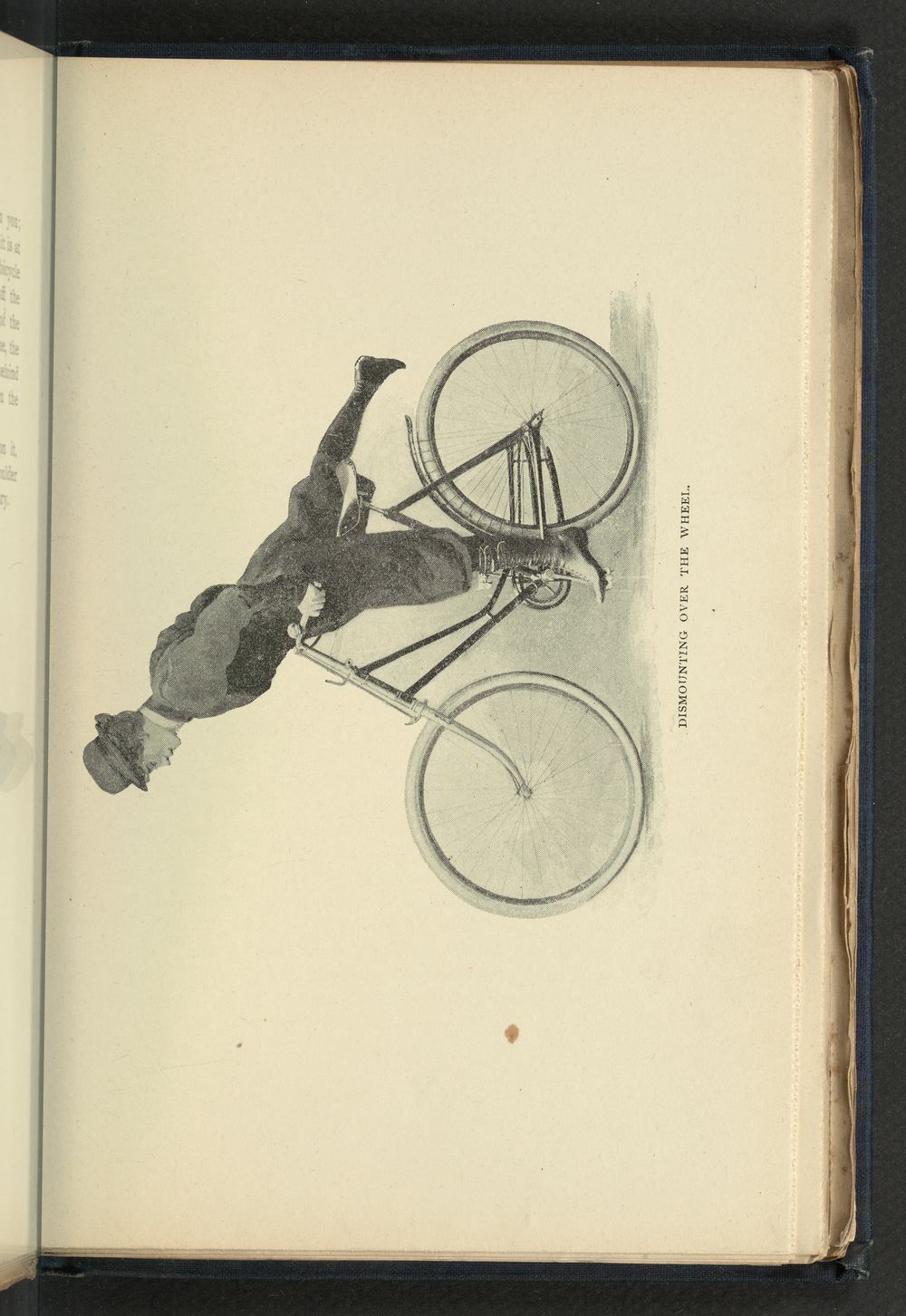
Some resources touted the bicycle as a wonderful new invention that would improve women’s lives and overall health. Bicycling for Ladies was one of them: a guide for everything to do with bicycles, from how to ride them, how to maintain them, and, of course, what to wear, with chapters including "On Wheels in General and Bicycles in Particular," "The Art of Wheeling on a Bicycle," "Dress," and "Tools and How to Use Them."
Bicycling requires the same freedom of movement as swimming does, and the dress must not hamper or hinder.
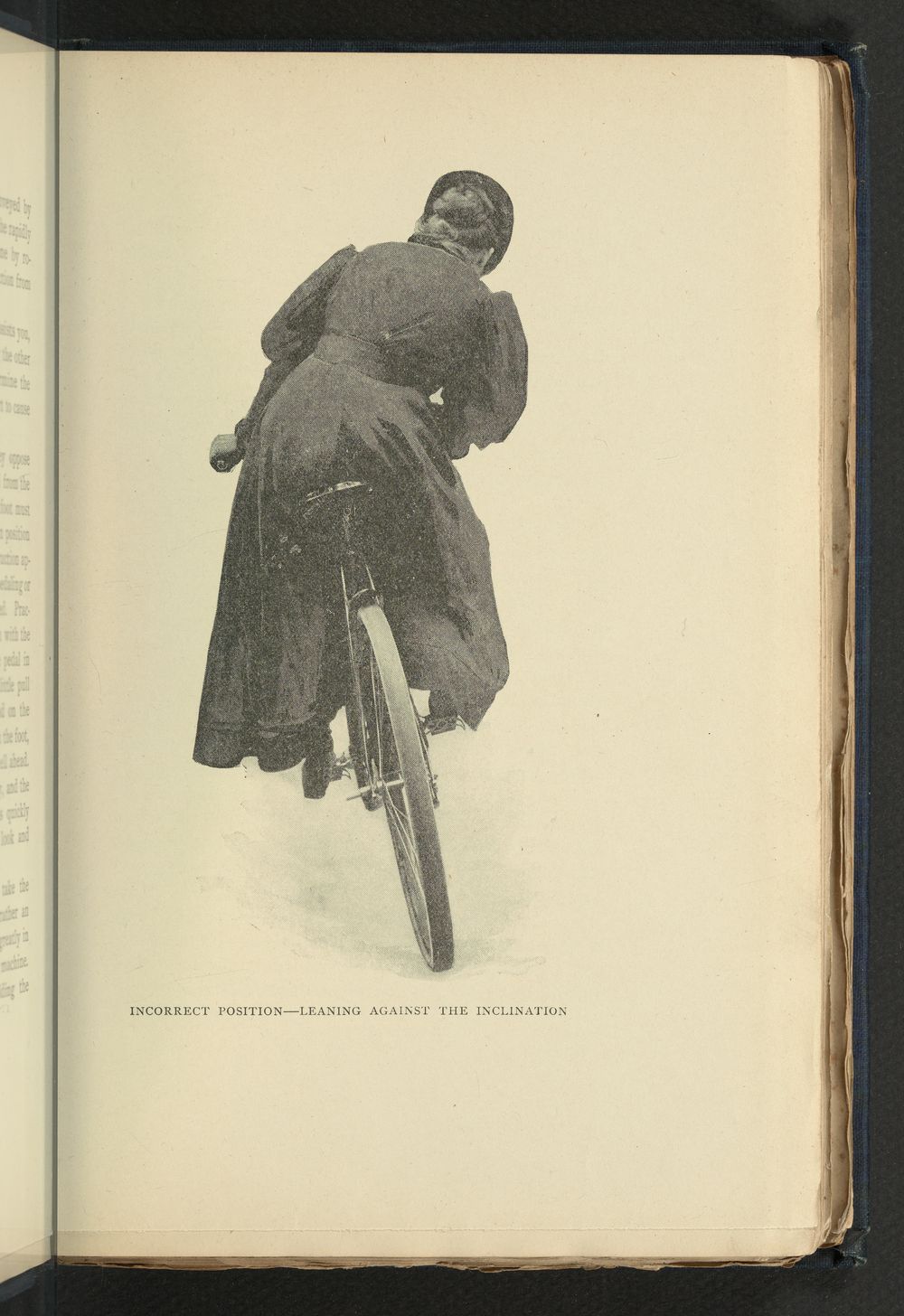
A Pro-cycling Perspective
Women are pictured throughout the text of "Bicycling for Ladies" in illustrations demonstrating proper form and technique when riding bicycles, and are pictured interchangeably in knickerbockers and skirts. There were several similar published cycling guides in the late 1800s, but Ward's was unique in marketing itself towards women.
In later chapters, Ward even encourages women cyclists to learn to use tools in order to independently repair their bicycles, noting that “any woman who is able to use a needle or scissors can use other tools equally well.” The idea that typical women's work might have transferrable skills towards more typically masculine jobs like that of a mechanic was certainly a novel one, though it is unknown whether Ward received any direct criticism for this aspect of the guide when it was published.
Gender Confusion
Gender confusion was another major theme of the cartoons Walker drew for Life concerning women’s clothing. Fashion in the 1850s through the 1890s emphasized an exaggerated female shape using corsets, padding, and bustles, while this new, more androgynous style choice gave women’s clothing more similarities to men’s. Other elements like military-inspired collars, structured tailoring, and shoulder pads emphasized these commonalities further, and seem to have inspired Walker to predict that men and women would soon be completely indistinguishable from one another. If women continued to wear pants and jackets, these cartoons suggested, all gender signifiers would be erased.
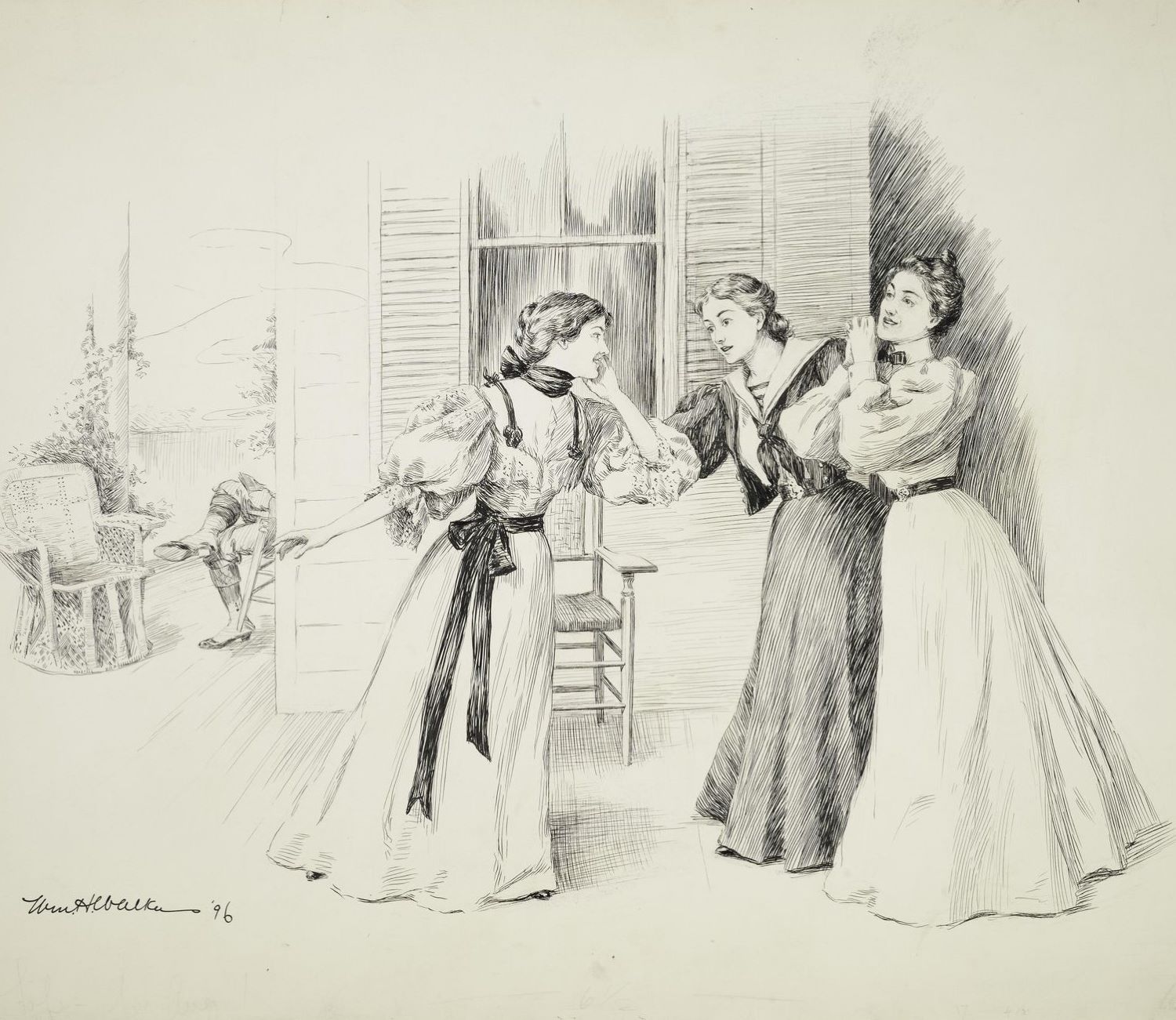
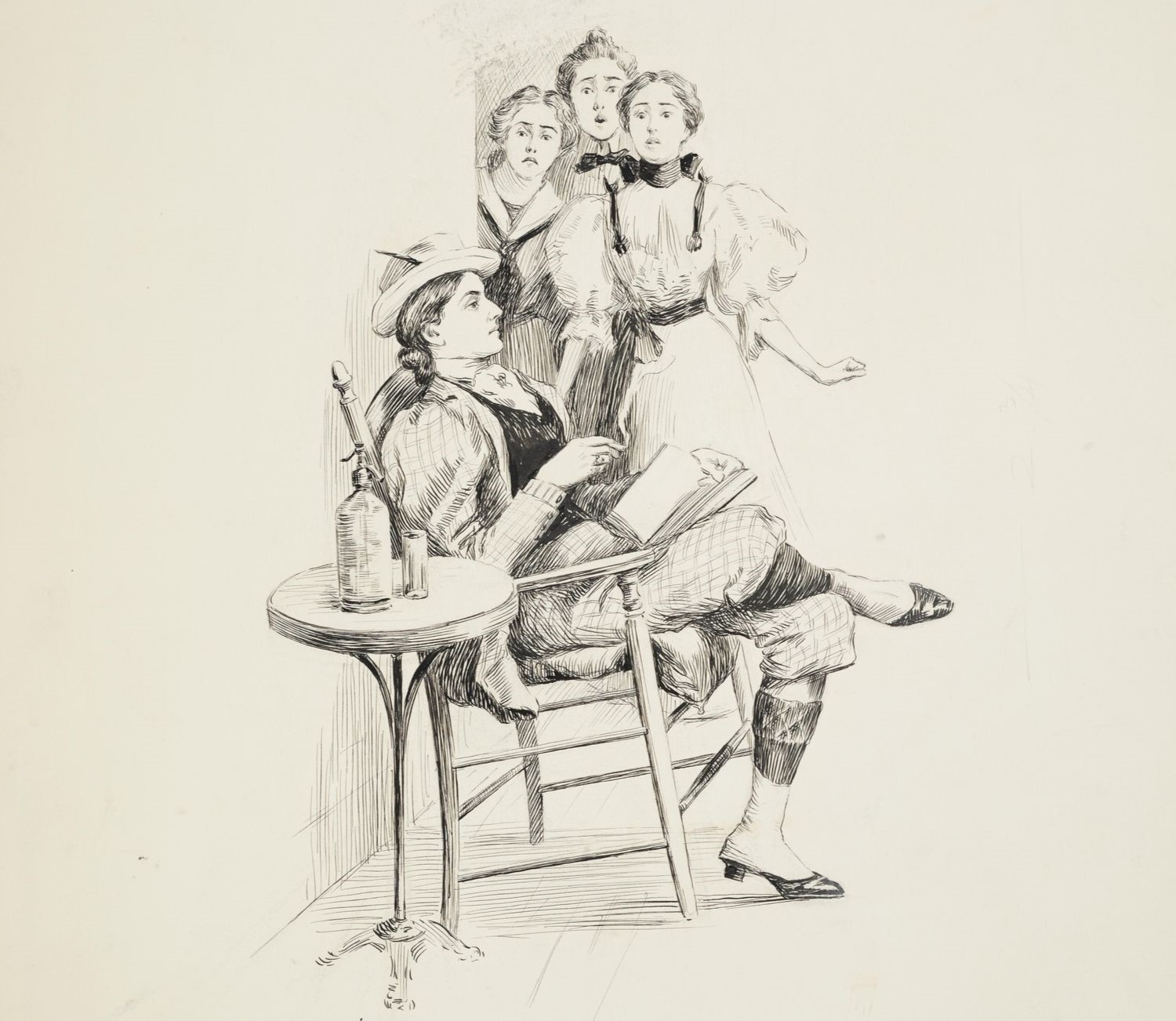
One series of cartoons from 1896 has three traditionally-dressed women being surprised that a person whom they thought was a man—a figure in a suit reading, drinking, and smoking—turned out to be a woman. The way she sits, an impossibility in the dresses the other women wear, is another transgression of gender norms. The three women who observe her, who in the first of the two cartoons were smiling, now look on with confusion.
The Threat of Empowerment
When women deviated from established social expectations by wearing pants, rather than seeing them as seeking equality, Walker saw threats to men’s lives and their personal freedom. In many of his cartoons, women were drawn as domineering, intimidating figures who were seeking the emasculation of men.
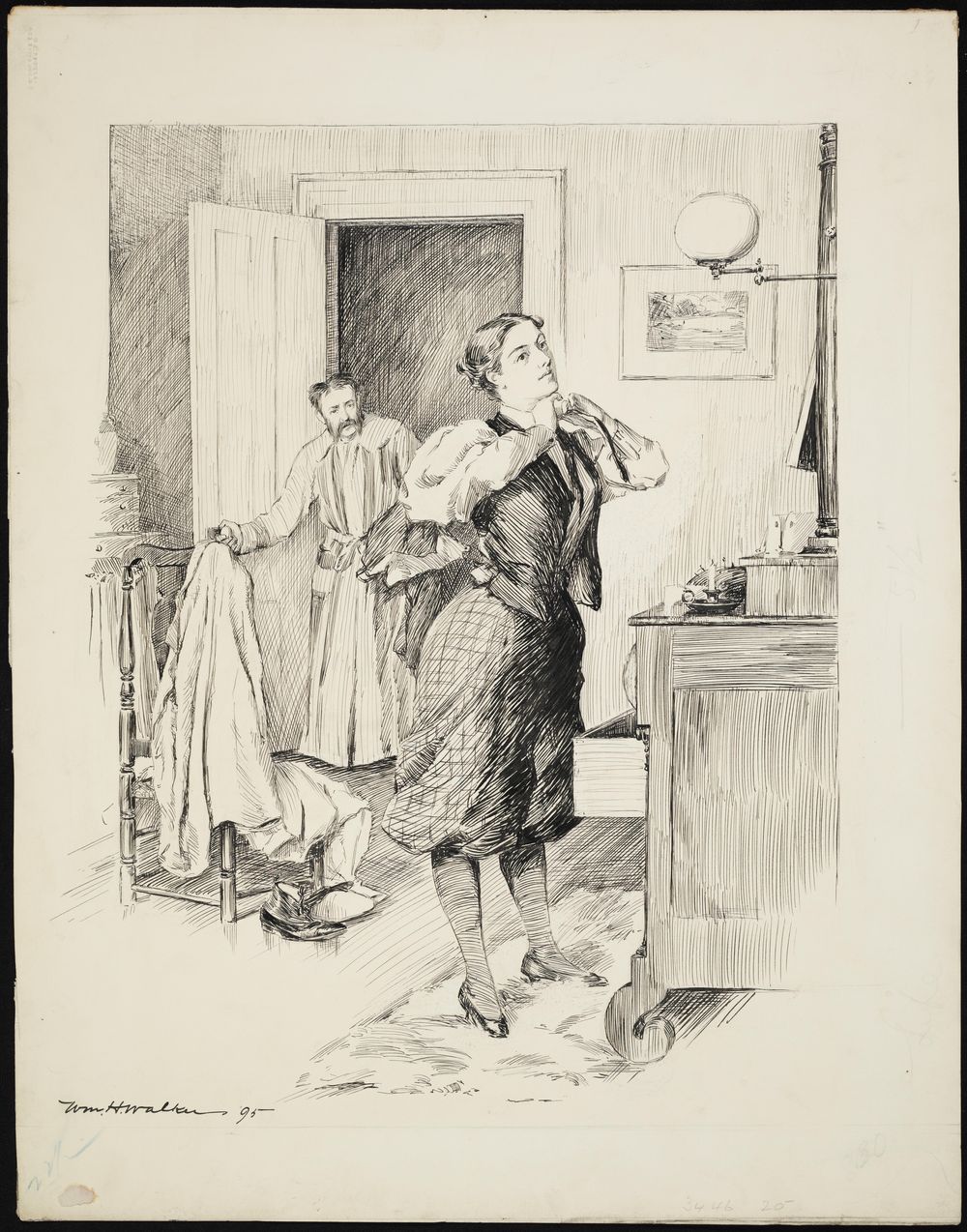
“The American Family,” December 19, 1895
When this cartoon appeared on the cover of Life under the header “Nowadays,” the caption read, “My dear Susan I wish you would keep your trowsers [sic] on your own side of the closet.” A husband is unable to find his own clothes when trying to get dressed in the morning because his wife has not only adopted “men’s” clothing, but also her husband’s space. He is left to beg for what would otherwise rightfully belong to him.
Here, references to space and style evoke the idea that when women began dressing like men, the outcome would be that men would have less physical and conceptual space, and instead be left with only what women are willing to give them.
Many more cartoons, however, took a more radical stance on what the change in women's clothing could bring, depicting a full reversal of roles between men and women, with women taking over men's jobs, places in the household, and even in the government.
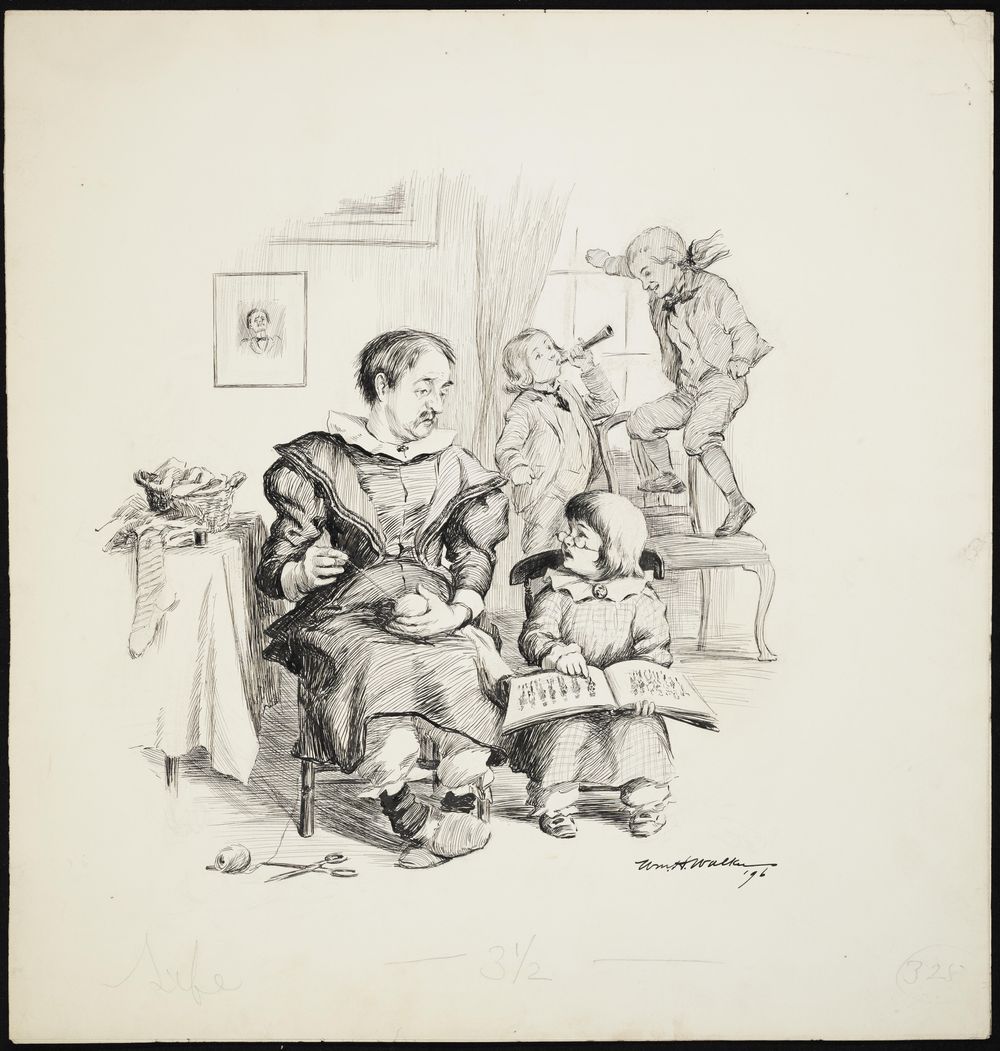
This cartoon, for example, was published in a 1896 edition of Life alongside a story titled "In the New Age."
"The man of the future sat patiently darning the family socks. …Two noisy, sturdy girls, as aggressive as became their sex, romped merrily about the sewing-room, aggravating his headache; while their gentle little brother sat quietly by his father’s side, studying the pictures in an old book of bygone fashions which he had found, and which appealed, of course, to the instincts of the miniature man.
'Look, father!' he said, pointing to an old print of the year 1890–'see what queer clothes that man has on! What are they? Did men really wear them then?'
'Yes, dear,' said his father, laying down his needle for a moment and bending over the page–'I never saw any; but father once told me that grandfather wore them when he was a boy. They called them pantaloons.'"
The experience of the father and son in this cartoon alludes to a world where, not only have women begun to wear pants, they have completely taken over the societal roles of men. There is no mother present in the story—she is presumably out working for the family—and the only possible reference to her is a photo on the wall in the background of the cartoon, where she looks over the proceedings from a distance. The focus is on the father and son, who are wearing dresses and, in the father's case, quietly doing needlework while the son's sisters play noisily in the background. The son's shock towards the idea that men might have once been the ones to wear pants is meant as both joke and warning.
“The New Navy,” April 16, 1896, and “An Inauguration of the Future,” March 4, 1897
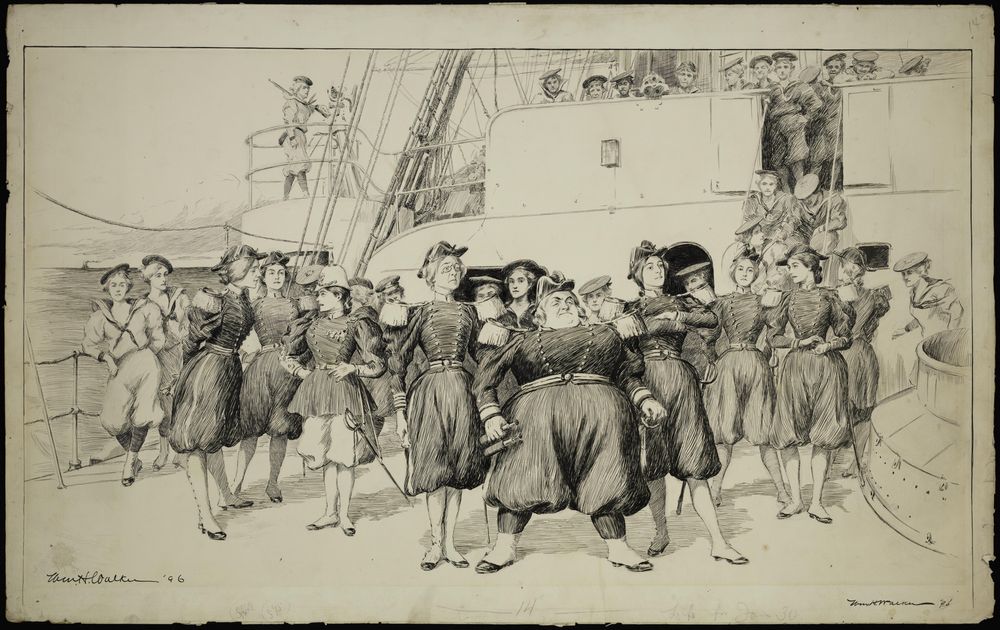
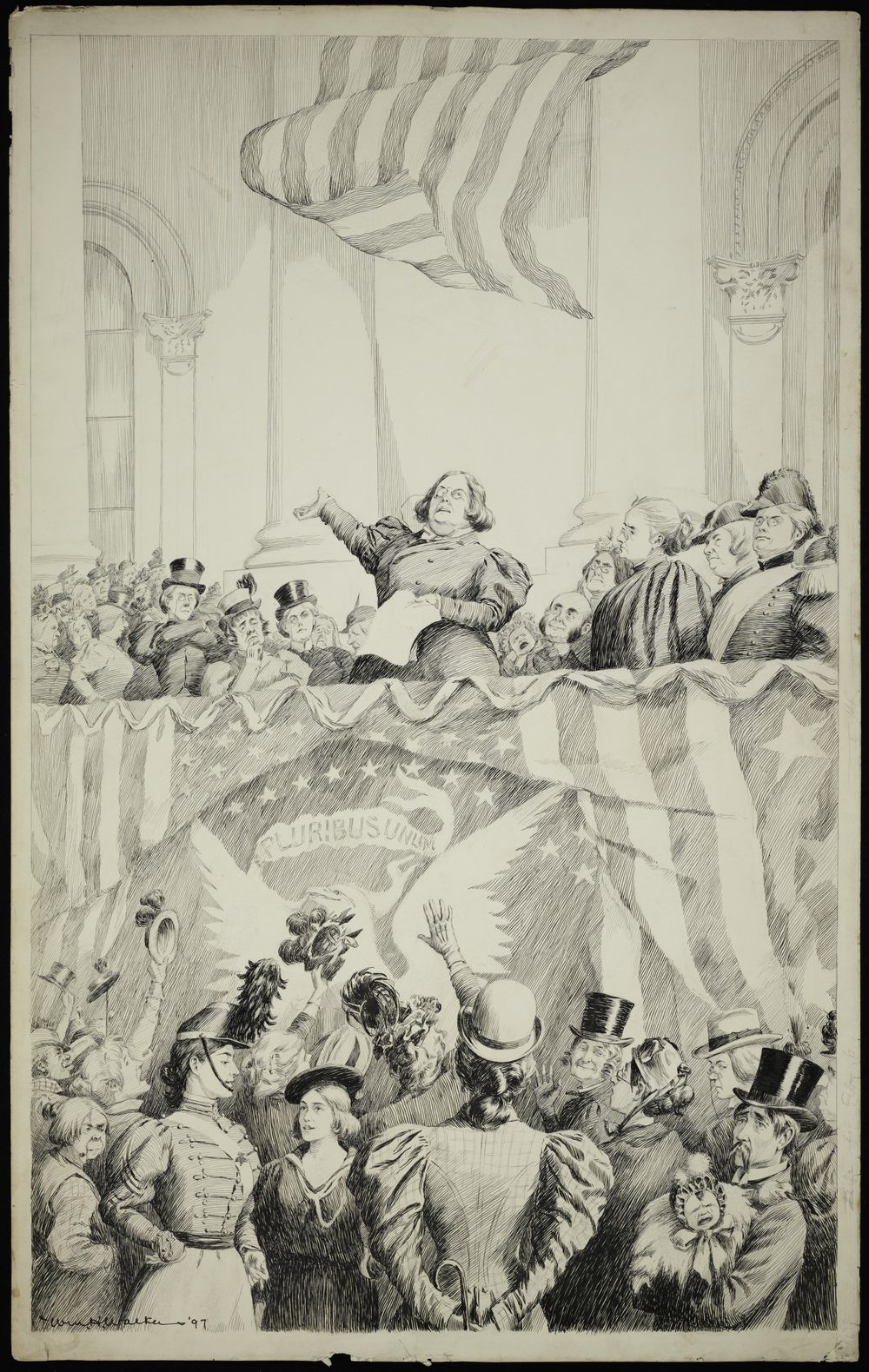
In both of these cartoons, women are shown to have taken over jobs that had, up until then, been "men's work." At this point in time, women did not yet have universal suffrage, and it was considered quite radical to think that a woman might take a position in government, much less be the President of the United States. It was equally out-there to imagine that women might serve in the United States military. Despite some women serving the nation in supportive roles such as nurses, seamstresses, or cooks in war zones since the American Revolution, women did not actually wear the uniforms of the U.S. military before World War I and were not considered military veterans. Under military policy, women were not on the front lines until 2001.
What these fear-mongering images were meant to do, however, was not to depict reality but to stir up disgust at the turn society was taking, and to further imply that women who wished to wear pants were not only strange, but malicious and conniving. They claimed they wanted equality, but these cartoons imagined a more sinister underlying agenda of displacement. If women could wear pants, might they, in turn, treat men as men had treated women in centuries past? Would familiar rules apply at all anymore?