News & Blog Posts
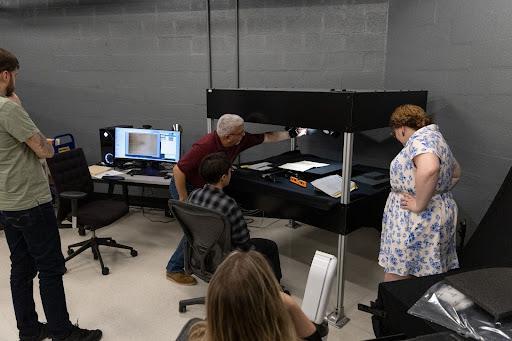
Princeton University Library is using a pioneering digital system to uncover the history of collection items
Princeton University Library’s (PUL) digital imaging technicians are helping researchers look beyond the surfaces of PUL Collections using a piece of technology inspired by the way scientists capture images of the moon.
As advanced as it is, the Selene is also unique: PUL has the only machine of its kind in the United States.
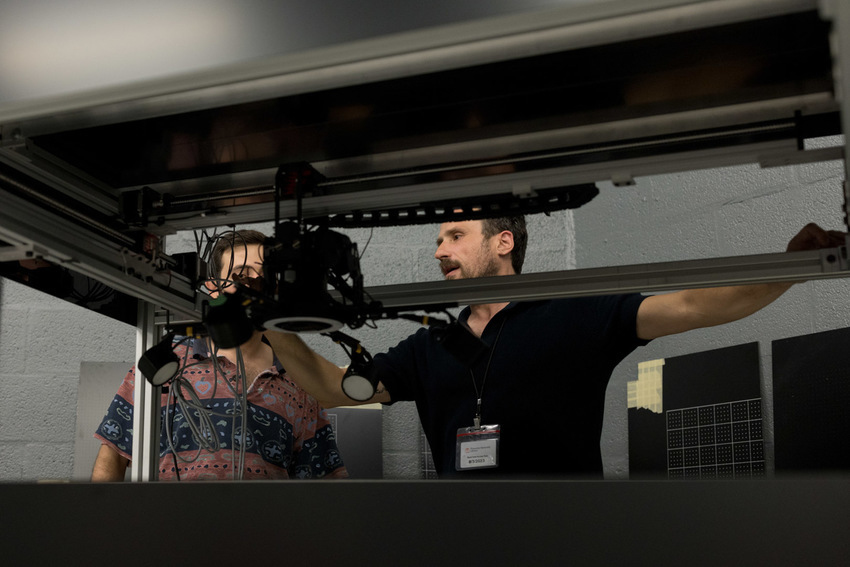
The Selene System at the Princeton University Library
In August 2023, Jorge Cano and Carlos San Juan completed the installation of a Selene Photometric Stereo System inside the Princeton University Library. This pioneering recording system developed by Jorge Cano and the Factum Arte engineering team is the first of its kind ever installed in the US and is part of a larger initiative – the Selene Club.
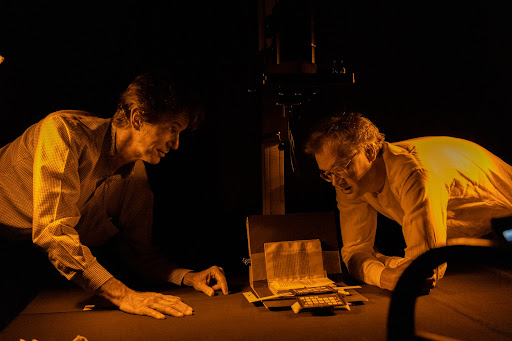
Uncovering the secrets of PUL items through spectral imaging
For a week in June 2022, Toth visited Princeton University Library (PUL) to dissect items from its collection via spectral imaging. Essentially, by photographing the items under various wavelengths of light, Toth can illuminate text and markings that were previously invisible to the naked eye. These items are known as palimpsests, or manuscripts that have had their writing effaced and replaced.
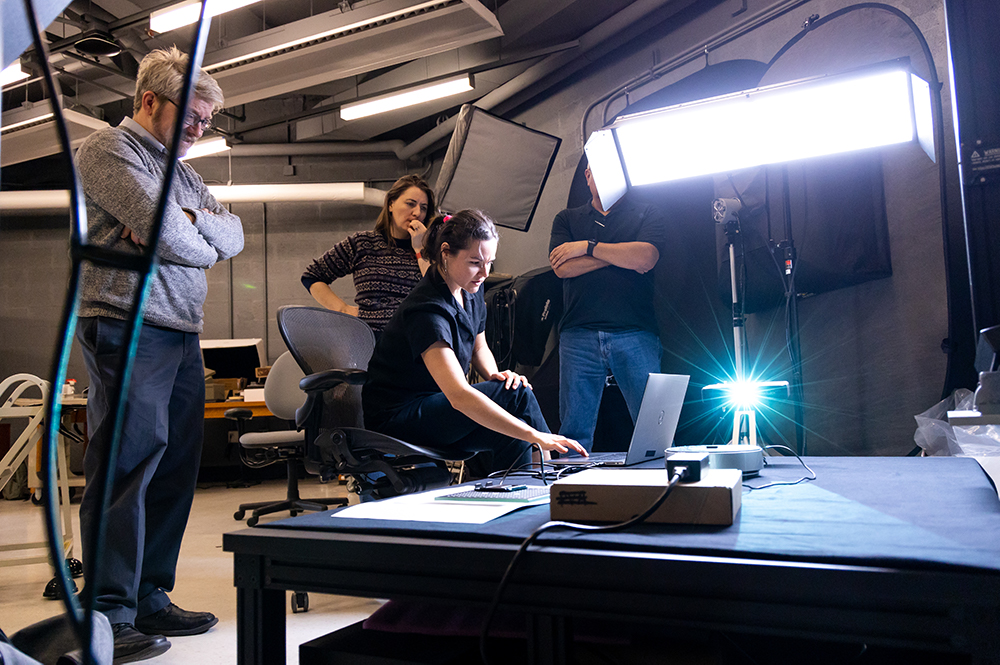
PUL delves into 3D scanning technology through a workshop series
In 2023 Princeton University Library (PUL) embarked on an educational campaign to introduce university staff to various applications of 3D capture through a series of workshops. The impetus for the series stemmed from an acquisition by Princeton University Library Special Collections. “In 1868, small printing metal pieces were found at the bottom of a river in France,” explained Eric White, Scheide Librarian and Assistant University Librarian for Special Collections, Rare Books and Manuscripts. “These turned out to be pieces from a 15th century printer, which are the oldest European printing pieces that are known to exist.” White brought together a group of PUL's specialists in 3D applications — including Grayburn, Ackerly, and Roel Muñoz, Library Digital Imaging Manager — to figure out how best to capture the tiny type set pieces.
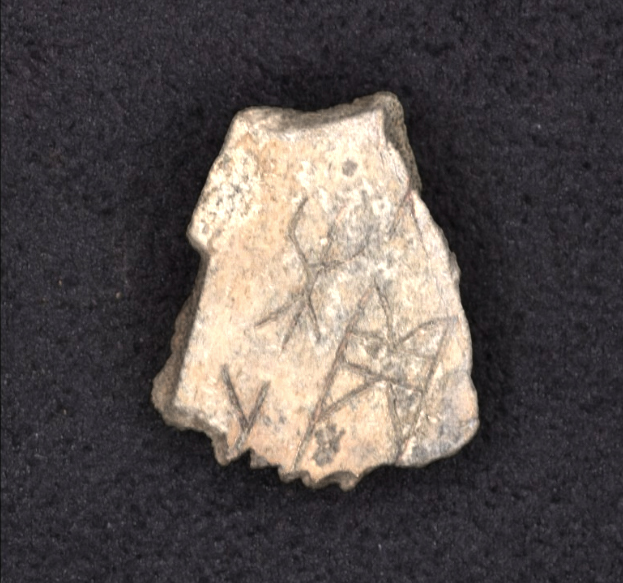
Chinese oracle bones now available for innovative view
After some long processing work, in 2021 Princeton University Library (PUL) became only the second library to put its Chinese oracle bone collection online in a cutting-edge project. Princeton collaborated with the China Academic Digital Associative Library (CADAL), in this project, which used Reflectance Transformation Imaging (RTI) technology, which enables the end-user to decide upon the angle from which an object is lighted. This allows making all of the carvings on the oracle bones clearly visible.